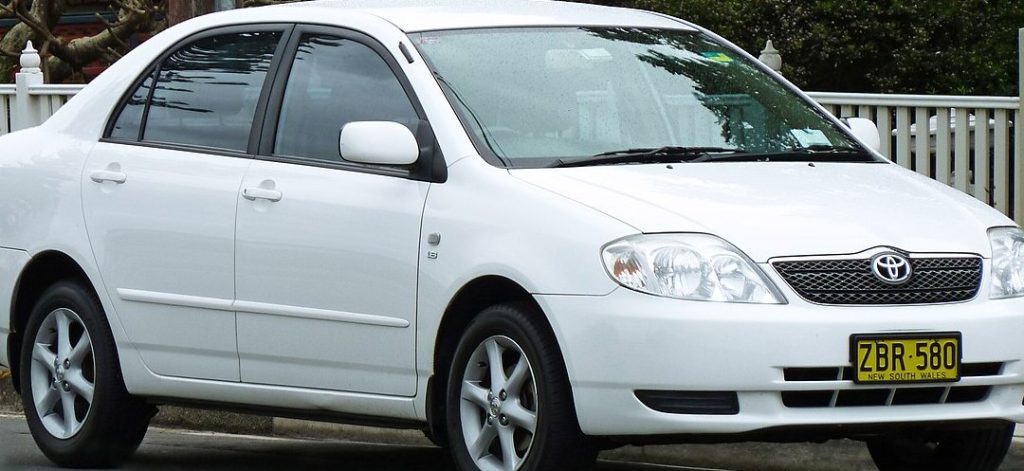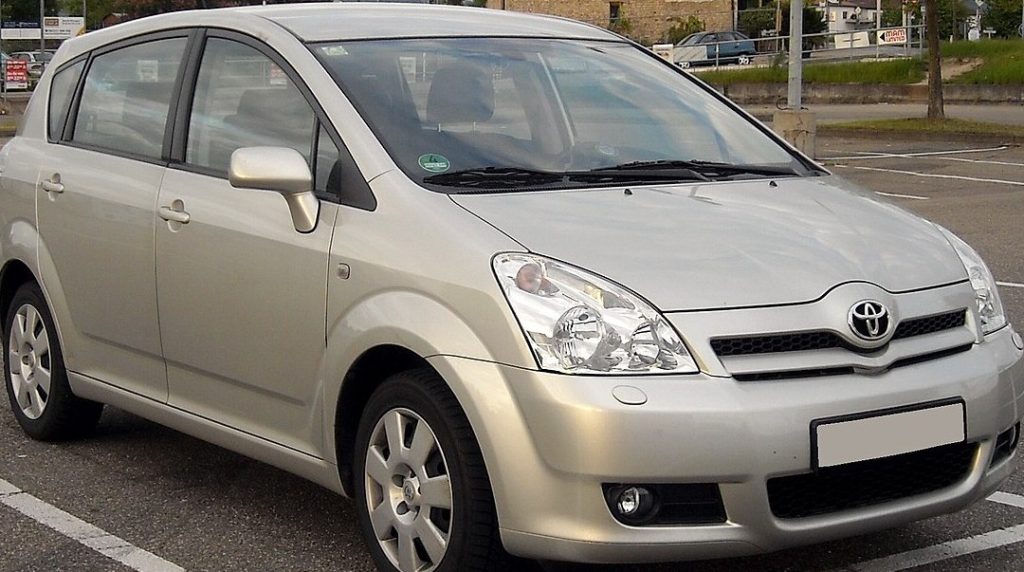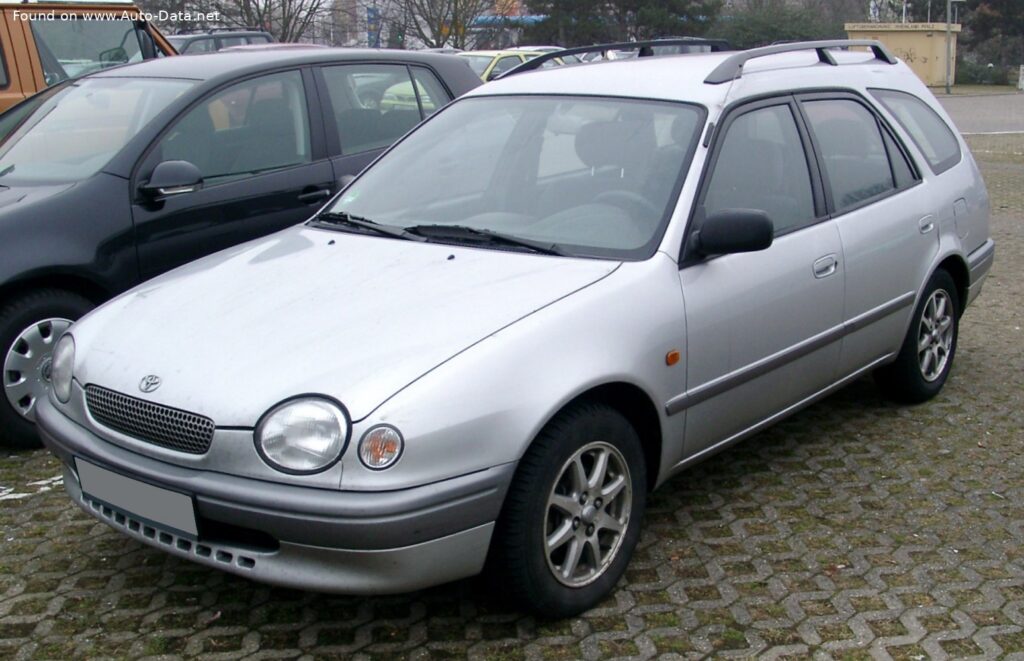
The Toyota Corolla Wagon VIII (E110), specifically the 1.6 i 16V (110 Hp) variant, represents a significant chapter in the storied history of the Toyota Corolla, one of the best-selling nameplates in automotive history. Introduced in 1997 as part of the eighth generation (E110 series), this station wagon model emphasized practicality, fuel efficiency, and the unwavering reliability that Toyota had meticulously cultivated over decades. While the sedan and hatchback versions of the E110 Corolla saw widespread global distribution, including a presence in the United States, the wagon variant, often referred to as an “estate” in European markets, played a particularly vital role in regions like Europe and Asia, where compact wagons were highly valued for their versatility. This iteration of the Corolla Wagon continued Toyota’s tradition of offering a dependable and economical family vehicle, blending sensible engineering with a comfortable, albeit understated, driving experience.
The Eighth Generation Corolla: Evolution of a Legend
The E110 generation of the Toyota Corolla, produced from 1995 to 2002, was designed to be a more refined and aerodynamically efficient successor to the E100. For the wagon body style, which commenced production in 1997 and concluded in 2001, the focus was on maximizing interior space and cargo utility without sacrificing the compact footprint that made the Corolla so maneuverable in urban environments. The 1.6 i 16V model, equipped with a 110 horsepower engine, positioned itself as a capable and economical option within the lineup, suitable for daily commuting, family duties, and longer journeys alike. Its design philosophy was rooted in functionality and durability, characteristics that resonated strongly with buyers looking for a no-fuss vehicle that could withstand years of service.
Powertrain & Engine Architecture
At the heart of the Toyota Corolla Wagon VIII (E110) 1.6 i 16V lies Toyota’s well-regarded 4A-FE engine. This naturally aspirated, inline four-cylinder gasoline (petrol) engine boasts a displacement of 1.6 liters (1587 cm³ or 96.84 cubic inches). Engineered for efficiency and smooth operation, it features a Double Overhead Camshaft (DOHC) valvetrain with four valves per cylinder, a configuration that allows for optimal airflow and combustion. The engine’s multi-port manifold fuel injection system ensures precise fuel delivery, contributing to both its performance and fuel economy.
This robust powerplant generates a respectable 110 horsepower at 6000 rpm, providing ample motivation for the compact wagon. Torque output stands at 145 Nm, or approximately 106.95 lb.-ft., delivered at 4800 rpm. This torque figure, coupled with the vehicle’s relatively light curb weight of 2369.97 lbs (1075 kg), results in a weight-to-power ratio of 9.8 kg per horsepower. Power is efficiently transferred to the front wheels via a five-speed manual transmission, a common and reliable setup for vehicles in this segment during the late 1990s.
Transmission Details
The five-speed manual transmission used in the Corolla Wagon 1.6 i 16V was a standard Toyota unit, known for its durability and smooth shifting characteristics. Gear ratios were optimized for a balance of fuel efficiency and usable power. First gear was relatively short, providing good acceleration from a standstill, while fifth gear was geared for comfortable highway cruising. The transmission’s simplicity contributed to its reliability and low maintenance requirements.
Driving Characteristics
The Corolla Wagon 1.6 i 16V offered a predictable and comfortable driving experience. While not particularly sporty, it provided adequate performance for everyday driving situations. Acceleration from 0 to 60 mph took approximately 9.7 seconds (0-100 km/h in 10.2 seconds), making it adequately brisk for highway merging and urban driving. Its maximum speed reached 121.17 mph (195 km/h), demonstrating its capability for sustained highway cruising. The relatively low horsepower and torque figures meant that the engine needed to be revved to extract its full potential, especially when carrying a full load or tackling inclines. Compared to higher-output Corolla variants, such as those equipped with the 1.8L engine, the 1.6L felt less responsive, but it compensated with improved fuel economy.
The suspension provided a comfortable ride, absorbing bumps and imperfections in the road surface effectively. Steering was light and precise, making it easy to maneuver in tight spaces. Overall, the driving experience was geared towards practicality and ease of use, rather than outright performance.
Equipment & Trim Levels
The 1.6 i 16V Corolla Wagon typically came with a reasonable level of standard equipment, focusing on practicality and convenience. Standard features generally included power steering, central locking, electric windows, and an adjustable steering column. Air conditioning was often an optional extra, as were features like alloy wheels and a radio/cassette player. Interior upholstery was typically cloth, with a durable and easy-to-clean finish. The dashboard layout was functional and straightforward, with clearly labeled controls. Higher trim levels might have included features like a sunroof, upgraded audio system, and more luxurious interior trim.
Chassis & Braking
The drivetrain architecture of the Corolla Wagon VIII (E110) is a conventional front-engine, front-wheel-drive layout. This configuration, known for its packaging efficiency and predictable handling characteristics, made it an ideal choice for a practical family vehicle. The suspension system utilized coil springs at both the front and rear, providing a comfortable ride quality tuned for everyday use. Braking duties were handled by ventilated discs at the front, offering effective stopping power, complemented by drum brakes at the rear. An Anti-lock Braking System (ABS) was a significant safety feature for its time, enhancing control during emergency braking maneuvers. Steering was managed by a rack-and-pinion system with hydraulic power assist, ensuring light and responsive steering feedback, particularly beneficial in parking situations and city driving. The vehicle rode on 175/65 R14 tires, a common size for compact cars of this era, balancing grip with ride comfort and cost-effectiveness.
Market Reception & Comparison
Critics generally viewed the 1.6L Corolla Wagon as a sensible and reliable choice in the compact wagon segment. It wasn’t the most exciting car to drive, but it excelled in areas that mattered most to its target audience: practicality, fuel efficiency, and dependability. Compared to other trims in the Corolla lineup, the 1.6L offered a more affordable entry point, making it accessible to a wider range of buyers. While the higher-output 1.8L engine provided more spirited performance, it came at a higher price and with slightly reduced fuel economy. The 1.6L also compared favorably to diesel-powered competitors in terms of refinement and noise levels, although it didn’t offer the same level of low-end torque. Fuel economy was a strong suit, with an urban consumption rate of 10.9 liters per 100 km (21.6 US mpg) and an impressive extra-urban (highway) figure of 6.5 liters per 100 km (36.2 US mpg).
Technical Specifications: Toyota Corolla Wagon VIII (E110) 1.6 i 16V (110 Hp)
| General Information | |
| Brand | Toyota |
| Model | Corolla |
| Generation | Corolla Wagon VIII (E110) |
| Type (Engine) | 1.6 i 16V (110 Hp) |
| Start of Production | 1997 |
| End of Production | 2001 |
| Powertrain Architecture | Internal Combustion Engine |
| Body Type | Station Wagon (Estate) |
| Seats | 5 |
| Doors | 5 |
| Performance Specifications | |
| Fuel Consumption (Urban) | 10.9 l/100 km (21.6 US mpg) |
| Fuel Consumption (Extra Urban) | 6.5 l/100 km (36.2 US mpg) |
| Fuel Type | Petrol (Gasoline) |
| Acceleration 0-60 mph | 9.7 sec |
| Acceleration 0-100 km/h | 10.2 sec |
| Maximum Speed | 195 km/h (121.17 mph) |
| Weight-to-Power Ratio | 9.8 kg/Hp (102.3 Hp/tonne) |
| Weight-to-Torque Ratio | 7.4 kg/Nm (134.9 Nm/tonne) |
| Engine Specifications | |
| Power | 110 Hp @ 6000 rpm |
| Power per Liter | 69.3 Hp/l |
| Torque | 145 Nm @ 4800 rpm (106.95 lb.-ft. @ 4800 rpm) |
| Engine Layout | Front, Transverse |
| Engine Model/Code | 4A-FE |
| Engine Displacement | 1587 cm³ (1.6 liters / 96.84 cu. in.) |
| Number of Cylinders | 4 |
| Engine Configuration | Inline |
| Cylinder Bore | 81 mm (3.19 in.) |
| Piston Stroke | 77 mm (3.03 in.) |
| Compression Ratio | 9.5:1 |
| Number of Valves per Cylinder | 4 |
| Fuel Injection System | Multi-port manifold injection |
| Engine Aspiration | Naturally aspirated engine |
| Valvetrain | DOHC |
| Engine Oil Capacity | 3.2 l (3.38 US qt) |
| Engine Oil Specification | Not specified |
| Coolant Capacity | 6 l (6.34 US qt) |
| Space, Volume and Weights | |
| Kerb Weight | 1075 kg (2369.97 lbs) |
| Max. Weight | 1615 kg (3560.47 lbs) |
| Max Load | 540 kg (1190.5 lbs) |
| Trunk (Boot) Space – Minimum | 308 l (10.88 cu. ft.) |
| Trunk (Boot) Space – Maximum | 1218 l (43.01 cu. ft.) |
| Fuel Tank Capacity | 50 l (13.21 US gal) |
| Dimensions | |
| Length | 4320 mm (170.08 in.) |
| Width | 1690 mm (66.54 in.) |
| Height | 1445 mm (56.89 in.) |
| Wheelbase | 2465 mm (97.05 in.) |
| Front Track | 1460 mm (57.48 in.) |
| Rear (Back) Track | 1450 mm (57.09 in.) |
| Drivetrain, Brakes and Suspension Specifications | |
| Drivetrain Architecture | Internal Combustion engine (ICE) drives the front wheels. |
| Drive Wheel | Front-wheel drive |
| Number of Gears and Type of Gearbox | 5 gears, manual transmission |
| Front Suspension | Coil spring |
| Rear Suspension | Coil spring |
| Front Brakes | Ventilated discs |
| Rear Brakes | Drum |
| Assisting Systems | ABS (Anti-lock Braking System) |
| Steering Type | Steering rack and pinion |
| Power Steering | Hydraulic Steering |
| Tires Size | 175/65 R14 |
Legacy
The Toyota Corolla, and specifically the Toyota Corolla Wagon VIII (E110), cemented its legacy as a global automotive icon primarily through its relentless pursuit of reliability, affordability, and practicality. Even today, many E110 Corollas, including the wagon variants, can still be found on roads worldwide, a testament to their inherent durability and the quality of their engineering. The 4A-FE engine is known for its longevity, and with proper maintenance, can easily exceed 200,000 miles. In the used car market, these Corollas are often sought after by buyers looking for a dependable and economical vehicle, particularly those who appreciate the practicality of the wagon body style. While not a collector’s item, the E110 Corolla Wagon holds a respected place in automotive history as a symbol of Toyota’s commitment to building cars that simply last.