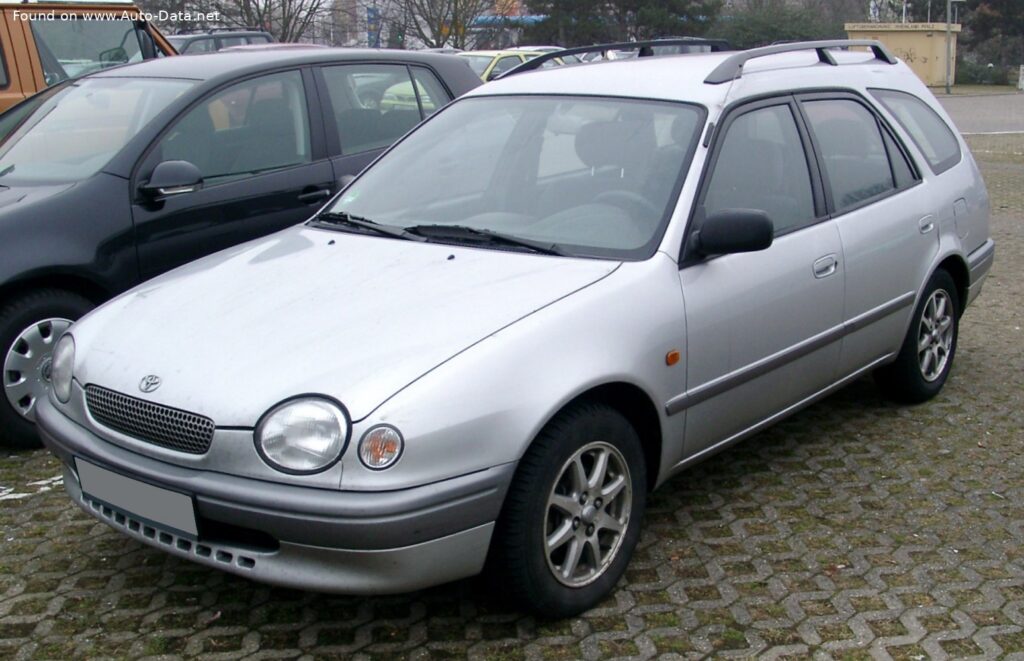
The Toyota Corolla Wagon VIII (E110) 2.0 D-4D represents a compelling, though often overlooked, variant within the globally successful eighth-generation Corolla lineup (E110), produced from 1995 to 2002. Specifically manufactured between 2000 and 2001, this station wagon was primarily targeted towards European and Asian markets where diesel fuel efficiency and cargo capacity were highly valued. Combining Toyota’s well-established reputation for reliability with its then-new D-4D common rail diesel technology, the Corolla Wagon 2.0 D-4D offered a practical and economical transportation solution for families, businesses, and individuals alike. It occupied a niche position within the E110 range, offering a diesel alternative to the predominantly gasoline-powered models available in North America.
The Efficient 2.0 D-4D Powertrain
The heart of the Toyota Corolla Wagon VIII (E110) 2.0 D-4D was Toyota’s 1CD-FTV engine, a 1,995 cm³ (2.0-liter) inline four-cylinder diesel. This engine marked a significant step forward for Toyota, being one of its early and successful implementations of common rail direct injection. This advanced fuel injection system delivered improvements in fuel efficiency, reduced emissions, and enhanced refinement compared to older indirect injection diesel designs. A turbocharger and intercooler further optimized air intake, boosting combustion efficiency and power delivery.
The 1CD-FTV engine produced 90 horsepower at 4000 rpm. While this output may seem modest by contemporary standards, its strength resided in its torque: a robust 158.58 lb-ft of torque available at a relatively low 2400 rpm. This ample low-end torque was ideally suited for a station wagon, providing strong pulling power for carrying passengers and cargo, whether in urban environments or on the highway.
Power was transferred to the front wheels through a reliable 5-speed manual transmission, a common and efficient choice for compact cars of the era. This front-wheel-drive configuration, combined with the transverse engine layout, contributed to predictable handling and maximized interior space. Performance figures reflected the vehicle’s utilitarian focus: 0-60 mph acceleration was achieved in 12.8 seconds, with a maximum speed of 105.63 mph.
However, the most significant attribute of this diesel variant was its exceptional fuel economy. The vehicle achieved an impressive 44.4 US mpg on the extra-urban cycle and a combined average of 37.9 US mpg. These figures were highly competitive and translated into substantial cost savings for owners, making it an attractive option in fuel-conscious markets. The 14.53 US gallon fuel tank extended its range, minimizing the frequency of refueling stops. The engine’s high compression ratio of 18.6:1 and four valves per cylinder demonstrated Toyota’s commitment to engineering a durable, efficient, and refined diesel powerplant.
Comparison with Other E110 Variants
The 2.0 D-4D wagon differed significantly from the gasoline-powered Corolla variants prevalent in North America. While those models prioritized outright performance and a smoother driving experience, the D-4D focused on fuel efficiency and practicality. Compared to the 1.8L gasoline engine available in some markets, the diesel offered considerably better fuel economy but less peak horsepower. The D-4D also contrasted with higher-performance E110 models, such as those equipped with larger gasoline engines, which catered to drivers seeking a more engaging driving experience. The diesel’s torque advantage, however, made it more capable of handling loads and navigating challenging terrain. Within the diesel range, the 2.0 D-4D represented a step up in power and refinement compared to smaller displacement diesel options available in some regions.
Design and Features
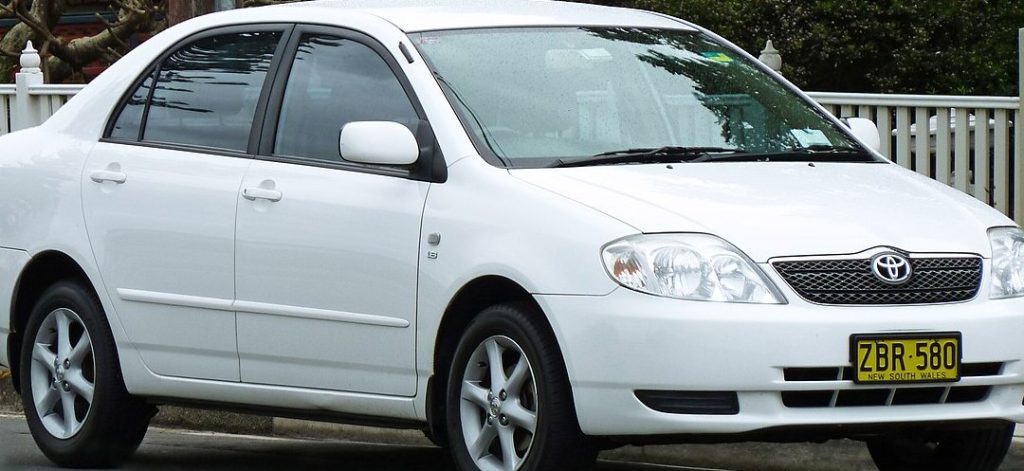
The Toyota Corolla Wagon VIII (E110) was designed with a primary focus on practicality, versatility, and ease of use. Its 5-door, 5-seat configuration made it an ideal choice for families and individuals needing ample space for passengers and cargo. The exterior styling was typical of Toyota during this period: understated, clean, and functional. While not designed to be visually striking, its balanced proportions and good visibility ensured excellent maneuverability and a timeless aesthetic.
The vehicle’s dimensions were compact yet optimized for interior volume: a length of 166.93 inches, a width of 67.32 inches, and a height of 63.39 inches. The 102.36-inch wheelbase provided a stable platform and contributed to a surprisingly spacious cabin for a vehicle in its class. The station wagon body style’s key strength was its cargo capacity. The trunk offered a minimum of 14.66 cubic feet of space, expandable to an impressive 62.15 cubic feet with the rear seats folded down. This flexible cargo area was a major selling point, allowing owners to easily transport everything from groceries to sports equipment or luggage.
Beneath its practical exterior, the Corolla Wagon featured a robust and proven chassis. The suspension system consisted of a spring strut setup at the front and coil springs at the rear, a configuration known for delivering a comfortable and predictable ride quality suitable for various road conditions. Stopping power was provided by ventilated disc brakes at the front and solid disc brakes at the rear, enhanced by an Anti-lock Braking System (ABS) for controlled braking in challenging situations. Steering was managed by a hydraulic rack and pinion system, offering direct and communicative feedback to the driver. The vehicle rode on 185/70 R14 tires mounted on 14-inch wheels, providing a good balance of comfort, grip, and cost-effectiveness.
Chassis & Braking
The E110 Corolla Wagon 2.0 D-4D utilized a conventional chassis design, prioritizing durability and cost-effectiveness. The front suspension employed MacPherson struts, offering a good compromise between ride comfort and handling. The rear suspension featured a torsion beam setup, which was space-efficient and contributed to the wagon’s large cargo area. Braking was handled by ventilated discs on the front wheels and solid discs on the rear, providing adequate stopping power for the vehicle’s weight and intended use. The inclusion of ABS was a significant safety feature, enhancing braking control, particularly on slippery surfaces. Stabilizer bars were fitted to both the front and rear axles, helping to reduce body roll during cornering.
Market Reception & Comparison
The Toyota Corolla Wagon VIII (E110) 2.0 D-4D was generally well-received in markets where diesel station wagons were popular. Critics praised its fuel efficiency, practicality, and Toyota’s renowned reliability. However, some reviewers noted that the engine’s performance was modest compared to gasoline alternatives. Compared to other diesel wagons in its class, such as the Volkswagen Golf Estate TDI, the Corolla offered a competitive fuel economy and a reputation for long-term durability. Its interior, while functional, was often considered less stylish than some of its European rivals. The Corolla’s strength lay in its overall package: a dependable, economical, and practical vehicle that offered excellent value for money.
Technical Specifications
| Category | Specification |
| General Information | |
| Brand | Toyota |
| Model | Corolla |
| Generation | Corolla Wagon VIII (E110) |
| Type (Engine) | 2.0 D-4D (90 Hp) |
| Production Start | 2000 year |
| Production End | 2001 year |
| Powertrain Architecture | Internal Combustion Engine |
| Body type | Station wagon (estate) |
| Seats | 5 |
| Doors | 5 |
| Performance Specifications | |
| Fuel consumption (economy) – urban | 29.8 US mpg |
| Fuel consumption (economy) – extra urban | 44.4 US mpg |
| Fuel consumption (economy) – combined | 37.9 US mpg |
| Fuel Type | Diesel |
| Acceleration 0 – 60 mph | 12.8 sec |
| Maximum speed | 105.63 mph |
| Weight-to-power ratio | 14.9 kg/Hp |
| Weight-to-torque ratio | 6.2 kg/Nm |
| Engine Specifications | |
| Power | 90 Hp @ 4000 rpm. |
| Power per liter | 45.1 Hp/l |
| Torque | 158.58 lb.-ft. @ 2400 rpm. |
| Engine layout | Front, Transverse |
| Engine Model/Code | 1CD-FTV |
| Engine displacement | 2.0 liters (121.74 cu. in.) |
| Number of cylinders | 4 |
| Engine configuration | Inline |
| Cylinder Bore | 3.24 in. |
| Piston Stroke | 3.7 in. |
| Compression ratio | 18.6:1 |
| Number of valves per cylinder | 4 |
| Fuel injection system | Diesel Commonrail |
| Engine aspiration | Turbocharger, Intercooler |
| Engine oil capacity | 6.23 US qt |
| Coolant capacity | 8.03 US qt |
| Space, Volume and Weights | |
| Kerb Weight | 2954.19 lbs. |
| Max. weight | 4045.48 lbs. |
| Max load | 1091.29 lbs. |
| Trunk (boot) space – minimum | 14.66 cu. ft. |
| Trunk (boot) space – maximum | 62.15 cu. ft. |
| Fuel tank capacity | 14.53 US gal |
| Dimensions | |
| Length | 166.93 in. |
| Width | 67.32 in. |
| Height | 63.39 in. |
| Wheelbase | 102.36 in. |
| Front track | 58.27 in. |
| Rear (Back) track | 58.66 in. |
| Drivetrain, Brakes and Suspension | |
| Drivetrain Architecture | Internal combustion engine drives front wheels |
| Drive wheel | Front wheel drive |
| Number of gears and type of gearbox | 5 gears, manual transmission |
| Front suspension | Spring Strut |
| Rear suspension | Coil spring |
| Front brakes | Ventilated discs |
| Rear brakes | Disc |
| Assisting systems | ABS (Anti-lock braking system) |
Legacy
The Toyota Corolla Wagon VIII (E110) 2.0 D-4D has earned a reputation for exceptional long-term reliability. The 1CD-FTV engine, while not without its potential issues (such as potential for injector wear and turbocharger failure with high mileage), is generally considered a durable unit when properly maintained. Today, these wagons are increasingly sought after by enthusiasts and those seeking a dependable and economical vehicle. Parts availability remains relatively good, and the Corolla’s simple design makes it relatively easy to maintain and repair. The 2.0 D-4D variant, in particular, is valued for its balance of fuel efficiency and usable power, making it a practical choice for everyday driving. Its enduring appeal is a testament to Toyota’s engineering prowess and the Corolla’s unwavering commitment to quality and reliability.