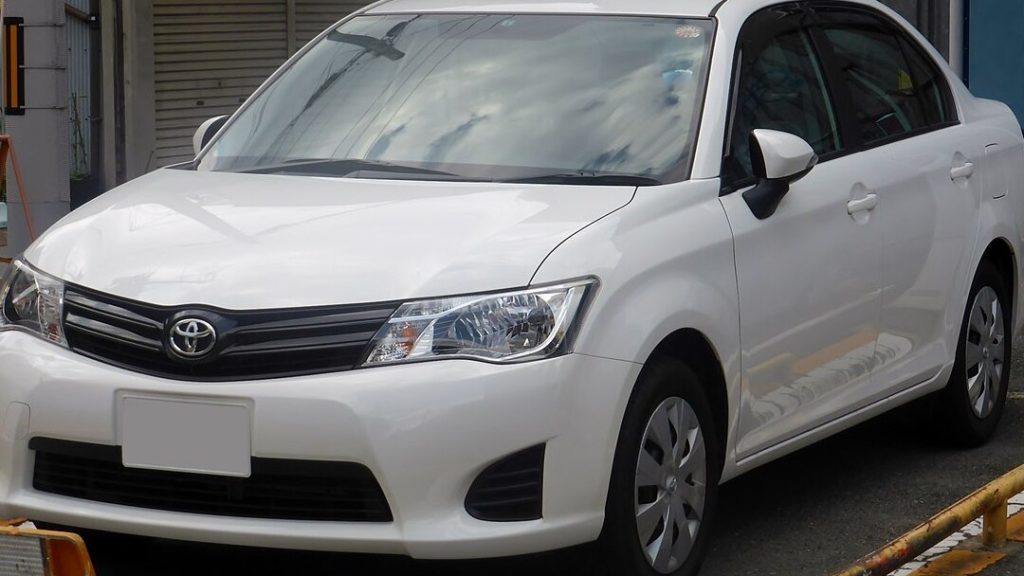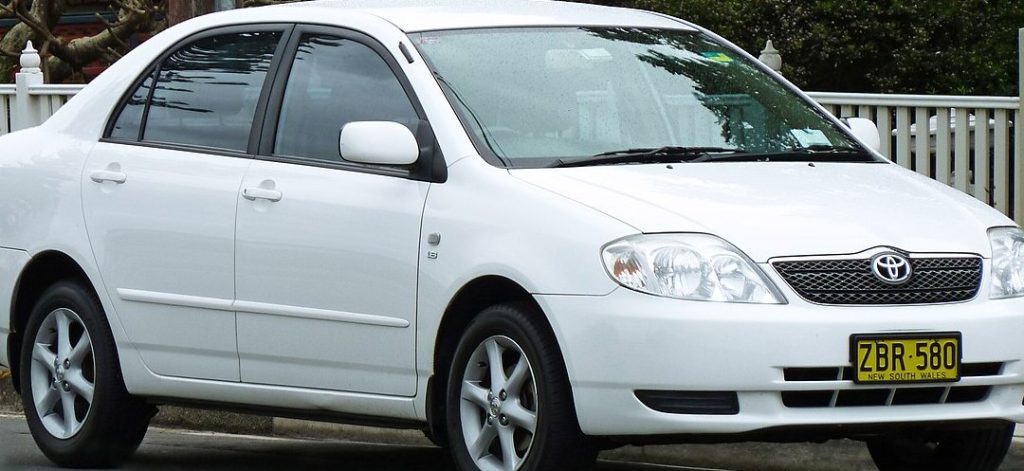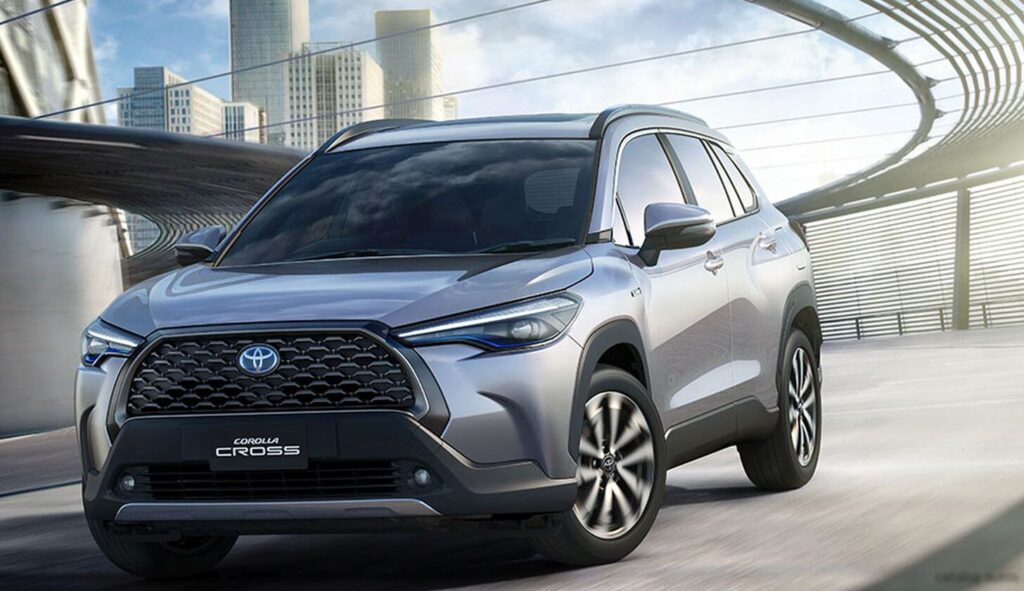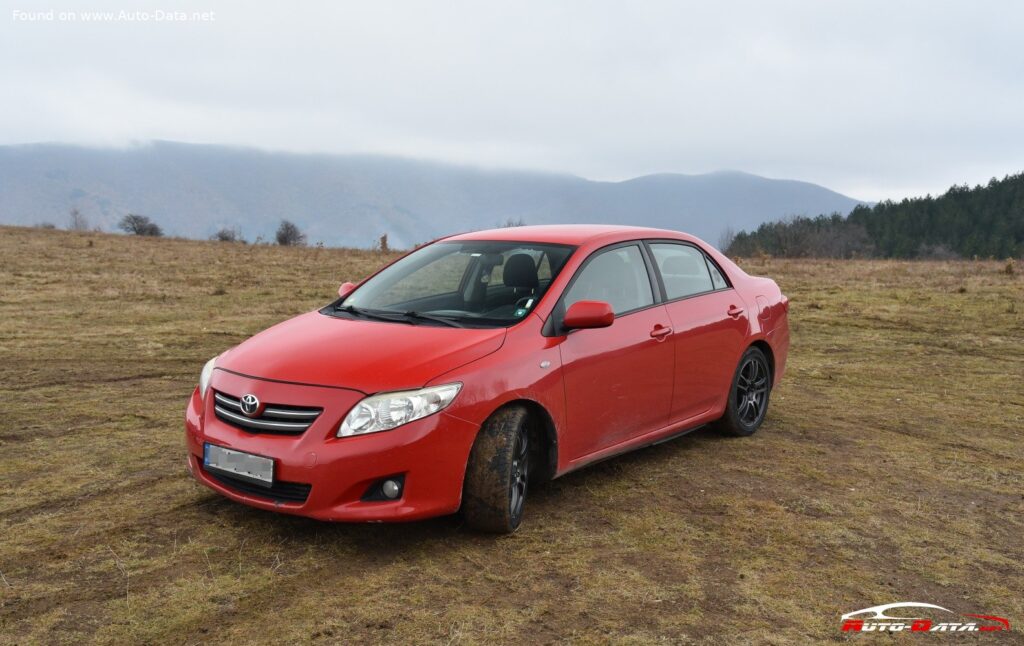
The Toyota Corolla, a name synonymous with reliability and practicality, has been a global automotive cornerstone for decades. The tenth generation of this venerable compact car, internally designated as the E140 and E150 series, continued this legacy with its production run from 2006 to 2013, though the specific variant under review, the Toyota Corolla X (E140, E150) 1.3 i 16V VVT-i (101 Hp), was produced from 2008 to 2012. While the Corolla nameplate is well-known in North America, this particular 1.3-liter engine variant was primarily targeted at European and Asian markets, where smaller displacement engines are favored for their fuel efficiency and lower taxation. This iteration of the Corolla sedan upheld its reputation as a dependable, economical, and comfortable vehicle, serving as a workhorse for families and businesses across numerous international territories.
The E140/E150 generation represented an evolutionary step in the Corolla’s design and engineering. It offered a more refined ride, improved interior quality, and enhanced safety features compared to its predecessors. The 1.3 i 16V VVT-i engine, in particular, showcased Toyota’s commitment to developing efficient, small-displacement powertrains that met stringent emissions standards like Euro 4, while still providing adequate performance for daily driving in its intended markets. This model was a crucial player in Toyota’s global strategy, reinforcing its presence in segments where cost-effectiveness and durability were paramount.
Powertrain & Engine Architecture
At the heart of the Toyota Corolla X (E140, E150) 1.3 i 16V VVT-i (101 Hp) lies the 1NR-FE engine, a naturally aspirated, 1.3-liter (1329 cm³ or 81.1 cu. in.) inline four-cylinder gasoline unit. This engine is a prime example of Toyota’s engineering prowess in creating compact, efficient, and durable powertrains. It features a Double Overhead Camshaft (DOHC) valvetrain with 4 valves per cylinder, incorporating Toyota’s renowned Variable Valve Timing with intelligence (VVT-i) system. VVT-i continuously adjusts the timing of the intake and exhaust valves, optimizing engine performance across the RPM range, enhancing both power output and fuel efficiency.
The 1NR-FE engine generates a respectable 101 horsepower at 6000 rpm, which, for a 1.3-liter unit, is a strong output, translating to approximately 76 horsepower per liter. Torque peaks at 132 Nm (97.36 lb.-ft.) at a relatively low 3800 rpm, providing decent pulling power for city driving and highway cruising. The engine utilizes multi-port fuel injection to deliver fuel to the cylinders. The 1NR-FE is known for its robust construction and relatively simple design, contributing to its long-term reliability. The engine block is typically cast aluminum, helping to reduce weight. The cylinder head is also aluminum alloy, further contributing to weight savings and improved heat dissipation.
Power is delivered to the front wheels via a smooth-shifting 6-speed manual transmission, a choice that further contributes to the vehicle’s efficiency and driver engagement. While an automatic transmission was available on other Corolla variants, the 1.3L engine was primarily paired with the manual gearbox in many markets. This transmission was selected for its efficiency and relatively low cost, aligning with the overall value proposition of this Corolla trim.
Driving Characteristics
The Corolla 1.3 i 16V VVT-i is geared more towards economy than outright speed. It accelerates from 0 to 60 mph in a calculated 12.4 seconds (0-100 km/h in 13.1 seconds), with a maximum speed of 111.85 mph (180 km/h). These figures are competitive for its class and engine size in the markets it served. The 6-speed manual transmission allows the driver to keep the engine in its optimal power band, maximizing efficiency and responsiveness. However, overtaking maneuvers on highways require careful planning due to the engine’s limited power reserve.
Compared to higher-output Corolla variants, such as those equipped with the 1.6L or 1.8L engines, the 1.3L model feels noticeably less powerful. The larger engines offered quicker acceleration and more effortless cruising speeds. However, the 1.3L engine’s lighter weight and lower friction contribute to its superior fuel economy. Compared to diesel-powered Corolla models (like the 1.4 D-4D), the 1.3L gasoline engine offers a smoother and quieter driving experience, but lacks the low-end torque of the diesel.
The gear ratios in the 6-speed manual transmission are well-spaced, providing a balance between acceleration and fuel efficiency. First gear is relatively short, providing good off-the-line acceleration, while higher gears are geared for comfortable highway cruising. The clutch pedal is light and easy to operate, making it suitable for both novice and experienced drivers.
Equipment & Trim Levels
The Toyota Corolla X (E140, E150) 1.3 i 16V VVT-i typically represented an entry-level trim within the Corolla lineup in many markets. Standard features generally included power steering, air conditioning, central locking, electric front windows, and a basic audio system with CD player. Safety features such as Anti-lock Braking System (ABS) and airbags were also commonly included as standard equipment.
Interior upholstery was typically cloth, with a durable and practical design. The dashboard layout was straightforward and functional, with easy-to-read gauges and intuitive controls. Optional extras available for this trim often included alloy wheels, a more advanced audio system with MP3 compatibility, and rear electric windows. Higher trim levels offered features like automatic climate control, cruise control, and leather upholstery, but these were not typically available with the 1.3L engine.
The Corolla X trim level often signified a slightly more equipped version compared to the base model, potentially adding features like body-colored door handles and mirrors, and a more comprehensive interior trim package.
Chassis & Braking
The Corolla X (E140, E150) 1.3 i 16V VVT-i utilized a MacPherson strut suspension setup at the front, providing a comfortable and controlled ride. The rear suspension employed a semi-independent coil spring arrangement, which was cost-effective and provided adequate ride quality for everyday driving. A front stabilizer bar helped to reduce body roll during cornering.
Braking performance was handled by ventilated discs at the front and solid discs at the rear, offering reliable stopping power. The ABS system helped to prevent wheel lockup during emergency braking, enhancing safety. The braking system was tuned to provide a predictable and progressive feel, making it easy for drivers to modulate braking force.
The relatively lightweight nature of the 1.3L engine contributed to a balanced chassis, improving handling and responsiveness. The 195/65 R15 tires provided a good balance between ride comfort and grip, suitable for a variety of road conditions.
Market Reception & Comparison
Critics generally viewed the Toyota Corolla X (E140, E150) 1.3 i 16V VVT-i as a sensible and practical choice for buyers seeking a reliable and fuel-efficient compact sedan. While it wasn’t praised for its performance, it was consistently lauded for its dependability, low running costs, and comfortable ride. It was often seen as a strong value proposition, offering a lot of car for the money.
Fuel economy was a major selling point, with combined consumption rated at 5.8 l/100 km, equivalent to an impressive 40.6 US mpg. This made it one of the most fuel-efficient cars in its class. Reliability was also a key strength, with the 1NR-FE engine proving to be exceptionally durable and requiring minimal maintenance. Compared to other trims in the Corolla lineup, the 1.3L model offered the lowest purchase price and the best fuel economy, but at the expense of performance. Compared to competitors like the Honda Civic and Volkswagen Jetta, the Corolla 1.3L often held a slight advantage in terms of reliability and long-term cost of ownership.
Technical Specifications
| Category | Specification |
| Brand | Toyota |
| Model | Corolla |
| Generation | Corolla X (E140, E150) |
| Engine Type | 1.3 i 16V VVT-i (101 Hp) |
| Production Start | 2008 year |
| Production End | 2012 year |
| Body Type | Sedan |
| Seats | 5 |
| Doors | 4 |
| Fuel Consumption (Urban) | 7.3 l/100 km |
| Fuel Consumption (Extra Urban) | 4.9 l/100 km |
| Fuel Consumption (Combined) | 5.8 l/100 km |
| Fuel Type | Petrol (Gasoline) |
| Acceleration 0 – 60 mph | 12.4 sec |
| Acceleration 0 – 100 km/h | 13.1 sec |
| Maximum Speed | 180 km/h |
| Emission Standard | Euro 4 |
| Power | 101 Hp @ 6000 rpm |
| Torque | 132 Nm @ 3800 rpm |
| Engine Layout | Front, Transverse |
| Engine Model/Code | 1NR-FE |
| Engine Displacement | 1329 cm³ |
| Number of Cylinders | 4 |
| Engine Configuration | Inline |
| Compression Ratio | 11.5:1 |
| Valves per Cylinder | 4 |
| Fuel Injection System | Multi-port manifold injection |
| Kerb Weight | 1270 kg |
| Length | 4540 mm |
| Width | 1760 mm |
| Height | 1470 mm |
| Wheelbase | 2600 mm |
| Gearbox Type | 6 gears, manual transmission |
Legacy
The 1NR-FE engine, paired with the E140/E150 Corolla, has proven to be exceptionally reliable over the long term. Many examples are still on the road today, having accumulated high mileage with minimal major repairs. The engine’s simple design and robust construction contribute to its longevity. In the used car market, this Corolla variant is often sought after by buyers looking for a dependable and affordable vehicle. Its reputation for low running costs and minimal maintenance makes it an attractive option for budget-conscious consumers. While not a particularly exciting car to drive, its practicality and reliability have ensured its enduring popularity.