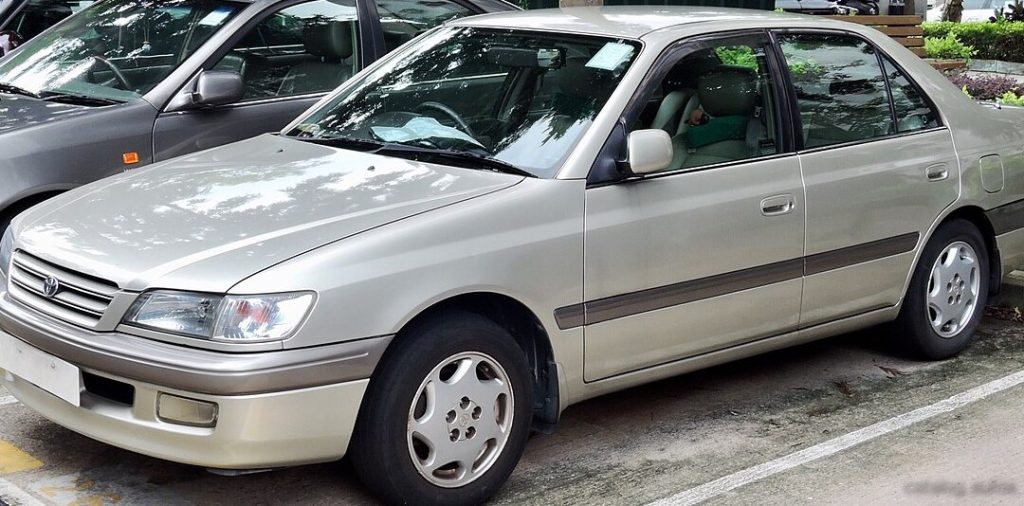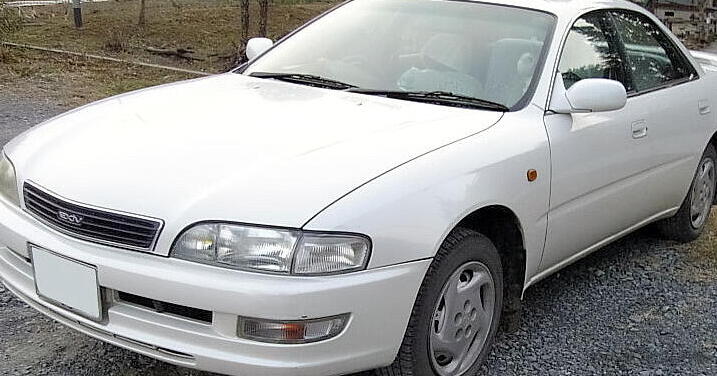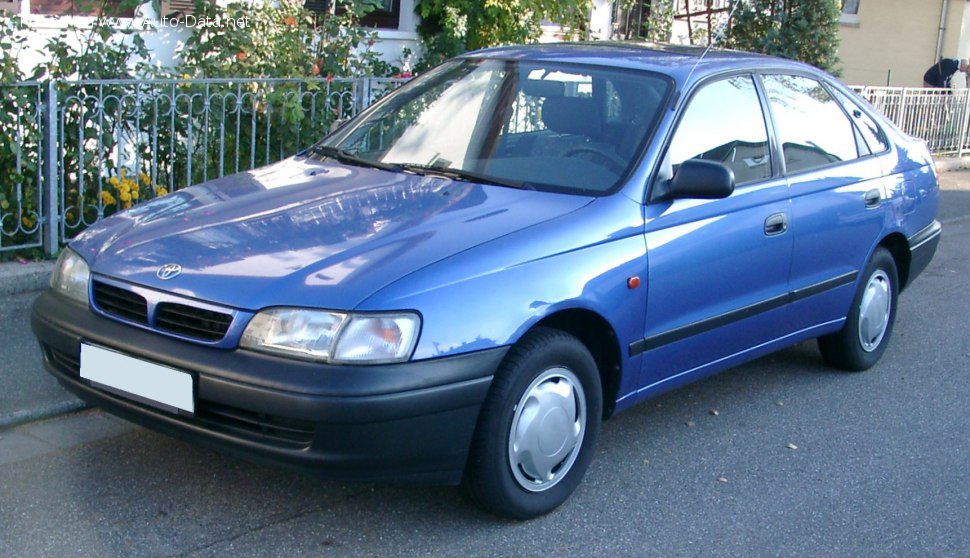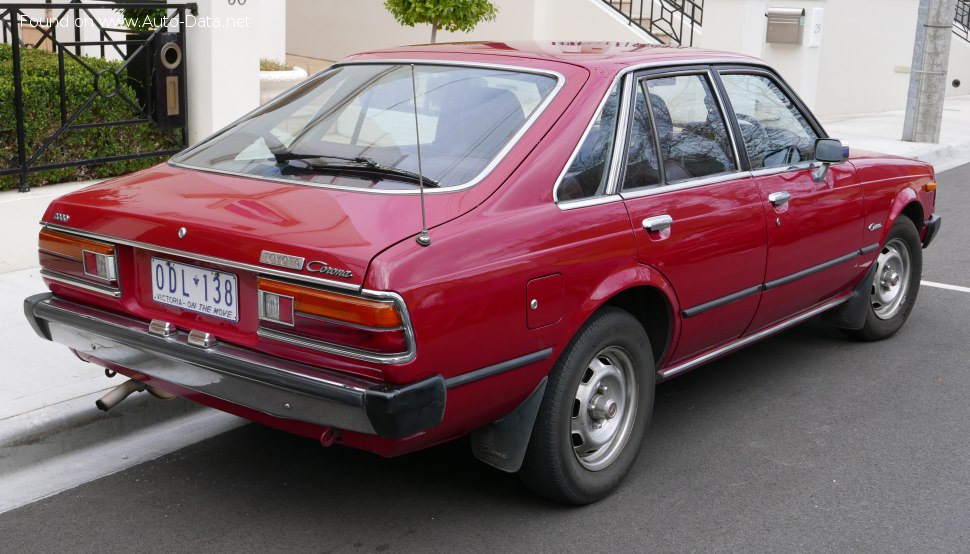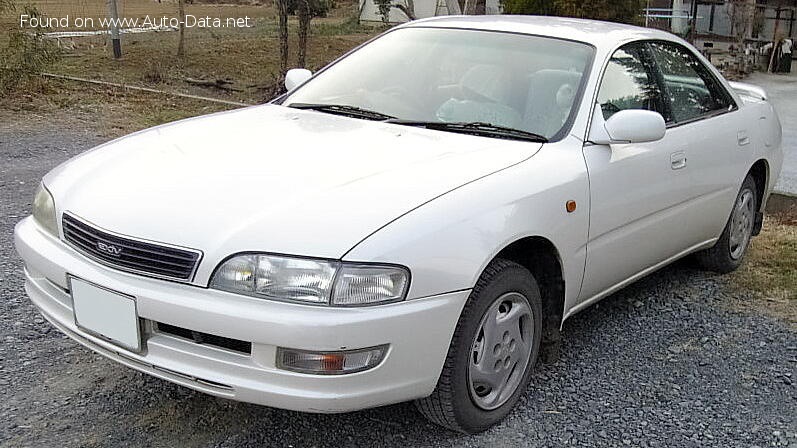
The Toyota Corona EXiV 2.0i (140 Hp) represents a distinctive chapter in Toyota’s history, emerging from Japan’s “bubble economy” period (late 1980s to early 1990s). Launched in 1989 as a sportier, more stylish derivative of the venerable Toyota Corona, the EXiV (an acronym for “Extra Impressive”) was exclusively designed for the Japanese domestic market (JDM). It carved out a niche for buyers seeking the practicality of a sedan combined with the sleek aesthetics of a coupe, thanks to its signature pillarless hardtop design. This first-generation Corona EXiV, produced from 1989 to 1993, specifically the 2.0i variant with 140 horsepower, embodied Toyota’s commitment to offering a diverse range of vehicles tailored to specific consumer desires, often blurring traditional segment lines.
While the standard Toyota Corona was a global workhorse, known for its reliability and utilitarian appeal, the EXiV aimed for a more sophisticated and youthful demographic within Japan. It shared its platform with other popular JDM models like the Carina ED and the sportier Celica, benefiting from Toyota’s advanced engineering of the era. This article delves into the technical prowess, design philosophy, and market impact of this unique Japanese sedan, providing an international automotive expert’s perspective on its significance.
Powertrain & Engine Architecture
At the heart of the Toyota Corona EXiV 2.0i (140 Hp) was a robust and well-engineered powertrain designed for a balance of spirited performance and everyday usability. This variant featured a 2.0-liter (1998 cm3 or 121.93 cu. in.) inline-four engine, a staple configuration for Toyota during this period. The engine was naturally aspirated, relying on efficient design rather than forced induction to produce its power. It utilized a multi-port manifold injection system, a sophisticated fuel delivery method for its time, ensuring precise fuel metering and improved combustion efficiency.
Key to its performance was the four-valves-per-cylinder design, allowing for better airflow into and out of the combustion chambers, contributing to higher engine speeds and enhanced power delivery. This powerplant generated a respectable 140 horsepower at 6000 rpm, a strong output for a naturally aspirated 2.0-liter engine in 1989. Torque stood at 186 Nm (137.19 lb.-ft.) available at 4400 rpm, providing ample pulling power for urban driving and highway cruising. The engine code for this variant is typically 3S-FE, a member of Toyota’s S-series engine family.
Power was sent to the front wheels via a precise 5-speed manual transmission, offering engaging control for the driver. An optional 4-speed automatic transmission was also available, catering to buyers prioritizing convenience over outright performance. This front-wheel-drive (FWD) architecture, common for sedans in this segment, provided predictable handling and efficient packaging. With a curb weight of approximately 2755.78 lbs. (1250 kg), the Corona EXiV 2.0i achieved a power-to-weight ratio of around 8.9 kg/Hp (112 Hp/tonne), indicating a lively performance characteristic for its class. The engine’s bore and stroke were both 86 mm (3.39 in.), suggesting a square engine design, often favored for its balance of torque and high-rpm power potential. The compression ratio of 9.5:1 further optimized efficiency and power output without demanding excessively high-octane fuel.
Driving Characteristics
The Toyota Corona EXiV 2.0i with the 5-speed manual transmission offered a reasonably engaging driving experience. The 3S-FE engine, while not exceptionally powerful, provided adequate acceleration for everyday driving. The gear ratios were well-matched, allowing the engine to remain in its optimal power band during typical driving scenarios. The automatic transmission, while offering convenience, noticeably dulled the driving experience, resulting in slower acceleration and a less responsive feel. Compared to the Celica, which often featured more powerful engine options and a sport-tuned suspension, the EXiV prioritized comfort and refinement. Against the more utilitarian Corona, the EXiV felt significantly more responsive and enjoyable to drive.
The FWD layout contributed to predictable handling, although it lacked the dynamic capabilities of rear-wheel-drive competitors. Steering was light and precise, making it easy to maneuver in urban environments. The suspension, tuned for comfort, absorbed bumps and imperfections in the road well, providing a smooth ride. However, this comfort came at the expense of ultimate handling precision, with noticeable body roll during cornering.
Equipment & Trim Levels
The Corona EXiV 2.0i was positioned as a mid-range to upper-mid-range trim within the EXiV lineup. Standard features typically included power windows, power locks, air conditioning, and a basic audio system. Higher trim levels added features such as alloy wheels, upgraded upholstery (often velour or a combination of cloth and leather), a more sophisticated audio system, and optional features like a sunroof. The interior design was functional and aesthetically pleasing, reflecting the design trends of the late 1980s and early 1990s.
The pillarless hardtop design was a defining feature, creating a spacious and airy cabin. Interior color schemes were typically conservative, with shades of gray, beige, and blue being common. Optional extras included a CD player, upgraded speakers, and a rear spoiler. The dashboard layout was straightforward and easy to use, with clearly labeled controls and a prominent instrument cluster.
Chassis & Braking
The Toyota Corona EXiV 2.0i utilized a MacPherson strut front suspension and a torsion beam rear suspension. This configuration provided a good balance of ride comfort and handling. The front suspension featured coil springs and a stabilizer bar to reduce body roll. The rear suspension, while simpler, offered adequate damping and control. The braking system consisted of ventilated disc brakes at the front and drum brakes at the rear, a common setup for vehicles in this class during the early 1990s. ABS (Anti-lock Braking System) was available as an option, enhancing braking performance and safety, particularly in slippery conditions.
The car rode on 185/65 R14 tires mounted on 6.0J x 14-inch wheel rims. The front track measured 57.68 inches (1465 mm) and the rear track 56.3 inches (1430 mm), contributing to its stable road manners. Steering was rack-and-pinion, providing precise and responsive control.
Market Reception & Comparison
The Toyota Corona EXiV 2.0i was generally well-received in the Japanese market. Critics praised its stylish design, comfortable interior, and reliable powertrain. However, some reviewers noted that its performance was not as exhilarating as some of its competitors, such as the Nissan Skyline or the Mazda MX-6. Fuel economy was respectable, averaging around 25-30 mpg in mixed driving conditions. Compared to the 1.8L Corona variants, the 2.0i offered a noticeable performance improvement, justifying its higher price point.
In terms of reliability, the 3S-FE engine proved to be exceptionally durable, with many examples exceeding 200,000 miles with proper maintenance. The automatic transmission, while reliable, was sometimes criticized for its sluggishness. Overall, the Corona EXiV 2.0i offered a compelling combination of style, comfort, and reliability, making it a popular choice among Japanese buyers.
Technical Specifications
| Category | Specification |
| General Information | |
| Brand | Toyota |
| Model | Corona EXiV |
| Type (Engine) | 2.0i (140 Hp) |
| Production Start | 1989 |
| Production End | 1993 |
| Engine | 3S-FE Inline-4 |
| Displacement | 1998 cc (121.93 cu in) |
| Horsepower | 140 hp @ 6000 rpm |
| Torque | 186 Nm (137.19 lb-ft) @ 4400 rpm |
| Compression Ratio | 9.5:1 |
| Fuel System | Multi-port Fuel Injection |
| Transmission | 5-speed Manual or 4-speed Automatic |
| Drivetrain | Front-Wheel Drive |
| Brakes (Front) | Ventilated Discs |
| Brakes (Rear) | Drums |
| Suspension (Front) | MacPherson Strut |
| Suspension (Rear) | Torsion Beam |
| Weight | 1250 kg (2755.78 lbs) |
| Wheel Size | 14 inches |
| Tire Size | 185/65 R14 |
Legacy
The Toyota Corona EXiV 2.0i, while largely forgotten outside of Japan, remains a fondly remembered vehicle among JDM enthusiasts. The 3S-FE engine is known for its longevity and relatively simple maintenance requirements. Today, well-maintained examples are becoming increasingly collectible, particularly those with low mileage and original features. The pillarless hardtop design continues to be admired for its unique aesthetic appeal. The EXiV represents a fascinating period in Toyota’s history, showcasing the company’s willingness to experiment with new designs and cater to the specific tastes of the Japanese market. Its robust powertrain and generally reliable construction ensure that many examples continue to provide enjoyable transportation even decades after their initial production.