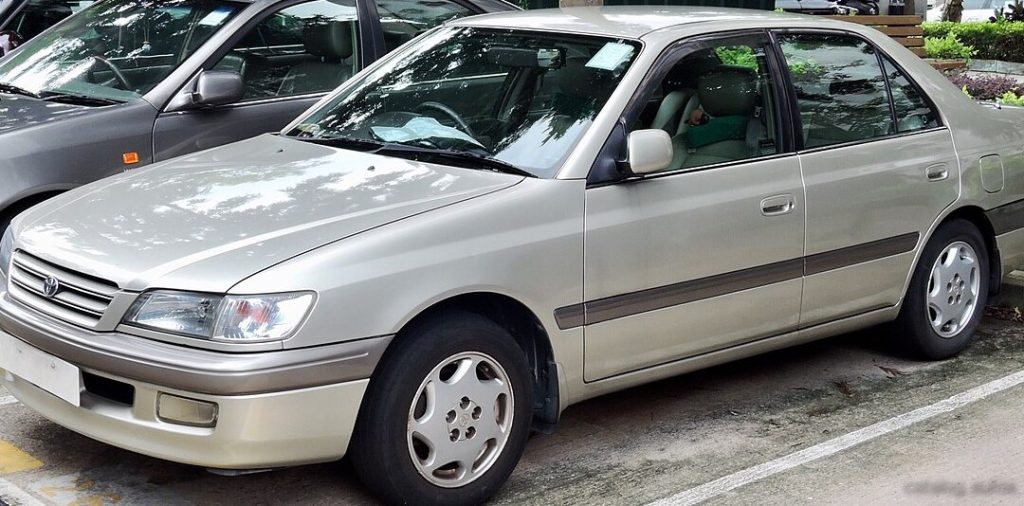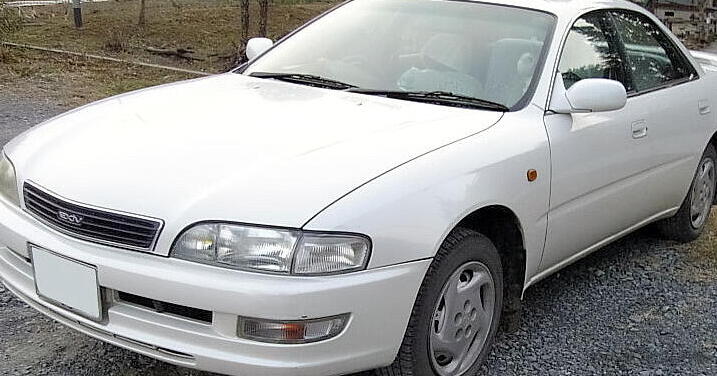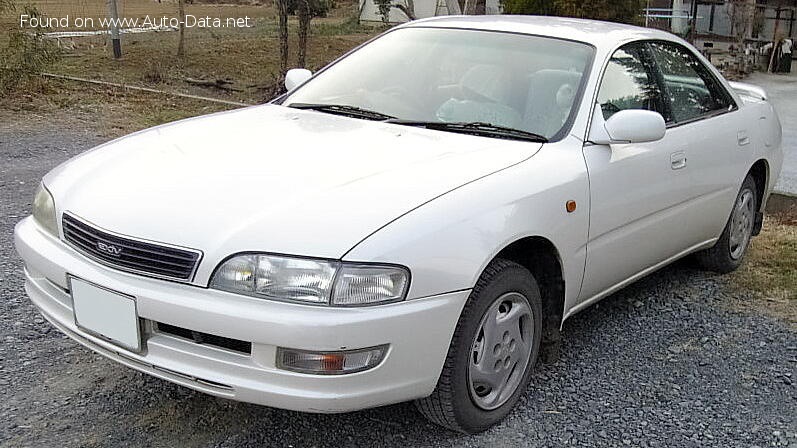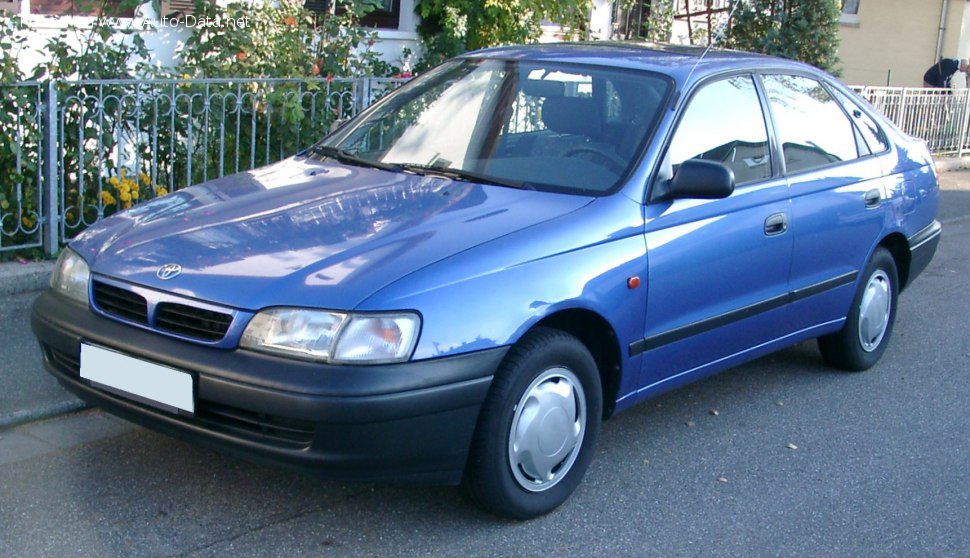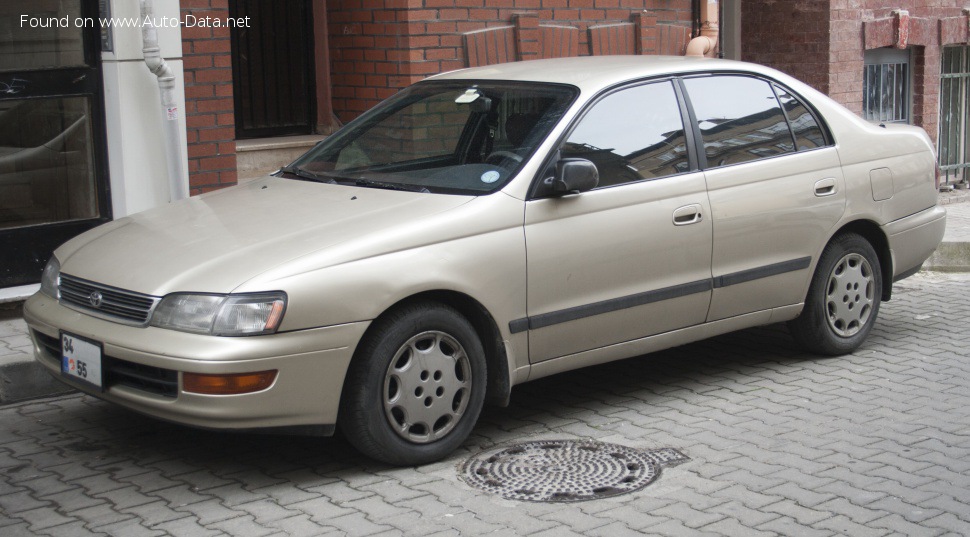
The Toyota Corona, a name synonymous with reliability and practicality for decades, saw its T19 generation introduced in 1992. This iteration continued the Corona’s legacy as a robust and dependable mid-size sedan, primarily targeting family buyers and fleet operators in markets outside North America. The specific variant, the Toyota Corona (T19) 2.0 D (73 Hp) Automatic, represented a particularly strong offering in regions where diesel powertrains were highly valued for their fuel efficiency and durability, such as Europe and parts of Asia. Positioned as a direct competitor to other mainstream sedans of its era, the T19 Corona maintained Toyota’s reputation for quality engineering and a no-nonsense approach to automotive design. While never officially sold in the United States with this diesel powertrain, understanding its role provides insight into Toyota’s global strategy and the diverse needs of international markets.
Toyota Corona (T19): A Global Perspective
The Toyota Corona (T19), produced between 1992 and 1994, was a key model in Toyota’s international lineup. While the Corona name had largely been superseded by the Camry in North America, it remained a significant player in markets like Europe, Australia, and Asia. These regions often favored diesel engines due to fuel costs and taxation, making the 2.0 D variant a particularly popular choice. The T19 represented Toyota’s commitment to providing dependable, affordable transportation tailored to specific regional demands.
Engine & Performance
The Toyota Corona (T19) 2.0 D Automatic was powered by Toyota’s 2C diesel engine, a 1,974 cubic centimeter (2.0 liter) inline four-cylinder unit. This engine was engineered for durability and fuel economy rather than high performance, producing 73 horsepower at 4,600 rpm and 97.36 lb-ft (132 Nm) of torque at 2,800 rpm. The engine featured an overhead camshaft (OHC) valvetrain with two valves per cylinder and utilized a precombustion chamber injection system, offering smoother operation and reduced noise compared to direct injection diesels of the time. A high compression ratio of 23:1 ensured efficient combustion. Power was delivered to the front wheels through a 4-speed automatic transmission, prioritizing ease of use and comfort. The vehicle achieved a top speed of 99.42 mph (160 km/h) with a curb weight of 2,535.32 pounds (1,150 kg), resulting in a weight-to-power ratio of 15.8 kg/Hp. The focus was on providing a reliable and economical driving experience.
Design & Features
The T19 Corona maintained a traditional four-door sedan body style, appealing to families and business users. Its design was conservative and functional, emphasizing interior space, visibility, and accessibility. The vehicle measured 177.95 inches (4,520 mm) in length, 66.73 inches (1,695 mm) in width, and 55.51 inches (1,410 mm) in height, with a wheelbase of 101.57 inches (2,580 mm). The interior featured a straightforward dashboard layout with durable materials designed for longevity. Common features included air conditioning, power windows, and a basic audio system. Safety was also a consideration, with the inclusion of an Anti-lock Braking System (ABS) as a significant upgrade. The suspension system, utilizing wishbones at both the front and rear, aimed for a balance between ride comfort and handling stability. Hydraulic power steering with a rack-and-pinion setup provided light and predictable steering. Ventilated front disc brakes and rear drum brakes provided adequate stopping power, while 14-inch wheels with 175/70 R14 tires completed the package.
Technical Specifications: Toyota Corona (T19) 2.0 D Automatic
| Category | Specification |
| General Information | |
| Brand | Toyota |
| Model | Corona |
| Generation | Corona (T19) |
| Type (Engine) | 2.0 D (73 Hp) Automatic |
| Start of production | 1992 |
| End of production | 1994 |
| Powertrain Architecture | Internal Combustion engine |
| Body type | Sedan |
| Seats | 5 |
| Doors | 4 |
| Performance Specs | |
| Fuel Type | Diesel |
| Maximum speed | 160 km/h (99.42 mph) |
| Weight-to-power ratio | 15.8 kg/Hp (63.5 Hp/tonne) |
| Weight-to-torque ratio | 8.7 kg/Nm (114.8 Nm/tonne) |
| Engine Specs | |
| Power | 73 Hp @ 4600 rpm |
| Power per liter | 37 Hp/l |
| Torque | 132 Nm @ 2800 rpm (97.36 lb.-ft. @ 2800 rpm) |
| Engine layout | Front, Transverse |
| Engine Model/Code | 2C |
| Engine displacement | 1974 cm3 (120.46 cu. in. / 2.0 Liters) |
| Number of cylinders | 4 |
| Engine configuration | Inline |
| Cylinder Bore | 86 mm (3.39 in.) |
| Piston Stroke | 85 mm (3.35 in.) |
| Compression ratio | 23:1 |
| Number of valves per cylinder | 2 |
| Fuel injection system | Precombustion chamber injection |
| Engine aspiration | Naturally aspirated |
| Valvetrain | OHC |
| Engine oil capacity | 4.3 l (4.54 US qt) |
| Coolant | 7 l (7.4 US qt) |
| Space, Volume and Weights | |
| Kerb Weight | 1150 kg (2535.32 lbs.) |
| Max. weight | 1425 kg (3141.59 lbs.) |
| Max load | 275 kg (606.27 lbs.) |
| Fuel tank capacity | 60 l (15.85 US gal) |
| Dimensions | |
| Length | 4520 mm (177.95 in.) |
| Width | 1695 mm (66.73 in.) |
| Height | 1410 mm (55.51 in.) |
| Wheelbase | 2580 mm (101.57 in.) |
| Front track | 1465 mm (57.68 in.) |
| Rear track | 1450 mm (57.09 in.) |
| Drivetrain, Brakes and Suspension Specs | |
| Drivetrain Architecture | Front-wheel drive |
| Drive wheel | Front wheel drive |
| Number of gears and type of gearbox | 4 gears, automatic transmission |
| Front suspension | Wishbone |
| Rear suspension | Wishbone |
| Front brakes | Ventilated discs |
| Rear brakes | Drum |
| Assisting systems | ABS (Anti-lock braking system) |
| Steering type | Steering rack and pinion |
| Power steering | Hydraulic Steering |
| Tires size | 175/70 R14 |
| Wheel rims size | 14 |
Legacy and Market Impact
The Toyota Corona (T19), and its diesel variants, played a significant role in establishing Toyota’s reputation for reliability and value in international markets. While the Corona was eventually replaced by other models in many regions, it solidified Toyota’s position as a manufacturer of dependable, affordable transportation. The 2.0 D variant specifically appealed to consumers prioritizing fuel economy and longevity, competing with vehicles like the Opel Vectra, Ford Mondeo, Volkswagen Passat, Nissan Primera, and Honda Accord. The Corona’s strength lay in its low running costs and exceptional durability, often outperforming competitors in long-term ownership. The T19 Corona represents a period when Toyota focused on building cars that were simply reliable and economical, leaving a lasting legacy as a practical choice for drivers worldwide.