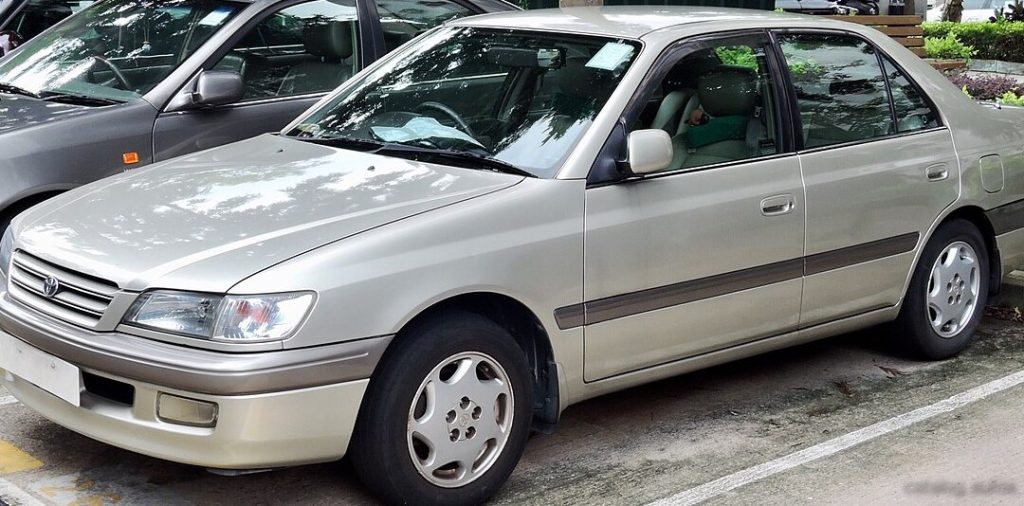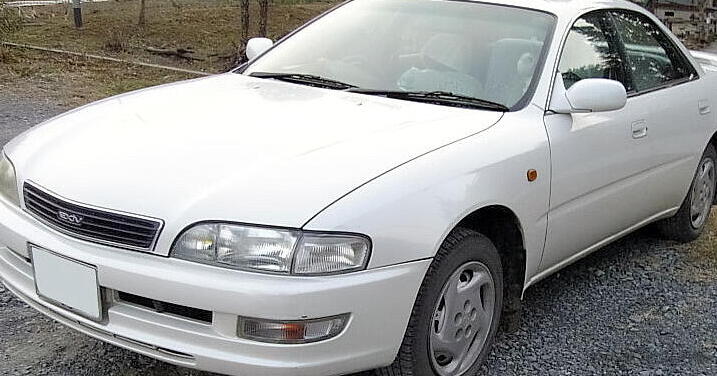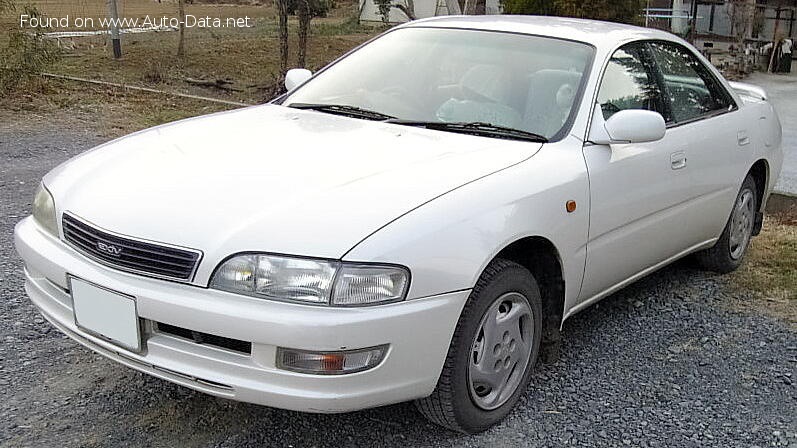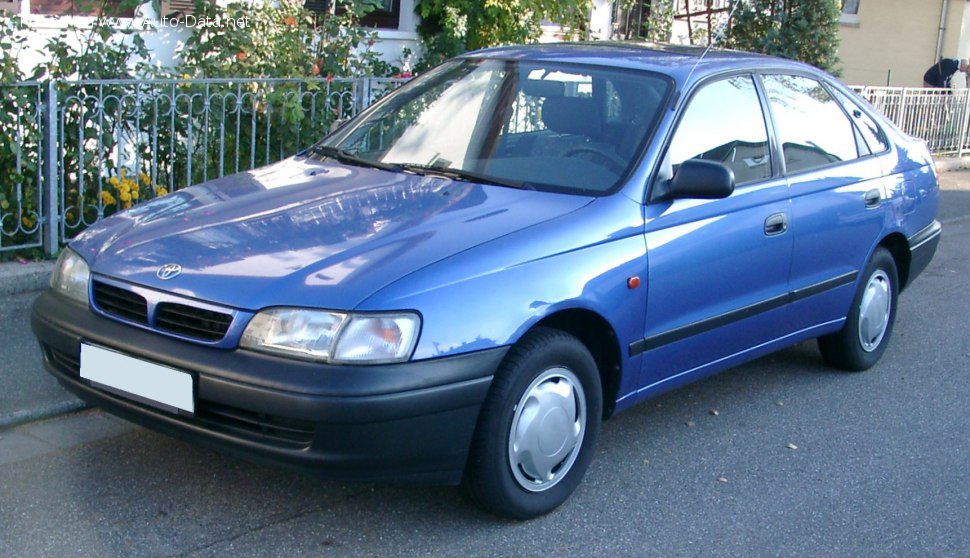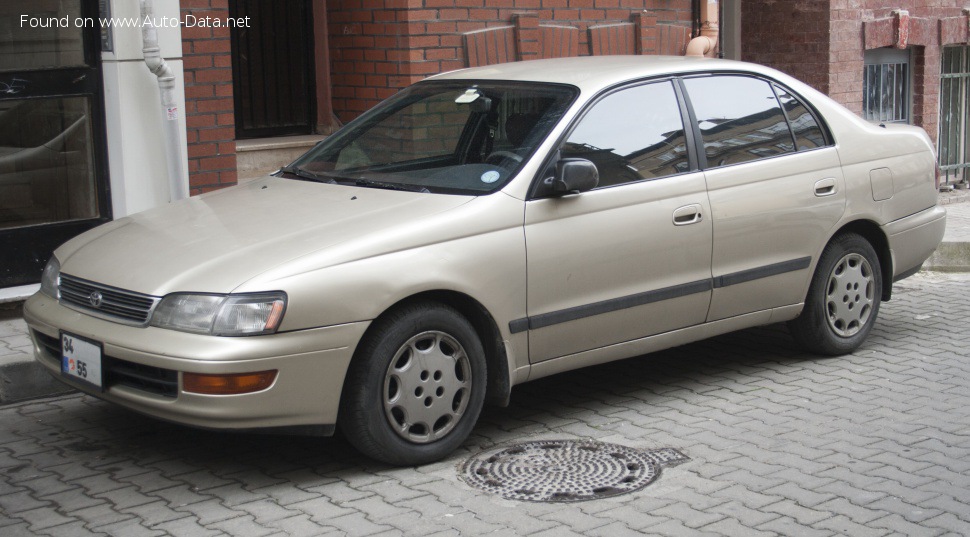
The Toyota Corona, a nameplate synonymous with reliability and practical motoring for decades, underwent a significant evolution with the introduction of its tenth generation, the T19 series, in 1992. While the Corona line had a long and storied history, particularly in Asian markets and as an early import to the United States, by the mid-1990s, its role had largely shifted. The T19 generation, produced from 1992 to 1998, saw the Corona primarily serving as a compact to mid-size sedan in Japan, Southeast Asia, and some European markets, where it was often badge-engineered as the Carina E. The specific variant under examination, the Toyota Corona (T19) 2.0 i 16V TR-G (180 Hp), represents a particularly intriguing, performance-oriented iteration produced between 1994 and 1996. This model showcased Toyota’s engineering prowess, blending the Corona’s traditional virtues of dependability with a surprisingly potent powertrain, aimed at enthusiasts seeking a discreet yet capable daily driver.
Engine & Performance: The Heart of the Toyota Corona (T19) TR-G
At the core of the Toyota Corona (T19) 2.0 i 16V TR-G’s appeal was its high-performance engine, the revered 3S-GE. This 2.0-liter (1998 cm3 or 121.93 cubic inches) inline-four engine was a masterpiece of naturally aspirated engineering, featuring a DOHC (Double Overhead Camshaft) 16-valve valvetrain. Unlike the more common, economy-focused engines found in many Coronas, the 3S-GE was designed for spirited driving, delivering an impressive 180 horsepower at a high 7000 rpm. This power output, equivalent to approximately 90.1 horsepower per liter, was remarkable for a non-turbocharged engine of its era, showcasing Toyota’s commitment to performance even in its more mainstream models.
The engine produced a peak torque of 191 Nm (140.87 lb-ft) at 4800 rpm, providing a broad powerband that made the car responsive both in city driving and during more enthusiastic maneuvers. With a compression ratio of 10.3:1 and a multi-port manifold injection system, the 3S-GE was a finely tuned machine, known for its smooth operation and eagerness to rev. Power was sent to the front wheels via a precise 5-speed manual transmission, offering an engaging driving experience. This powertrain architecture resulted in a commendable weight-to-power ratio of 6.6 kg per horsepower (151.3 Hp per tonne), allowing the 1190 kg (2623.5 lbs) sedan to feel agile and quick for its class. Furthermore, the combined fuel economy was rated at an efficient 6.7 l/100 km, translating to approximately 35.1 US mpg, an impressive figure for a performance-oriented vehicle.
Design & Features: Blending Utility with Subtle Sportiness
The Toyota Corona (T19) TR-G maintained the practical and understated design language characteristic of the Corona line. As a 4-door sedan with seating for five, it offered ample space and comfort for daily use. Its dimensions were well-proportioned for its segment: 4500 mm (177.17 inches) in length, 1740 mm (68.5 inches) in width, and 1325 mm (52.17 inches) in height, with a wheelbase of 2535 mm (99.8 inches). These dimensions contributed to a stable ride and a surprisingly spacious interior, making it a versatile vehicle for families and individuals alike.
While the exterior design was generally conservative, typical of mid-90s Japanese sedans, the TR-G variant likely featured subtle cues to denote its performance pedigree, such as specific badging, alloy wheels, and possibly minor aerodynamic enhancements. The interior would have been characterized by Toyota’s renowned build quality, durable materials, and ergonomic layout. Key features for the era included power steering (rack and pinion type) and an Anti-lock Braking System (ABS), enhancing both driver control and safety. The suspension system utilized a wishbone setup at both the front and rear, which contributed to a balanced ride, offering a good compromise between comfort and handling responsiveness. Braking performance was handled by ventilated discs at the front and solid discs at the rear, providing confident stopping power for the car’s capabilities. The car rode on 205/55 R15 V-rated tires, offering a good grip and contributing to the vehicle’s sporty demeanor.
A JDM Offering
It’s important to note that the Toyota Corona (T19) TR-G was primarily a Japan Domestic Market (JDM) vehicle. While some examples were privately imported to other regions, it was never officially sold in North America. In Japan, it competed with other performance-oriented sedans, offering a compelling alternative to more mainstream options. The TR-G’s appeal lay in its blend of practicality, reliability, and a surprisingly potent engine, making it a popular choice for enthusiasts who wanted a capable and discreet daily driver.
Technical Specifications for the Toyota Corona (T19) 2.0 i 16V TR-G (180 Hp)
| Category | Feature |
| General Information | Brand |
| Toyota | |
| Model | |
| Corona | |
| Generation | |
| Corona (T19) | |
| Type (Engine) | |
| 2.0 i 16V TR-G (180 Hp) | |
| Production Years | |
| 1994 – 1996 | |
| Body Type | |
| Sedan, 4 Doors, 5 Seats | |
| Engine Specifications | Engine Model/Code |
| 3S-GE | |
| Engine Displacement | |
| 1998 cm3 (121.93 cu. in.) | |
| Number of Cylinders | |
| 4, Inline | |
| Valvetrain | |
| DOHC, 4 valves per cylinder | |
| Engine Aspiration | |
| Naturally Aspirated | |
| Fuel Injection System | |
| Multi-port manifold injection | |
| Cylinder Bore | |
| 86 mm (3.39 in.) | |
| Piston Stroke | |
| 86 mm (3.39 in.) | |
| Performance & Powertrain | Power |
| 180 Hp @ 7000 rpm | |
| Torque | |
| 191 Nm (140.87 lb.-ft.) @ 4800 rpm | |
| Compression Ratio | |
| 10.3:1 | |
| Transmission | |
| 5-speed manual | |
| Drive Wheel | |
| Front Wheel Drive (FWD) | |
| Fuel & Economy | Fuel Type |
| Petrol (Gasoline) | |
| Fuel Consumption (Combined) | |
| 6.7 l/100 km (35.1 US mpg) | |
| Fuel Tank Capacity | |
| 60 l (15.85 US gal) | |
| Weights & Ratios | Kerb Weight |
| 1190 kg (2623.5 lbs.) | |
| Max. Weight | |
| 1465 kg (3229.77 lbs.) | |
| Max Load | |
| 275 kg (606.27 lbs.) | |
| Weight-to-Power Ratio | |
| 6.6 kg/Hp (151.3 Hp/tonne) | |
| Weight-to-Torque Ratio | |
| 6.2 kg/Nm (160.5 Nm/tonne) | |
| Dimensions | Length |
| 4500 mm (177.17 in.) | |
| Width | |
| 1740 mm (68.5 in.) | |
| Height | |
| 1325 mm (52.17 in.) | |
| Wheelbase | |
| 2535 mm (99.8 in.) | |
| Front Track | |
| 1510 mm (59.45 in.) | |
| Rear Track | |
| 1490 mm (58.66 in.) | |
| Chassis & Brakes | Front Suspension |
| Wishbone | |
| Rear Suspension | |
| Wishbone | |
| Front Brakes | |
| Ventilated discs | |
| Rear Brakes | |
| Disc | |
| Assisting Systems | |
| ABS (Anti-lock braking system) | |
| Tires Size | |
| 205/55 R15 V | |
| Capacities | Engine Oil Capacity |
| 4.5 l (4.76 US qt) | |
| Engine Oil Specification | |
| Not specified in data | |
| Coolant Capacity | |
| 6.9 l (7.29 US qt) |
Legacy & Market Impact of the Toyota Corona (T19)
The Toyota Corona (T19) 2.0 i 16V TR-G (180 Hp) occupies a unique niche in automotive history. While the Corona name itself often conjures images of dependable, no-frills transportation, the TR-G variant stands out as a genuine “sleeper” – a car that offered significant performance without drawing undue attention. In its primary markets, particularly Japan, it competed against other capable mid-size sedans such as the Honda Accord (specifically the SiR variants with their potent VTEC engines), the Nissan Primera GT, and the Mazda Capella (known as the 626 in many export markets). The Corona TR-G carved out its reputation through Toyota’s hallmark reliability combined with the thrilling performance of the 3S-GE engine, which was also famously used in other Toyota performance cars like the Celica and MR2.
This generation of the Corona, and especially its performance variants, represented a transitional period for Toyota’s global sedan strategy. As the Camry grew in size and luxury to become Toyota’s dominant mid-size offering in North America and many other markets, the Corona’s role became more specialized. The T19 was one of the last generations to carry the Corona badge widely before it was largely superseded by the Carina E in Europe and the Camry in other regions. Its legacy lies in demonstrating that even a traditionally conservative brand like Toyota was capable of injecting serious performance into its mainstream platforms, offering a compelling blend of practicality, understated style, and genuine driving excitement. For enthusiasts today, the Toyota Corona (T19) TR-G remains a sought-after classic, celebrated for its robust engineering, the legendary 3S-GE engine, and its enduring appeal as a discreet performance machine from the golden age of Japanese automotive innovation.