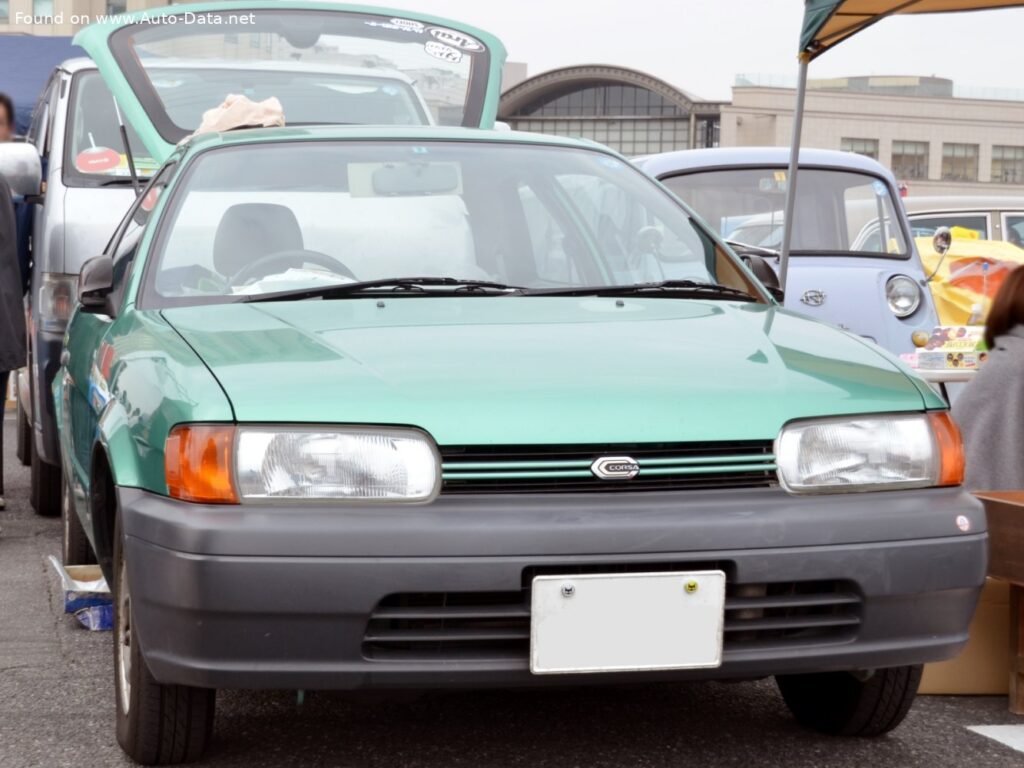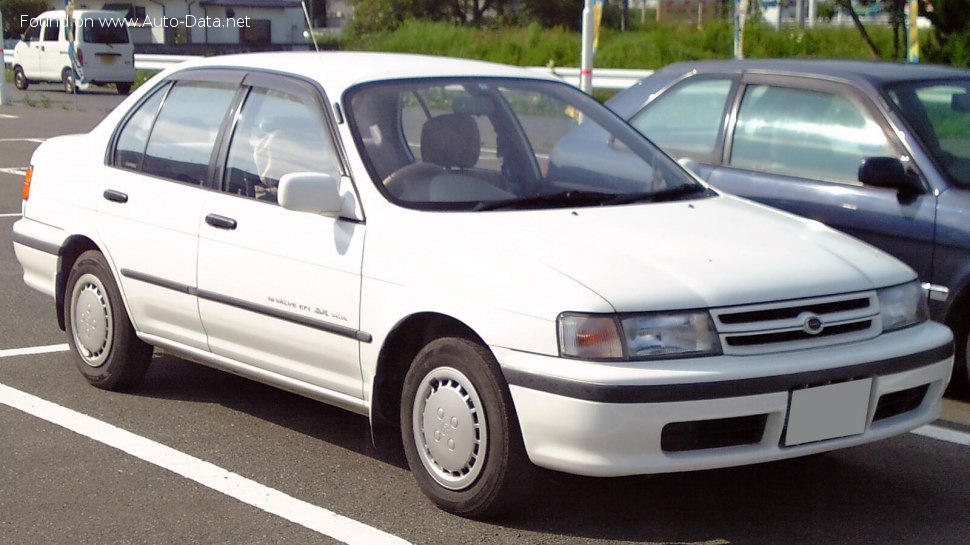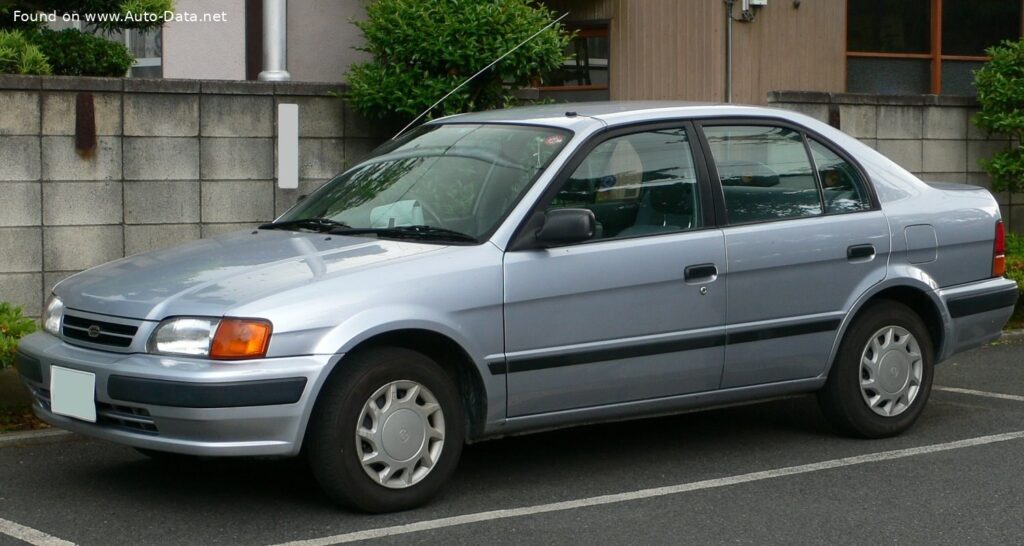
The Toyota Corsa Hatchback (L40), produced from 1990 to 1994, was a significant subcompact vehicle in Toyota’s global lineup. While not officially sold in the United States under the Corsa nameplate, its platform twin was known as the Toyota Tercel. The Corsa was particularly popular in Japan and throughout Asia, offering an accessible and practical hatchback option. Built on Toyota’s reputation for durability, efficiency, and a straightforward approach to transportation, the 1.5 i variant, with its 105 horsepower, provided a compelling combination of performance and fuel economy for its class.
The Toyota Corsa Hatchback (L40): A Global Perspective
The L40 generation represented an evolutionary step for the Corsa, featuring a more rounded and aerodynamic design compared to earlier models. It maintained a front-engine, front-wheel-drive layout, maximizing interior space and enhancing driving dynamics within its compact dimensions. The 1.5-liter engine in this variant showcased Toyota’s engineering capabilities, delivering respectable power from a small displacement, consistent with the brand’s focus on efficient and reliable powertrains during the early 1990s.
Engine & Performance Dynamics
The heart of the 1990-1994 Toyota Corsa Hatchback (L40) 1.5 i was the 5E-FE engine. This naturally aspirated, 1.5-liter (1497 cm³ or 91.35 cubic inches) inline-four engine exemplified Toyota’s dedication to robust and efficient powerplants. Equipped with a Double Overhead Camshaft (DOHC) valvetrain and four valves per cylinder, the 5E-FE was engineered for smooth operation and responsive power delivery.
The engine generated 105 horsepower at 6400 rpm, a substantial output for a subcompact vehicle of its time. This resulted in a power-per-liter ratio of 70.1 horsepower per liter, demonstrating efficient engine design. Torque figures were also impressive for the segment, peaking at 93.67 lb-ft (127 Nm) at 3200 rpm. This broad torque band provided good drivability in urban settings and contributed to a more agile feel than expected from its engine size. The engine featured a compression ratio of 9.4:1 and utilized a multi-port fuel injection system for precise fuel delivery.
The Corsa’s performance was further enhanced by its light curb weight of just 1851.88 pounds (840 kg). This resulted in an excellent weight-to-power ratio of approximately 17.6 pounds per horsepower, or 125 horsepower per tonne. This favorable ratio contributed to a lively driving experience, particularly in city traffic or on winding roads. The engine oil capacity was 3.38 US quarts (3.2 liters), and its front, transverse layout, coupled with front-wheel drive, was a standard, efficient configuration for compact cars, maximizing interior space and simplifying the drivetrain.
Fuel economy was a key selling point for the Toyota Corsa. The 1.5 i variant achieved an urban fuel consumption rate of 31.4 US mpg (7.5 l/100 km) and an outstanding extra-urban (highway) figure of 56 US mpg (4.2 l/100 km). These figures underscored the Corsa’s economical nature, making it an attractive option for budget-conscious buyers seeking reliable and inexpensive transportation.
Design & Features
The L40 generation Toyota Corsa Hatchback showcased a contemporary design for the early 1990s, moving away from the boxier aesthetics of previous generations towards a more rounded, aerodynamic profile. The 3-door hatchback body style offered a blend of sporty appeal and practical utility. Its compact dimensions – a length of 154.72 inches (3930 mm), a width of 64.76 inches (1645 mm), and a height of 53.74 inches (1365 mm) – made it highly maneuverable in urban environments, aided by a minimum turning circle of just 29.53 feet (9 meters).
Despite its compact exterior, the Corsa L40 comfortably accommodated five occupants, thanks to efficient packaging and a wheelbase of 93.7 inches (2380 mm). The interior, while not luxurious, prioritized ergonomics and durability, hallmarks of Toyota design. Controls were intuitively placed, and materials were chosen for their hard-wearing qualities, reflecting the car’s role as a dependable daily driver. Storage solutions were practical, and the hatchback configuration provided versatile cargo space.
The Corsa L40’s chassis and safety features were typical for its class. It featured disc brakes at the front and drum brakes at the rear, a common and effective combination for a lightweight subcompact. The availability of an Anti-lock Braking System (ABS) was a significant safety enhancement for a vehicle in this segment during the early 1990s, offering improved control during emergency braking. The car rode on 155/80 SR13 tires, providing a balance of comfort and grip for everyday driving conditions.
Technical Specifications
| Category | Specification |
| General Information | |
| Brand | Toyota |
| Model | Corsa |
| Generation | Corsa Hatchback (L40) |
| Type (Engine) | 1.5 i (105 Hp) |
| Start of Production | 1990 year |
| End of Production | 1994 year |
| Powertrain Architecture | Internal Combustion engine |
| Body Type | Hatchback |
| Seats | 5 |
| Doors | 3 |
| Performance Specs | |
| Fuel Consumption (Urban) | 31.4 US mpg (7.5 l/100 km) |
| Fuel Consumption (Extra Urban) | 56 US mpg (4.2 l/100 km) |
| Fuel Type | Petrol (Gasoline) |
| Weight-to-Power Ratio | 8 kg/Hp (17.64 lbs/Hp), 125 Hp/tonne |
| Weight-to-Torque Ratio | 6.6 kg/Nm (14.55 lbs/Nm), 151.2 Nm/tonne |
| Engine Specs | |
| Power | 105 Hp @ 6400 rpm |
| Power per Liter | 70.1 Hp/l |
| Torque | 93.67 lb-ft (127 Nm) @ 3200 rpm |
| Engine Layout | Front, Transverse |
| Engine Model/Code | 5E-FE |
| Engine Displacement | 1.5 liters (1497 cm³ / 91.35 cu. in.) |
| Number of Cylinders | 4 |
| Engine Configuration | Inline |
| Cylinder Bore | 2.91 in. (74 mm) |
| Piston Stroke | 3.43 in. (87 mm) |
| Compression Ratio | 9.4:1 |
| Number of Valves per Cylinder | 4 |
| Fuel Injection System | Multi-port manifold injection |
| Engine Aspiration | Naturally aspirated engine |
| Valvetrain | DOHC |
| Engine Oil Capacity | 3.38 US qt (3.2 l) |
| Space, Volume and Weights | |
| Kerb Weight | 1851.88 lbs (840 kg) |
| Dimensions | |
| Length | 154.72 in. (3930 mm) |
| Width | 64.76 in. (1645 mm) |
| Height | 53.74 in. (1365 mm) |
| Wheelbase | 93.7 in. (2380 mm) |
| Front Track | 55.12 in. (1400 mm) |
| Rear (Back) Track | 56.3 in. (1430 mm) |
| Minimum Turning Circle (Turning Diameter) | 29.53 ft (9 m) |
| Drivetrain, Brakes and Suspension Specs | |
| Drivetrain Architecture | The Internal combustion engine (ICE) drives the front wheels of the vehicle. |
| Drive Wheel | Front wheel drive |
| Front Brakes | Disc |
| Rear Brakes | Drum |
| Assisting Systems | ABS (Anti-lock braking system) |
| Tires Size | 155/80 SR13 |
The Toyota Corsa Hatchback (L40) 1.5 i, though not sold in the US market under this name, was a crucial part of Toyota’s global strategy, particularly in Japan and Asia. It solidified Toyota’s reputation for building small, dependable, and economical cars. Its appeal lay in its reliability, low running costs, and practical design. The L40 generation, with its refined aesthetics and improved engineering, represented the evolution of compact car design in the early 1990s. The robust 5E-FE engine became a cornerstone of Toyota’s small-engine family, known for its longevity and tuneability. Ultimately, the Corsa is remembered as a prime example of Toyota’s engineering philosophy: building practical, efficient, and exceptionally reliable vehicles.