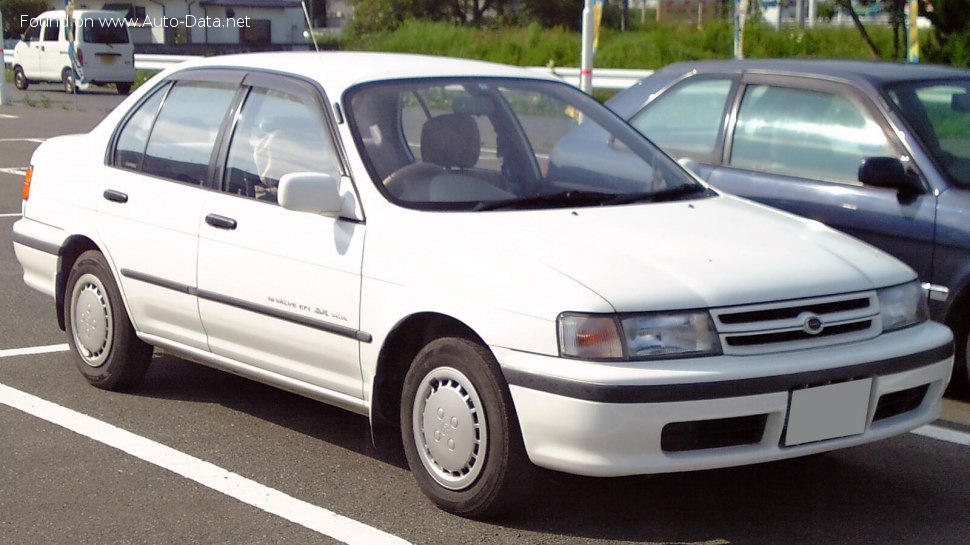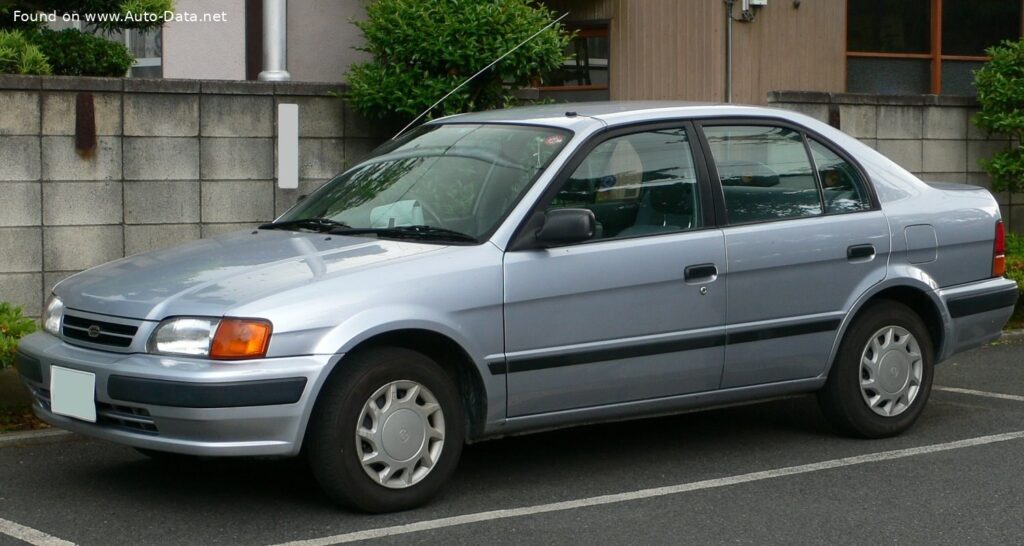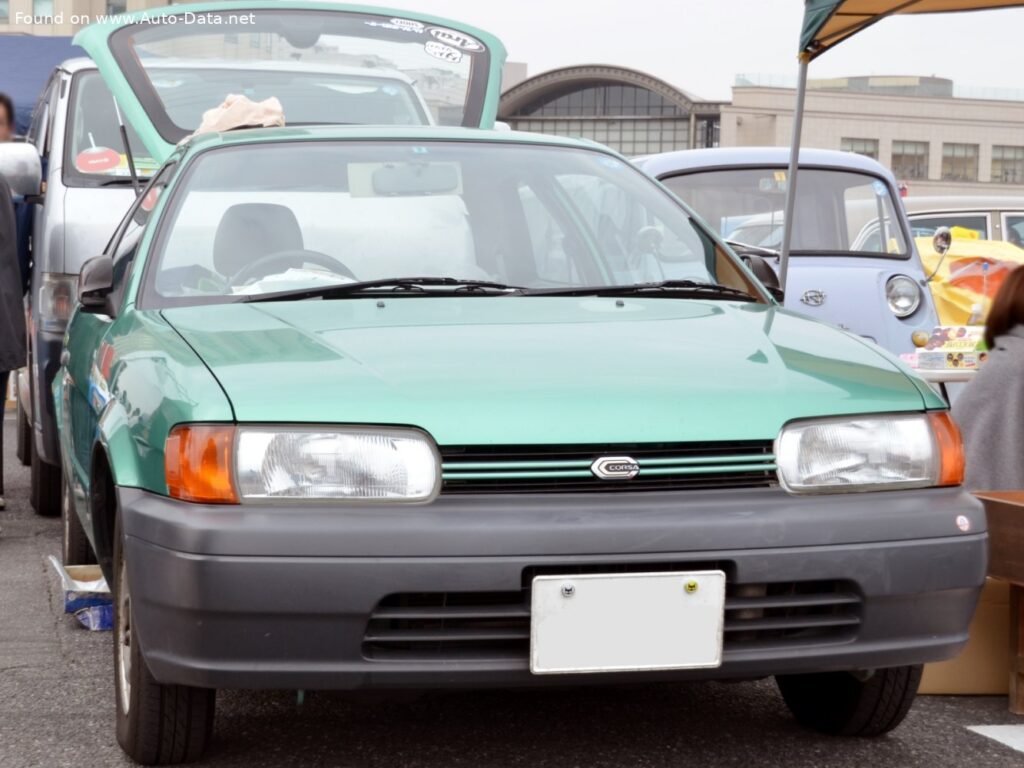
The Toyota Corsa Hatchback (L50) represents the fifth generation of Toyota’s long-running compact car nameplate, primarily known in its home market of Japan and select international regions. Produced from 1994 to 1998, the L50 generation continued the Corsa’s tradition of offering reliable, economical, and practical transportation in a compact package. While never officially sold in the United States, the Corsa shared its platform with the globally recognized Toyota Tercel, offering a glimpse into Toyota’s engineering philosophy for entry-level vehicles during the mid-1990s. This particular variant, the 1.5 d (67 Hp), highlights Toyota’s commitment to fuel efficiency and durability through its diesel powertrain, catering to markets where diesel engines were a popular choice for their robust performance and lower running costs.
Positioned as a straightforward and dependable vehicle, the Toyota Corsa Hatchback (L50) was a staple in its segment, competing against other Japanese and European compacts focused on urban usability and affordability. Its design was utilitarian yet modern for its time, embodying the practical needs of everyday commuters and small families. The L50 generation built upon the Corsa’s reputation for longevity and low maintenance, characteristics that have become synonymous with the Toyota brand worldwide.
Engine & Performance: The Economical Heart of the Toyota Corsa Hatchback (L50)
Underpinning the Toyota Corsa Hatchback (L50) 1.5 d (67 Hp) was a robust and efficient diesel powertrain, a testament to Toyota’s engineering prowess in developing reliable engines for various global markets. The specific engine in question is the 1N-T, a 1.5-liter (1453 cubic centimeters or 88.67 cubic inches) inline four-cylinder unit. This engine featured a Double Overhead Camshaft (DOHC) valvetrain, a relatively advanced setup for a compact diesel of its era, contributing to better engine breathing and efficiency. Crucially, it was equipped with a turbocharger, enhancing its power output and torque delivery, making it more responsive than naturally aspirated diesel alternatives.
The 1N-T engine delivered a modest but highly practical 67 horsepower at 4500 revolutions per minute (rpm). More significantly for a diesel, it produced a healthy 137 Newton-meters (101.05 lb.-ft.) of torque at a low 2600 rpm. This low-end torque was vital for urban driving, providing ample pulling power from a standstill and making the vehicle feel capable despite its relatively low horsepower figure. The engine’s layout was front, transverse, driving the front wheels, a common and efficient architecture for compact cars that maximizes interior space and simplifies the drivetrain.
Fuel efficiency was a standout feature of this diesel variant. The Corsa 1.5 d boasted impressive figures, with an urban consumption rate of 7.5 liters per 100 kilometers (approximately 31.4 US miles per gallon) and an even more remarkable extra-urban consumption of 4.2 liters per 100 kilometers (around 56 US miles per gallon). These numbers underscored its appeal as an economical daily driver, particularly in markets where fuel prices were a significant concern. The high compression ratio of 22:1 is typical for a diesel engine, facilitating efficient combustion, while the inclusion of a Diesel Commonrail fuel injection system (advanced for a 1994 model) further optimized fuel delivery and engine performance.
Design & Features: Practicality in a Compact Form
The Toyota Corsa Hatchback (L50) adopted a pragmatic and functional design language characteristic of compact cars in the mid-1990s. As a 3-door hatchback, it prioritized ease of maneuverability in congested urban environments and efficient use of space. Despite its compact exterior dimensions, the Corsa was designed to comfortably accommodate five occupants, making it a viable option for small families or groups.
Measuring 3915 millimeters (154.13 inches) in length, 1660 millimeters (65.35 inches) in width, and 1370 millimeters (53.94 inches) in height, the L50 Corsa was adept at navigating tight streets and parking spaces. Its wheelbase of 2380 millimeters (93.7 inches) contributed to a stable ride for its class, while a minimum turning circle of 9 meters (29.53 feet) ensured excellent agility. The design featured clean lines and a relatively aerodynamic profile for the era, contributing to its fuel efficiency.
In terms of features, the Corsa 1.5 d (67 Hp) focused on essential functionality. Standard safety equipment for the time included Anti-lock Braking System (ABS), providing enhanced control during emergency braking situations. The braking system itself comprised disc brakes at the front for effective stopping power and drum brakes at the rear, a common and cost-effective setup for compact vehicles. The car rode on 155/80 SR13 tires, a sensible size for balancing ride comfort, grip, and economy. The interior, while basic by today’s standards, was designed for durability and ease of use, with straightforward controls and practical storage solutions.
The Toyota Corsa Hatchback (L50) and its Market Position
The L50 Corsa was a product of its time, reflecting the automotive priorities of the mid-1990s. It wasn’t about luxury or performance; it was about providing reliable, affordable transportation. This focus resonated particularly well in Europe and Asia, where smaller cars and diesel engines were more prevalent than in the United States. The Corsa’s simplicity and durability made it a popular choice for first-time car buyers and those seeking a dependable second vehicle.
Technical Specifications
| Category | Specification |
| General Information | |
| Brand | Toyota |
| Model | Corsa |
| Generation | Corsa Hatchback (L50) |
| Type (Engine) | 1.5 d (67 Hp) |
| Start of production | 1994 year |
| End of production | 1998 year |
| Powertrain Architecture | Internal Combustion engine |
| Body type | Hatchback |
| Seats | 5 |
| Doors | 3 |
| Performance Specs | |
| Fuel consumption (economy) – urban | 7.5 l/100 km (31.4 US mpg) |
| Fuel consumption (economy) – extra urban | 4.2 l/100 km (56 US mpg) |
| Fuel Type | Diesel |
| Weight-to-power ratio | 12.5 kg/Hp (79.8 Hp/tonne) |
| Weight-to-torque ratio | 6.1 kg/Nm (163.1 Nm/tonne) |
| Engine Specs | |
| Power | 67 Hp @ 4500 rpm |
| Power per liter | 46.1 Hp/l |
| Torque | 137 Nm (101.05 lb.-ft.) @ 2600 rpm |
| Engine layout | Front, Transverse |
| Engine Model/Code | 1N-T |
| Engine displacement | 1453 cm3 (88.67 cu. in.) |
| Number of cylinders | 4 |
| Engine configuration | Inline |
| Cylinder Bore | 74 mm (2.91 in.) |
| Piston Stroke | 84.5 mm (3.33 in.) |
| Compression ratio | 22:1 |
| Fuel injection system | Diesel Commonrail |
| Engine aspiration | Turbocharger |
| Valvetrain | DOHC |
| Engine oil capacity | 3.8 l (4.02 US qt) |
| Coolant | 5.3 l (5.6 US qt) |
| Space, Volume and Weights | |
| Kerb Weight | 840 kg (1851.88 lbs.) |
| Dimensions | |
| Length | 3915 mm (154.13 in.) |
| Width | 1660 mm (65.35 in.) |
| Height | 1370 mm (53.94 in.) |
| Wheelbase | 2380 mm (93.7 in.) |
| Front track | 1400 mm (55.12 in.) |
| Rear (Back) track | 1430 mm (56.3 in.) |
| Minimum turning circle (turning diameter) | 9 m (29.53 ft.) |
| Drivetrain, Brakes and Suspension Specs | |
| Drivetrain Architecture | The Internal combustion engine (ICE) drives the front wheels of the vehicle. |
| Drive wheel | Front wheel drive |
| Front brakes | Disc |
| Rear brakes | Drum |
| Assisting systems | ABS (Anti-lock braking system) |
| Tires size | 155/80 SR13 |
Legacy & Market Impact of the Toyota Corsa Hatchback (L50)
The Toyota Corsa Hatchback (L50), particularly in its diesel configuration, carved out a significant niche in its primary markets, most notably Japan and various Asian and European countries where compact, fuel-efficient vehicles were highly valued. As part of Toyota’s broader compact car lineup, which included the closely related Tercel and Starlet, the Corsa contributed to Toyota’s reputation for producing reliable, no-nonsense transportation that consistently delivered on its promise of durability and economy.
In Japan, the Corsa was a popular choice for urban commuters and young families seeking an affordable and practical vehicle. Its compact dimensions made it ideal for navigating crowded city streets and tight parking spaces, while its robust diesel engine offered impressive fuel economy, a significant advantage for budget-conscious buyers. The 1N-T diesel engine, with its turbocharger and relatively sophisticated DOHC design for a small diesel of its time, further solidified Toyota’s image as an engineering leader, even in the entry-level segments.
Competitors to the Toyota Corsa Hatchback (L50) in its segment included a variety of domestic and international models. In Japan, it contended with rivals such as the Nissan Pulsar, Honda Civic, and Mazda Familia (323). In markets where it was exported, it faced off against European mainstays like the Volkswagen Polo, Ford Fiesta, and Opel Corsa (Vauxhall Corsa in the UK), all of which were vying for dominance in the compact hatchback arena. The Toyota Corsa distinguished itself with its legendary reliability, low running costs, and a reputation for holding its value well.
While the Corsa nameplate might not be familiar to American consumers due to its limited availability in the U.S. market, its underlying engineering principles and commitment to quality were very much in line with the Toyota models that found immense success stateside, such as the Corolla and Tercel. The L50 generation, with its emphasis on efficiency, practicality, and longevity, played an important role in reinforcing Toyota’s global image as a manufacturer of dependable and intelligent automotive solutions. Today, surviving examples of the Toyota Corsa Hatchback (L50) are often cherished for their robust build quality and economical operation, serving as a reminder of an era when compact cars were designed first and foremost for utility and endurance.