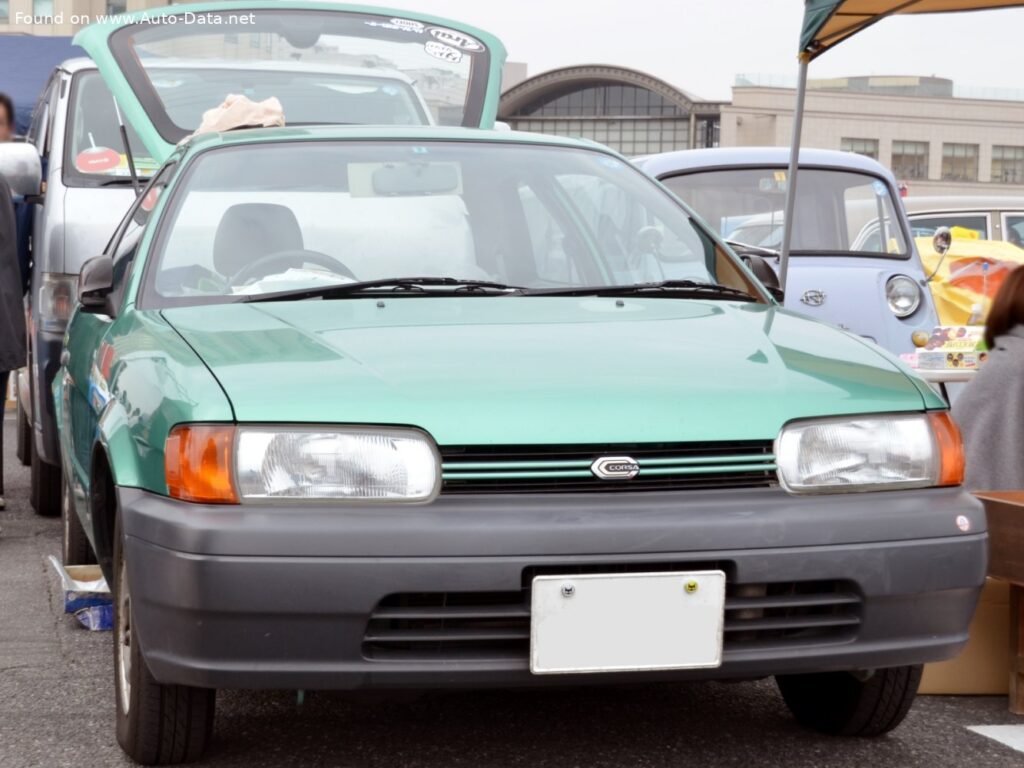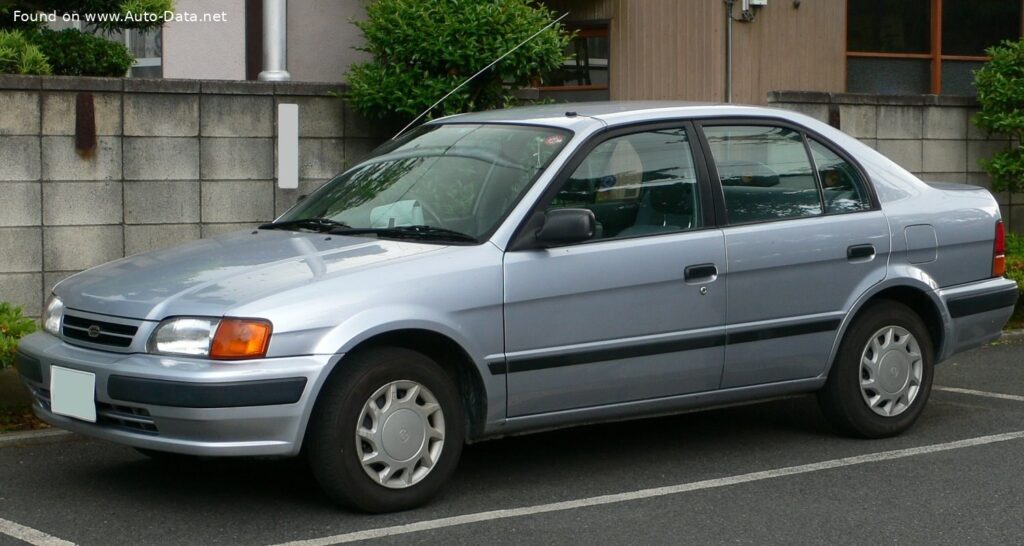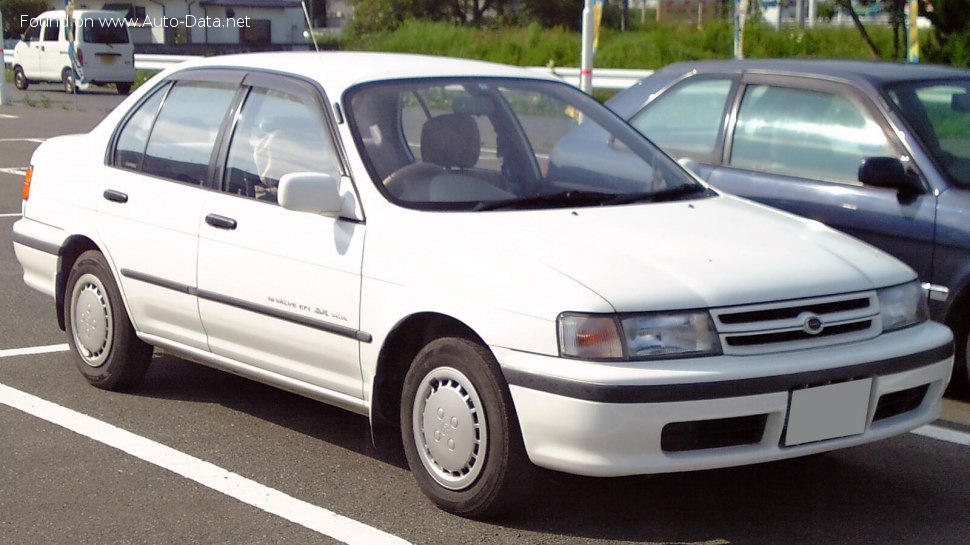
The Toyota Corsa (L40) represents the fourth generation of a nameplate that played a significant role in Toyota’s extensive domestic market offerings during the early 1990s. Produced from 1990 to 1994, the L40 generation of the Toyota Corsa (L40) was marketed primarily in Japan, often sold through specific Toyota dealership networks alongside its twin, the Toyota Tercel, which was more widely known in export markets, including North America. This particular variant, the 1.5 i (105 Hp) sedan, exemplifies the practical, reliable, and efficient ethos that defined Toyota’s subcompact and entry-level offerings of the era. Positioned as an accessible and economical four-door sedan, the L40 Corsa provided a sensible choice for Japanese consumers seeking dependable daily transportation with a focus on fuel efficiency and urban maneuverability.
Evolution and Market Positioning of the Toyota Corsa (L40)
The Toyota Corsa lineage began in 1978, sharing its platform with the Tercel. While the Tercel was Toyota’s global subcompact workhorse, the Corsa was primarily a Japan-market specific model, allowing Toyota to cater to different sales channels and consumer preferences within its home country. The L40 generation marked a significant update, introducing more rounded styling cues that were characteristic of early 1990s automotive design, moving away from the boxier aesthetics of its predecessors. This generation continued the Corsa’s tradition as a front-wheel-drive, compact sedan, embodying Toyota’s commitment to producing cars that were both durable and affordable to own and operate.
In its segment, the Toyota Corsa (L40) competed in a crowded field of Japanese subcompacts, including the Nissan Sunny (known as Sentra in the US), Honda Civic, and Mazda Familia (323). Its appeal lay in its strong reputation for reliability, low maintenance costs, and practical interior packaging for its compact exterior dimensions. The 1.5 i (105 Hp) model, in particular, offered a good balance of performance and economy, making it a popular choice for families and individuals navigating Japan’s often congested urban and suburban landscapes.
Engine & Performance Characteristics of the Toyota Corsa (L40) 1.5 i (105 Hp)
At the heart of the Toyota Corsa (L40) 1.5 i (105 Hp) sedan was Toyota’s venerable 5E-FE engine. This powerplant was a prime example of Toyota’s engineering philosophy from the era: robust, efficient, and technologically advanced for its class. The 5E-FE is a 1.5-liter (1497 cm3 or 91.35 cubic inches) inline four-cylinder engine, configured transversely at the front of the vehicle. It featured a Double Overhead Camshaft (DOHC) valvetrain with four valves per cylinder, a setup that was becoming increasingly common in the early 1990s for its ability to optimize airflow and combustion efficiency.
The engine was naturally aspirated and utilized a multi-port manifold injection system for precise fuel delivery, contributing to both its performance and fuel economy. It produced a respectable 105 horsepower at a relatively high 6400 rpm, indicating a free-revving nature. Torque output stood at 93.67 lb-ft (127 Nm) delivered at a more accessible 3200 rpm, providing adequate low-end and mid-range pulling power for city driving and highway cruising. This combination of power and torque, especially when considering the vehicle’s light curb weight of 1851.88 lbs (840 kg), resulted in a lively driving experience for its class.
Fuel efficiency was a key selling point for the Corsa. The 1.5 i model achieved an estimated urban fuel consumption of 31.4 US mpg (7.5 l/100 km), which was competitive for the time. On the extra-urban cycle, it could reach an impressive 56 US mpg (4.2 l/100 km), showcasing its efficiency during longer journeys. The engine’s compression ratio of 9.4:1 was typical for gasoline engines of its period, balancing performance with the ability to run on standard octane fuel. With an engine oil capacity of 3.38 US quarts (3.2 liters), maintenance was straightforward and cost-effective, further enhancing its appeal as an economical vehicle.
Design & Features
The design of the Toyota Corsa (L40) reflected the prevailing trends of the early 1990s, characterized by smoother lines and a less angular aesthetic compared to 1980s cars. As a four-door sedan with seating for five, it offered practical family transportation. Its compact dimensions made it well-suited for urban environments: a length of 162.01 inches (4115 mm), a width of 65.35 inches (1660 mm), and a height of 53.94 inches (1370 mm). The modest 93.7-inch (2380 mm) wheelbase contributed to its agile handling and a tight turning circle of 29.53 feet (9 meters), a significant advantage in crowded city streets.
The exterior styling was understated but functional, prioritizing aerodynamics and passenger comfort over flamboyant design. The interior was designed for practicality and durability, with sensible ergonomics and controls that were easy to operate. For its era, the Corsa offered a respectable level of features. While specific trim levels would dictate the exact equipment, common amenities would have included air conditioning, a basic audio system, and power windows in higher trims. Safety features, though not as extensive as in modern vehicles, did include an Anti-lock Braking System (ABS) as an assisting system, which was a notable advancement for a subcompact vehicle in the early 1990s, contributing to improved braking control.
The drivetrain architecture featured front-wheel drive, a configuration widely adopted for its efficiency, packaging advantages, and predictable handling characteristics. The braking system comprised disc brakes at the front for effective stopping power and drum brakes at the rear, a common and cost-effective setup for vehicles in this class. The standard tire size of 155/80 SR13 indicates a focus on comfort and fuel efficiency, with a relatively tall sidewall for absorbing road imperfections.
Technical Specifications
| Category | Specification |
| Brand | Toyota |
| Model | Corsa |
| Generation | Corsa (L40) |
| Type (Engine) | 1.5 i (105 Hp) |
| Production Start | 1990 year |
| Production End | 1994 year |
| Powertrain Architecture | Internal Combustion engine |
| Body type | Sedan |
| Seats | 5 |
| Doors | 4 |
| Fuel Type | Petrol (Gasoline) |
| Fuel Consumption (Urban) | 7.5 l/100 km (31.4 US mpg) |
| Fuel Consumption (Extra Urban) | 4.2 l/100 km (56 US mpg) |
| Power | 105 Hp @ 6400 rpm |
| Power per liter | 70.1 Hp/l |
| Torque | 127 Nm (93.67 lb-ft) @ 3200 rpm |
| Engine Layout | Front, Transverse |
| Engine Model/Code | 5E-FE |
| Engine Displacement | 1497 cm3 (91.35 cu. in.) |
| Number of Cylinders | 4 |
| Engine Configuration | Inline |
| Cylinder Bore | 74 mm (2.91 in.) |
| Piston Stroke | 87 mm (3.43 in.) |
| Compression Ratio | 9.4:1 |
| Valves per Cylinder | 4 |
| Fuel Injection System | Multi-port manifold injection |
| Engine Aspiration | Naturally aspirated |
| Valvetrain | DOHC |
| Engine Oil Capacity | 3.2 l (3.38 US qt) |
| Kerb Weight | 840 kg (1851.88 lbs) |
| Weight-to-power ratio | 8 kg/Hp (125 Hp/tonne) |
| Weight-to-torque ratio | 6.6 kg/Nm (151.2 Nm/tonne) |
| Fuel Tank Capacity | 45 l (11.89 US gal) |
| Length | 4115 mm (162.01 in.) |
| Width | 1660 mm (65.35 in.) |
| Height | 1370 mm (53.94 in.) |
| Wheelbase | 2380 mm (93.7 in.) |
| Front Track | 1400 mm (55.12 in.) |
| Rear Track | 1430 mm (56.3 in.) |
| Minimum Turning Circle | 9 m (29.53 ft.) |
| Drive Wheel | Front wheel drive |
| Front Brakes | Disc |
| Rear Brakes | Drum |
| Assisting Systems | ABS (Anti-lock braking system) |
| Tire Size | 155/80 SR13 |
Legacy and Market Impact
The Toyota Corsa (L40), particularly the 1.5 i (105 Hp) sedan, solidified Toyota’s reputation for building highly reliable, economical, and practical vehicles. While not a performance icon or a luxury statement, its impact was profound in its primary market of Japan. It served as a testament to Toyota’s strategy of offering a diverse range of models tailored to specific consumer needs and sales channels, even for what might appear to be overlapping segments to an outsider. The Corsa, alongside its Tercel twin, contributed significantly to Toyota’s dominance in the subcompact segment, providing dependable mobility to millions.
In the fiercely competitive Japanese market, the Corsa held its own against formidable rivals by consistently delivering on its promise of quality and value. Its shared platform with the Tercel and Starlet allowed for economies of scale, ensuring that parts and servicing were readily available and affordable. The Corsa’s understated design and robust mechanicals meant that many examples continued to serve faithfully for decades, a hallmark of Toyota’s engineering philosophy. Its legacy is not one of groundbreaking innovation, but rather of consistent excellence in the fundamentals of automotive design: reliability, efficiency, and practicality.
Although the Corsa nameplate was eventually discontinued in 1999, effectively being succeeded by models like the Vitz (Yaris in other markets) and Corolla, the principles it embodied lived on. The L40 generation remains a classic example of early 1990s Japanese automotive engineering, showcasing how a well-engineered, no-frills vehicle can achieve significant market success and leave a lasting impression through sheer dependability. For automotive enthusiasts and historians, the Toyota Corsa (L40) serves as a valuable case study in the strategic importance of market-specific models and the enduring appeal of Toyota’s core values.