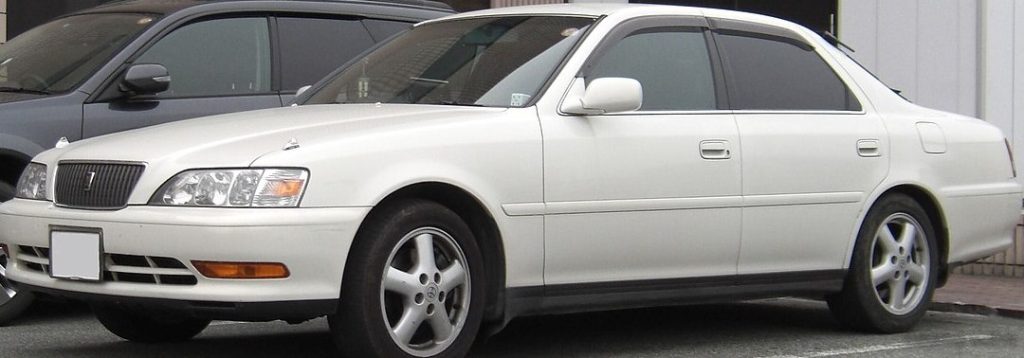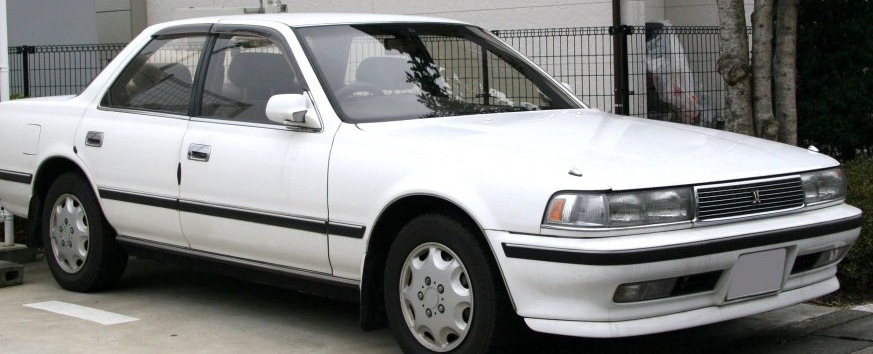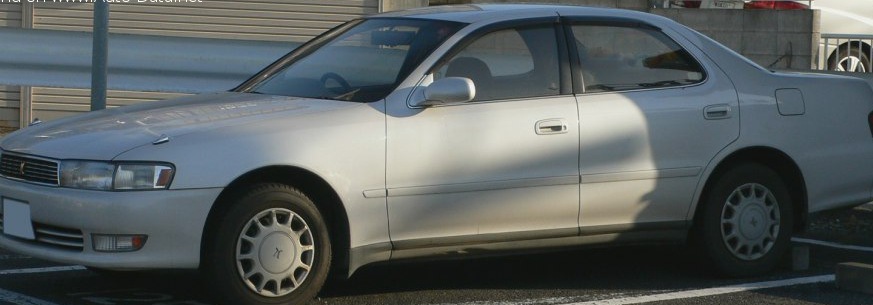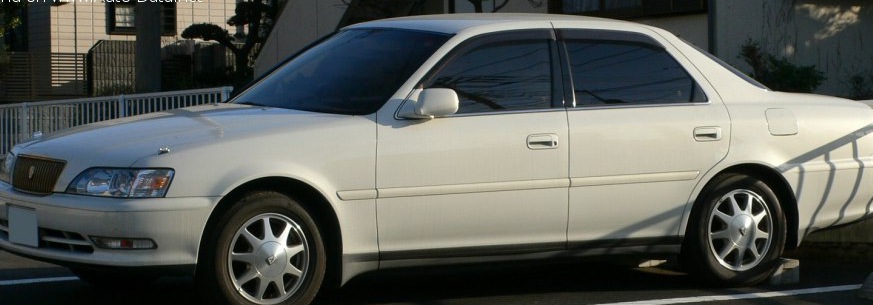
The Toyota Cresta GX100 2.4 D, produced between 1996 and 2001, represents a unique offering within the tenth generation of the Cresta lineage. Positioned as a mid-range variant, this diesel-powered sedan catered to buyers seeking fuel efficiency and durability, particularly within the Japanese domestic market (JDM). The GX100 series, built on the Toyota J platform, aimed to blend comfort, practicality, and a degree of sporting character, though the 2.4 D prioritized economy over outright performance. This model occupied a space between the more powerful gasoline variants and the base-level trims, appealing to a segment of buyers who valued reliability and lower running costs.
Technical Specifications
| Brand | Toyota |
| Model | Cresta |
| Generation | Cresta (GX100) |
| Type (Engine) | 2.4 d (97 Hp) |
| Start of production | 1996 |
| End of production | 2001 |
| Powertrain Architecture | Internal Combustion engine |
| Body type | Sedan |
| Seats | 5 |
| Doors | 4 |
| Fuel consumption (urban) | 11.6 l/100 km (20.3 US mpg, 24.4 UK mpg) |
| Fuel consumption (extra urban) | 6.2 l/100 km (37.9 US mpg, 45.6 UK mpg) |
| Fuel Type | Diesel |
| Power | 97 Hp @ 3800 rpm |
| Power per litre | 39.7 Hp/l |
| Torque | 221 Nm @ 2400 rpm (163 lb.-ft. @ 2400 rpm) |
| Engine layout | Front, Longitudinal |
| Engine Model/Code | 2L-TE |
| Engine displacement | 2446 cm3 (149.26 cu. in.) |
| Number of cylinders | 4 |
| Engine configuration | Inline |
| Number of valves per cylinder | 4 |
| Fuel injection system | Precombustion chamber injection |
| Engine aspiration | Turbocharger |
| Valvetrain | OHC |
| Engine oil capacity | 5.3 l (5.6 US qt | 4.66 UK qt) |
| Coolant capacity | 9 l (9.51 US qt | 7.92 UK qt) |
| Max. weight | 1330 kg (2932.15 lbs.) |
| Fuel tank capacity | 70 l (18.49 US gal | 15.4 UK gal) |
| Length | 4750 mm (187.01 in.) |
| Width | 1755 mm (69.09 in.) |
| Height | 1420 mm (55.91 in.) |
| Wheelbase | 2730 mm (107.48 in.) |
| Front track | 1485 mm (58.46 in.) |
| Rear track | 1495 mm (58.86 in.) |
| Minimum turning circle | 10.2 m (33.46 ft.) |
| Drivetrain | Rear wheel drive |
| Front brakes | Ventilated discs |
| Rear brakes | Disc |
| Tires size | 195/65 R15 |
| Wheel rims size | 6JJ x 15 |
Powertrain & Engine Architecture
The heart of the Cresta 2.4 D is the 2L-TE engine, a 2.4-liter inline-four cylinder diesel. This engine utilizes a precombustion chamber injection system, a common feature in older diesel designs, which improves combustion efficiency and reduces noise compared to direct injection systems. A turbocharger is employed to boost power output, bringing it to 97 horsepower at 3800 rpm and 221 Nm (163 lb-ft) of torque at 2400 rpm. The engine features an overhead camshaft (OHC) valvetrain, operating four valves per cylinder. The 2L-TE is known for its robust construction and relative simplicity, contributing to its longevity. The engine is longitudinally mounted in the front of the vehicle, driving the rear wheels. The transmission paired with this engine is a four-speed automatic, chosen to provide ease of use and comfort for the target demographic.
Driving Characteristics
The 2.4 D automatic combination in the GX100 Cresta delivers a driving experience focused on relaxed cruising and fuel economy. Acceleration is modest, with the 97 horsepower engine providing adequate power for everyday driving but lacking the punch of the gasoline-powered variants. The four-speed automatic transmission is tuned for smooth shifts and prioritizes fuel efficiency over sporty responsiveness. Gear ratios are relatively tall, contributing to lower engine speeds at highway speeds. Compared to the manual transmission options or the higher-output 2.5-liter gasoline engines, the 2.4 D automatic feels noticeably slower, particularly during overtaking maneuvers. However, the turbocharger does provide a useful boost in torque at lower engine speeds, making it reasonably drivable in urban environments.
Equipment & Trim Levels
The 2.4 D trim of the Cresta GX100 typically included features such as power windows, power steering, and air conditioning as standard equipment. Interior upholstery was generally cloth, with a focus on durability rather than luxury. The dashboard layout was functional and straightforward, with clearly labeled controls. Optional extras available for this trim could include an upgraded audio system, alloy wheels, and a sunroof. The overall interior ambiance was comfortable and practical, reflecting the car’s positioning as a sensible and reliable family sedan. The trim level sat between the more basic models and the higher-spec versions that offered leather interiors and more advanced features.
Chassis & Braking
The Cresta GX100 2.4 D utilizes a traditional rear-wheel-drive chassis with independent front suspension and a solid rear axle. The front suspension employs MacPherson struts, while the rear utilizes a multi-link setup. Braking duties are handled by ventilated discs at the front and solid discs at the rear. An Anti-lock Braking System (ABS) was included as standard, enhancing safety. The suspension tuning is geared towards comfort, providing a relatively smooth ride over most road surfaces. Stabilizer bars are present at both the front and rear, helping to reduce body roll during cornering. The tires are typically 195/65 R15, providing a good balance of grip and ride comfort.
Market Reception & Comparison
The Toyota Cresta 2.4 D was generally well-received in the Japanese market as a practical and economical option. Critics praised its fuel efficiency and reliability, but noted its lack of outright performance compared to the gasoline-powered models. Compared to the 2.5-liter gasoline variants, the 2.4 D offered significantly better fuel economy, but at the cost of acceleration and overall driving excitement. The 2.4 D also offered a more affordable entry point into the Cresta lineup, making it accessible to a wider range of buyers. Its reliability was a key selling point, aligning with Toyota’s reputation for building durable vehicles.
Legacy
The 2L-TE engine, found in the Cresta 2.4 D, is known for its longevity and relatively simple maintenance requirements. While not a high-performance engine, it has proven to be remarkably durable, with many examples still running reliably today. In the used car market, the GX100 2.4 D is often sought after by buyers looking for a dependable and affordable rear-wheel-drive sedan. Parts availability can be a concern, particularly outside of Japan, but the engine’s robust construction means that major repairs are relatively infrequent. The Cresta 2.4 D represents a practical and understated classic, offering a glimpse into a bygone era of Japanese automotive engineering.