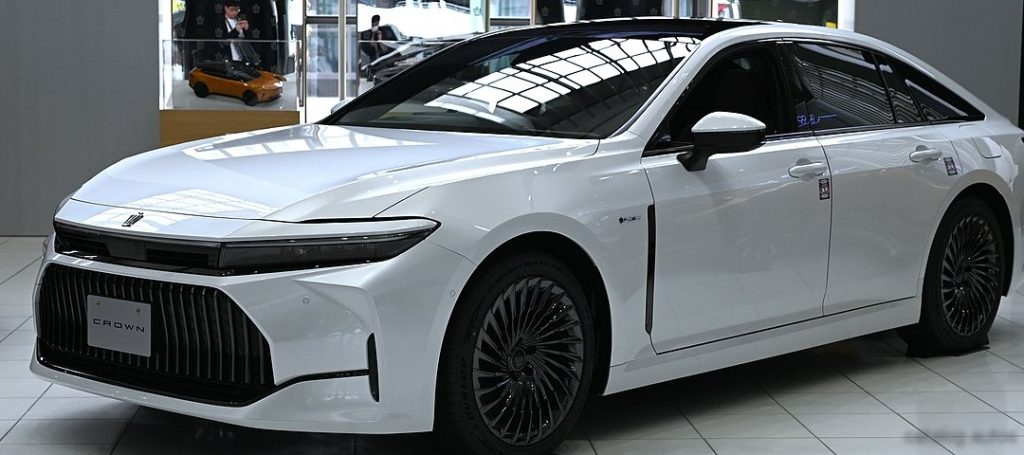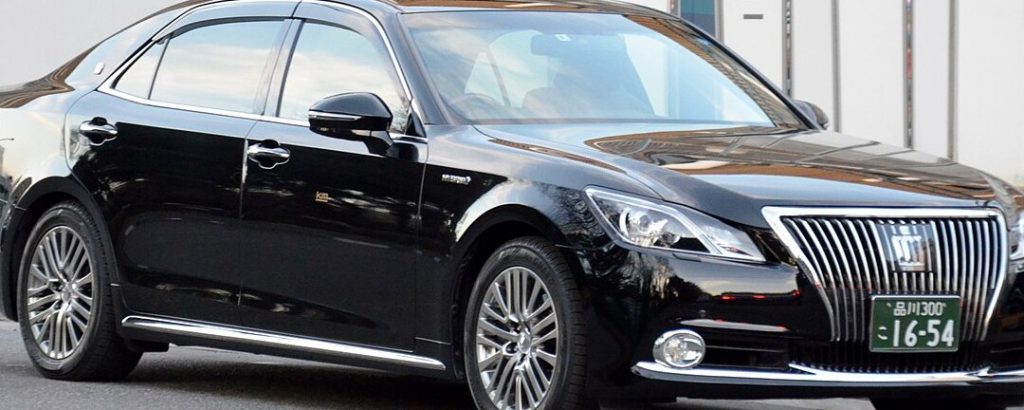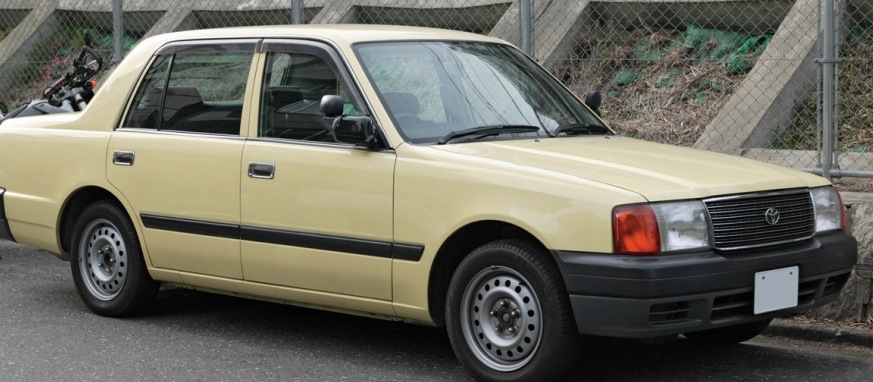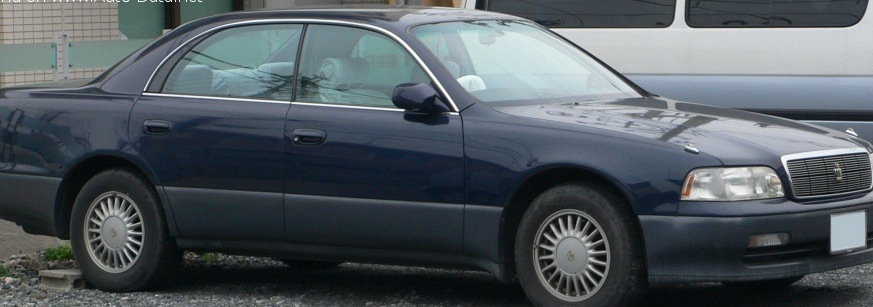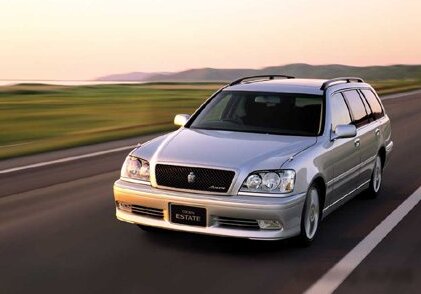
The Toyota Crown Estate (S170 series, specifically the facelifted version introduced in 2001) represented a significant offering in the Japanese domestic market (JDM) as a large, comfortable, and technologically advanced station wagon. Produced from 2001 to 2007, this generation of the Crown Estate aimed to blend luxury with practicality, catering to families and individuals requiring substantial cargo space without sacrificing refinement. The 3.0 24V (220 Hp) Automatic variant occupied a premium position within the lineup, offering a balance of performance and convenience. It was positioned above the lower-displacement engine options and served as a stepping stone to the more powerful, and often more expensive, trims.
Technical Specifications
| Brand | Toyota |
| Model | Crown |
| Generation | Crown Estate (S170, facelift 2001) |
| Type (Engine) | 3.0 24V (220 Hp) Automatic |
| Start of production | 2001 |
| End of production | 2007 |
| Powertrain Architecture | Internal Combustion engine |
| Body type | Station wagon (estate) |
| Seats | 5 |
| Doors | 5 |
| Fuel Type | Petrol (Gasoline) |
| Weight-to-power ratio | 7.6 kg/Hp, 131.7 Hp/tonne |
| Weight-to-torque ratio | 5.7 kg/Nm, 176 Nm/tonne |
| Power | 220 Hp @ 5600 rpm |
| Power per litre | 73.4 Hp/l |
| Torque | 294 Nm @ 3600 rpm (216.84 lb.-ft. @ 3600 rpm) |
| Engine layout | Front, Longitudinal |
| Engine Model/Code | 2JZ-FSE |
| Engine displacement | 2997 cm3 (182.89 cu. in.) |
| Number of cylinders | 6 |
| Engine configuration | Inline |
| Cylinder Bore | 86 mm (3.39 in.) |
| Piston Stroke | 86 mm (3.39 in.) |
| Compression ratio | 11.3:1 |
| Number of valves per cylinder | 4 |
| Fuel injection system | Direct injection |
| Engine aspiration | Naturally aspirated engine |
| Valvetrain | DOHC |
| Engine oil capacity | 5.4 l (5.71 US qt | 4.75 UK qt) |
| Coolant | 7.5 l (7.93 US qt | 6.6 UK qt) |
| Kerb Weight | 1670 kg (3681.72 lbs.) |
| Max. weight | 1945 kg (4287.99 lbs.) |
| Max load | 275 kg (606.27 lbs.) |
| Trunk (boot) space – minimum | 530 l (18.72 cu. ft.) |
| Fuel tank capacity | 70 l (18.49 US gal | 15.4 UK gal) |
| Length | 4835 mm (190.35 in.) |
| Width | 1765 mm (69.49 in.) |
| Height | 1510 mm (59.45 in.) |
| Wheelbase | 2780 mm (109.45 in.) |
| Front track | 1495 mm (58.86 in.) |
| Rear (Back) track | 1475 mm (58.07 in.) |
| Ride height (ground clearance) | 155 mm (6.1 in.) |
| Minimum turning circle (turning diameter) | 11.2 m (36.75 ft.) |
| Drivetrain Architecture | The Internal combustion engine (ICE) drives the rear wheels of the vehicle. |
| Drive wheel | Rear wheel drive |
| Number of gears and type of gearbox | 5 gears, automatic transmission |
| Front suspension | Double wishbone |
| Rear suspension | Double wishbone |
| Front brakes | Ventilated discs |
| Rear brakes | Disc |
| Assisting systems | ABS (Anti-lock braking system) |
| Tires size | 215/55 R16 |
| Wheel rims size | 16 |
Powertrain & Engine Architecture
The heart of the Crown Estate 3.0 was the 2JZ-FSE engine, a 3.0-liter inline-six cylinder powerplant. This engine was notable for its direct fuel injection system, a relatively advanced feature for its time, contributing to improved fuel efficiency and reduced emissions. The 2JZ-FSE utilized a DOHC (Double Overhead Camshaft) valvetrain, optimizing airflow into and out of the cylinders for enhanced performance. The engine produced 220 horsepower at 5600 rpm and 294 Nm (216.84 lb-ft) of torque at 3600 rpm. The automatic transmission was a 5-speed unit, designed to provide smooth and comfortable shifts, prioritizing ease of driving over outright sportiness. This transmission was tuned for relaxed cruising and efficient power delivery, aligning with the Crown Estate’s overall character.
Driving Characteristics
The 3.0-liter engine and automatic transmission combination delivered a comfortable and refined driving experience. While not overtly sporty, the powertrain provided ample power for highway cruising and overtaking maneuvers. The automatic transmission, while smooth, wasn’t particularly quick to downshift, meaning that aggressive driving required planning. Compared to the manual transmission options or higher-output versions of the Crown, this setup prioritized comfort and fuel economy over raw performance. The rear-wheel-drive configuration contributed to a balanced feel, although it wasn’t designed for spirited cornering. The gear ratios were optimized for mid-range torque, making it a capable and relaxed long-distance cruiser.
Equipment & Trim Levels
The Crown Estate 3.0 Automatic typically came well-equipped, reflecting its position as a premium trim level. Standard features often included power windows, power locks, air conditioning, a high-quality audio system, and comfortable cloth or leather upholstery. Optional extras could include a sunroof, upgraded audio systems, navigation systems (a relatively new feature at the time), and woodgrain interior trim. The interior design emphasized comfort and spaciousness, with ample legroom for both front and rear passengers. The dashboard layout was functional and well-organized, with easy-to-read gauges and intuitive controls.
Chassis & Braking
The Crown Estate utilized a double wishbone suspension system both front and rear, providing a comfortable and controlled ride. The suspension was tuned for absorbing bumps and minimizing body roll, prioritizing passenger comfort over sharp handling. Braking duties were handled by ventilated discs at the front and solid discs at the rear. An Anti-lock Braking System (ABS) was standard, enhancing safety by preventing wheel lockup during hard braking. The chassis was designed for rigidity and durability, contributing to the vehicle’s overall stability and longevity.
Market Reception & Comparison
The Toyota Crown Estate 3.0 Automatic was generally well-received by Japanese consumers. Critics praised its spacious interior, comfortable ride, and refined powertrain. However, some noted that the automatic transmission could feel somewhat sluggish compared to manual options. Fuel economy was considered reasonable for a vehicle of its size and class. Compared to other trims in the Crown Estate lineup, the 3.0-liter variant offered a significant performance upgrade over the smaller engine options, while remaining more affordable than the top-of-the-line models. It appealed to buyers who wanted a luxurious and practical station wagon without the expense of the flagship trims.
Legacy
The 2JZ-FSE engine, while not as renowned as some of Toyota’s other performance engines, proved to be a reliable and durable powerplant. The Crown Estate S170 series, in general, has a reputation for longevity and relatively low maintenance costs. In the used car market, these vehicles are often sought after for their comfort, spaciousness, and reliability. While finding parts may become increasingly challenging as the vehicle ages, the 2JZ-FSE engine remains relatively well-supported. The Crown Estate 3.0 Automatic represents a well-engineered and thoughtfully designed station wagon that continues to offer a comfortable and practical driving experience even today.