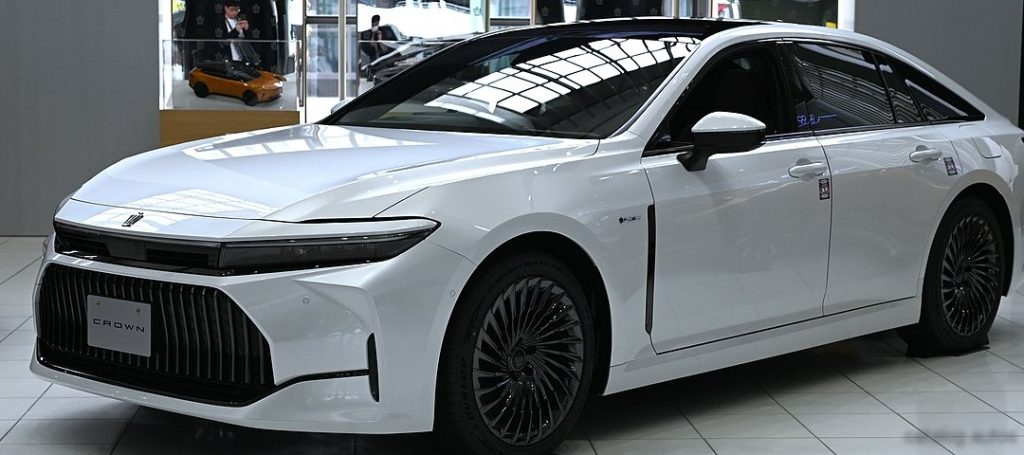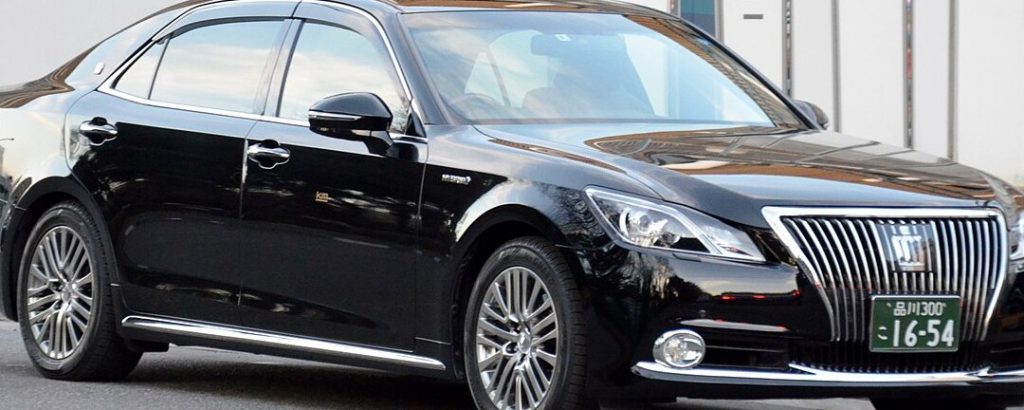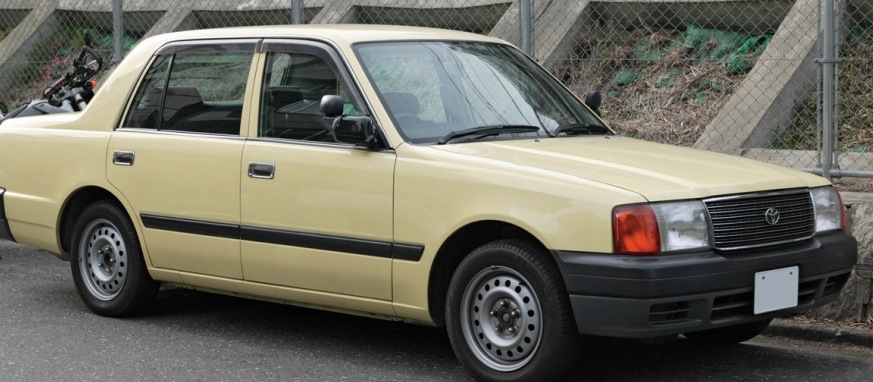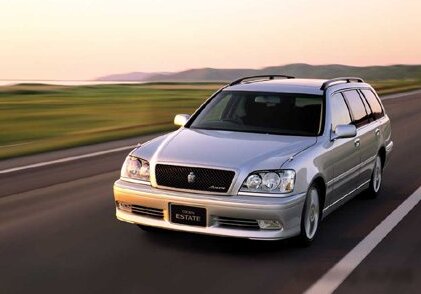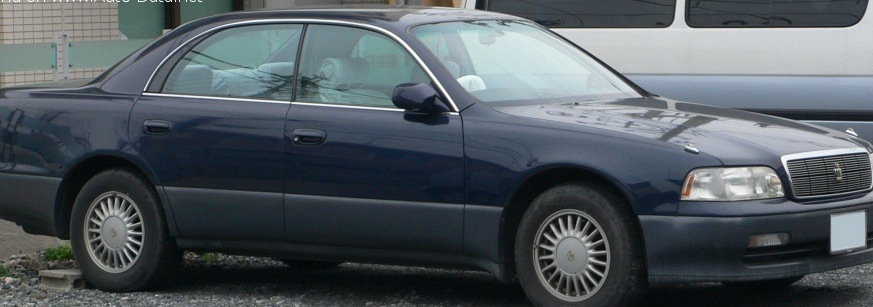
The Toyota Crown Majesta I (S140) 4.0i V8 32V, produced between 1991 and 1993, represented Toyota’s ambitious entry into the full-size luxury sedan segment, primarily aimed at the Japanese domestic market (JDM). Positioned above the standard Crown, the Majesta offered a more opulent experience with enhanced features, a larger engine, and a more sophisticated chassis. This particular variant, equipped with the 1UZ-FE 4.0-liter V8 engine and a four-speed automatic transmission, along with full-time four-wheel drive, was the flagship model of the initial Majesta lineup. It was designed to compete directly with established luxury cars from Nissan and Honda, as well as imported models from Europe and the United States.
Technical Specifications
| Brand | Toyota |
| Model | Crown Majesta |
| Generation | Crown Majesta I (S140) |
| Type (Engine) | 4.0i V8 32V (260 Hp) 4×4 Automatic |
| Start of production | 1991 |
| End of production | 1993 |
| Powertrain Architecture | Internal Combustion engine |
| Body type | Sedan |
| Seats | 5 |
| Doors | 4 |
| Fuel Type | Petrol (Gasoline) |
| Weight-to-power ratio | 6.4 kg/Hp, 155.7 Hp/tonne |
| Weight-to-torque ratio | 4.7 kg/Nm, 211.4 Nm/tonne |
| Power | 260 Hp @ 5400 rpm |
| Power per litre | 65.5 Hp/l |
| Torque | 353 Nm @ 4600 rpm (260.36 lb.-ft. @ 4600 rpm) |
| Engine layout | Front, Longitudinal |
| Engine Model/Code | 1UZ-FE |
| Engine displacement | 3968 cm3 (242.14 cu. in.) |
| Number of cylinders | 8 |
| Engine configuration | V-engine |
| Cylinder Bore | 87.5 mm (3.44 in.) |
| Piston Stroke | 82.5 mm (3.25 in.) |
| Compression ratio | 10.5:1 |
| Number of valves per cylinder | 4 |
| Fuel injection system | Multi-port manifold injection |
| Engine aspiration | Naturally aspirated engine |
| Valvetrain | DOHC |
| Engine oil capacity | 4.8 l (5.07 US qt | 4.22 UK qt) |
| Kerb Weight | 1670 kg (3681.72 lbs) |
| Fuel tank capacity | 80 l (21.13 US gal | 17.6 UK gal) |
| Length | 4900 mm (192.91 in.) |
| Width | 1800 mm (70.87 in.) |
| Height | 1420 mm (55.91 in.) |
| Wheelbase | 2780 mm (109.45 in.) |
| Front track | 1535 mm (60.43 in.) |
| Rear (Back) track | 1520 mm (59.84 in.) |
| Ride height (ground clearance) | 145 mm (5.71 in.) |
| Minimum turning circle (turning diameter) | 11.0 m (36.09 ft.) |
| Drive wheel | All wheel drive (4×4) |
| Number of gears and type of gearbox | 4 gears, automatic transmission |
| Front suspension | Double wishbone |
| Rear suspension | Double wishbone |
| Front brakes | Ventilated discs |
| Rear brakes | Ventilated discs |
| Assisting systems | ABS (Anti-lock braking system) |
| Steering type | Steering rack and pinion |
| Power steering | Hydraulic Steering |
| Tires size | 215/65 R15 |
| Wheel rims size | 15 |
Powertrain & Engine Architecture
The heart of the Majesta 4.0i was the 1UZ-FE engine, a 3.968-liter (242.14 cubic inches) naturally aspirated V8. This engine was a landmark achievement for Toyota, being one of the first mass-produced DOHC (Double Overhead Camshaft) V8 engines. It featured a 60-degree V-angle, four valves per cylinder, and multi-port fuel injection. The 1UZ-FE was renowned for its smoothness and reliability. The four-speed automatic transmission, designated A340E, was specifically chosen for its ability to handle the engine’s torque and provide comfortable shifts. This transmission was electronically controlled, offering adaptive shifting based on driving conditions. The full-time four-wheel drive system utilized a viscous coupling center differential, providing all-weather traction without requiring driver intervention.
Driving Characteristics
The combination of the 260 horsepower V8 and the four-speed automatic resulted in a relaxed and refined driving experience. While not overtly sporty, the Majesta 4.0i offered ample power for effortless cruising and confident overtaking. The automatic transmission, while smooth, wasn’t particularly quick to downshift, making spirited driving less engaging than with a manual transmission. The four-wheel drive system enhanced stability, particularly on slippery surfaces. Compared to the six-cylinder Crown models, the 4.0i provided a significant performance boost, but at the cost of increased fuel consumption. The gear ratios were tuned for comfortable highway driving, prioritizing smoothness over outright acceleration.
Equipment & Trim Levels
The Majesta 4.0i was generously equipped, reflecting its luxury positioning. Standard features included power-adjustable seats, leather upholstery, woodgrain interior trim, a high-quality sound system, and automatic climate control. Power windows, power locks, and power mirrors were also standard. Optional extras included a navigation system (a relatively new technology at the time), a premium sound system with a CD changer, and upgraded leather options. The interior design emphasized spaciousness and comfort, with a focus on high-quality materials and meticulous craftsmanship.
Chassis & Braking
The Majesta I (S140) utilized a robust chassis with independent double wishbone suspension at both the front and rear. This suspension setup provided a comfortable ride and good handling characteristics. Ventilated disc brakes were fitted on all four wheels, providing ample stopping power. An Anti-lock Braking System (ABS) was standard, enhancing safety. The steering was a rack-and-pinion system with hydraulic power assistance, offering precise and responsive steering feel. The chassis was designed to minimize noise, vibration, and harshness (NVH), contributing to the car’s overall refinement.
Market Reception & Comparison
The Toyota Crown Majesta I was well-received in Japan, establishing itself as a credible competitor in the luxury sedan segment. Critics praised its smooth engine, comfortable ride, and spacious interior. However, some noted that its styling was conservative compared to some European rivals. Compared to the standard Crown, the Majesta offered a significant step up in terms of luxury and performance, but also came with a higher price tag. The 4.0i V8 variant was the most expensive and exclusive model in the Majesta lineup, appealing to buyers who prioritized power and refinement. Fuel economy, while acceptable for a V8, was lower than that of the six-cylinder models.
Legacy
The 1UZ-FE engine, found in the Majesta 4.0i, gained a reputation for exceptional durability and longevity. Many examples of this engine have surpassed 300,000 kilometers (186,000 miles) with minimal maintenance. The Majesta I (S140) is now considered a classic car in Japan, and well-maintained examples are highly sought after by collectors. While relatively rare outside of Japan, the Majesta 4.0i represents a significant milestone in Toyota’s history, demonstrating the company’s ability to produce a world-class luxury sedan. The combination of a smooth V8 engine, comfortable ride, and robust build quality has ensured its enduring appeal in the used car market.