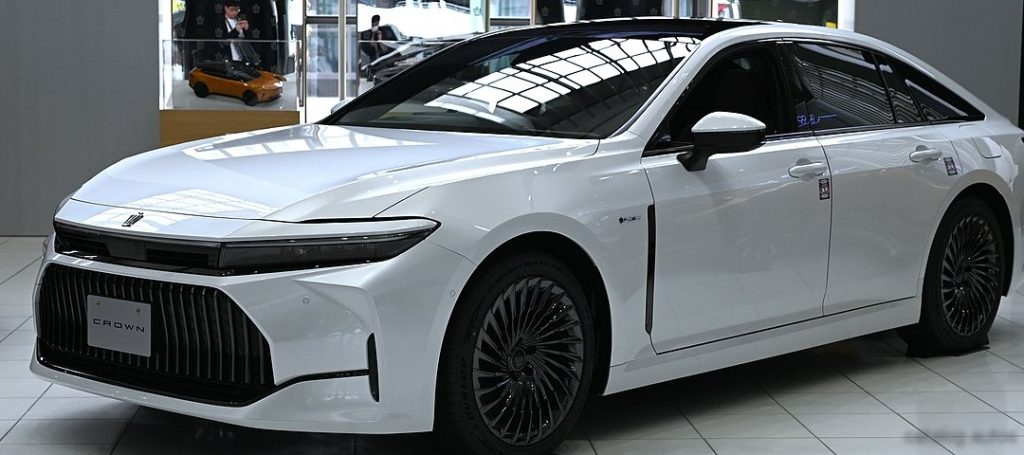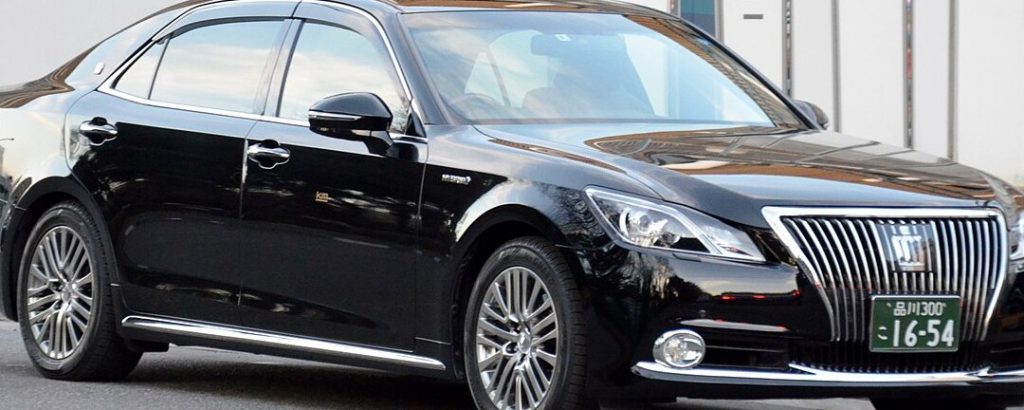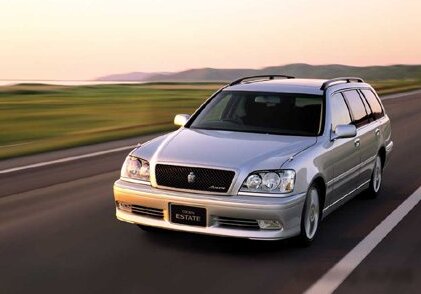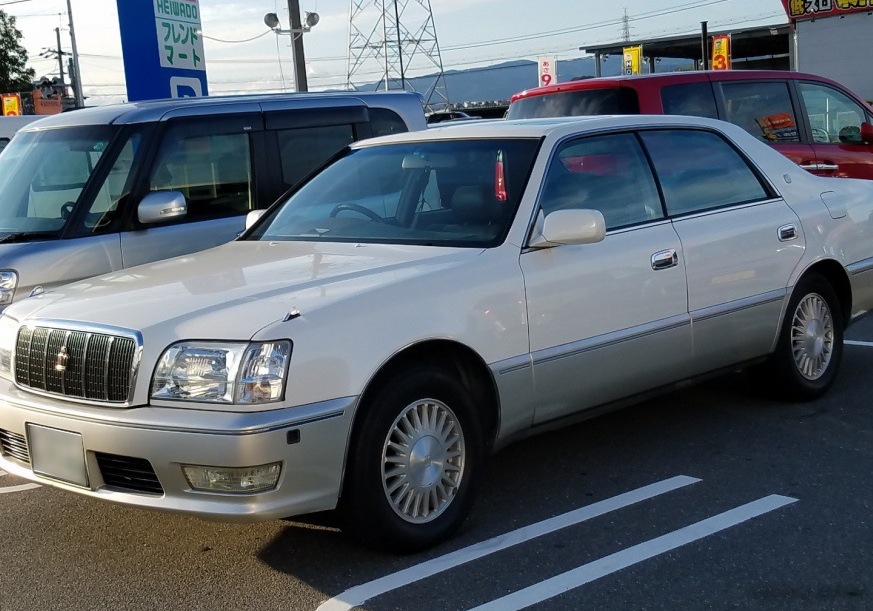
The Toyota Crown Majesta II, specifically the S150 chassis with the 1997 facelift, represented a significant evolution in Toyota’s luxury sedan offerings. Produced between 1997 and 1999, the 3.0i V6 24V variant, equipped with a four-speed automatic transmission, occupied a sweet spot in the Majesta lineup, balancing performance with the comfort expected of a flagship vehicle. This model was primarily aimed at the Japanese domestic market (JDM), where large, luxurious sedans were highly valued, and served as a competitor to vehicles like the Nissan Cima and Honda Inspire. The S150 Majesta built upon the success of the first generation, offering enhanced refinement and technology.
Technical Specifications
| Brand | Toyota |
| Model | Crown Majesta |
| Generation | Crown Majesta II (S150, facelift 1997) |
| Type (Engine) | 3.0i V6 24V (220 Hp) Automatic |
| Start of production | 1997 |
| End of production | 1999 |
| Powertrain Architecture | Internal Combustion engine |
| Body type | Sedan |
| Seats | 5 |
| Doors | 4 |
| Fuel Type | Petrol (Gasoline) |
| Weight-to-power ratio | 7.4 kg/Hp, 135 Hp/tonne |
| Weight-to-torque ratio | 5.5 kg/Nm, 180.4 Nm/tonne |
| Power | 220 Hp @ 5600 rpm |
| Power per litre | 73.4 Hp/l |
| Torque | 294 Nm @ 4000 rpm, 216.84 lb.-ft. @ 4000 rpm |
| Engine layout | Front, Longitudinal |
| Engine Model/Code | 2JZ-GE |
| Engine displacement | 2997 cm3, 182.89 cu. in. |
| Number of cylinders | 6 |
| Engine configuration | Inline |
| Cylinder Bore | 86 mm, 3.39 in. |
| Piston Stroke | 86 mm, 3.39 in. |
| Compression ratio | 10.5:1 |
| Number of valves per cylinder | 4 |
| Fuel injection system | Multi-port manifold injection |
| Engine aspiration | Naturally aspirated engine |
| Valvetrain | DOHC |
| Engine oil capacity | 5.4 l, 5.71 US qt | 4.75 UK qt |
| Kerb Weight | 1630 kg, 3593.53 lbs |
| Fuel tank capacity | 80 l, 21.13 US gal | 17.6 UK gal |
| Length | 4900 mm, 192.91 in |
| Width | 1795 mm, 70.67 in |
| Height | 1430 mm, 56.3 in |
| Wheelbase | 2780 mm, 109.45 in |
| Front track | 1535 mm, 60.43 in |
| Rear (Back) track | 1515 mm, 59.65 in |
| Ride height (ground clearance) | 145 mm, 5.71 in |
| Minimum turning circle (turning diameter) | 11.0 m, 36.09 ft |
| Drivetrain Architecture | The Internal combustion engine (ICE) drives the rear wheels of the vehicle. |
| Drive wheel | Rear wheel drive |
| Number of gears and type of gearbox | 4 gears, automatic transmission |
| Front suspension | Double wishbone |
| Rear suspension | Double wishbone |
| Front brakes | Ventilated discs |
| Rear brakes | Ventilated discs |
| Assisting systems | ABS (Anti-lock braking system) |
| Steering type | Steering rack and pinion |
| Power steering | Hydraulic Steering |
| Tires size | 215/65 R15 |
| Wheel rims size | 15 |
Powertrain & Engine Architecture
The heart of the 3.0i Majesta was the 2JZ-GE engine, a 3.0-liter inline-six cylinder powerplant. This engine was renowned for its smoothness and reliability. The 2JZ-GE featured a double overhead camshaft (DOHC) valvetrain with four valves per cylinder, contributing to its strong performance across the rev range. Fuel delivery was handled by a multi-port fuel injection system, optimizing combustion efficiency. The engine produced 220 horsepower at 5600 rpm and 294 Nm (216.84 lb-ft) of torque at 4000 rpm. The four-speed automatic transmission was chosen for its smooth shifting and ease of use, aligning with the Majesta’s luxury focus. While not offering the sporty responsiveness of a manual transmission, it provided a comfortable and refined driving experience.
Driving Characteristics
The 3.0i automatic Majesta offered a comfortable and composed driving experience. The automatic transmission, while not particularly advanced by modern standards, was well-matched to the engine’s torque curve, providing adequate acceleration for everyday driving. The rear-wheel-drive configuration contributed to balanced handling, although the Majesta was primarily designed for comfort rather than aggressive cornering. Compared to the base model engines, the 3.0i offered a noticeable performance improvement, making highway merging and overtaking significantly easier. The automatic transmission’s gear ratios were tuned for smooth cruising, prioritizing fuel efficiency and minimizing engine noise at highway speeds. It wasn’t a sports sedan, but a refined and capable grand tourer.
Equipment & Trim Levels
The 3.0i trim level of the Majesta II was well-equipped, reflecting its position as a premium offering. Standard features typically included power-adjustable seats, woodgrain interior trim, a high-quality audio system, automatic climate control, and power windows and locks. Leather upholstery was common, and many examples were equipped with optional features such as a navigation system (a relatively new technology at the time), a sunroof, and upgraded sound systems. The interior design emphasized spaciousness and comfort, with a focus on high-quality materials and a refined aesthetic. The dashboard layout was functional and elegant, prioritizing ease of use.
Chassis & Braking
The Majesta II utilized a double wishbone suspension system both front and rear, providing a comfortable ride and good handling characteristics. Ventilated disc brakes were fitted on all four wheels, offering adequate stopping power for the vehicle’s weight. An Anti-lock Braking System (ABS) was standard, enhancing safety. The chassis was designed to minimize noise, vibration, and harshness (NVH), contributing to the Majesta’s refined driving experience. The steering was rack and pinion with hydraulic power assistance, providing a light and precise feel.
Market Reception & Comparison
The Toyota Crown Majesta II, and specifically the 3.0i variant, was well-received in the Japanese market. Critics praised its comfortable ride, spacious interior, and refined engine. Compared to other trims in the Majesta lineup, the 3.0i offered a significant performance upgrade over the smaller displacement engines, while remaining more affordable than the top-of-the-line models. Fuel economy was reasonable for a vehicle of its size and class, although not exceptional. Reliability was a key strength, as with most Toyota products of the era. The Majesta was often seen as a more understated and sophisticated alternative to some of its more flamboyant competitors.
Legacy
The 2JZ-GE engine, found in the 3.0i Majesta, has earned a reputation for exceptional durability and longevity. Well-maintained examples continue to operate reliably today. The Majesta II, while not widely exported outside of Japan, has gained a following among enthusiasts who appreciate its classic styling, comfortable ride, and robust engineering. In the used car market, these vehicles are often sought after for their condition and originality. Parts availability can be a concern outside of Japan, but the 2JZ-GE engine’s widespread use in other Toyota models (like the Supra and Aristo) means that many components are still readily available. The 1997 facelift Majesta represents a high point in Toyota’s luxury sedan history, offering a blend of comfort, performance, and reliability that remains appealing even decades later.