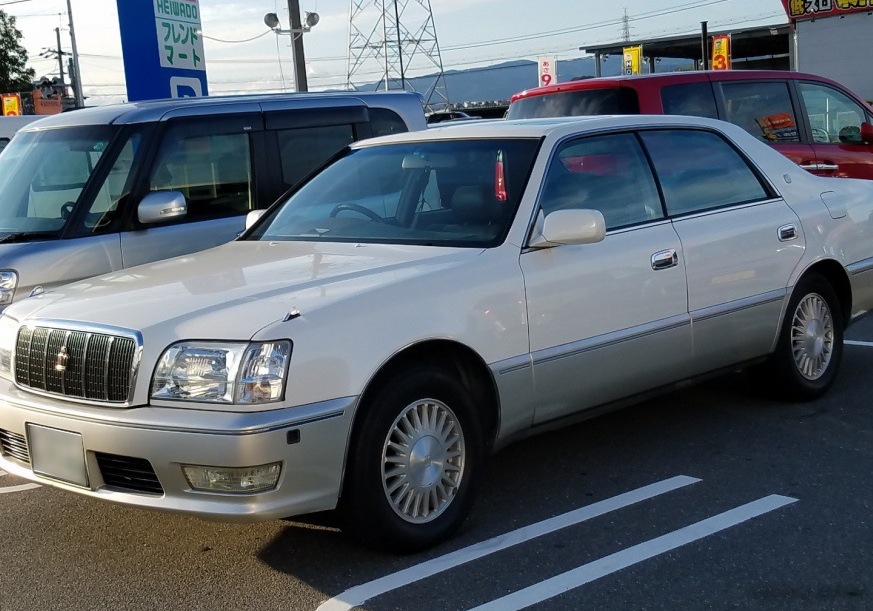
The Toyota Crown Majesta II, specifically the S150 chassis with the 1997 facelift, represented a significant evolution in Toyota’s luxury sedan offerings. Produced between 1997 and 1999, the 4.0 i-Four variant, equipped with the 1UZ-FE V8 engine and a four-speed automatic transmission, stood as a flagship model, emphasizing both performance and sophisticated all-wheel drive capability. This model occupied the top tier of the Majesta II lineup, positioned above the more common inline-six cylinder options and aimed at buyers seeking a premium driving experience with enhanced traction. It was primarily marketed within Japan, catering to a domestic preference for large, comfortable, and technologically advanced vehicles.
Technical Specifications
| Brand | Toyota |
| Model | Crown Majesta |
| Generation | Crown Majesta II (S150, facelift 1997) |
| Type | 4.0 i-Four V8 32V (280 Hp) 4×4 Automatic |
| Start of production | 1997 |
| End of production | 1999 |
| Powertrain Architecture | Internal Combustion engine |
| Body type | Sedan |
| Seats | 5 |
| Doors | 4 |
| Fuel Type | Petrol (Gasoline) |
| Weight-to-power ratio | 6.5 kg/Hp, 154.7 Hp/tonne |
| Weight-to-torque ratio | 4.5 kg/Nm, 222.1 Nm/tonne |
| Power | 280 Hp @ 6000 rpm |
| Power per litre | 70.6 Hp/l |
| Torque | 402 Nm @ 4000 rpm (296.5 lb.-ft. @ 4000 rpm) |
| Engine layout | Front, Longitudinal |
| Engine Model/Code | 1UZ-FE |
| Engine displacement | 3968 cm3 (242.14 cu. in.) |
| Number of cylinders | 8 |
| Engine configuration | V-engine |
| Cylinder Bore | 87.5 mm (3.44 in.) |
| Piston Stroke | 82.5 mm (3.25 in.) |
| Compression ratio | 11:1 |
| Number of valves per cylinder | 4 |
| Fuel injection system | Multi-port manifold injection |
| Engine aspiration | Naturally aspirated engine |
| Valvetrain | DOHC |
| Engine oil capacity | 4.8 l (5.07 US qt | 4.22 UK qt) |
| Kerb Weight | 1810 kg (3990.37 lbs.) |
| Fuel tank capacity | 80 l (21.13 US gal | 17.6 UK gal) |
| Length | 4900 mm (192.91 in.) |
| Width | 1795 mm (70.67 in.) |
| Height | 1430 mm (56.3 in.) |
| Wheelbase | 2780 mm (109.45 in.) |
| Front track | 1535 mm (60.43 in.) |
| Rear track | 1525 mm (60.04 in.) |
| Ride height (ground clearance) | 135 mm (5.31 in.) |
| Minimum turning circle | 11.0 m (36.09 ft.) |
| Drivetrain Architecture | All wheel drive (4×4) |
| Number of gears | 4 |
| Type of gearbox | Automatic transmission |
| Front suspension | Double wishbone |
| Rear suspension | Double wishbone |
| Front brakes | Ventilated discs |
| Rear brakes | Ventilated discs |
| Assisting systems | ABS (Anti-lock braking system) |
| Steering type | Steering rack and pinion |
| Power steering | Hydraulic Steering |
| Tires size | 215/60 R15 |
| Wheel rims size | 15 |
Powertrain & Engine Architecture
The heart of the Majesta II 4.0 i-Four is the 1UZ-FE 4.0-liter V8 engine. This engine, a member of Toyota’s renowned UZ engine family, is a naturally aspirated, all-aluminum alloy engine featuring a 60-degree V-angle. It utilizes a double overhead camshaft (DOHC) valvetrain with four valves per cylinder, contributing to its smooth power delivery and relatively high specific output. The 1UZ-FE employs multi-port fuel injection, carefully metering fuel into each cylinder for optimal combustion. The engine’s robust construction and over-engineering were hallmarks of Toyota’s design philosophy at the time, prioritizing longevity and reliability. The four-speed automatic transmission, while not as sophisticated as some contemporary transmissions, was chosen for its smoothness and suitability for the Majesta’s luxury-oriented character. It was designed to provide seamless shifts and contribute to a comfortable driving experience.
Driving Characteristics
The combination of the 280 horsepower V8 and the all-wheel-drive system resulted in a surprisingly capable grand tourer. While not a sports car, the Majesta II 4.0 i-Four offered brisk acceleration and confident handling, particularly in inclement weather. The all-wheel-drive system provided enhanced traction, making it a secure and stable vehicle on slippery surfaces. The automatic transmission, while lacking the responsiveness of a manual, was well-suited to the engine’s torque curve, delivering smooth and predictable power delivery. Compared to the inline-six variants, the V8 offered a significant performance advantage, but at the cost of slightly increased fuel consumption. The gear ratios were tuned for comfortable cruising, prioritizing relaxed highway driving over outright acceleration.
Equipment & Trim Levels
The 4.0 i-Four trim level was generously equipped, reflecting its position as the range-topping model. Standard features typically included leather upholstery, power-adjustable front seats with memory function, a premium sound system, automatic climate control, and woodgrain interior trim. Optional extras could include a navigation system (a relatively new technology at the time), a sunroof, and upgraded audio components. The interior was designed to provide a luxurious and comfortable environment, with a focus on high-quality materials and meticulous craftsmanship. The exterior featured unique badging and often included alloy wheels as standard.
Chassis & Braking
The Majesta II utilized a double wishbone suspension setup at both the front and rear, providing a comfortable ride and good handling characteristics. The suspension was tuned to prioritize ride comfort over sporty handling, absorbing bumps and imperfections in the road effectively. Braking duties were handled by ventilated disc brakes on all four wheels, providing ample stopping power. An Anti-lock Braking System (ABS) was standard, enhancing safety and control during emergency braking situations. The chassis was designed to be rigid and robust, contributing to the vehicle’s overall stability and refinement.
Market Reception & Comparison
The Toyota Crown Majesta II 4.0 i-Four was well-received in the Japanese market, praised for its luxurious interior, smooth ride, and powerful engine. Critics noted the car’s refinement and build quality, highlighting its status as a true flagship sedan. Compared to its competitors, such as the Nissan Cima and Honda Inspire, the Majesta II offered a unique combination of performance, luxury, and reliability. Fuel economy, while not a primary concern for buyers in this segment, was reasonable for a V8-powered vehicle. Reliability was a strong point, with the 1UZ-FE engine being known for its durability and longevity.
Legacy
The Toyota Crown Majesta II 4.0 i-Four has developed a strong following among enthusiasts and collectors. The 1UZ-FE engine is renowned for its robustness and is often regarded as one of Toyota’s most reliable engines. Well-maintained examples are increasingly sought after in the used car market, particularly those with low mileage and a complete service history. While the car’s age means that maintenance costs can be higher than for more modern vehicles, its enduring quality and unique character continue to appeal to discerning buyers. The Majesta II represents a high point in Japanese luxury car design, showcasing Toyota’s commitment to engineering excellence and refined comfort.