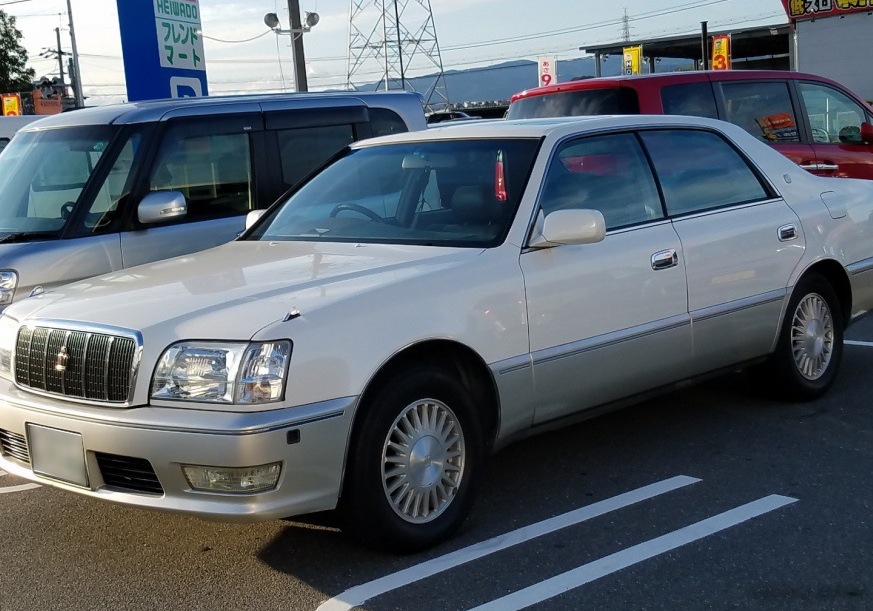
The Toyota Crown Majesta II, specifically the S150 chassis with the 1997 facelift, represented a pinnacle of Japanese luxury car engineering. Produced between 1997 and 1999, this variant featured a naturally aspirated 4.0-liter V8 engine paired with a five-speed automatic transmission. It occupied the top echelon of the Crown Majesta lineup, offering a more powerful and refined alternative to the inline-six cylinder models. The Majesta was exclusively sold within the Japanese domestic market (JDM), catering to buyers seeking a spacious, comfortable, and technologically advanced luxury sedan. It was positioned as a competitor to vehicles like the Nissan Cima and Honda Inspire, offering a unique blend of traditional Japanese craftsmanship and modern features.
Technical Specifications
| Brand | Toyota |
| Model | Crown Majesta |
| Generation | Crown Majesta II (S150, facelift 1997) |
| Type (Engine) | 4.0 V8 32V (280 Hp) Automatic |
| Start of production | 1997 |
| End of production | 1999 |
| Powertrain Architecture | Internal Combustion engine |
| Body type | Sedan |
| Seats | 5 |
| Doors | 4 |
| Fuel Type | Petrol (Gasoline) |
| Weight-to-power ratio | 6 kg/Hp, 166.7 Hp/tonne |
| Weight-to-torque ratio | 4.2 kg/Nm, 239.3 Nm/tonne |
| Power | 280 Hp @ 6000 rpm |
| Power per litre | 70.6 Hp/l |
| Torque | 402 Nm @ 4000 rpm, 296.5 lb.-ft. @ 4000 rpm |
| Engine layout | Front, Longitudinal |
| Engine Model/Code | 1UZ-FE |
| Engine displacement | 3968 cm3, 242.14 cu. in. |
| Number of cylinders | 8 |
| Engine configuration | V-engine |
| Cylinder Bore | 87.5 mm, 3.44 in. |
| Piston Stroke | 82.5 mm, 3.25 in. |
| Compression ratio | 11:1 |
| Number of valves per cylinder | 4 |
| Fuel injection system | Multi-port manifold injection |
| Engine aspiration | Naturally aspirated engine |
| Valvetrain | DOHC |
| Engine oil capacity | 4.8 l, 5.07 US qt | 4.22 UK qt |
| Kerb Weight | 1680 kg, 3703.77 lbs |
| Fuel tank capacity | 80 l, 21.13 US gal | 17.6 UK gal |
| Length | 4900 mm, 192.91 in |
| Width | 1795 mm, 70.67 in |
| Height | 1420 mm, 55.91 in |
| Wheelbase | 2780 mm, 109.45 in |
| Front track | 1535 mm, 60.43 in |
| Rear (Back) track | 1520 mm, 59.84 in |
| Ride height (ground clearance) | 140 mm, 5.51 in |
| Minimum turning circle (turning diameter) | 11.0 m, 36.09 ft |
| Drivetrain Architecture | The Internal combustion engine (ICE) drives the rear wheels of the vehicle. |
| Drive wheel | Rear wheel drive |
| Number of gears and type of gearbox | 5 gears, automatic transmission |
| Front suspension | Double wishbone |
| Rear suspension | Double wishbone |
| Front brakes | Ventilated discs |
| Rear brakes | Ventilated discs |
| Assisting systems | ABS (Anti-lock braking system) |
| Steering type | Steering rack and pinion |
| Power steering | Hydraulic Steering |
| Tires size | 215/60 R15 |
| Wheel rims size | 15 |
Powertrain & Engine Architecture
The heart of the 1997-1999 Crown Majesta II was the 1UZ-FE engine. This 4.0-liter V8 is a naturally aspirated, 32-valve DOHC engine known for its smoothness and reliability. The 1UZ-FE utilized a cast iron block with an aluminum cylinder head, a design choice that balanced durability with weight reduction. Fuel delivery was managed by a multi-port fuel injection system, ensuring precise fuel metering for optimal performance and efficiency. The engine’s 11:1 compression ratio contributed to its respectable power output. The five-speed automatic transmission, a common Toyota unit of the era, was designed for smooth and refined shifts. While not a performance-oriented transmission, it was well-suited to the Majesta’s luxury focus, prioritizing comfort over aggressive gear changes. The transmission featured electronically controlled torque converter lock-up for improved fuel economy at highway speeds.
Driving Characteristics
The combination of the 4.0-liter V8 and the five-speed automatic resulted in a driving experience that prioritized effortless cruising and smooth acceleration. With 280 horsepower and 296.5 lb-ft of torque, the Majesta offered ample power for overtaking and merging onto highways. However, it wasn’t designed for sporty driving. The automatic transmission’s gear ratios were tuned for comfort and fuel economy, resulting in a slightly less responsive feel compared to the manual transmission options available in other Crown models. The rear-wheel-drive configuration provided a balanced feel, although it lacked the all-weather capability of all-wheel-drive systems found in some competitors. The Majesta’s suspension was tuned for a comfortable ride, absorbing bumps and imperfections in the road with ease.
Equipment & Trim Levels
The Crown Majesta II was renowned for its luxurious appointments. Standard features on the 4.0 V8 model included leather upholstery, power-adjustable front seats with memory function, woodgrain interior trim, a premium sound system, and automatic climate control. Higher trim levels added features such as a navigation system, a rear-seat entertainment system, and electronically adjustable rear seats. The interior design emphasized spaciousness and comfort, with ample legroom for both front and rear passengers. Exterior features included alloy wheels, chrome accents, and a sophisticated paint finish.
Chassis & Braking
The Majesta II utilized a double wishbone suspension system at both the front and rear, providing a comfortable and controlled ride. Ventilated disc brakes were standard on all four wheels, offering adequate stopping power for the vehicle’s weight. An Anti-lock Braking System (ABS) was also standard, enhancing safety during emergency braking situations. The steering system employed a rack-and-pinion setup with hydraulic power assistance, providing precise and responsive steering feel. The relatively large 215/60 R15 tires contributed to ride comfort and grip.
Market Reception & Comparison
The Toyota Crown Majesta II, particularly the 4.0 V8 variant, was highly regarded in the Japanese market for its luxurious features, smooth ride, and reliable powertrain. Critics praised the spacious interior, comfortable seats, and refined driving experience. Compared to the inline-six cylinder models, the V8 offered significantly more power and a more prestigious image. However, the V8 also came with a higher price tag and slightly lower fuel economy. The Majesta’s main competitors, the Nissan Cima and Honda Inspire, offered similar levels of luxury and refinement, but the Majesta distinguished itself with its distinctive styling and Toyota’s reputation for reliability.
Legacy
The 1UZ-FE engine, found in the 1997-1999 Crown Majesta II, is renowned for its durability and longevity. Properly maintained examples of this powertrain can easily exceed 200,000 miles. In the used car market, the Majesta II remains a sought-after vehicle among enthusiasts who appreciate its classic Japanese luxury and engineering. While import restrictions limit its availability outside of Japan, the Majesta II has gained a cult following among JDM car enthusiasts worldwide. The car represents a high point in Japanese automotive design and engineering, offering a unique blend of comfort, performance, and reliability.