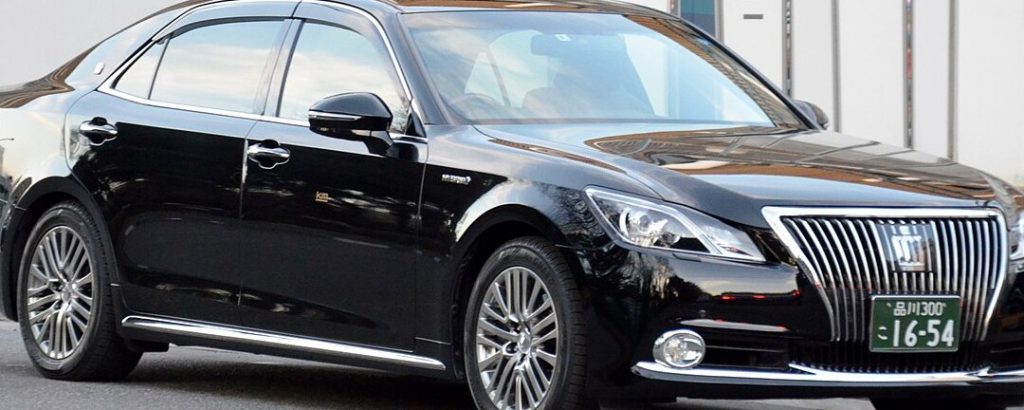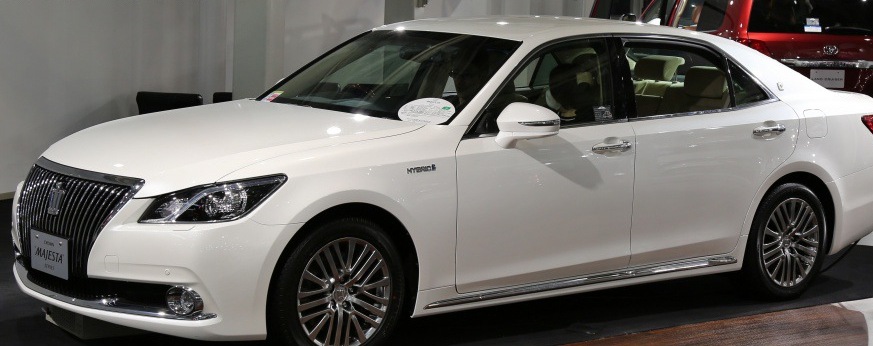
The Toyota Crown Majesta VI (S210), produced between 2013 and 2018, represents the sixth generation of Toyota’s flagship luxury sedan, the Crown Majesta. Positioned above the standard Crown and Athlete models, the Majesta was exclusively sold in Japan through Toyota’s Toyopet dealership network, catering to a discerning clientele seeking a refined and technologically advanced vehicle. The S210 generation marked a significant shift with the introduction of hybrid technology as a core powertrain option, alongside traditional gasoline engines. This particular variant, the 2.5-liter Hybrid 4WD e-CVT, occupied a middle ground in the Majesta lineup, offering a balance between fuel efficiency, performance, and all-weather capability. It was designed to appeal to buyers who desired the prestige of the Majesta nameplate with the benefits of a modern hybrid system.
Technical Specifications
| Brand | Toyota |
| Model | Crown Majesta |
| Generation | Crown Majesta VI (S210) |
| Type | 2.5 (178+143 Hp) Hybrid 4WD e-CVT |
| Start of production | 2013 |
| End of production | 2018 |
| Powertrain Architecture | FHEV (Full Hybrid Electric Vehicle) |
| Body type | Sedan |
| Seats | 5 |
| Doors | 4 |
| Fuel Type | Petrol (Gasoline) |
| Weight-to-power ratio | 10.2 kg/Hp, 98.3 Hp/tonne |
| Weight-to-torque ratio | 8.2 kg/Nm, 122.1 Nm/tonne |
| Battery technology | Nickel-metal hydride (NiMH) |
| Electric motor power | 143 Hp |
| Electric motor Torque | 300 Nm (221.27 lb.-ft.) |
| Electric motor model/code | 1KM |
| Electric motor location | Integrated into the transmission |
| Electric motor type | Synchronous |
| Power | 178 Hp @ 6000 rpm |
| Power per litre | 71.4 Hp/l |
| Torque | 221 Nm @ 4200-4800 rpm (163 lb.-ft. @ 4200-4800 rpm) |
| Engine layout | Front, Longitudinal |
| Engine Model/Code | 2AR-FSE |
| Engine displacement | 2493 cm3 (152.13 cu. in.) |
| Number of cylinders | 4 |
| Engine configuration | Inline |
| Cylinder Bore | 90 mm (3.54 in.) |
| Piston Stroke | 98 mm (3.86 in.) |
| Compression ratio | 13:1 |
| Number of valves per cylinder | 4 |
| Fuel injection system | Direct injection and Multi-port manifold injection |
| Engine aspiration | Naturally aspirated engine |
| Valvetrain | DOHC |
| Engine oil capacity | 4.5 l (4.76 US qt | 3.96 UK qt) |
| Coolant | 8.2 l (8.66 US qt | 7.21 UK qt) |
| Kerb Weight | 1810 kg (3990.37 lbs.) |
| Max. weight | 2085 kg (4596.64 lbs.) |
| Max load | 275 kg (606.27 lbs.) |
| Fuel tank capacity | 65 l (17.17 US gal | 14.3 UK gal) |
| Length | 4970 mm (195.67 in.) |
| Width | 1800 mm (70.87 in.) |
| Height | 1475 mm (58.07 in.) |
| Wheelbase | 2925 mm (115.16 in.) |
| Front track | 1545 mm (60.83 in.) |
| Rear (Back) track | 1550 mm (61.02 in.) |
| Ride height (ground clearance) | 155 mm (6.1 in.) |
| Minimum turning circle (turning diameter) | 11.0 m (36.09 ft.) |
| Drivetrain Architecture | The Internal combustion engine (ICE) and the electric motor permanently drive the four wheels of the car with the ability to work in full electric or mixed mode. |
| Drive wheel | All wheel drive (4×4) |
| Number of gears and type of gearbox | automatic transmission e-CVT |
| Front suspension | Independent coil spring |
| Rear suspension | Independent multi-link suspension |
| Front brakes | Ventilated discs |
| Rear brakes | Disc |
| Assisting systems | ABS (Anti-lock braking system) |
| Steering type | Steering rack and pinion |
| Power steering | Electric Steering |
| Tires size | 225/50 R17 |
| Wheel rims size | 7.5J x 17 |
Powertrain & Engine Architecture
The heart of the Majesta 2.5 Hybrid is Toyota’s 2AR-FSE 2.5-liter inline-four gasoline engine, coupled with Toyota’s Hybrid Synergy Drive system. The 2AR-FSE utilizes a combination of direct injection (D-4S) and port injection to optimize combustion efficiency and power delivery. This engine produces 178 horsepower at 6000 rpm and 221 Nm (163 lb-ft) of torque between 4200 and 4800 rpm. The electric motor, designated 1KM, contributes an additional 143 horsepower and 300 Nm (221 lb-ft) of torque. The combined system output is not simply an addition of the two figures, as the system intelligently manages power delivery based on driving conditions. The e-CVT (electronically controlled continuously variable transmission) seamlessly blends the power from both the engine and motor, providing smooth and efficient acceleration. Unlike traditional CVTs with belts, Toyota’s e-CVT uses a planetary gearset, offering a more robust and refined driving experience. The nickel-metal hydride (NiMH) battery pack provides energy storage for the electric motor, enabling short periods of electric-only driving and assisting the gasoline engine during acceleration.
Driving Characteristics
The 2.5-liter Hybrid 4WD Majesta offers a comfortable and refined driving experience. The e-CVT provides seamless acceleration, although it lacks the immediate responsiveness of a traditional automatic transmission. The combined output of the engine and electric motor delivers adequate performance for everyday driving, with a 0-60 mph time estimated around 9-10 seconds. The all-wheel-drive system provides enhanced traction and stability, particularly in inclement weather. Compared to the more powerful 3.5-liter V6 models, the 2.5 Hybrid prioritizes fuel economy over outright performance. The hybrid system allows for regenerative braking, capturing energy during deceleration and storing it in the battery, further enhancing efficiency. The steering is light and precise, making the Majesta easy to maneuver in urban environments. The suspension is tuned for comfort, absorbing bumps and imperfections in the road with ease.
Equipment & Trim Levels
The Majesta 2.5 Hybrid 4WD typically came well-equipped, reflecting its luxury positioning. Standard features included leather upholstery, woodgrain interior trim, power-adjustable front seats with heating and ventilation, a premium audio system, navigation system, automatic climate control, and a suite of safety features such as ABS, traction control, and multiple airbags. Optional extras included features like adaptive cruise control, lane departure warning, a rear-seat entertainment system, and upgraded leather options. Trim levels varied slightly depending on the year, but generally offered incremental upgrades in terms of interior appointments and technology features.
Chassis & Braking
The S210 Majesta utilizes an independent coil spring suspension at the front and an independent multi-link suspension at the rear, providing a comfortable and controlled ride. The front brakes are ventilated discs, while the rear brakes are solid discs. The braking system is assisted by ABS (Anti-lock Braking System) and electronic brake-force distribution (EBD). The chassis is designed for rigidity, minimizing body roll and enhancing handling stability. The all-wheel-drive system contributes to improved traction and stability, particularly in slippery conditions.
Market Reception & Comparison
The Toyota Crown Majesta 2.5 Hybrid 4WD was generally well-received in the Japanese market. Critics praised its comfortable ride, refined interior, and fuel efficiency. Compared to the 3.5-liter V6 models, the hybrid variant offered significantly better fuel economy, making it an attractive option for buyers prioritizing efficiency. However, some critics noted that the hybrid powertrain lacked the responsiveness and excitement of the V6 engine. Reliability was a strong point, as with most Toyota vehicles, and the Majesta enjoyed a reputation for being a dependable and long-lasting luxury sedan.
Legacy
The Toyota Crown Majesta VI (S210) 2.5 Hybrid 4WD remains a desirable used car in Japan, known for its comfort, reliability, and fuel efficiency. The Hybrid Synergy Drive system has proven to be durable and dependable, with many examples exceeding high mileage without major issues. The Majesta’s reputation for quality and refinement has ensured its continued popularity among discerning buyers seeking a luxurious and technologically advanced Japanese sedan. While not officially sold in the United States, the Majesta represents a compelling example of Toyota’s engineering prowess and commitment to innovation.