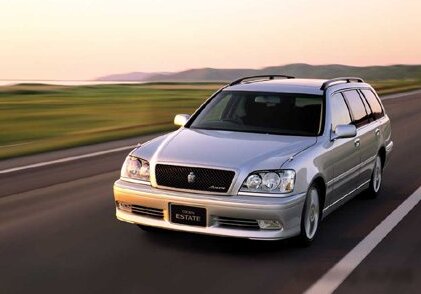
The Toyota Crown XI Athlete (S170) 3.0 24V, produced between 1999 and 2001, represented a significant iteration of Toyota’s flagship sedan. Positioned as a more sporty and luxurious variant within the S170 Crown lineup, the Athlete aimed to attract buyers seeking a blend of performance and comfort. This generation Crown, built on the S170 platform, continued Toyota’s tradition of offering a high-quality, reliable, and well-equipped vehicle, primarily targeted at the Japanese domestic market (JDM). The 3.0 24V engine paired with an automatic transmission was a mid-to-upper tier offering, sitting below the more exclusive trims but offering a substantial step up from the base 2.5L models.
Technical Specifications
| Brand | Toyota |
| Model | Crown |
| Generation | Crown XI Athlete (S170) |
| Type (Engine) | 3.0 24V (220 Hp) Automatic |
| Start of production | 1999 year |
| End of production | 2001 year |
| Powertrain Architecture | Internal Combustion engine |
| Body type | Sedan |
| Seats | 5 |
| Doors | 4 |
| Fuel consumption (urban) | 15 l/100 km (15.7 US mpg, 18.8 UK mpg, 6.7 km/l) |
| Fuel Type | Petrol (Gasoline) |
| Weight-to-power ratio | 7.2 kg/Hp, 139.2 Hp/tonne |
| Weight-to-torque ratio | 5.4 kg/Nm, 186.1 Nm/tonne |
| Power | 220 Hp @ 5600 rpm |
| Power per litre | 73.4 Hp/l |
| Torque | 294 Nm @ 3600 rpm (216.84 lb.-ft. @ 3600 rpm) |
| Engine layout | Front, Longitudinal |
| Engine Model/Code | 2JZ-FSE |
| Engine displacement | 2997 cm3 (182.89 cu. in.) |
| Number of cylinders | 6 |
| Engine configuration | Inline |
| Cylinder Bore | 86 mm (3.39 in.) |
| Piston Stroke | 86 mm (3.39 in.) |
| Compression ratio | 11:1 |
| Number of valves per cylinder | 4 |
| Fuel injection system | Multi-port manifold injection |
| Engine aspiration | Naturally aspirated engine |
| Valvetrain | DOHC |
| Engine oil capacity | 5.4 l (5.71 US qt | 4.75 UK qt) |
| Coolant | 7.5 l (7.93 US qt | 6.6 UK qt) |
| Kerb Weight | 1580 kg (3483.3 lbs.) |
| Trunk (boot) space – minimum | 530 l (18.72 cu. ft.) |
| Fuel tank capacity | 70 l (18.49 US gal | 15.4 UK gal) |
| Length | 4820 mm (189.76 in.) |
| Width | 1765 mm (69.49 in.) |
| Height | 1455 mm (57.28 in.) |
| Wheelbase | 2780 mm (109.45 in.) |
| Front track | 1495 mm (58.86 in.) |
| Rear (Back) track | 1475 mm (58.07 in.) |
| Ride height (ground clearance) | 155 mm (6.1 in.) |
| Minimum turning circle (turning diameter) | 10.6 m (34.78 ft.) |
| Drivetrain Architecture | The Internal combustion engine (ICE) drives the rear wheels of the vehicle. |
| Drive wheel | Rear wheel drive |
| Number of gears and type of gearbox | 5 gears, automatic transmission |
| Front suspension | Double wishbone |
| Rear suspension | Double wishbone |
| Front brakes | Ventilated discs |
| Rear brakes | Disc |
| Assisting systems | ABS (Anti-lock braking system) |
| Tires size | 215/55 R16 |
| Wheel rims size | 16 |
Powertrain & Engine Architecture
The heart of the Crown XI Athlete 3.0 was the 2JZ-FSE engine, a 3.0-liter inline-six cylinder powerplant. This engine utilized a DOHC (Double Overhead Camshaft) valvetrain and multi-port fuel injection. The ‘FSE’ designation indicated the use of Toyota’s Direct Injection-Four Stroke engine technology, a form of stratified charge direct injection aimed at improving fuel efficiency and reducing emissions. While not a full direct injection system like later iterations, it represented a significant advancement for its time. The 2JZ-FSE produced 220 horsepower at 5600 rpm and 294 Nm (216.84 lb-ft) of torque at 3600 rpm. The engine’s longitudinal mounting and rear-wheel-drive configuration were traditional for a luxury sedan of this era. The automatic transmission was a 5-speed unit, designed to provide smooth shifts and comfortable cruising. It wasn’t known for being particularly sporty, prioritizing refinement over aggressive gear changes.
Driving Characteristics
The 3.0L automatic Crown Athlete offered a comfortable and refined driving experience. The automatic transmission, while smooth, did result in some power loss compared to the available manual transmission options. Acceleration was adequate for everyday driving and highway merging, but it wasn’t a particularly quick car. The focus was on providing a relaxed and effortless driving experience. The gear ratios were tuned for fuel economy and smooth cruising, rather than outright performance. Compared to the base 2.5L models, the 3.0L offered a noticeable improvement in power and responsiveness, making it more suitable for longer journeys and carrying a full load of passengers. However, it didn’t possess the same sporting character as some of its European rivals.
Equipment & Trim Levels
The Athlete trim level included several features designed to enhance comfort and convenience. Standard equipment typically included power windows, power locks, power mirrors, air conditioning, a high-quality audio system, and velour upholstery. Leather upholstery was often an optional extra. The dashboard featured woodgrain accents and a generally upscale design. Optional extras could include a navigation system, sunroof, and upgraded sound system. The Athlete trim also often featured unique exterior styling cues, such as a different grille and alloy wheel design, to differentiate it from other Crown models.
Chassis & Braking
The Crown XI Athlete utilized a double wishbone suspension system both front and rear, providing a comfortable ride and good handling characteristics. The front brakes were ventilated discs, while the rear brakes were solid discs. ABS (Anti-lock Braking System) was standard equipment. The suspension was tuned for comfort, prioritizing a smooth ride over aggressive handling. Stabilizer bars were fitted front and rear to reduce body roll during cornering. The chassis was designed to provide a quiet and refined driving experience, minimizing road noise and vibration.
Market Reception & Comparison
The Toyota Crown XI Athlete 3.0 24V was generally well-received in the Japanese market. Critics praised its comfortable ride, spacious interior, and high level of equipment. The 3.0L engine was considered a good balance of power and fuel efficiency. Compared to the 2.5L models, the 3.0L Athlete offered a more refined and enjoyable driving experience. However, some critics noted that the automatic transmission could feel a bit sluggish, and the car lacked the sporting character of some of its European competitors. Fuel economy was reasonable for a car of its size and engine displacement, but it wasn’t class-leading.
Legacy
The 2JZ-FSE engine, while not as renowned as the 2JZ-GTE (turbocharged version), is known for its reliability and durability. With proper maintenance, these engines can last for many years. The Crown XI Athlete (S170) 3.0 24V remains a popular choice among enthusiasts in the used car market, particularly in Japan. Parts availability is generally good, and the car’s relatively simple mechanical design makes it relatively easy to maintain. The Athlete trim level is particularly sought after due to its higher level of equipment and more powerful engine. Today, these Crowns are appreciated for their classic styling, comfortable ride, and reputation for reliability, representing a high point in Japanese luxury sedan design.