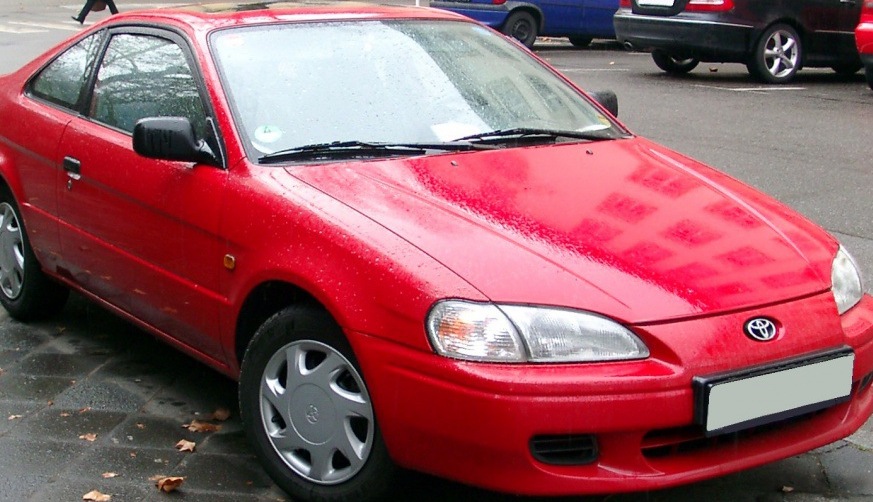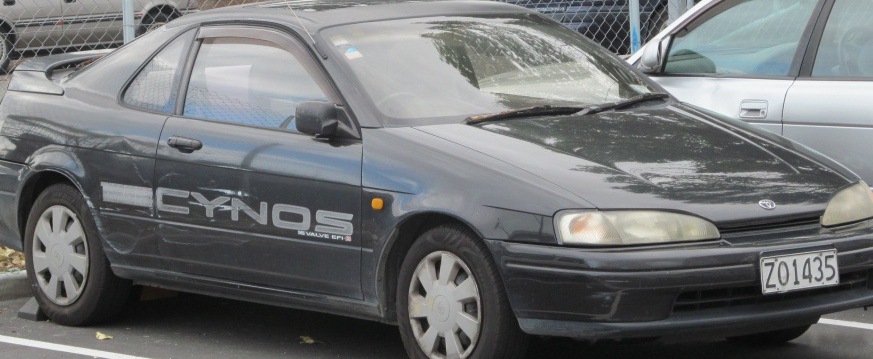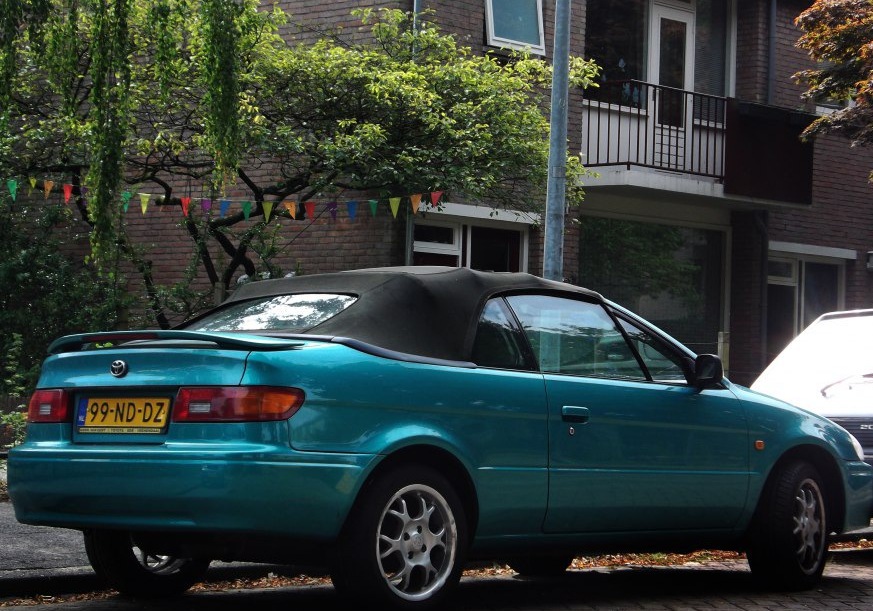
The Toyota Cynos (EL52) 1.3i 16V Alpha Automatic, produced between 1995 and 1999, represents a unique offering within Toyota’s broader lineup of the early to mid-1990s. This compact, two-door cabriolet was primarily aimed at the Japanese domestic market (JDM), where it filled a niche for affordable, stylish open-top motoring. The Cynos, sharing its platform (the EL52 series) with the Toyota Starlet and the Daihatsu Charmant, was not officially sold in the United States. The 1.3i 16V Alpha Automatic trim sat as a mid-range option, offering a balance between affordability and features, appealing to buyers seeking a fun, economical convertible.
Technical Specifications
| Brand | Toyota |
| Model | Cynos |
| Generation | Cynos (EL52) |
| Type | 1.3i 16V Alpha (88 Hp) Automatic |
| Start of production | 1995 |
| End of production | 1999 |
| Powertrain Architecture | Internal Combustion engine |
| Body type | Cabriolet |
| Seats | 4 |
| Doors | 2 |
| Fuel consumption (urban) | 6.2 l/100 km (37.9 US mpg) |
| Fuel consumption (extra urban) | 4 l/100 km (58.8 US mpg) |
| Fuel Type | Petrol (Gasoline) |
| Weight-to-power ratio | 9.9 kg/Hp |
| Weight-to-torque ratio | 7.1 kg/Nm |
| Power | 88 Hp @ 6000 rpm |
| Power per litre | 67.7 Hp/l |
| Torque | 123 Nm @ 4400 rpm (90.72 lb.-ft. @ 4400 rpm) |
| Engine layout | Front, Transverse |
| Engine Model/Code | 4E-FE |
| Engine displacement | 1299 cm3 (79.27 cu. in.) |
| Number of cylinders | 4 |
| Engine configuration | Inline |
| Cylinder Bore | 75 mm (2.95 in.) |
| Piston Stroke | 73.5 mm (2.89 in.) |
| Compression ratio | 10.5:1 |
| Number of valves per cylinder | 4 |
| Fuel injection system | Multi-port manifold injection |
| Engine aspiration | Naturally aspirated engine |
| Valvetrain | DOHC |
| Engine oil capacity | 3.2 l (3.38 US qt | 2.82 UK qt) |
| Kerb Weight | 870 kg (1918.02 lbs.) |
| Max. weight | 1090 kg (2403.04 lbs.) |
| Max load | 220 kg (485.02 lbs.) |
| Fuel tank capacity | 45 l (11.89 US gal | 9.9 UK gal) |
| Length | 4155 mm (163.58 in.) |
| Width | 1660 mm (65.35 in.) |
| Height | 1295 mm (50.98 in.) |
| Wheelbase | 2380 mm (93.7 in.) |
| Front track | 1405 mm (55.31 in.) |
| Rear track | 1395 mm (54.92 in.) |
| Minimum turning circle | 9.4 m (30.84 ft.) |
| Drivetrain Architecture | Front wheel drive |
| Drive wheel | Front wheel drive |
| Number of gears | 3 |
| Gearbox type | Automatic transmission |
| Front suspension | Wishbone |
| Rear suspension | Suspension with traction connecting levers |
| Front brakes | Disc |
| Rear brakes | Drum |
| Assisting systems | ABS (Anti-lock braking system) |
| Steering type | Steering rack and pinion |
| Power steering | Hydraulic Steering |
| Tires size | 175/65 R14 |
| Wheel rims size | 14 |
Powertrain & Engine Architecture
The Cynos 1.3i 16V Alpha Automatic is powered by the Toyota 4E-FE engine, a 1.3-liter (1299 cc) inline-four cylinder gasoline engine. This engine utilizes a double overhead camshaft (DOHC) valvetrain with four valves per cylinder, contributing to its relatively high output for its displacement. The 4E-FE employs multi-port fuel injection, a common feature for engines of this era, ensuring efficient fuel delivery. The engine produces 88 horsepower at 6000 rpm and 123 Nm (90.72 lb-ft) of torque at 4400 rpm. Paired with this engine is a 3-speed automatic transmission. This transmission, while providing ease of use, was not known for its sporty performance or fuel efficiency compared to the available manual transmission options.
Driving Characteristics
The 1.3i Automatic Cynos offered a comfortable, if not particularly exhilarating, driving experience. The 3-speed automatic transmission, while smooth, resulted in relatively slow acceleration. The gear ratios were optimized for fuel economy rather than performance, meaning the engine often felt strained during overtaking maneuvers or when climbing hills. Compared to the 1.5-liter engine options or the manual transmission variants, the 1.3i Automatic felt noticeably slower. However, its lightweight construction (870 kg / 1918 lbs) helped mitigate some of the power deficit. Steering was light and precise, making it easy to maneuver in urban environments.
Equipment & Trim Levels
The 1.3i 16V Alpha Automatic trim level typically included features such as power steering, central locking, electric windows, and an AM/FM radio. Interior upholstery was generally cloth, with a simple, functional dashboard layout. Optional extras could include air conditioning, upgraded audio systems, and alloy wheels. The convertible top was manually operated, a cost-saving measure common in this segment. The overall interior ambiance was basic but well-built, reflecting Toyota’s reputation for quality.
Chassis & Braking
The Cynos utilized a front-engine, front-wheel-drive layout. The front suspension employed a wishbone design, while the rear suspension featured a torsion beam setup with traction connecting levers. Braking consisted of disc brakes on the front wheels and drum brakes on the rear. An Anti-lock Braking System (ABS) was included as standard equipment, enhancing safety. The relatively narrow tires (175/65 R14) provided adequate grip for everyday driving but were not geared towards sporty handling.
Market Reception & Comparison
The Cynos 1.3i Automatic was generally well-received in Japan as an affordable and stylish entry-level convertible. Critics noted its comfortable ride and ease of use, but also pointed out its lack of outright performance. Compared to the more powerful 1.5-liter variants, the 1.3i Automatic offered lower running costs and a more relaxed driving experience, appealing to a different segment of the market. Fuel economy was a strong point, with reported figures of around 38 mpg (US) in urban driving and 59 mpg (US) on the highway. Reliability was also a key strength, consistent with Toyota’s reputation.
Legacy
The Toyota Cynos, while not a mainstream success outside of Japan, has gained a cult following among enthusiasts of JDM cars. The 4E-FE engine is known for its durability and relatively simple maintenance requirements. However, finding replacement parts can be challenging outside of Japan. The automatic transmission, while reliable, is not as highly regarded as the manual transmission options. Today, well-maintained Cynos 1.3i Automatic models are becoming increasingly collectible, particularly those in original condition. The car represents a unique and charming piece of 1990s Japanese automotive history, offering a glimpse into a segment of the market rarely seen in the United States.