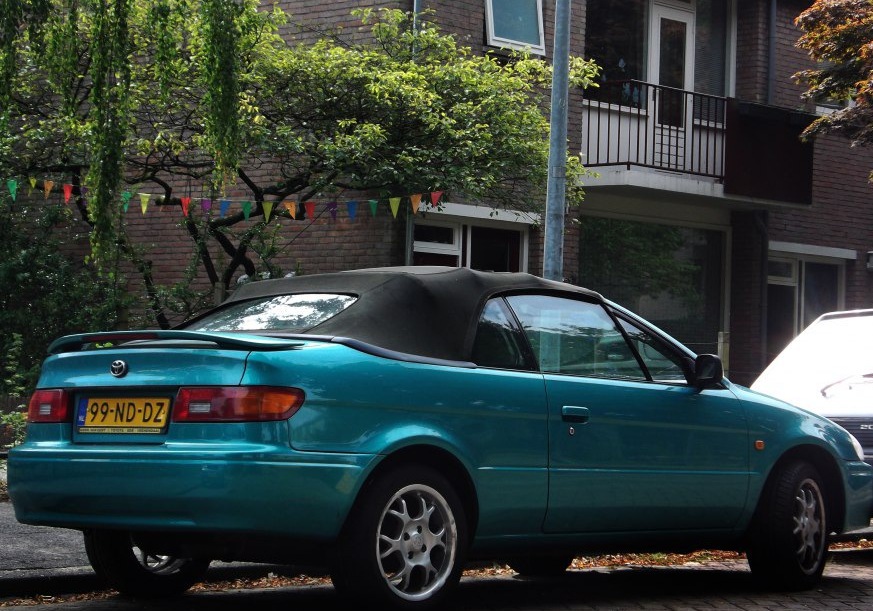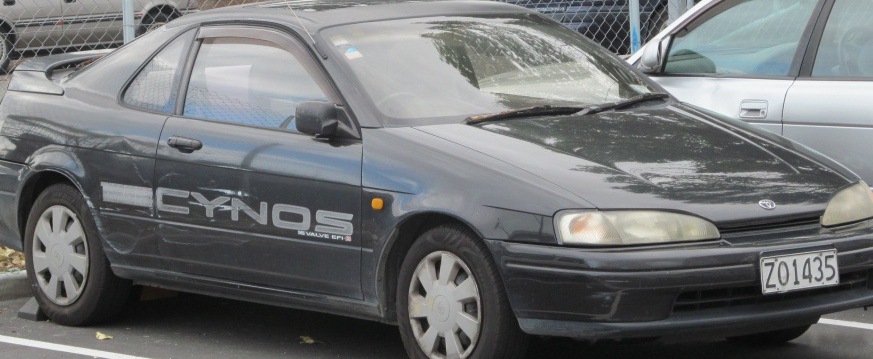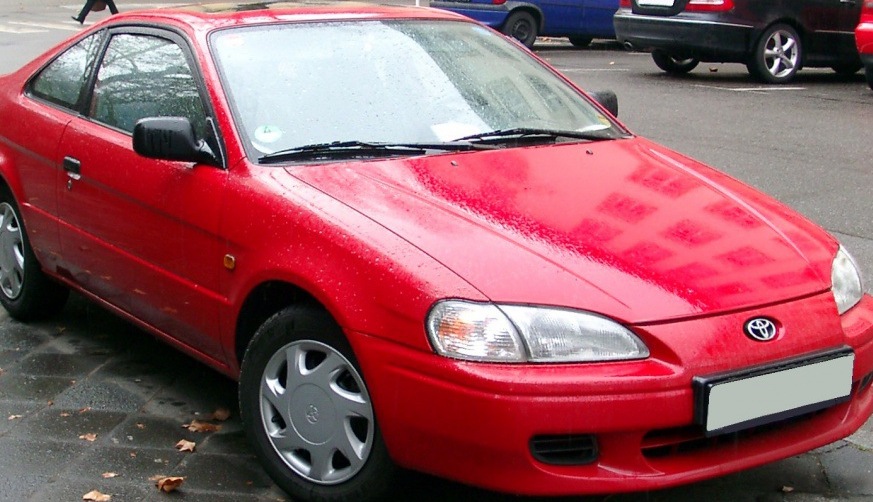
The Toyota Cynos (EL54) 1.5i 16V Beta, equipped with a 110 horsepower engine and automatic transmission, was a compact coupe produced by Toyota between 1995 and 1999. Positioned as a sporty, yet affordable option, the Cynos was primarily marketed in Japan and select export markets. It represented Toyota’s attempt to cater to a segment desiring a stylish, small coupe, and was based on the shared platform with the Toyota Starlet and the Daihatsu Mira, known internally as the EL5 platform. This particular 1.5i Beta automatic variant occupied a mid-range position within the Cynos lineup, offering a balance between performance and convenience.
Technical Specifications
| Brand | Toyota |
| Model | Cynos |
| Generation | Cynos (EL54) |
| Type (Engine) | 1.5i 16V Beta (110 Hp) Automatic |
| Start of production | 1995 |
| End of production | 1999 |
| Powertrain Architecture | Internal Combustion engine |
| Body type | Coupe |
| Seats | 4 |
| Doors | 2 |
| Fuel consumption (combined) | 5.1 l/100 km (46.1 US mpg, 55.4 UK mpg, 19.6 km/l) |
| Fuel Type | Petrol (Gasoline) |
| Weight-to-power ratio | 8.4 kg/Hp, 119.6 Hp/tonne |
| Weight-to-torque ratio | 6.8 kg/Nm, 147.8 Nm/tonne |
| Power | 110 Hp @ 6400 rpm |
| Power per litre | 73.5 Hp/l |
| Torque | 136 Nm @ 4000 rpm (100.31 lb.-ft. @ 4000 rpm) |
| Engine layout | Front, Transverse |
| Engine Model/Code | 5E-FE |
| Engine displacement | 1497 cm3 (91.35 cu. in.) |
| Number of cylinders | 4 |
| Engine configuration | Inline |
| Cylinder Bore | 74 mm (2.91 in.) |
| Piston Stroke | 87 mm (3.43 in.) |
| Compression ratio | 9.8:1 |
| Number of valves per cylinder | 4 |
| Fuel injection system | Multi-port manifold injection |
| Engine aspiration | Naturally aspirated engine |
| Valvetrain | DOHC |
| Engine oil capacity | 3.2 l (3.38 US qt | 2.82 UK qt) |
| Kerb Weight | 920 kg (2028.25 lbs.) |
| Max. weight | 1140 kg (2513.27 lbs.) |
| Max load | 220 kg (485.02 lbs.) |
| Fuel tank capacity | 45 l (11.89 US gal | 9.9 UK gal) |
| Length | 4155 mm (163.58 in.) |
| Width | 1660 mm (65.35 in.) |
| Height | 1295 mm (50.98 in.) |
| Wheelbase | 2380 mm (93.7 in.) |
| Front track | 1405 mm (55.31 in.) |
| Rear track | 1395 mm (54.92 in.) |
| Minimum turning circle | 9.4 m (30.84 ft.) |
| Drivetrain Architecture | Front wheel drive |
| Number of gears and type of gearbox | 3 gears, automatic transmission |
| Front suspension | Wishbone |
| Rear suspension | Suspension with traction connecting levers |
| Front brakes | Disc |
| Rear brakes | Drum |
| Assisting systems | ABS (Anti-lock braking system) |
| Steering type | Steering rack and pinion |
| Power steering | Hydraulic Steering |
| Tires size | 175/65 R14 |
| Wheel rims size | 14 |
Powertrain & Engine Architecture
The Cynos 1.5i Beta Automatic utilized the 5E-FE engine, a 1.5-liter inline-four cylinder gasoline engine. This engine featured a double overhead camshaft (DOHC) valvetrain and multi-port fuel injection. The 5E-FE was known for its relatively simple design and decent reliability. The engine produced 110 horsepower at 6400 rpm and 136 Nm (100.31 lb-ft) of torque at 4000 rpm. Paired with this engine was a 3-speed automatic transmission. While not a particularly advanced transmission, it provided smooth, if not overly quick, gear changes. The automatic transmission was chosen to appeal to buyers prioritizing ease of use over outright performance.
Driving Characteristics
The 1.5i Beta Automatic Cynos offered adequate, but not exhilarating, performance. The 3-speed automatic transmission, while convenient, resulted in noticeable gear changes and a less responsive feel compared to the available 5-speed manual transmission. Acceleration was sufficient for everyday driving, but overtaking maneuvers required planning. The gear ratios were optimized for fuel efficiency rather than rapid acceleration. The car felt relatively light and nimble, making it easy to maneuver in urban environments. The automatic transmission did detract from the sporty image the coupe styling suggested.
Equipment & Trim Levels
The 1.5i Beta Automatic trim typically included features such as power windows, power steering, and an AM/FM radio. Air conditioning was often standard, though sometimes offered as an option depending on the specific market. Interior upholstery was typically cloth, with a relatively basic dashboard layout. Optional extras could include alloy wheels, a sunroof, and upgraded audio systems. The interior, while functional, was not particularly luxurious, reflecting the Cynos’s positioning as an affordable coupe.
Chassis & Braking
The Cynos utilized a front-wheel-drive layout with a wishbone suspension in the front and a torsion beam suspension with traction connecting levers in the rear. The front brakes were disc brakes, while the rear brakes were drum brakes. Anti-lock Braking System (ABS) was often included as standard equipment, enhancing safety. The suspension setup provided a comfortable ride, but wasn’t particularly sporty. The relatively light weight of the vehicle helped to compensate for the less powerful engine and drum brakes in the rear.
Market Reception & Comparison
The Cynos 1.5i Beta Automatic received mixed reviews. Critics generally praised its styling and affordability, but noted the lack of performance compared to some competitors. The automatic transmission was often criticized for being somewhat dated and detracting from the driving experience. Compared to the manual transmission version, the automatic offered lower fuel economy and slower acceleration. Against rivals like the Honda Civic Coupe or Nissan Sentra Coupe, the Cynos offered a unique styling package but often fell short in terms of overall refinement and performance.
Legacy
The Toyota Cynos, while not a massive sales success, has gained a following among enthusiasts, particularly in Japan. The 5E-FE engine is known for its durability and relatively low maintenance costs. The automatic transmission, while not the most sophisticated, has proven to be reasonably reliable. Today, well-maintained Cynos models are becoming increasingly collectible, particularly those in original condition. The Cynos represents a unique chapter in Toyota’s history, showcasing their willingness to experiment with different body styles and target niche markets. Finding parts can be challenging outside of Japan, but the engine’s simplicity makes it relatively easy to repair.