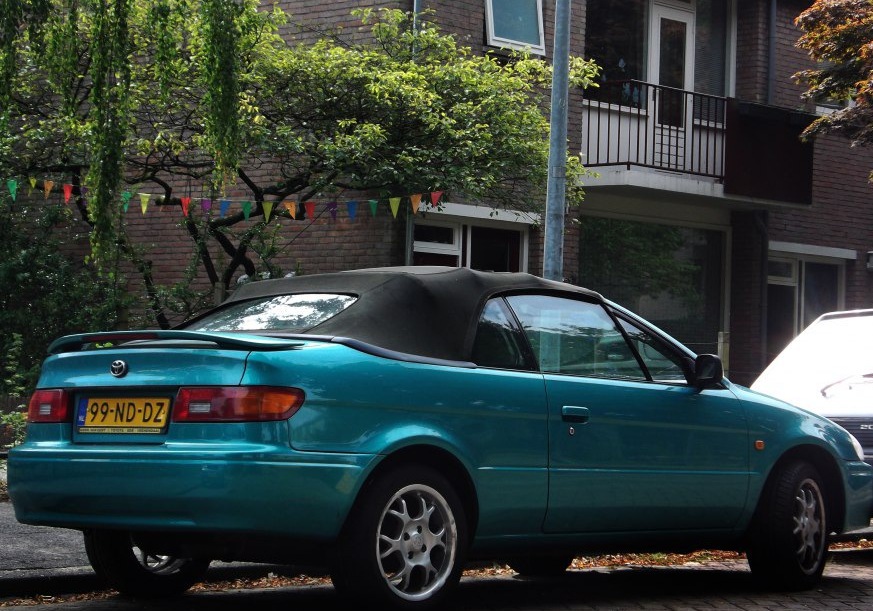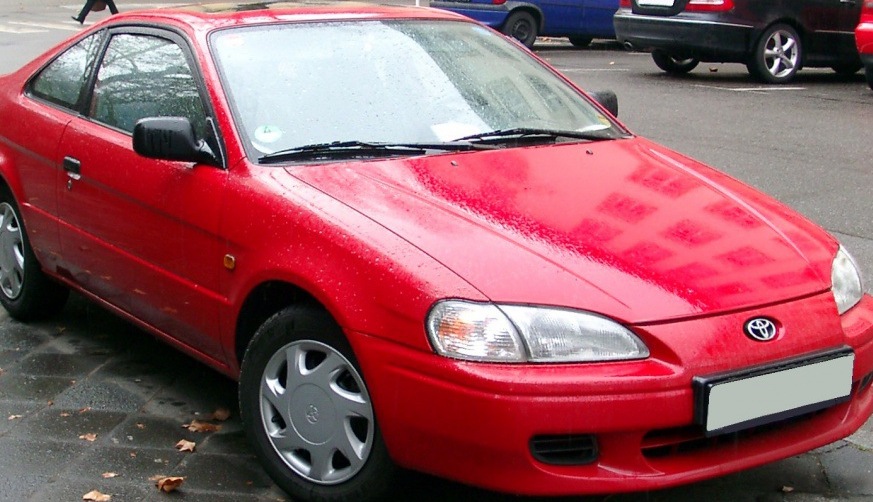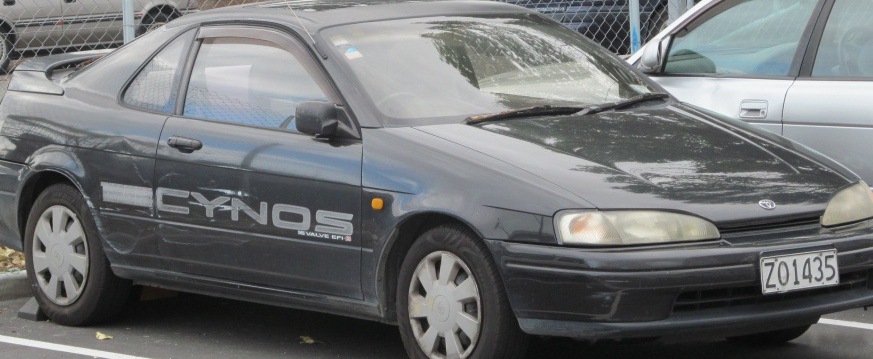
The Toyota Cynos (L44) 1.5i 16V, produced between 1991 and 1995, was a compact, two-door coupe marketed primarily in Japan and Australia. Positioned as an affordable and sporty option, the Cynos was based on the Toyota Corolla platform (E100 series) and shared many components with its more mainstream sibling. The 1.5i 16V variant, equipped with the 5E-FHE engine, represented a mid-range offering within the Cynos lineup, providing a balance between performance and fuel efficiency. It aimed to appeal to younger buyers seeking a stylish and economical vehicle.
Technical Specifications
| Brand | Toyota |
| Model | Cynos |
| Generation | Cynos (L44) |
| Type (Engine) | 1.5i 16V (115 Hp) |
| Start of production | 1991 |
| End of production | 1995 |
| Powertrain Architecture | Internal Combustion engine |
| Body type | Coupe |
| Seats | 4 |
| Doors | 2 |
| Fuel consumption (urban) | 6.76 l/100 km (34.8 US mpg, 41.8 UK mpg, 14.8 km/l) |
| Fuel consumption (extra urban) | 3.92 l/100 km (60 US mpg, 72.1 UK mpg, 25.5 km/l) |
| Fuel consumption (combined) | 6.8 l/100 km (34.6 US mpg, 41.5 UK mpg, 14.7 km/l) |
| Fuel Type | Petrol (Gasoline) |
| Weight-to-power ratio | 7.7 kg/Hp, 129.2 Hp/tonne |
| Weight-to-torque ratio | 6.6 kg/Nm, 151.7 Nm/tonne |
| Power | 115 Hp @ 6600 rpm |
| Power per litre | 76.8 Hp/l |
| Torque | 135 Nm @ 3200 rpm (99.57 lb.-ft. @ 3200 rpm) |
| Engine layout | Front, Transverse |
| Engine Model/Code | 5E-FHE |
| Engine displacement | 1497 cm3 (91.35 cu. in.) |
| Number of cylinders | 4 |
| Engine configuration | Inline |
| Cylinder Bore | 74 mm (2.91 in.) |
| Piston Stroke | 87 mm (3.43 in.) |
| Compression ratio | 9.8:1 |
| Number of valves per cylinder | 4 |
| Fuel injection system | Multi-port manifold injection |
| Engine aspiration | Naturally aspirated engine |
| Valvetrain | DOHC |
| Kerb Weight | 890 kg (1962.11 lbs.) |
| Max. weight | 1110 kg (2447.13 lbs.) |
| Max load | 220 kg (485.02 lbs.) |
| Fuel tank capacity | 45 l (11.89 US gal | 9.9 UK gal) |
| Length | 4145 mm (163.19 in.) |
| Width | 1645 mm (64.76 in.) |
| Height | 1295 mm (50.98 in.) |
| Wheelbase | 2380 mm (93.7 in.) |
| Front track | 1405 mm (55.31 in.) |
| Rear track | 1395 mm (54.92 in.) |
| Minimum turning circle | 9.4 m (30.84 ft.) |
| Drivetrain Architecture | Front wheel drive |
| Drive wheel | Front wheel drive |
| Number of gears | 5 gears, manual transmission |
| Front suspension | Wishbone |
| Rear suspension | Coil spring |
| Front brakes | Ventilated discs |
| Rear brakes | Drum |
| Assisting systems | ABS (Anti-lock braking system) |
| Steering type | Steering rack and pinion |
| Power steering | Hydraulic Steering |
| Tires size | 175/65 R14 |
Powertrain & Engine Architecture
The heart of the Cynos 1.5i 16V was the 5E-FHE engine, a 1.5-liter inline-four cylinder gasoline engine. This engine featured a double overhead camshaft (DOHC) valvetrain operating 16 valves (four per cylinder), contributing to its relatively high output for its displacement. The 5E-FHE utilized multi-port fuel injection, a common technology in the early 1990s, for precise fuel delivery and improved efficiency. The engine’s 9.8:1 compression ratio was a compromise between performance and the fuel quality available in various markets. The engine was transversely mounted in the front of the vehicle, driving the front wheels. The Cynos 1.5i 16V was exclusively offered with a five-speed manual transmission, providing drivers with direct control over the engine’s power band.
Driving Characteristics
The 115 horsepower and 135 Nm (99.57 lb-ft) of torque produced by the 5E-FHE engine provided adequate, though not exceptional, performance for the Cynos. Acceleration was respectable for its class, but the car wasn’t designed for outright speed. The five-speed manual transmission allowed drivers to keep the engine in its optimal power range, making the most of the available horsepower. The gear ratios were tuned for a balance of acceleration and fuel economy. Compared to potential higher-spec versions (had they existed), the 1.5i 16V prioritized fuel efficiency and affordability over raw power. The Cynos handled predictably, with a relatively comfortable ride quality, making it suitable for daily commuting and occasional spirited driving.
Equipment & Trim Levels
The Cynos 1.5i 16V typically came equipped with basic amenities, reflecting its position as an entry-level or mid-range model. Standard features generally included power steering, a basic audio system, and cloth upholstery. Air conditioning was often an optional extra, as were power windows and central locking. The interior design was functional and straightforward, prioritizing practicality over luxury. Trim levels varied depending on the market, but generally offered incremental upgrades in terms of interior materials and additional features. The exterior styling was characterized by its sleek, coupe-like profile, with integrated headlights and a relatively understated design.
Chassis & Braking
The Cynos utilized a front-engine, front-wheel-drive layout. The front suspension employed a wishbone design, while the rear suspension featured a coil spring setup. This configuration provided a reasonable balance between ride comfort and handling. Braking duties were handled by ventilated discs at the front and drum brakes at the rear. An Anti-lock Braking System (ABS) was often included as standard equipment, enhancing safety by preventing wheel lockup during hard braking. The chassis was relatively lightweight, contributing to the car’s agility and fuel efficiency.
Market Reception & Comparison
The Toyota Cynos 1.5i 16V was generally well-received as an affordable and reliable coupe. Critics praised its fuel efficiency and handling, but noted that its performance was not particularly exciting. Compared to other coupes in its class, such as the Honda Civic Coupe or Nissan Sunny Coupe, the Cynos offered a competitive combination of features and price. Its fuel economy was a strong selling point, particularly in markets where gasoline prices were high. Reliability was also a key strength, consistent with Toyota’s reputation for building durable vehicles.
Legacy
The Toyota Cynos, while not a widely recognized model outside of Japan and Australia, has developed a small but dedicated following among enthusiasts. The 5E-FHE engine is known for its durability and relatively simple maintenance requirements. Used Cynos models are generally affordable and can provide reliable transportation for those seeking a classic Japanese coupe. Parts availability can be a challenge in some regions, but many components are interchangeable with other Toyota models from the same era. The Cynos represents a unique and often overlooked chapter in Toyota’s history, offering a glimpse into the company’s design and engineering philosophies of the early 1990s.