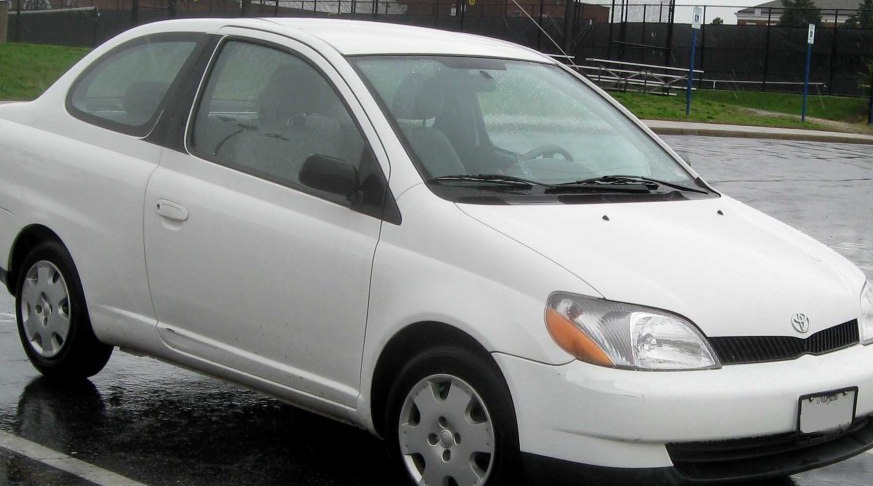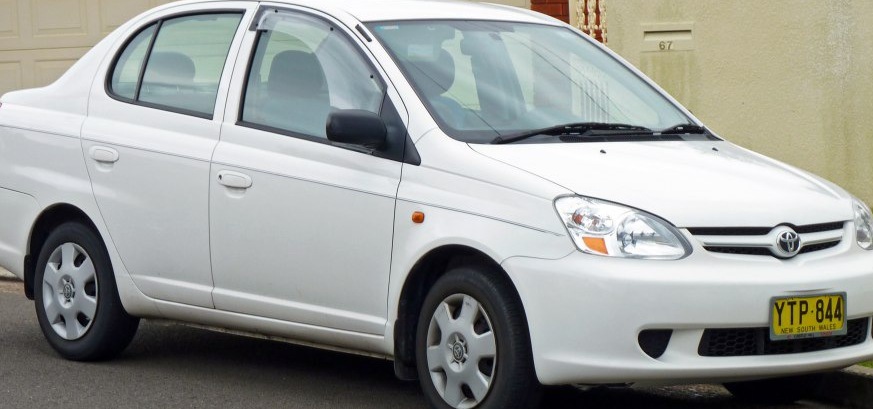
The Toyota Echo 1.5i 16V Automatic, produced from 1999 to 2005, represented Toyota’s entry into the subcompact car segment, primarily targeted at buyers seeking affordable, reliable, and fuel-efficient transportation. Positioned as the most accessible trim level within the Echo range, the 1.5i Automatic offered a practical and economical alternative to the five-speed manual version. It was a key model for Toyota in markets where automatic transmissions were highly preferred, particularly in North America. The Echo, known internally as the NCP10, was a significant departure from Toyota’s more conventional designs, featuring a distinctive, rounded exterior and a focus on maximizing interior space within a small footprint.
Technical Specifications
| Brand | Toyota |
| Model | Echo |
| Generation | Echo |
| Type (Engine) | 1.5i 16V (109 Hp) Automatic |
| Start of production | 1999 |
| End of production | 2005 |
| Powertrain Architecture | Internal Combustion engine |
| Body type | Sedan |
| Seats | 5 |
| Doors | 4 |
| Fuel Type | Petrol (Gasoline) |
| Maximum speed | 180 km/h (111.85 mph) |
| Weight-to-power ratio | 8.3 kg/Hp, 119.8 Hp/tonne |
| Weight-to-torque ratio | 6.4 kg/Nm, 157.1 Nm/tonne |
| Power | 109 Hp @ 6000 rpm |
| Power per litre | 72.9 Hp/l |
| Torque | 143 Nm @ 4200 rpm (105.47 lb.-ft. @ 4200 rpm) |
| Engine layout | Front, Transverse |
| Engine Model/Code | 1NZ-FE |
| Engine displacement | 1496 cm3 (91.29 cu. in.) |
| Number of cylinders | 4 |
| Engine configuration | Inline |
| Cylinder Bore | 75 mm (2.95 in.) |
| Piston Stroke | 84.7 mm (3.33 in.) |
| Compression ratio | 10.5:1 |
| Number of valves per cylinder | 4 |
| Fuel injection system | Multi-port manifold injection |
| Engine aspiration | Naturally aspirated engine |
| Valvetrain | DOHC |
| Engine oil capacity | 3.7 l (3.91 US qt | 3.26 UK qt) |
| Coolant | 4.3 l (4.54 US qt | 3.78 UK qt) |
| Kerb Weight | 910 kg (2006.21 lbs.) |
| Max. weight | 1185 kg (2612.48 lbs.) |
| Max load | 275 kg (606.27 lbs.) |
| Trunk (boot) space – minimum | 435 l (15.36 cu. ft.) |
| Fuel tank capacity | 45 l (11.89 US gal | 9.9 UK gal) |
| Length | 4145 mm (163.19 in.) |
| Width | 1660 mm (65.35 in.) |
| Height | 1500 mm (59.06 in.) |
| Wheelbase | 2370 mm (93.31 in.) |
| Front track | 1440 mm (56.69 in.) |
| Rear (Back) track | 1420 mm (55.91 in.) |
| Drivetrain Architecture | The Internal combustion engine (ICE) drives the front wheels of the vehicle. |
| Drive wheel | Front wheel drive |
| Number of gears and type of gearbox | 4 gears, automatic transmission |
| Front suspension | Wishbone |
| Rear suspension | Coil spring |
| Front brakes | Ventilated discs |
| Rear brakes | Drum |
| Steering type | Steering rack and pinion |
| Power steering | Hydraulic Steering |
| Tires size | 175/65 R14 S |
| Wheel rims size | 14 |
Powertrain & Engine Architecture
The heart of the Echo 1.5i Automatic was the 1NZ-FE engine, a 1.5-liter inline-four cylinder gasoline engine. This engine was part of Toyota’s NZ engine family, known for its lightweight construction and fuel efficiency. The 1NZ-FE featured a double overhead camshaft (DOHC) valvetrain with four valves per cylinder, and utilized multi-port fuel injection. The engine produced 109 horsepower at 6000 rpm and 143 Nm (105.47 lb-ft) of torque at 4200 rpm. Paired with this engine was a four-speed automatic transmission, a common choice for buyers prioritizing ease of use over outright performance. This transmission was designed for smooth shifts and optimized for fuel economy, rather than aggressive acceleration. The engine block was constructed from aluminum alloy, contributing to the vehicle’s overall light weight.
Driving Characteristics
The 1.5i Automatic’s driving experience was characterized by its practicality and ease of use. The four-speed automatic transmission, while not offering the responsiveness of a manual gearbox, provided smooth and predictable shifts. Acceleration was adequate for city driving and highway merging, but the 109 hp engine didn’t deliver particularly brisk performance. The automatic transmission’s gear ratios were tuned for fuel efficiency, meaning the engine often operated at higher rpm during acceleration. Compared to the five-speed manual version, the automatic offered a more relaxed driving experience, but at the expense of some performance and fuel economy. The light weight of the vehicle helped to mitigate the power deficit, making it feel more nimble than its horsepower figure might suggest.
Equipment & Trim Levels
The Echo 1.5i Automatic was generally equipped with a basic but functional set of features. Standard equipment typically included air conditioning, power steering, an AM/FM radio, and cloth upholstery. Safety features included dual front airbags. Optional extras were limited, but could include power windows and door locks. The interior design was simple and utilitarian, prioritizing space efficiency over luxury. The dashboard layout was straightforward, with easy-to-read gauges and controls. The trim level was considered entry-level, focusing on providing essential transportation at an affordable price point.
Chassis & Braking
The Echo featured a front-wheel-drive layout with a relatively simple suspension system. The front suspension utilized a wishbone design, while the rear suspension employed a coil spring setup. The braking system consisted of ventilated discs on the front wheels and drum brakes on the rear. The steering was rack and pinion, providing reasonably precise handling. The relatively light weight of the vehicle contributed to its nimble handling characteristics. Stabilizer bars were not standard equipment on the base 1.5i model, further emphasizing its focus on affordability.
Market Reception & Comparison
The Toyota Echo 1.5i Automatic was generally well-received by critics as a practical and economical subcompact car. It was praised for its fuel efficiency, reliability, and spacious interior for its size. However, some reviewers criticized its lack of refinement and its relatively slow acceleration. Compared to other subcompacts of the time, such as the Honda Civic and Nissan Sentra, the Echo offered a more affordable price point but lacked some of their features and driving sophistication. Fuel economy was a strong point, consistently achieving around 30-35 mpg in combined driving conditions. Reliability was also a key strength, with the 1NZ-FE engine proving to be exceptionally durable.
Legacy
The Toyota Echo, and specifically the 1.5i Automatic variant, has developed a reputation for exceptional reliability and longevity. Many examples are still on the road today, often with high mileage. The 1NZ-FE engine is known for its ability to withstand significant wear and tear, and maintenance costs are generally low. In the used car market, the Echo 1.5i Automatic remains a popular choice for budget-conscious buyers seeking a dependable and fuel-efficient vehicle. While it may not offer the latest technology or luxurious features, its simplicity and proven reliability continue to make it a viable option for those prioritizing practicality and affordability. The Echo paved the way for Toyota’s later success in the subcompact segment with models like the Yaris.