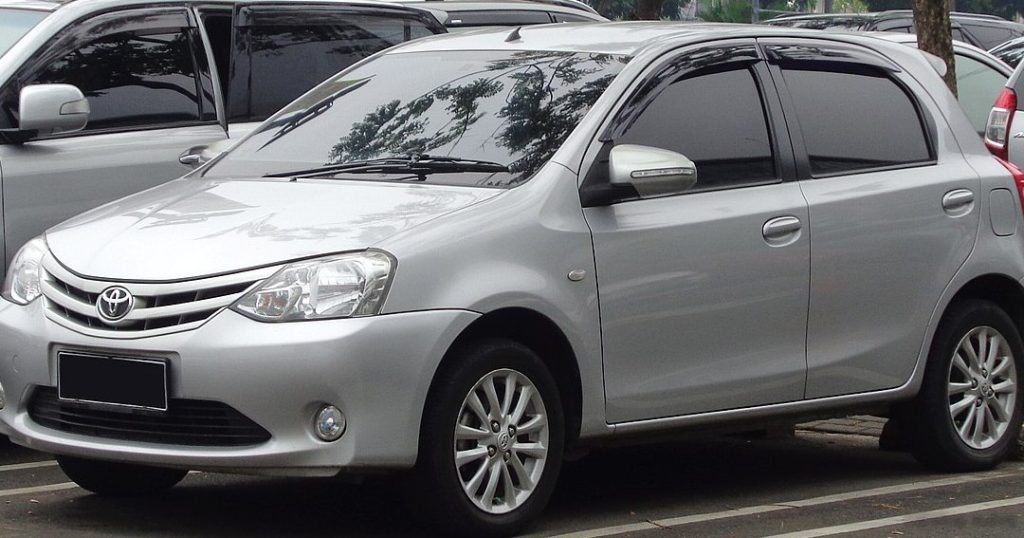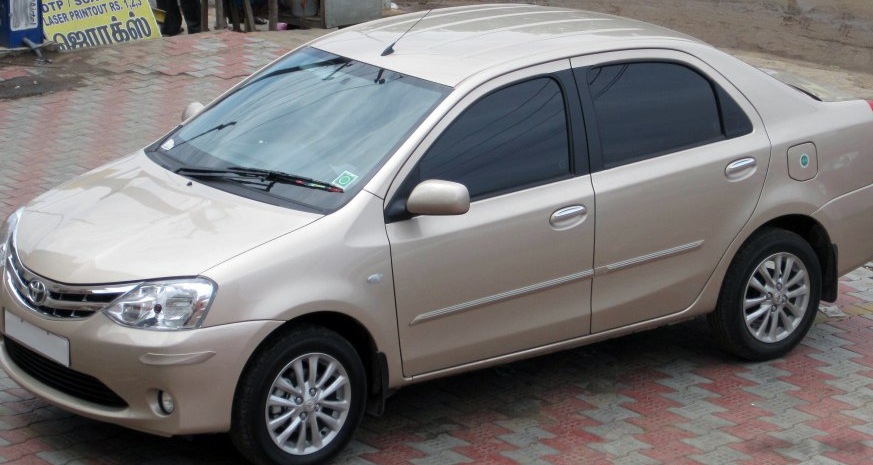
The Toyota Etios 1.4D (68 hp) was a subcompact sedan produced by Toyota, primarily targeted at emerging markets, including India, South Africa, and parts of South America, from 2010 until its discontinuation in 2017. Positioned as an entry-level vehicle, the 1.4D variant offered a diesel engine option within the broader Etios range, aiming to provide fuel efficiency and affordability. It was built on Toyota’s ‘B’ platform, shared with other global models, and represented Toyota’s attempt to cater to price-sensitive buyers seeking a reliable and practical vehicle. The Etios, in general, was not sold in North America or most of Europe.
Technical Specifications
| Brand | Toyota |
| Model | Etios |
| Generation | Etios |
| Type (Engine) | 1.4d (68 Hp) |
| Start of production | 2010 |
| Powertrain Architecture | Internal Combustion engine |
| Body type | Sedan |
| Seats | 5 |
| Doors | 4 |
| Fuel consumption (combined) | 4.2 l/100 km (56 US mpg, 67.3 UK mpg, 23.8 km/l) |
| Fuel Type | Diesel |
| Power | 68 Hp @ 3800 rpm |
| Power per litre | 49.9 Hp/l |
| Torque | 170 Nm @ 1800-2400 rpm (125.39 lb.-ft. @ 1800-2400 rpm) |
| Engine layout | Front, Transverse |
| Engine Model/Code | 1ND-TV |
| Engine displacement | 1364 cm3 (83.24 cu. in.) |
| Number of cylinders | 4 |
| Engine configuration | Inline |
| Number of valves per cylinder | 2 |
| Fuel injection system | Diesel Commonrail |
| Engine aspiration | Turbocharger, Intercooler |
| Engine oil capacity | 4.1 l (4.33 US qt | 3.61 UK qt) |
| Trunk (boot) space – minimum | 592 l (20.91 cu. ft.) |
| Fuel tank capacity | 45 l (11.89 US gal | 9.9 UK gal) |
| Length | 4369 mm (172.01 in.) |
| Width | 1695 mm (66.73 in.) |
| Height | 1510 mm (59.45 in.) |
| Wheelbase | 2550 mm (100.39 in.) |
| Minimum turning circle | 9.8 m (32.15 ft.) |
| Drivetrain Architecture | Front wheel drive, Internal Combustion Engine |
| Number of gears and type of gearbox | 5 gears, manual transmission |
| Front suspension | Independent type McPherson |
| Rear suspension | Torsion |
| Front brakes | Ventilated discs |
| Rear brakes | Drum |
| Tires size | 175/70 R14; 185/60 R15 |
| Wheel rims size | 14; 15 |
Powertrain & Engine Architecture
The heart of the Etios 1.4D was the 1ND-TV diesel engine, a 1.4-liter inline-four cylinder unit. This engine was a relatively simple design, prioritizing durability and fuel economy over outright performance. It featured a turbocharger with an intercooler to boost power and torque, and utilized a diesel common rail fuel injection system for efficient combustion. The 1ND-TV engine was known for its robust construction and relatively low maintenance requirements. The engine’s two valves per cylinder configuration contributed to its simplicity and cost-effectiveness. The 5-speed manual transmission was the only gearbox option available with this engine, designed to maximize fuel efficiency and provide adequate performance for everyday driving.
Driving Characteristics
The Etios 1.4D, with its 68 horsepower and 170 Nm (125 lb-ft) of torque, wasn’t designed for spirited driving. Acceleration was modest, and the engine felt strained at higher speeds. However, the torque delivery was relatively strong at lower RPMs, making it suitable for navigating city traffic and handling moderate inclines. The 5-speed manual transmission was geared towards economy, with taller ratios prioritizing fuel efficiency over rapid acceleration. Compared to the petrol (gasoline) versions of the Etios, the 1.4D offered significantly better fuel economy but lacked the responsiveness of the gasoline engines. The gear ratios were spaced to keep the engine within its optimal torque band during normal driving conditions.
Equipment & Trim Levels
The Etios 1.4D was typically offered in fairly basic trim levels, reflecting its position as an entry-level vehicle. Standard equipment generally included air conditioning, power steering, and basic instrumentation. Interior upholstery was typically cloth, and the dashboard design was functional but lacked the aesthetic refinement of more expensive vehicles. Optional extras, depending on the market, could include power windows, central locking, and an audio system. Safety features were also kept to a minimum, often including only dual front airbags and ABS brakes on higher trims. The focus was on providing essential features at the lowest possible cost.
Chassis & Braking
The Etios featured a McPherson strut front suspension and a torsion beam rear suspension. This setup was chosen for its simplicity, cost-effectiveness, and ability to provide a reasonably comfortable ride. The front brakes were ventilated discs, providing adequate stopping power, while the rear brakes were drums, a cost-saving measure. The suspension was tuned for comfort rather than sporty handling. Tire sizes varied depending on the trim level, with 14-inch and 15-inch wheels being common. The chassis was designed to be lightweight to maximize fuel efficiency and minimize production costs.
Market Reception & Comparison
The Toyota Etios 1.4D was generally well-received in its target markets for its reliability, fuel efficiency, and affordability. Critics praised its robust engine and low running costs, but often criticized its basic interior and lack of refinement. Compared to other diesel-powered subcompacts available in those markets, the Etios 1.4D offered a competitive fuel economy and a reputation for Toyota reliability. However, it often lagged behind in terms of features and interior quality. The Etios was often compared to vehicles like the Maruti Suzuki Swift Dzire (in India) and the Volkswagen Polo (in some markets), with the Etios typically being positioned as the more affordable option.
Legacy
The Toyota Etios, including the 1.4D variant, has established a reputation for being a durable and reliable vehicle, particularly in the used car market. The 1ND-TV diesel engine is known for its longevity and relatively low maintenance costs. While not a particularly exciting vehicle to drive, the Etios 1.4D remains a practical and affordable option for buyers seeking a dependable subcompact sedan. Its simplicity and robust construction have contributed to its continued popularity in the used car market, especially among those seeking a cost-effective and reliable mode of transportation. Parts availability remains generally good in regions where the Etios was officially sold.