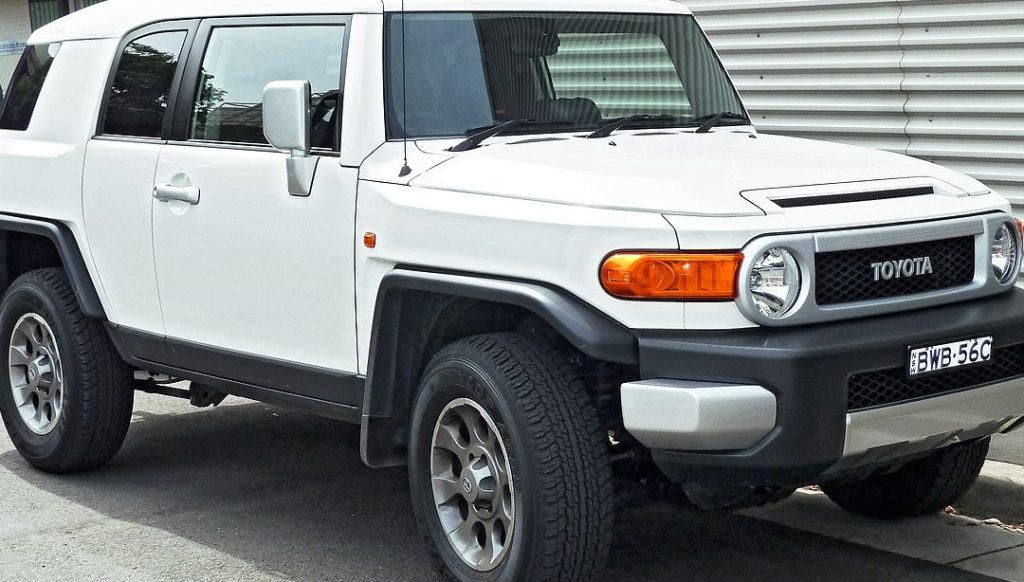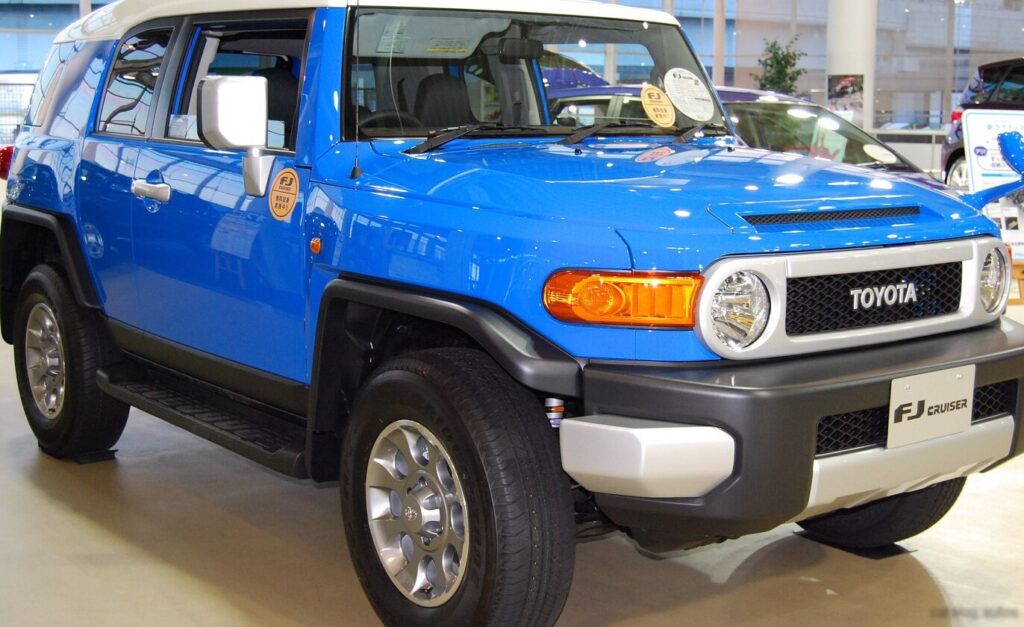
The Toyota FJ Cruiser 4.0 V6 Automatic, produced from 2010 to 2014, represents a distinctive iteration of Toyota’s retro-styled off-road SUV. Built upon the J15 platform, the FJ Cruiser aimed to evoke the spirit of the original Toyota Land Cruiser (FJ40) while offering modern comfort and capability. This particular variant, equipped with the 4.0-liter V6 engine and a five-speed automatic transmission, occupied a middle ground in the FJ Cruiser lineup, offering a balance between performance and ease of use. It was primarily marketed towards drivers seeking a capable off-road vehicle without the complexity of a manual transmission, and found a strong following in the United States and select international markets.
Technical Specifications
| Brand | Toyota |
| Model | FJ Cruiser |
| Generation | FJ Cruiser |
| Type (Engine) | 4.0 V6 (260 Hp) Automatic |
| Start of production | 2010 |
| End of production | 2014 |
| Powertrain Architecture | Internal Combustion engine |
| Body type | Off-road vehicle, SUV |
| Seats | 5 |
| Doors | 5 |
| Fuel consumption (urban) | 13.8 l/100 km (17 US mpg, 20.5 UK mpg) |
| Fuel consumption (extra urban) | 10.7 l/100 km (22 US mpg, 26.4 UK mpg) |
| Fuel Type | Petrol (Gasoline) |
| Emission standard | LEV-II |
| Weight-to-power ratio | 7.1 kg/Hp, 140.5 Hp/tonne |
| Weight-to-torque ratio | 5 kg/Nm, 198.4 Nm/tonne |
| Power | 260 Hp @ 5600 rpm |
| Power per litre | 65.7 Hp/l |
| Torque | 367 Nm @ 4400 rpm (270.69 lb.-ft. @ 4400 rpm) |
| Engine layout | Front, Longitudinal |
| Engine Model/Code | 1GR-FE |
| Engine displacement | 3956 cm3 (241.41 cu. in.) |
| Number of cylinders | 6 |
| Engine configuration | V-engine |
| Cylinder Bore | 94 mm (3.7 in.) |
| Piston Stroke | 95 mm (3.74 in.) |
| Compression ratio | 10.4:1 |
| Number of valves per cylinder | 4 |
| Fuel injection system | Multi-port manifold injection |
| Engine aspiration | Naturally aspirated engine |
| Valvetrain | DOHC, Dual VVT-i |
| Engine oil capacity | 6.1 l (6.45 US qt | 5.37 UK qt) |
| Coolant capacity | 9.8 l (10.36 US qt | 8.62 UK qt) |
| Kerb Weight | 1850 kg (4078.55 lbs.) |
| Max. weight | 2418 kg (5330.78 lbs.) |
| Max load | 568 kg (1252.23 lbs.) |
| Trunk (boot) space – minimum | 790 l (27.9 cu. ft.) |
| Trunk (boot) space – maximum | 1892 l (66.82 cu. ft.) |
| Fuel tank capacity | 72 l (19.02 US gal | 15.84 UK gal) |
| Permitted trailer load with brakes (12%) | 2268 kg (5000.08 lbs.) |
| Length | 4671 mm (183.9 in.) |
| Width | 1905 mm (75 in.) |
| Height | 1811 mm (71.3 in.) |
| Wheelbase | 2690 mm (105.91 in.) |
| Front track | 1605 mm (63.19 in.) |
| Rear (Back) track | 1615 mm (63.58 in.) |
| Ride height (ground clearance) | 221 mm (8.7 in.) |
| Minimum turning circle (turning diameter) | 12.4 m (40.68 ft.) |
| Approach angle | 32° |
| Departure angle | 30° |
| Ramp-over (brakeover) angle | 26° |
| Drivetrain Architecture | Rear wheel drive |
| Number of gears and type of gearbox | 5 gears, automatic transmission ECT-i |
| Front suspension | Double wishbone, Transverse stabilizer |
| Rear suspension | Independent multi-link spring suspension with stabilizer |
| Front brakes | Disc |
| Rear brakes | Ventilated discs |
| Assisting systems | ABS (Anti-lock braking system) |
| Steering type | Steering rack and pinion |
| Power steering | Hydraulic Steering |
| Tires size | 265/70 R17 |
| Wheel rims size | 7.5J x 17 |
INTRODUCTION
The Toyota FJ Cruiser 4.0 V6 Automatic, produced between 2010 and 2014, was a key variant within the second generation of the FJ Cruiser (introduced in 2006). Designed as a rugged, body-on-frame SUV, the FJ Cruiser aimed to recapture the adventurous spirit of the original FJ40 Land Cruiser, but with modern conveniences. The 4.0-liter V6 engine paired with a five-speed automatic transmission offered a compelling combination of power and usability, making it a popular choice for those seeking a capable off-road vehicle without the need for a manual gearbox. This configuration positioned itself as a step up from the base 2.5-liter four-cylinder models, offering significantly more power and torque for tackling challenging terrain or towing.
Powertrain & Engine Architecture
At the heart of the FJ Cruiser 4.0 V6 Automatic lies the 1GR-FE engine, a 3.956-liter (241.41 cubic inches) naturally aspirated V6. This engine utilizes a cast iron block and aluminum cylinder heads, incorporating Toyota’s Dual VVT-i (Variable Valve Timing-intelligent) technology for both intake and exhaust valves. This system optimizes engine performance and fuel efficiency across a wider range of engine speeds. Fuel delivery is managed by a multi-port fuel injection system. The engine produces 260 horsepower at 5600 rpm and 367 Nm (270.69 lb-ft) of torque at 4400 rpm. The five-speed automatic transmission, designated ECT-i (Electronically Controlled Transmission – intelligent), provides smooth and responsive shifting. While not the most technologically advanced transmission available at the time, it was known for its durability and reliability. The transmission’s gear ratios were tuned to balance on-road drivability with off-road crawling capability.
Driving Characteristics
The FJ Cruiser 4.0 V6 Automatic offered a noticeable improvement in performance compared to the 2.5-liter four-cylinder variant. Acceleration was brisk, and the engine provided ample torque for navigating challenging off-road conditions. The automatic transmission, while not offering manual shift control, provided smooth and predictable gear changes. Compared to the six-speed manual transmission available on some FJ Cruiser models, the automatic prioritized ease of use over outright performance. The automatic’s gear ratios were optimized for a balance between fuel economy and off-road capability, resulting in a slightly lower top speed and potentially slower acceleration than the manual version. However, the automatic’s convenience made it a more appealing option for many drivers, particularly those who frequently encountered stop-and-go traffic or challenging terrain where precise gear selection wasn’t always necessary.
Equipment & Trim Levels
The FJ Cruiser 4.0 V6 Automatic typically came standard with features such as air conditioning, power windows and locks, a CD player with auxiliary input, and anti-lock brakes (ABS). Interior upholstery was typically a durable cloth material, though leather options were available. The dashboard featured a straightforward design with easy-to-read gauges. Optional extras included a premium audio system, a backup camera, and a sunroof. Higher trim levels added features like heated seats, automatic climate control, and upgraded interior trim. The FJ Cruiser’s interior was designed with practicality in mind, featuring water-resistant surfaces and ample storage space.
Chassis & Braking
The FJ Cruiser utilized a body-on-frame construction, providing a robust and durable platform for off-road adventures. The front suspension consisted of a double wishbone setup with a transverse stabilizer bar, while the rear suspension employed an independent multi-link spring suspension, also with a stabilizer bar. This suspension configuration provided a comfortable ride on paved roads while maintaining excellent off-road articulation. Braking duties were handled by disc brakes on all four wheels, with ventilated discs at the rear for improved heat dissipation. The ABS system helped to maintain control during emergency braking situations. The FJ Cruiser’s relatively high ground clearance (221 mm / 8.7 inches) and robust suspension allowed it to tackle a wide range of off-road obstacles.
Market Reception & Comparison
The FJ Cruiser 4.0 V6 Automatic received generally positive reviews from automotive critics. It was praised for its rugged styling, off-road capability, and comfortable ride. However, some critics noted its relatively poor fuel economy and limited on-road refinement. Compared to the 2.5-liter four-cylinder model, the 4.0 V6 Automatic offered a significant performance upgrade, but at the cost of increased fuel consumption. Compared to other SUVs in its class, the FJ Cruiser stood out for its unique styling and off-road focus. Its fuel economy of 13.8 l/100 km (17 US mpg) in urban driving was considered relatively high, but its off-road prowess and distinctive character appealed to a dedicated following.
Legacy
The Toyota FJ Cruiser 4.0 V6 Automatic has proven to be a reliable and durable vehicle, with many examples still on the road today. The 1GR-FE engine is known for its longevity and relatively low maintenance costs. The automatic transmission, while not the most advanced, has also proven to be dependable. On the used car market, FJ Cruisers in good condition command a relatively high price, reflecting their popularity and reputation for reliability. The FJ Cruiser’s unique styling and off-road capability have made it a cult favorite among enthusiasts, ensuring its place in automotive history as a distinctive and capable SUV.