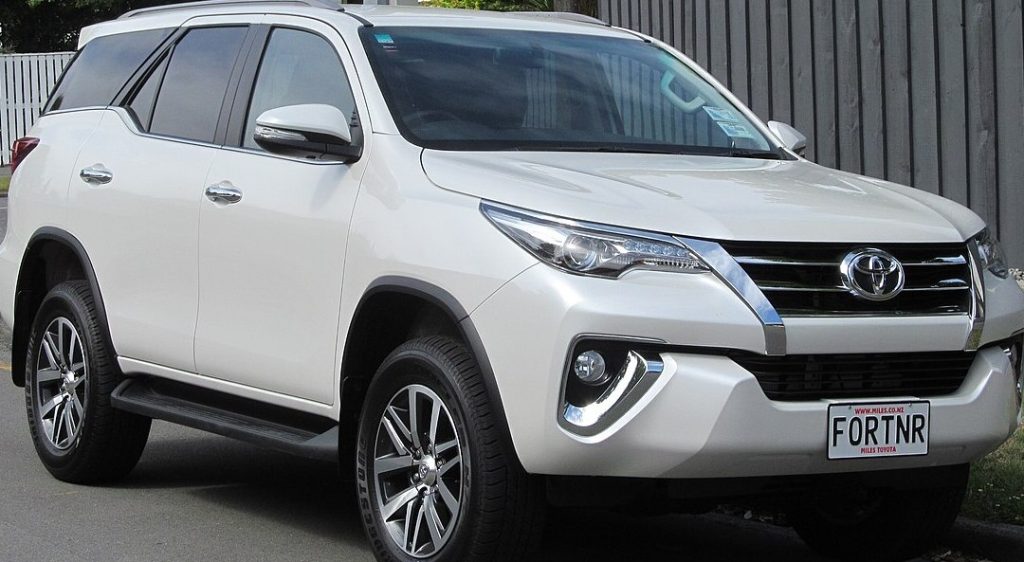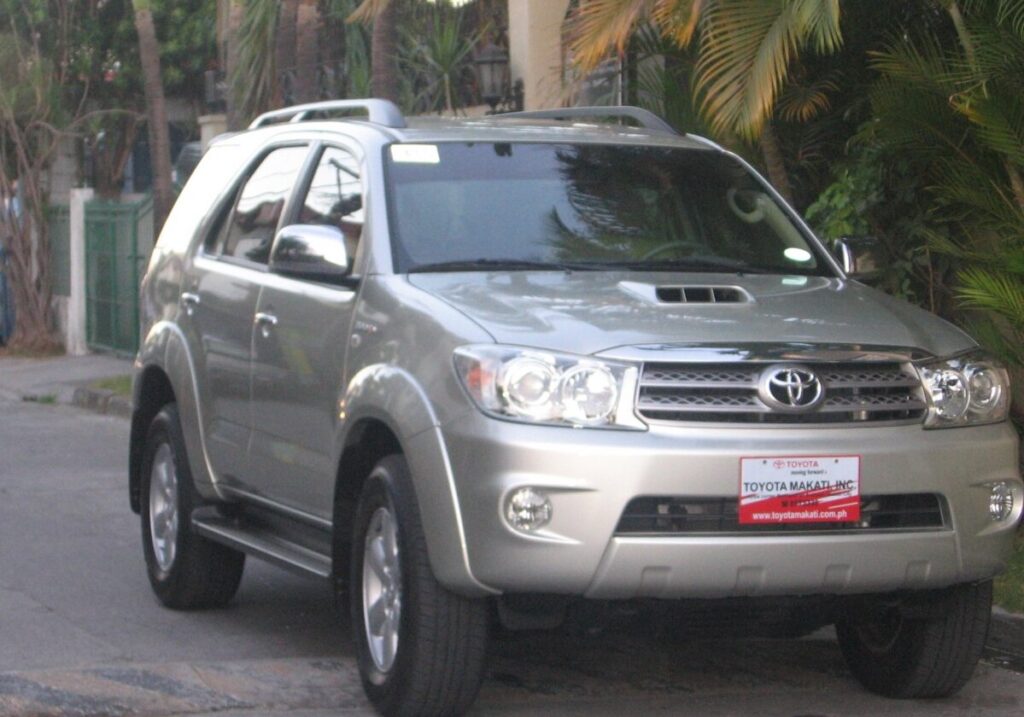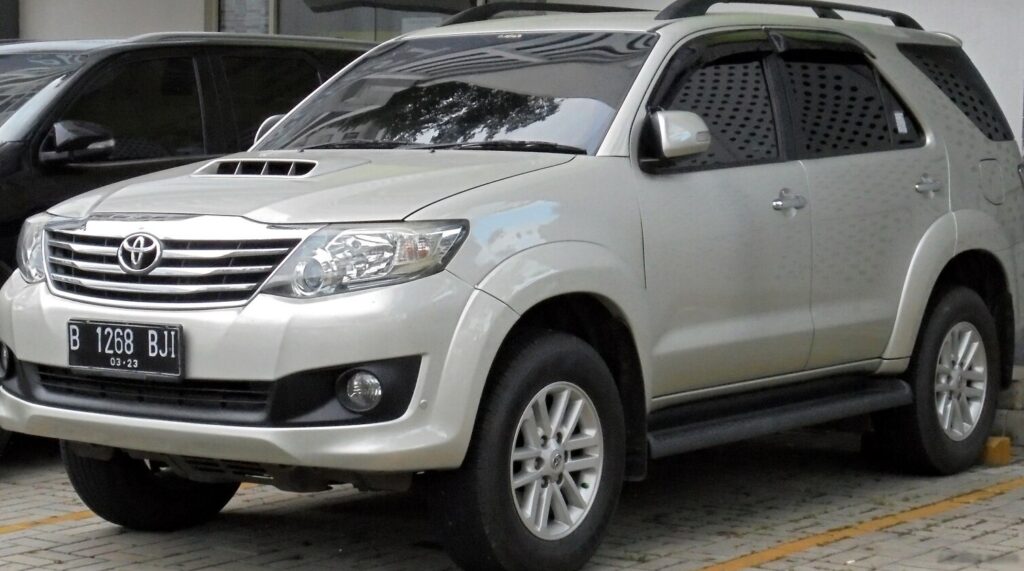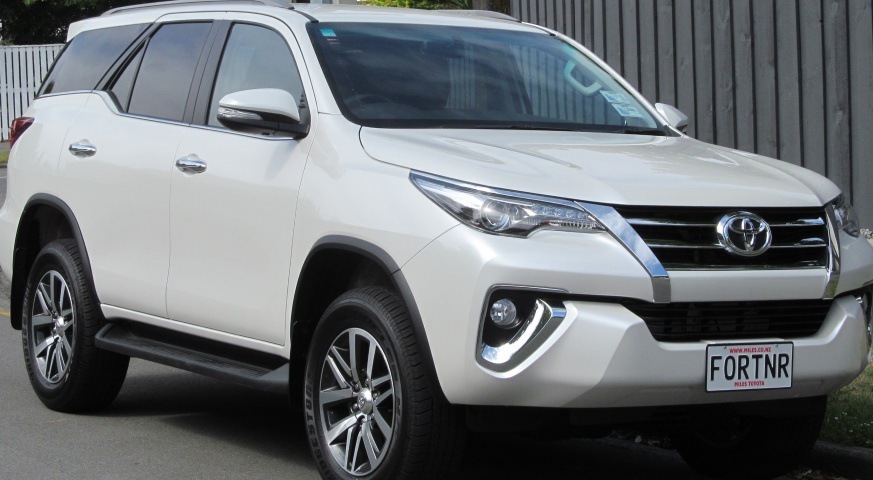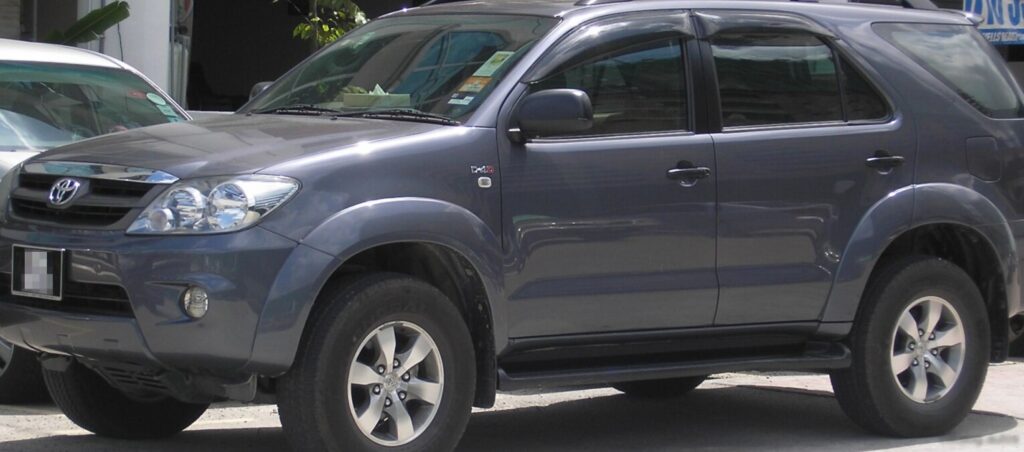
The Toyota Fortuner 2.7 G (118 hp) was a variant of the first-generation Fortuner, produced between 2004 and 2008. Positioned as an entry-level to mid-range offering within the Fortuner lineup, it aimed to provide a more accessible price point for buyers seeking a robust, seven-seater SUV with all-wheel drive capability. The Fortuner, based on the Toyota Hilux pickup truck platform, was primarily marketed in regions like Asia, South America, and Australia, where demand for body-on-frame SUVs remained strong. This 2.7 G trim offered a balance between affordability and functionality, making it a popular choice for families and those needing a versatile vehicle for both on and off-road use.
Technical Specifications
| Brand | Toyota |
| Model | Fortuner |
| Generation | Fortuner I |
| Type (Engine) | 2.7 G (118 Hp) |
| Start of production | 2004 |
| End of production | 2008 |
| Powertrain Architecture | Internal Combustion engine |
| Body type | SUV |
| Seats | 7 |
| Doors | 5 |
| Fuel Type | Petrol (Gasoline) |
| Power | 118 Hp @ 5200 rpm |
| Torque | 241 Nm @ 3800 rpm / 177.75 lb.-ft. @ 3800 rpm |
| Engine layout | Front, Longitudinal |
| Engine Model/Code | 2TR-FE |
| Number of cylinders | 4 |
| Engine configuration | Inline |
| Number of valves per cylinder | 4 |
| Fuel injection system | Multi-port manifold injection |
| Engine aspiration | Naturally aspirated engine |
| Valvetrain | DOHC |
| Engine oil capacity | 5.6 l / 5.92 US qt | 4.93 UK qt |
| Coolant capacity | 7.8 l / 8.24 US qt | 6.86 UK qt |
| Length | 4695 mm / 184.84 in |
| Width | 1840 mm / 72.44 in |
| Height | 1795 mm / 70.67 in |
| Wheelbase | 2750 mm / 108.27 in |
| Drive wheel | All wheel drive (4×4) |
| Number of gears and type of gearbox | 4 gears, automatic transmission |
Powertrain & Engine Architecture
The heart of the Fortuner 2.7 G is the 2TR-FE engine, a 2.7-liter inline-four cylinder gasoline engine. This engine is a member of Toyota’s TR family, known for its durability and relatively simple design. The 2TR-FE utilizes a double overhead camshaft (DOHC) valvetrain with four valves per cylinder, contributing to improved breathing and efficiency. Fuel delivery is managed by a multi-port fuel injection system, providing precise fuel metering for optimal combustion. The engine’s 118 horsepower and 241 Nm (177.75 lb-ft) of torque are respectable for its displacement, but it’s important to note that this engine was not designed for outright performance. It prioritized reliability and fuel economy over raw power. The engine is longitudinally mounted in the chassis, a configuration common in body-on-frame SUVs. Paired with the 2TR-FE is a four-speed automatic transmission. This transmission, while providing convenience, is a relatively older design compared to the five or six-speed automatics becoming common in other vehicles at the time. The gear ratios were tuned for everyday drivability and towing capacity, rather than sporty acceleration.
Driving Characteristics
The Fortuner 2.7 G with the four-speed automatic transmission delivers a comfortable, if not particularly exhilarating, driving experience. Acceleration is adequate for most situations, but the engine can feel strained when fully loaded or climbing steep hills. The automatic transmission shifts smoothly, but the limited number of gears can result in noticeable engine RPM fluctuations during highway cruising. The 4×4 system provides enhanced traction on loose surfaces, making it capable off-road, though it lacks the sophisticated terrain management systems found in some competitors. Compared to the higher-output 4.0-liter V6 versions of the Fortuner, the 2.7 G feels significantly less powerful. The V6 offered substantially more torque, resulting in quicker acceleration and greater towing capacity. However, the 2.7 G’s lighter engine weight contributes to slightly better fuel economy and handling. Compared to the diesel variants, the 2.7 G lacks the low-end grunt of the turbodiesel engines, making it less suitable for heavy-duty towing or frequent off-road excursions.
Equipment & Trim Levels
The 2.7 G trim level of the Fortuner I typically included standard features such as air conditioning, power windows, power door locks, and a basic audio system. Interior upholstery was usually cloth, and the dashboard featured a functional, if somewhat utilitarian, design. Optional extras available for the 2.7 G could include alloy wheels, a roof rack, fog lamps, and an upgraded audio system with a CD player. Safety features were relatively basic for the time, typically including dual front airbags and anti-lock brakes (ABS) on some models. The 2.7 G trim was positioned as a step up from the base model, offering a more comprehensive set of features without the added cost of the higher-end trims.
Chassis & Braking
The Fortuner I utilizes a traditional body-on-frame construction, providing a robust and durable chassis. The suspension consists of double wishbones at the front and a multi-link setup at the rear. This suspension configuration is designed to provide a comfortable ride while maintaining good off-road capability. Braking duties are handled by disc brakes at the front and drum brakes at the rear. While adequate for most driving conditions, the rear drum brakes are a cost-saving measure that limits overall braking performance compared to all-disc setups. Stabilizer bars are included at both the front and rear to reduce body roll during cornering. The chassis and suspension were tuned to handle the weight of a full load of passengers and cargo, as well as the stresses of off-road driving.
Market Reception & Comparison
The Toyota Fortuner 2.7 G was generally well-received in its target markets. Critics praised its ruggedness, reliability, and spacious interior. However, some reviewers noted the engine’s lack of power and the transmission’s limited number of gears. Fuel economy was considered average for a vehicle of its size and type. Compared to competitors like the Mitsubishi Pajero Sport and the Isuzu Cross, the Fortuner offered a compelling combination of features and value. The Fortuner’s Toyota badge also carried significant weight in terms of brand reputation and perceived reliability. The 2.7 G trim offered a more affordable entry point into the Fortuner range, making it accessible to a wider range of buyers.
Legacy
The Toyota Fortuner I 2.7 G has proven to be a durable and reliable vehicle in the used car market. The 2TR-FE engine is known for its longevity, and the four-speed automatic transmission, while not the most sophisticated, is generally dependable. Maintenance costs are relatively low, thanks to the engine’s simple design and the widespread availability of spare parts. Today, these Fortuners are often sought after by those looking for a rugged, affordable SUV for family use or light off-road adventures. While not a performance machine, the 2.7 G offers a practical and dependable transportation solution that has stood the test of time.