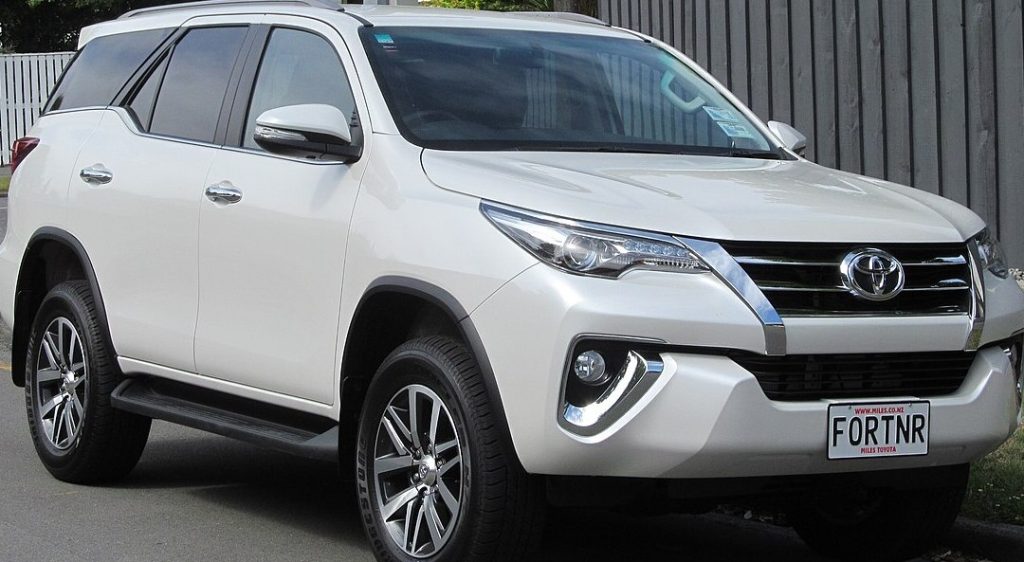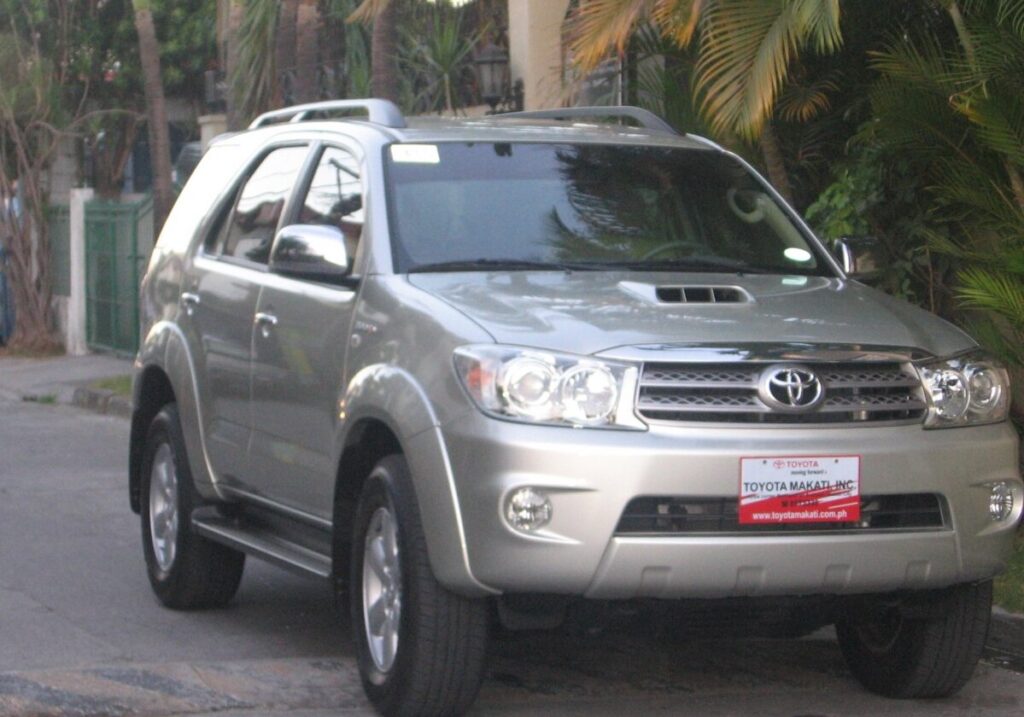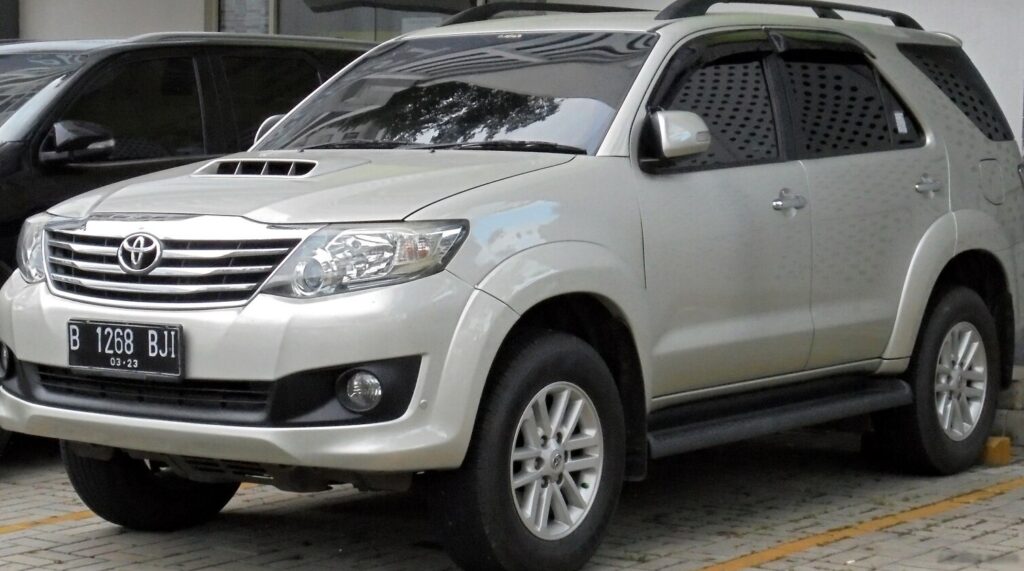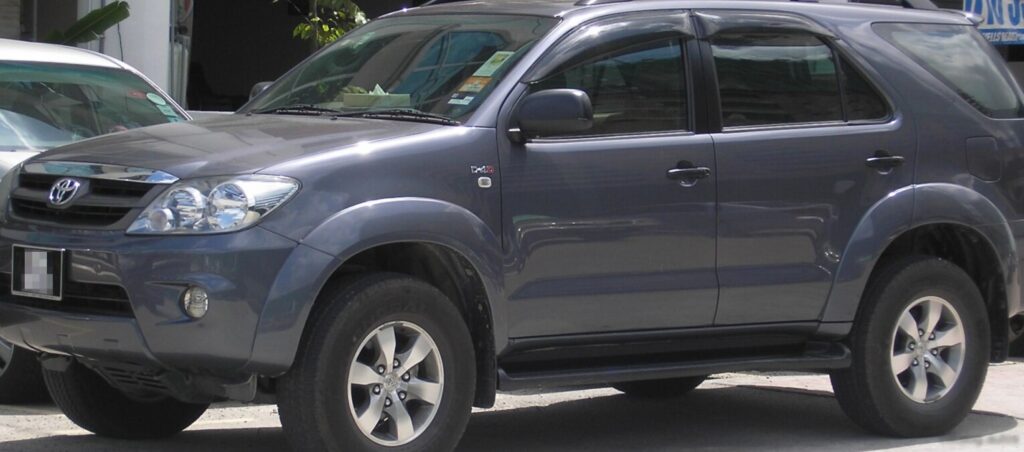
The Toyota Fortuner I 2.7 G (118 hp) Automatic, produced between 2004 and 2008, represents an entry-level offering within the first generation (AN150/AN160) of Toyota’s popular mid-size SUV. Positioned as a more affordable and accessible variant, it catered to buyers seeking the Fortuner’s rugged body-on-frame construction and seven-passenger capability without the higher price tag of the more powerful or feature-rich trims. The Fortuner, initially launched in 2005, was specifically designed for markets outside of North America, particularly Southeast Asia, Australia, and South Africa, where robust SUVs with off-road capability were in high demand. This 2.7G trim served as a key volume seller, offering a balance between practicality, affordability, and Toyota’s renowned reliability.
Technical Specifications
| Brand | Toyota |
| Model | Fortuner |
| Generation | Fortuner I |
| Type | 2.7 G (118 Hp) Automatic |
| Start of Production | 2004 |
| End of Production | 2008 |
| Powertrain Architecture | Internal Combustion Engine |
| Body Type | SUV |
| Seats | 7 |
| Doors | 5 |
| Fuel Type | Petrol (Gasoline) |
| Power | 118 Hp @ 5200 rpm |
| Torque | 241 Nm @ 3800 rpm / 177.75 lb.-ft. @ 3800 rpm |
| Engine Layout | Front, Longitudinal |
| Engine Model/Code | 2TR-FE |
| Number of Cylinders | 4 |
| Engine Configuration | Inline |
| Number of Valves per Cylinder | 4 |
| Fuel Injection System | Multi-port Manifold Injection |
| Engine Aspiration | Naturally Aspirated |
| Valvetrain | DOHC |
| Engine Oil Capacity | 5.6 l / 5.92 US qt | 4.93 UK qt |
| Coolant Capacity | 8.1 l / 8.56 US qt | 7.13 UK qt |
| Length | 4695 mm / 184.84 in. |
| Width | 1840 mm / 72.44 in. |
| Height | 1795 mm / 70.67 in. |
| Wheelbase | 2750 mm / 108.27 in. |
| Drive Wheel | All Wheel Drive (4×4) |
| Number of Gears & Gearbox Type | 4 gears, Automatic Transmission |
Powertrain & Engine Architecture
The heart of the Fortuner 2.7 G is the 2TR-FE engine, a 2.7-liter (2694 cc) inline-four cylinder gasoline engine. This engine is a member of Toyota’s TR family, known for its durability and relatively simple design. The 2TR-FE utilizes a double overhead camshaft (DOHC) valvetrain with four valves per cylinder, contributing to improved breathing and efficiency. Fuel delivery is managed by a multi-port fuel injection system, providing precise fuel metering for optimal combustion. The engine’s 118 horsepower at 5200 rpm and 241 Nm (177.75 lb-ft) of torque at 3800 rpm are respectable, but not particularly high, figures for a vehicle of this size and weight. The engine is longitudinally mounted, a configuration common in rear-wheel-drive and four-wheel-drive vehicles. Paired with the 2TR-FE is a four-speed automatic transmission. While not the most modern transmission available at the time, it was chosen for its reliability and ease of use, aligning with the Fortuner’s overall focus on practicality. The transmission’s gear ratios are tuned for a balance of everyday drivability and off-road capability, prioritizing torque multiplication at lower speeds.
Driving Characteristics
The driving experience in the Fortuner 2.7 G Automatic is characterized by its comfortable ride and adequate, though not exhilarating, performance. The four-speed automatic transmission, while smooth, lacks the responsiveness of more modern transmissions with a greater number of gears. Acceleration is adequate for everyday driving, but passing maneuvers require careful planning, especially when fully loaded with passengers and cargo. The 2.7-liter engine feels somewhat strained when climbing steep hills or carrying a heavy load. Compared to the higher-output 4.0-liter V6 versions of the Fortuner, the 2.7 G feels noticeably less powerful. However, the 2.7 G offers better fuel economy than the V6. The automatic transmission’s shift points are programmed to prioritize fuel efficiency and smooth operation, resulting in a less sporty driving experience. The four-wheel-drive system provides enhanced traction on loose surfaces, making it capable of handling moderate off-road conditions.
Equipment & Trim Levels
The 2.7 G trim level of the Fortuner I typically included standard features such as air conditioning, power windows, power door locks, and a basic audio system. Interior upholstery was typically cloth, and the dashboard featured a functional, if somewhat utilitarian, design. Optional extras available for the 2.7 G included alloy wheels, a roof rack, and an upgraded audio system. Safety features were relatively basic for the time, typically including dual front airbags and anti-lock brakes (ABS) on some markets. The 2.7 G was positioned as a mid-range trim, offering a step up in features from the base model but lacking the luxury appointments of the higher-end trims.
Chassis & Braking
The Fortuner I utilizes a traditional body-on-frame construction, providing a robust and durable platform. The suspension consists of double wishbones at the front and a multi-link setup at the rear. The rear suspension in the 2.7 G often featured drum brakes, while the front brakes were typically ventilated discs. This configuration was a cost-saving measure compared to the all-disc brake setup found on higher trim levels. A stabilizer bar was included at both the front and rear to reduce body roll during cornering. The chassis and suspension were tuned to provide a comfortable ride while maintaining reasonable off-road capability. The Fortuner’s relatively high ground clearance further enhances its off-road prowess.
Market Reception & Comparison
The Toyota Fortuner 2.7 G Automatic was generally well-received in its target markets. Critics praised its ruggedness, reliability, and spacious interior. However, some reviewers noted the engine’s lack of power and the transmission’s dated design. Compared to other SUVs in its class, such as the Mitsubishi Pajero Sport and the Isuzu MU-7, the Fortuner offered a compelling combination of features and value. Fuel economy was considered average for a vehicle of its size and type. Reliability was a major selling point, with the 2TR-FE engine and the four-speed automatic transmission proving to be durable and long-lasting.
Legacy
The Toyota Fortuner I 2.7 G Automatic has proven to be a remarkably reliable vehicle, and many examples are still on the road today. The 2TR-FE engine is known for its longevity, and the four-speed automatic transmission, while not the most sophisticated, is generally robust. In the used car market, the 2.7 G represents a relatively affordable entry point into Fortuner ownership. Maintenance costs are generally reasonable, and parts availability is good. While it may not offer the performance or features of newer SUVs, the Fortuner 2.7 G remains a popular choice for buyers seeking a durable, practical, and reliable seven-passenger vehicle.