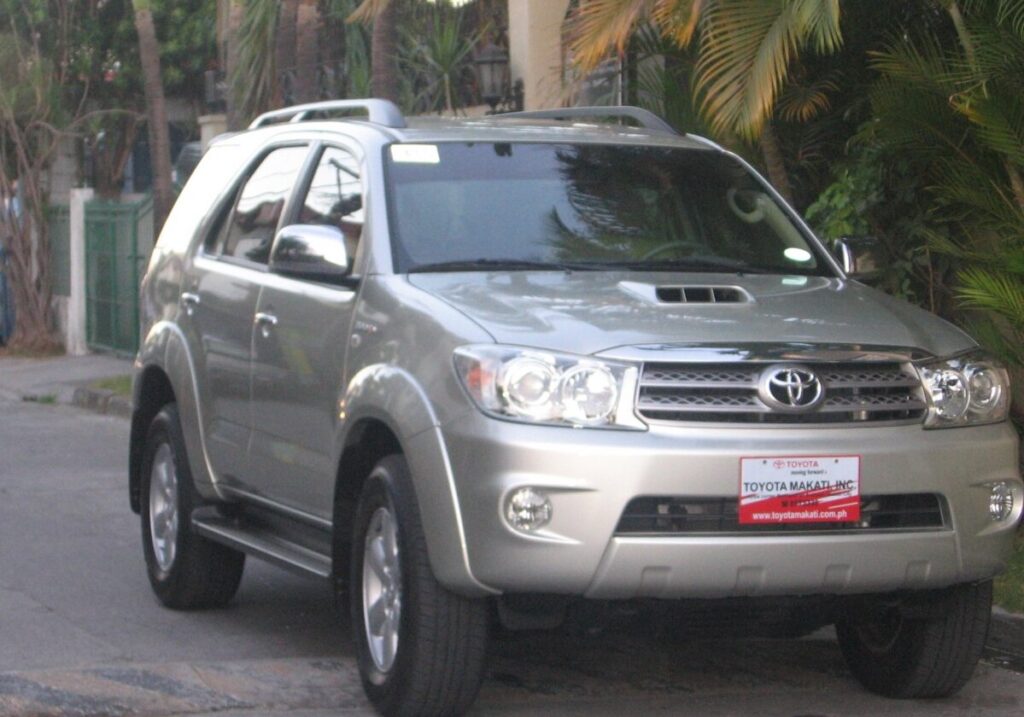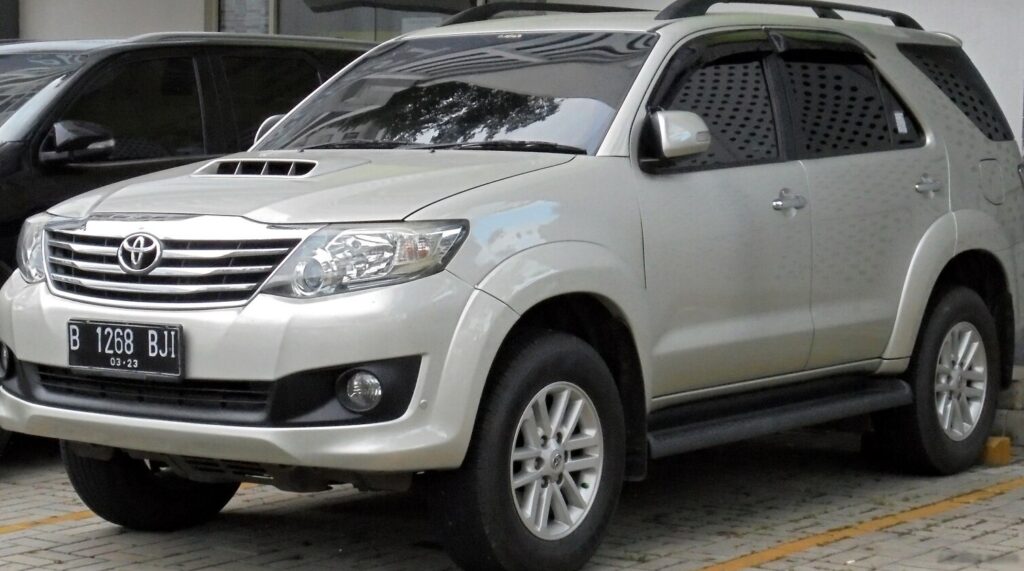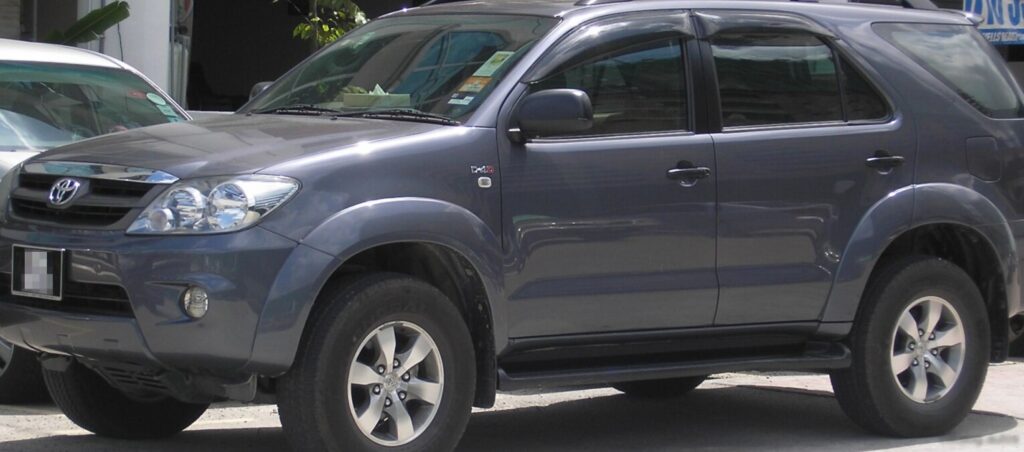
The Toyota Fortuner I 3.0 D-4D Automatic, produced between 2004 and 2008, represents the initial iteration of Toyota’s popular mid-size SUV. Built upon the Hilux pickup truck platform (specifically the ANH20/GGN20 series), the Fortuner was designed to offer a more comfortable and family-oriented alternative to the utilitarian Hilux, while retaining its robust four-wheel-drive capabilities. This particular variant, equipped with the 1KD-FTV 3.0-liter diesel engine and a four-speed automatic transmission, occupied a mid-range position within the Fortuner I lineup, offering a balance between performance, fuel efficiency, and convenience. It was primarily marketed in regions where diesel-powered SUVs were favored, including Southeast Asia, Australia, South Africa, and parts of South America.
Technical Specifications
| Brand | Toyota |
| Model | Fortuner |
| Generation | Fortuner I |
| Type (Engine) | 3.0 D-4D (163 Hp) Automatic |
| Start of production | 2004 |
| End of production | 2008 |
| Powertrain Architecture | Internal Combustion engine |
| Body type | SUV |
| Seats | 7 |
| Doors | 5 |
| Fuel consumption (urban) | 11.4 l/100 km (20.6 US mpg / 24.8 UK mpg / 8.8 km/l) |
| Fuel consumption (extra urban) | 7.1 l/100 km (33.1 US mpg / 39.8 UK mpg / 14.1 km/l) |
| Fuel Type | Diesel |
| Acceleration 0 – 100 km/h | 11.7 sec |
| Acceleration 0 – 62 mph | 11.7 sec |
| Acceleration 0 – 60 mph | 11.1 sec |
| Maximum speed | 173 km/h (107.5 mph) |
| Power | 163 Hp @ 3400 rpm |
| Torque | 343 Nm @ 1600 rpm (252.98 lb.-ft. @ 1600 rpm) |
| Engine layout | Front, Longitudinal |
| Engine Model/Code | 1KD-FTV |
| Engine displacement | 2982 cm3 (181.97 cu. in.) |
| Number of cylinders | 4 |
| Engine configuration | Inline |
| Cylinder Bore | 96 mm (3.78 in.) |
| Piston Stroke | 103 mm (4.06 in.) |
| Compression ratio | 18.4:1 |
| Number of valves per cylinder | 4 |
| Fuel injection system | Diesel Commonrail |
| Engine aspiration | Turbocharger, Intercooler |
| Valvetrain | DOHC |
| Engine oil capacity | 6.9 l (7.29 US qt | 6.07 UK qt) |
| Coolant capacity | 11.1 l (11.73 US qt | 9.77 UK qt) |
| Length | 4695 mm (184.84 in.) |
| Width | 1840 mm (72.44 in.) |
| Height | 1795 mm (70.67 in.) |
| Wheelbase | 2750 mm (108.27 in.) |
| Drivetrain | All wheel drive (4×4) |
| Number of gears and type of gearbox | 4 gears, automatic transmission |
Powertrain & Engine Architecture
The heart of the Fortuner I 3.0 D-4D Automatic is the 1KD-FTV engine, a 2.982-liter (181.97 cubic inches) inline-four cylinder diesel. This engine is a member of Toyota’s D-4D (Direct Injection 4-stroke Diesel) family, known for its robust construction and relatively good fuel economy. The 1KD-FTV utilizes a common rail direct injection system, delivering fuel at extremely high pressure for improved combustion efficiency and reduced emissions. A turbocharger with an intercooler further enhances power output. The engine features a double overhead camshaft (DOHC) valvetrain with four valves per cylinder, optimizing airflow for increased performance. The 163 horsepower and 343 Nm (252.98 lb-ft) of torque are respectable figures for a vehicle of this size and class. The four-speed automatic transmission, while providing convenience, is a somewhat dated design compared to more modern transmissions with more gears. It’s known for its durability but can sometimes feel less refined than newer automatic gearboxes.
Driving Characteristics
The 3.0 D-4D Automatic Fortuner offers a comfortable, if not particularly sporty, driving experience. The automatic transmission provides smooth shifts under normal driving conditions, but can feel sluggish when attempting quick acceleration or overtaking maneuvers. The 163 hp engine provides adequate power for everyday driving and highway cruising, but it’s not overly powerful, especially when fully loaded with passengers and cargo. The four-wheel-drive system, selectable via a rotary dial, provides enhanced traction on slippery surfaces and allows for limited off-road capability. Compared to the five-speed manual transmission version of the same engine, the automatic suffers a slight performance penalty due to the transmission’s inherent efficiency losses. The manual version generally feels more responsive and offers better fuel economy. The automatic was favored by buyers prioritizing ease of use over outright performance.
Equipment & Trim Levels
The Fortuner I 3.0 D-4D Automatic typically came equipped with a reasonable level of standard features. These included air conditioning, power windows, power door locks, and a basic audio system. Higher trim levels, often denoted by “G” or “V” designations, added features such as alloy wheels, fog lights, a woodgrain interior trim, and upgraded audio systems. Optional extras included a sunroof, leather upholstery, and a rear parking sensor system. The interior was generally functional and durable, with seating for seven passengers across three rows. The third-row seats were best suited for children or shorter adults.
Chassis & Braking
The Fortuner I utilizes a body-on-frame construction, inherited from the Hilux pickup truck. This provides a robust and durable chassis capable of handling rough terrain and heavy loads. The suspension consists of double wishbones at the front and leaf springs at the rear. The rear leaf springs, while contributing to the vehicle’s load-carrying capacity, can result in a somewhat firm ride quality, particularly when unladen. Braking duties are handled by ventilated disc brakes at the front and drum brakes at the rear. While adequate for most driving situations, the rear drum brakes are a cost-saving measure that doesn’t offer the same stopping power as disc brakes on all four wheels.
Market Reception & Comparison
The Toyota Fortuner I was generally well-received in its target markets. Critics praised its ruggedness, reliability, and spacious interior. However, some criticisms were leveled at its relatively basic interior appointments and the somewhat dated four-speed automatic transmission. Compared to other SUVs in its class, such as the Mitsubishi Pajero Sport and the Isuzu MU-7, the Fortuner offered a compelling combination of value, reliability, and off-road capability. The 3.0 D-4D Automatic variant offered a good balance between performance and fuel economy, making it a popular choice for families and individuals who needed a versatile and dependable SUV.
Legacy
The 1KD-FTV engine, in particular, has earned a reputation for exceptional reliability and longevity. With proper maintenance, these engines can easily exceed 200,000 miles (320,000 kilometers). The four-speed automatic transmission, while not as sophisticated as newer designs, is also generally durable. In the used car market, the Fortuner I 3.0 D-4D Automatic remains a popular choice due to its affordability, reliability, and practicality. However, potential buyers should be aware of the potential for wear and tear on suspension components and the importance of regular maintenance to ensure continued reliability. The Fortuner’s success paved the way for subsequent generations, which have continued to build upon its strengths and address some of its earlier shortcomings.