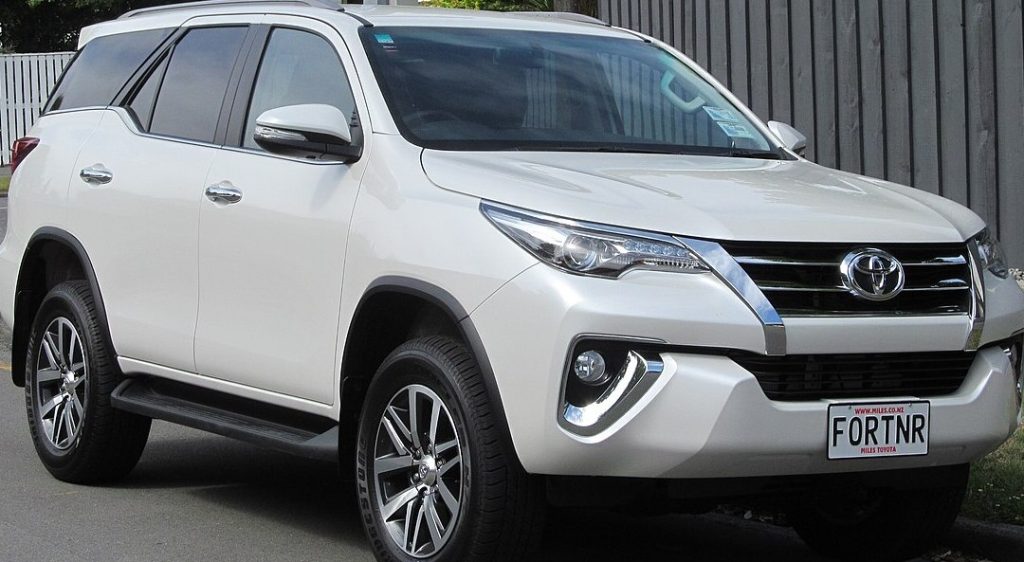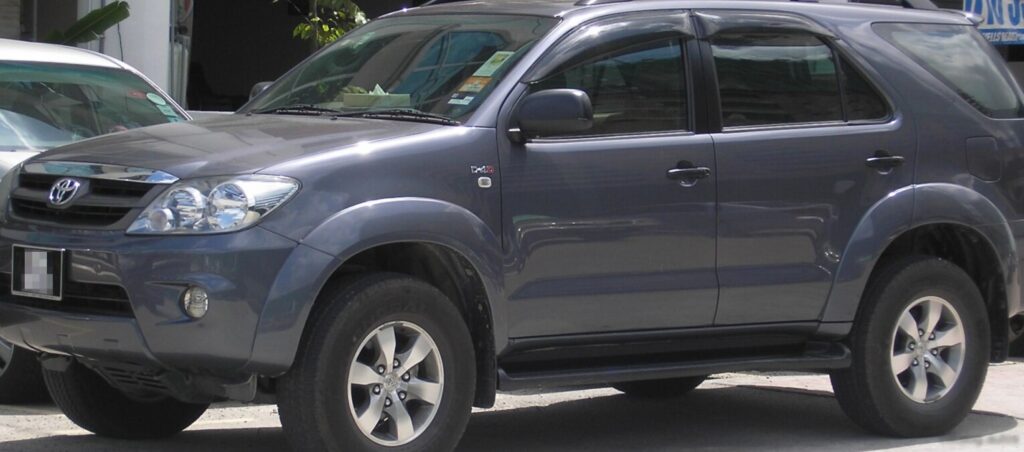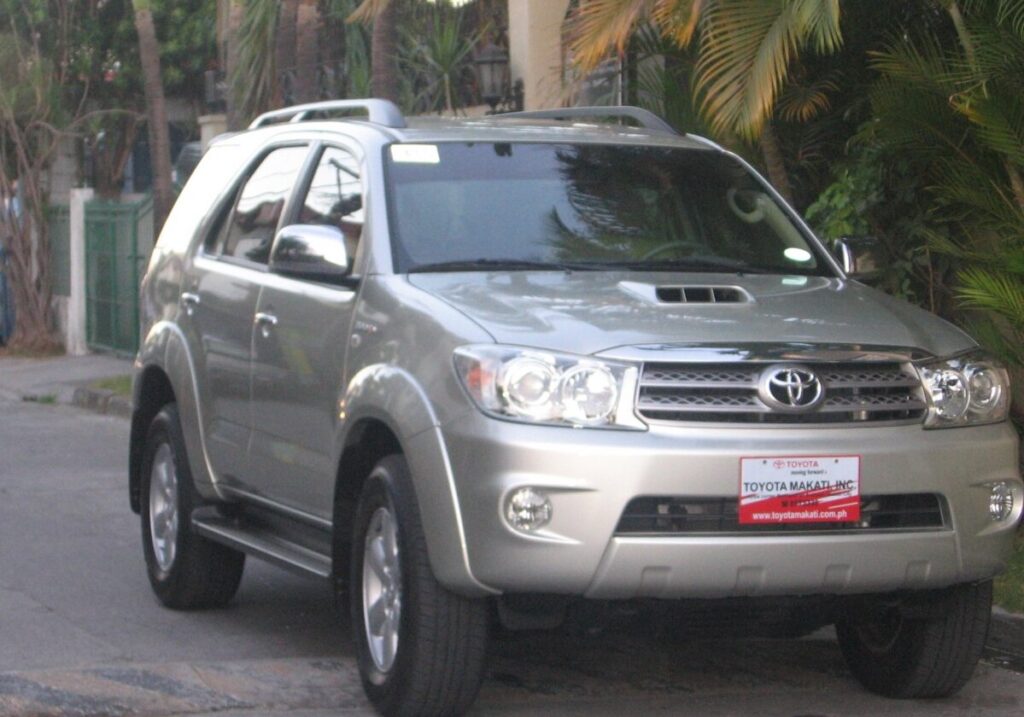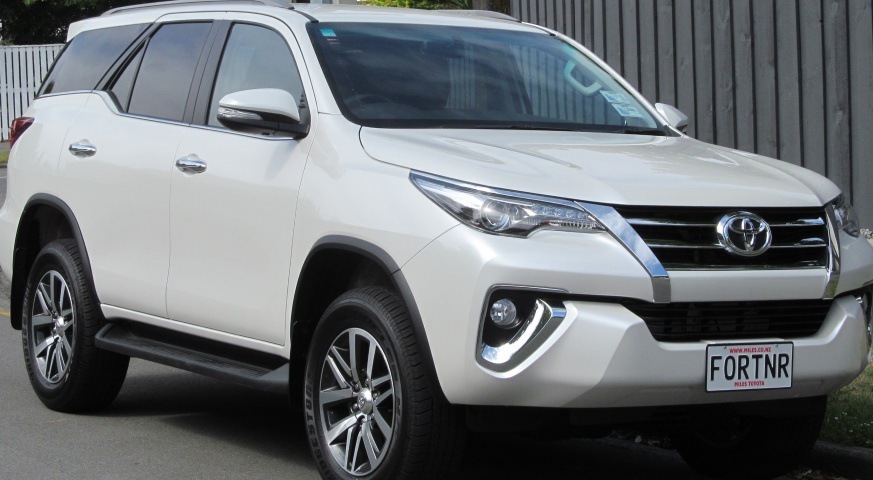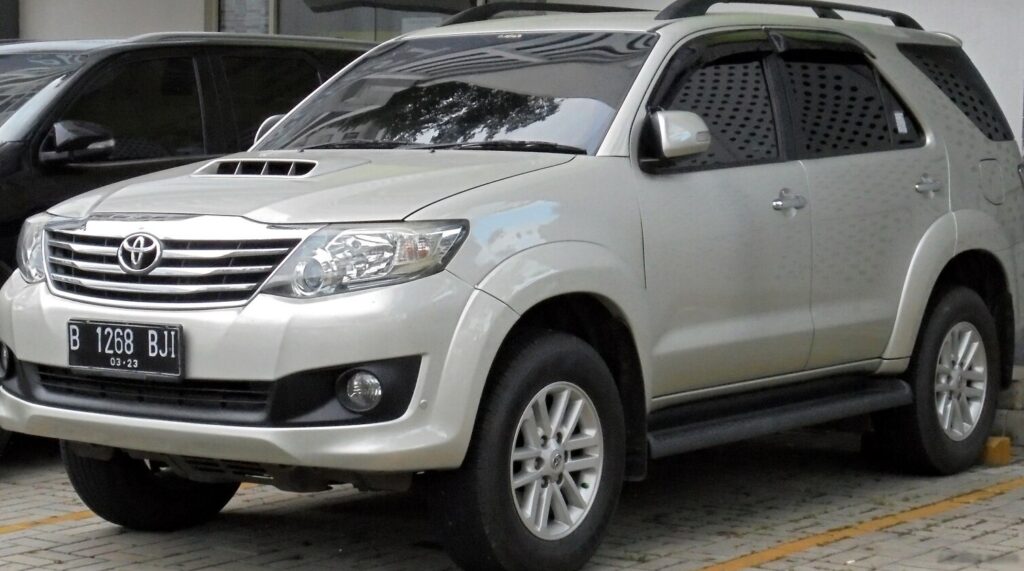
The Toyota Fortuner, a mid-size SUV built on the Hilux pickup truck platform, first appeared in 2005. The first generation, designated as the Fortuner I, underwent a significant facelift in 2011, bringing updated styling and mechanical refinements. This article focuses specifically on the 2.5 D-4D variant produced between 2011 and 2015, equipped with a 144 horsepower diesel engine and a five-speed manual transmission. This configuration was a popular choice in many markets, particularly in regions where robust, body-on-frame SUVs were favored for their durability and off-road capability. The Fortuner I facelift aimed to broaden the vehicle’s appeal by enhancing both its aesthetics and driving experience.
Technical Specifications
| Brand | Toyota |
| Model | Fortuner |
| Generation | Fortuner I (facelift 2011) |
| Type (Engine) | 2.5 D-4D (144 Hp) |
| Start of production | 2011 |
| End of production | 2015 |
| Powertrain Architecture | Internal Combustion engine |
| Body type | SUV |
| Seats | 7 |
| Doors | 5 |
| Fuel consumption (combined) | 8 l/100 km (29.4 US mpg, 35.3 UK mpg, 12.5 km/l) |
| CO2 emissions | 211 g/km |
| Fuel Type | Diesel |
| Maximum speed | 175 km/h (108.74 mph) |
| Emission standard | Euro 3 |
| Power | 144 Hp @ 3400 rpm |
| Power per litre | 57.7 Hp/l |
| Torque | 343 Nm @ 1600-2800 rpm (252.98 lb.-ft. @ 1600-2800 rpm) |
| Engine layout | Front, Longitudinal |
| Engine Model/Code | 2KD-FTV |
| Engine displacement | 2494 cm3 (152.19 cu. in.) |
| Number of cylinders | 4 |
| Engine configuration | Inline |
| Cylinder Bore | 92 mm (3.62 in.) |
| Piston Stroke | 93.8 mm (3.69 in.) |
| Number of valves per cylinder | 4 |
| Fuel injection system | Diesel Commonrail |
| Engine aspiration | Turbocharger, Intercooler |
| Valvetrain | DOHC |
| Engine oil capacity | 6.9 l (7.29 US qt | 6.07 UK qt) |
| Coolant | 9 l (9.51 US qt | 7.92 UK qt) |
| Max. weight | 2505 kg (5522.58 lbs.) |
| Fuel tank capacity | 80 l (21.13 US gal | 17.6 UK gal) |
| Permitted trailer load with brakes (12%) | 1715 kg (3780.93 lbs.) |
| Permitted trailer load without brakes | 750 kg (1653.47 lbs.) |
| Length | 4705 mm (185.24 in.) |
| Width | 1840 mm (72.44 in.) |
| Height | 1850 mm (72.83 in.) |
| Wheelbase | 2750 mm (108.27 in.) |
| Front track | 1540 mm (60.63 in.) |
| Rear track | 1540 mm (60.63 in.) |
| Ride height (ground clearance) | 220 mm (8.66 in.) |
| Minimum turning circle | 11.8 m (38.71 ft.) |
| Approach angle | 30° |
| Departure angle | 25° |
| Drivetrain Architecture | Rear wheel drive |
| Number of gears and type of gearbox | 5 gears, manual transmission |
| Front suspension | Coil spring, Double wishbone, Transverse stabilizer |
| Rear suspension | Rigid axle suspension, Coil spring |
| Front brakes | Ventilated discs |
| Rear brakes | Drum |
| Assisting systems | ABS (Anti-lock braking system) |
| Steering type | Steering rack and pinion |
| Power steering | Hydraulic Steering |
| Tires size | 265/65 R17 |
| Wheel rims size | 7.5J x 17 |
INTRODUCTION
The 2011 facelift of the Toyota Fortuner I brought a refreshed look and subtle mechanical improvements to Toyota’s popular SUV. The 2.5 D-4D model, producing 144 horsepower, occupied a middle ground in the Fortuner lineup. It was positioned above the base 2.7-liter gasoline engine and below the more powerful 3.0-liter D-4D variants. This configuration aimed to provide a balance between fuel efficiency, reasonable performance, and affordability, making it a practical choice for families and individuals needing a versatile seven-seater. The Fortuner, in general, was designed to cater to markets where a rugged, reliable SUV was highly valued, particularly in Southeast Asia, Australia, and parts of Africa and South America.
Powertrain & Engine Architecture
The heart of the 2.5 D-4D Fortuner is the 2KD-FTV engine, a 2.5-liter inline-four diesel. This engine utilizes a common rail direct injection system, which delivers fuel directly into the cylinders at extremely high pressure, improving combustion efficiency and reducing emissions. The 2KD-FTV is also equipped with a turbocharger and intercooler, boosting power output and enhancing torque across a wider rev range. The engine features a double overhead camshaft (DOHC) valvetrain with four valves per cylinder, optimizing airflow for improved performance. The five-speed manual transmission was the standard offering for this variant, providing drivers with full control over gear selection. The transmission’s gear ratios were tuned to maximize fuel economy and provide adequate acceleration for everyday driving conditions.
Driving Characteristics
The 144 horsepower and 343 Nm (253 lb-ft) of torque delivered by the 2.5 D-4D engine provided adequate, though not exhilarating, performance. Acceleration was respectable, but the Fortuner’s substantial weight (over 2.5 tons) meant it wasn’t a particularly quick vehicle. The engine’s peak torque, available from 1600-2800 rpm, provided good low-end grunt, making it capable of handling moderate off-road terrain and towing loads. Compared to the higher-output 3.0-liter D-4D, the 2.5 D-4D felt less powerful, especially when fully loaded or climbing steep inclines. However, the 2.5 D-4D offered better fuel economy than its more powerful sibling. The manual transmission allowed for precise gear control, but the shift quality wasn’t as refined as some contemporary transmissions.
Equipment & Trim Levels
The 2.5 D-4D Fortuner typically came with a reasonable level of standard equipment. This included air conditioning, power windows, power door locks, and a basic audio system. Interior upholstery was usually cloth, though leather options were available as upgrades. Higher trim levels added features such as alloy wheels, fog lights, a multi-function steering wheel, and a more advanced audio system with Bluetooth connectivity. Optional extras included a sunroof, rear parking sensors, and a navigation system. The dashboard layout was functional and straightforward, prioritizing practicality over luxury.
Chassis & Braking
The Fortuner’s chassis was a traditional body-on-frame construction, providing excellent durability and off-road capability. The front suspension utilized a double wishbone setup with coil springs and a transverse stabilizer bar, while the rear suspension employed a rigid axle with coil springs. This configuration provided a comfortable ride on paved roads while maintaining robust off-road performance. The braking system consisted of ventilated discs at the front and drum brakes at the rear. Anti-lock Braking System (ABS) was standard, enhancing safety during emergency braking situations. The Fortuner’s relatively high ground clearance (220 mm / 8.66 inches) allowed it to navigate rough terrain with ease.
Market Reception & Comparison
The 2.5 D-4D Fortuner was generally well-received by critics and consumers alike. It was praised for its reliability, durability, and spacious interior. However, some reviewers noted its relatively basic interior and lack of refinement compared to some of its competitors. In terms of fuel economy, the 2.5 D-4D offered a noticeable improvement over the 3.0-liter D-4D, making it a more attractive option for those prioritizing running costs. Compared to other SUVs in its class, such as the Mitsubishi Pajero Sport and the Isuzu MU-X, the Fortuner offered a compelling combination of value, reliability, and off-road capability.
Legacy
The 2KD-FTV engine, found in the 2.5 D-4D Fortuner, has a reputation for being exceptionally reliable and durable, provided it receives regular maintenance. These engines are known to withstand high mileage with minimal issues. In the used car market, the 2.5 D-4D Fortuner remains a popular choice due to its affordability, practicality, and reputation for dependability. While it may not offer the performance or luxury of some newer SUVs, its robust construction and proven powertrain make it a sensible option for those seeking a reliable and capable seven-seater. Common maintenance items include regular oil changes, filter replacements, and inspection of the turbocharger and fuel injection system.