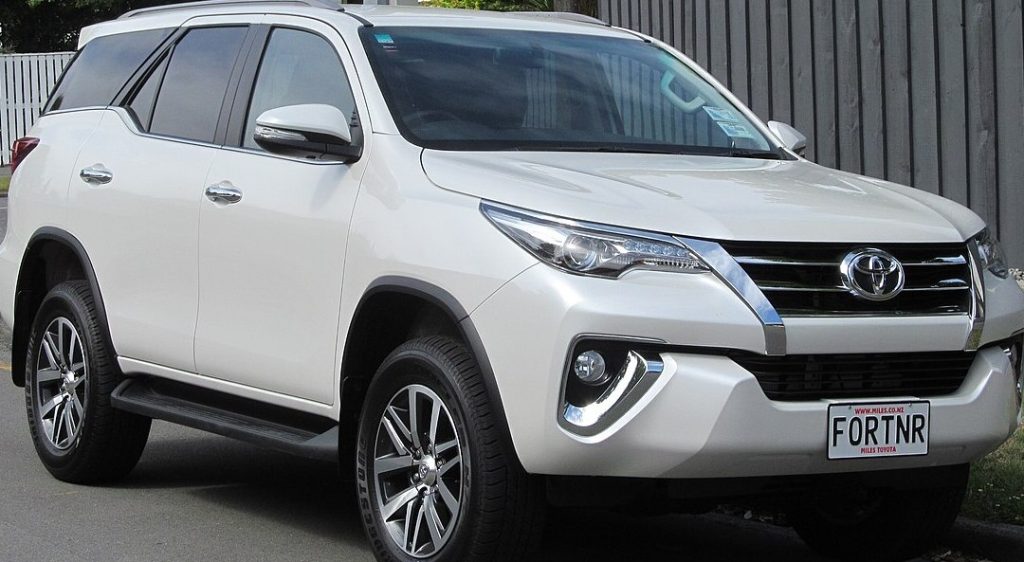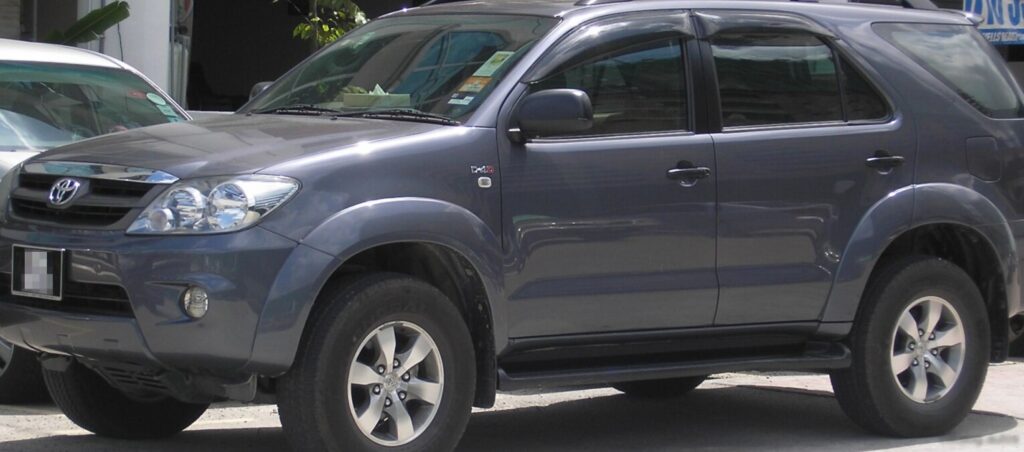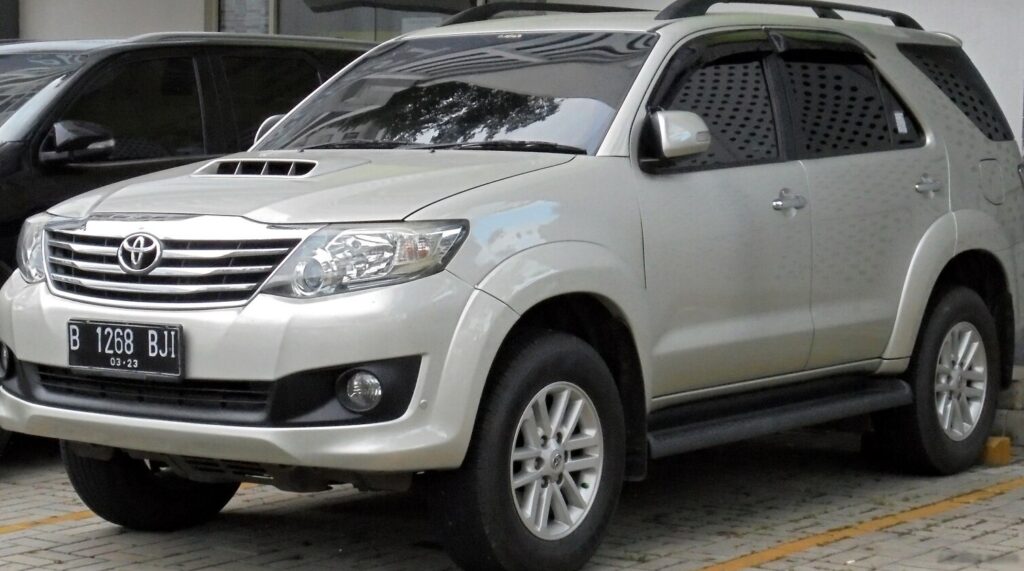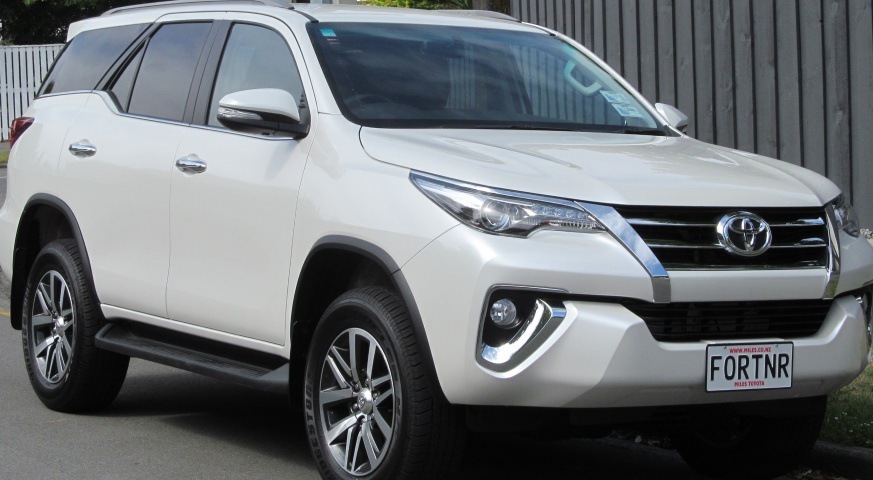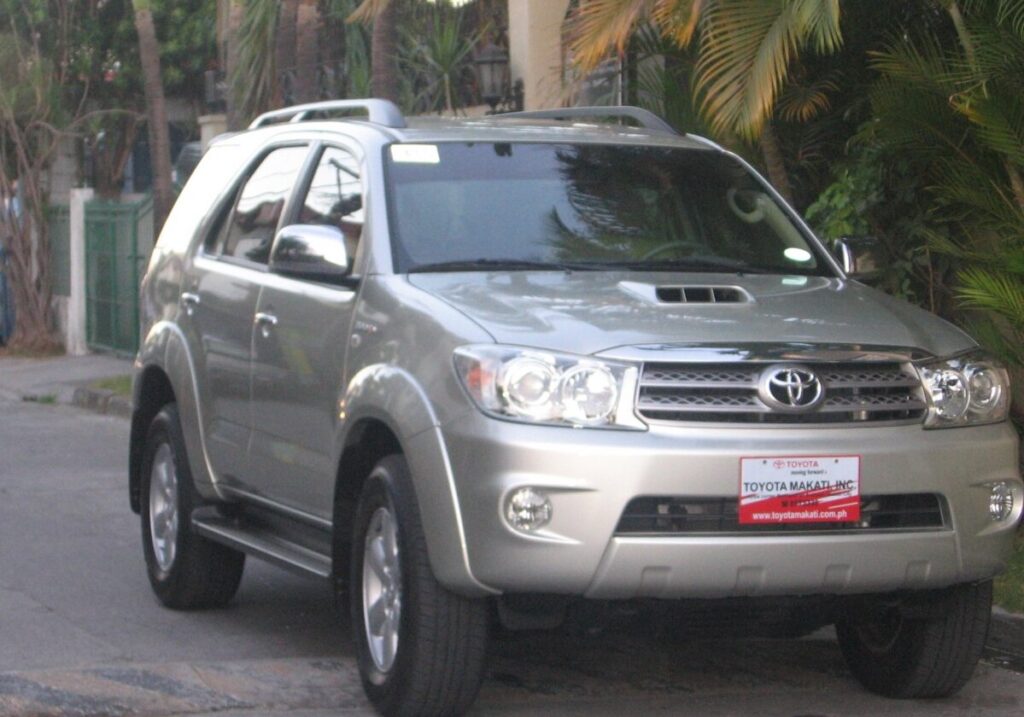
The Toyota Fortuner, launched in 2005, quickly became a popular choice in the mid-size SUV segment, particularly in markets outside of North America. The first generation, designated as the Fortuner I, underwent a significant facelift in 2008, bringing updated styling and refinements. Among the various engine and drivetrain configurations offered, the 3.0 D-4D (171 hp) 4WD variant occupied a key position, balancing off-road capability with reasonable on-road performance and fuel efficiency. Production of this specific facelifted version ran from 2008 to 2011, catering to buyers seeking a robust, seven-seat SUV with four-wheel drive.
Technical Specifications
| Brand | Toyota |
| Model | Fortuner |
| Generation | Fortuner I (facelift 2008) |
| Type (Engine) | 3.0 D-4D (171 Hp) 4WD |
| Start of production | 2008 |
| End of production | 2011 |
| Powertrain Architecture | Internal Combustion engine |
| Body type | SUV |
| Seats | 7 |
| Doors | 5 |
| Fuel Type | Diesel |
| Weight-to-power ratio | 11.4 kg/Hp, 87.5 Hp/tonne |
| Weight-to-torque ratio | 5.7 kg/Nm, 175.4 Nm/tonne |
| Power | 171 Hp @ 3600 rpm |
| Power per litre | 57.3 Hp/l |
| Torque | 343 Nm @ 1400-3400 rpm (252.98 lb.-ft. @ 1400-3400 rpm) |
| Engine layout | Front, Longitudinal |
| Engine Model/Code | 1KD-FTV |
| Engine displacement | 2982 cm3 (181.97 cu. in.) |
| Number of cylinders | 4 |
| Engine configuration | Inline |
| Cylinder Bore | 96 mm (3.78 in.) |
| Piston Stroke | 103 mm (4.06 in.) |
| Number of valves per cylinder | 4 |
| Fuel injection system | Diesel Commonrail |
| Engine aspiration | Turbocharger, Intercooler |
| Valvetrain | DOHC |
| Engine oil capacity | 6.9 l (7.29 US qt | 6.07 UK qt) |
| Coolant | 9.8 l (10.36 US qt | 8.62 UK qt) |
| Kerb Weight | 1955 kg (4310.04 lbs.) |
| Max. weight | 2510 kg (5533.6 lbs.) |
| Max load | 555 kg (1223.57 lbs.) |
| Fuel tank capacity | 80 l (21.13 US gal | 17.6 UK gal) |
| Length | 4695 mm (184.84 in.) |
| Width | 1840 mm (72.44 in.) |
| Height | 1850 mm (72.83 in.) |
| Wheelbase | 2750 mm (108.27 in.) |
| Front track | 1540 mm (60.63 in.) |
| Rear (Back) track | 1540 mm (60.63 in.) |
| Ride height (ground clearance) | 221 mm (8.7 in.) |
| Minimum turning circle (turning diameter) | 11.8 m (38.71 ft.) |
| Approach angle | 30° |
| Departure angle | 25° |
| Ramp-over (brakeover) angle | 23° |
| Drivetrain Architecture | The Internal combustion engine (ICE) drives permanently the four wheels of the vehicle. |
| Drive wheel | All wheel drive (4×4) |
| Number of gears and type of gearbox | 5 gears, manual transmission |
| Front suspension | Coil spring, Double wishbone, Transverse stabilizer |
| Rear suspension | Rigid axle suspension, Coil spring |
| Front brakes | Ventilated discs |
| Rear brakes | Drum |
| Assisting systems | ABS (Anti-lock braking system) |
| Steering type | Steering rack and pinion |
| Power steering | Hydraulic Steering |
| Tires size | 265/65 R17 |
| Wheel rims size | 7.5J x 17 |
INTRODUCTION
The Toyota Fortuner I (facelift 2008) 3.0 D-4D 4WD represents a compelling blend of ruggedness and practicality. Built upon the Hilux pickup truck platform (specifically the ANH20/GGN20 series), the Fortuner was designed to offer SUV buyers a durable, body-on-frame construction with the added benefit of seven-passenger seating. The 2008 facelift brought cosmetic updates, including a revised front grille, headlights, and bumpers, along with minor interior enhancements. This 3.0-liter diesel variant, paired with a five-speed manual transmission and a four-wheel-drive system, was positioned as a mid-range offering, appealing to those needing both on-road comfort and off-road capability. It was a particularly popular choice in regions like Australia, South Africa, and parts of Asia where robust SUVs are highly valued.
Powertrain & Engine Architecture
At the heart of the Fortuner 3.0 D-4D lies the 1KD-FTV engine, a 2.982-liter inline-four cylinder diesel. This engine is a workhorse, known for its durability and relatively straightforward mechanical design. It utilizes a common rail direct injection system, delivering fuel at extremely high pressure for improved combustion efficiency and reduced emissions. The engine is turbocharged and intercooled, boosting power output to 171 horsepower at 3600 rpm and 343 Nm (252.98 lb-ft) of torque between 1400 and 3400 rpm. The DOHC (Double Overhead Camshaft) valvetrain contributes to efficient engine breathing. The five-speed manual transmission provides a direct connection to the drivetrain, offering the driver control over gear selection. The 4WD system is typically part-time, allowing the driver to switch between two-wheel drive for fuel economy and four-wheel drive for enhanced traction in challenging conditions.
Driving Characteristics
The 3.0 D-4D 4WD Fortuner delivers a driving experience that prioritizes robustness over outright speed. While 171 hp isn’t a particularly high output, the engine’s strong low-end torque makes it capable of handling challenging terrain and towing loads. The five-speed manual transmission allows for precise control, but the gear ratios are geared more towards maximizing fuel efficiency and off-road performance than providing rapid acceleration. Compared to the gasoline-powered Fortuner variants, the diesel offers significantly better fuel economy and more torque. Against higher-output diesel versions (if available in certain markets), this 171 hp variant feels less powerful, particularly when fully loaded or climbing steep inclines. However, it strikes a good balance between performance and economy for everyday use.
Equipment & Trim Levels
The 2008 facelifted Fortuner 3.0 D-4D 4WD typically came equipped with a reasonable level of standard features. These generally included air conditioning, power windows, power door locks, and a basic audio system. Interior upholstery was typically cloth, though leather options were often available as an upgrade. Safety features included ABS (Anti-lock Braking System) as standard. Optional extras could include alloy wheels, a sunroof, a more advanced audio system with CD changer, and rear parking sensors. The trim level often dictated the availability of these extras, with higher trims offering more luxurious appointments.
Chassis & Braking
The Fortuner’s chassis is a traditional body-on-frame construction, providing excellent durability and off-road capability. The front suspension utilizes a double wishbone setup with coil springs and a transverse stabilizer bar, offering a reasonable level of ride comfort. The rear suspension employs a rigid axle with coil springs, prioritizing load-carrying capacity and off-road articulation. Braking duties are handled by ventilated discs at the front and drum brakes at the rear. While adequate for most driving situations, the rear drum brakes are a point of criticism compared to the all-disc setups found on some competitors. The hydraulic power steering provides a good balance between assistance and road feel.
Market Reception & Comparison
The Toyota Fortuner 3.0 D-4D 4WD was generally well-received by automotive critics and buyers alike. It was praised for its ruggedness, reliability, and spacious interior. The diesel engine was lauded for its fuel efficiency and torque, making it a practical choice for long-distance travel and towing. Compared to other SUVs in its class, such as the Mitsubishi Pajero Sport and the Ford Everest, the Fortuner offered a compelling combination of features and value. Some critics noted the relatively basic interior and the rear drum brakes as drawbacks, but these were often outweighed by the vehicle’s overall strengths. Fuel economy was competitive for its class, and the 1KD-FTV engine proved to be exceptionally reliable.
Legacy
The Toyota Fortuner I (facelift 2008) 3.0 D-4D 4WD has proven to be a remarkably durable and reliable vehicle. The 1KD-FTV engine is known for its longevity, and with proper maintenance, can easily exceed 200,000 miles. In the used car market, these Fortuners hold their value relatively well, particularly those that have been well-maintained and haven’t been subjected to extreme off-road abuse. They remain a popular choice for buyers seeking a dependable, seven-seat SUV with four-wheel drive, and their reputation for reliability continues to attract a loyal following. Common issues are typically related to wear and tear on suspension components and the occasional failure of the turbocharger, but these are generally straightforward to repair.