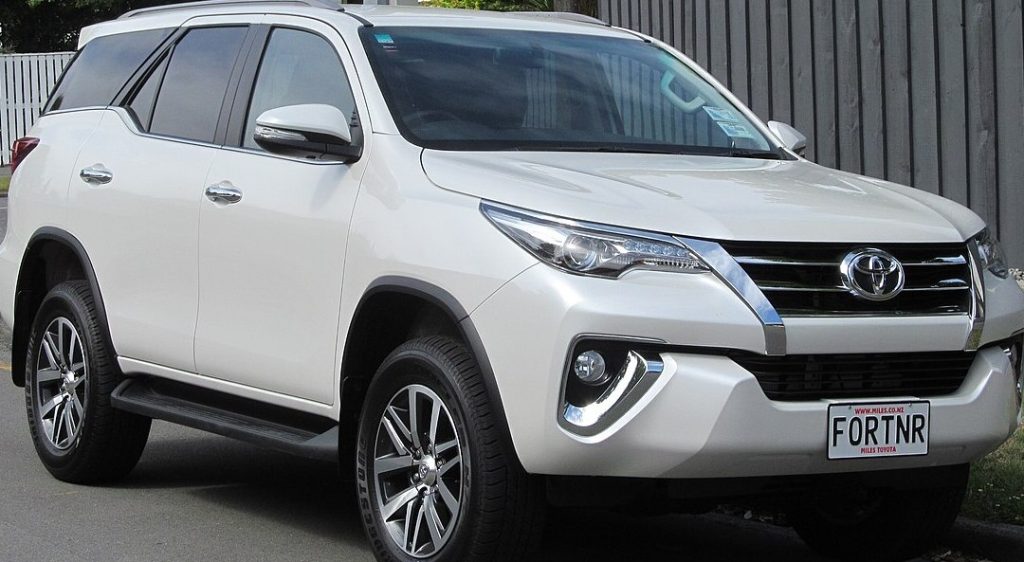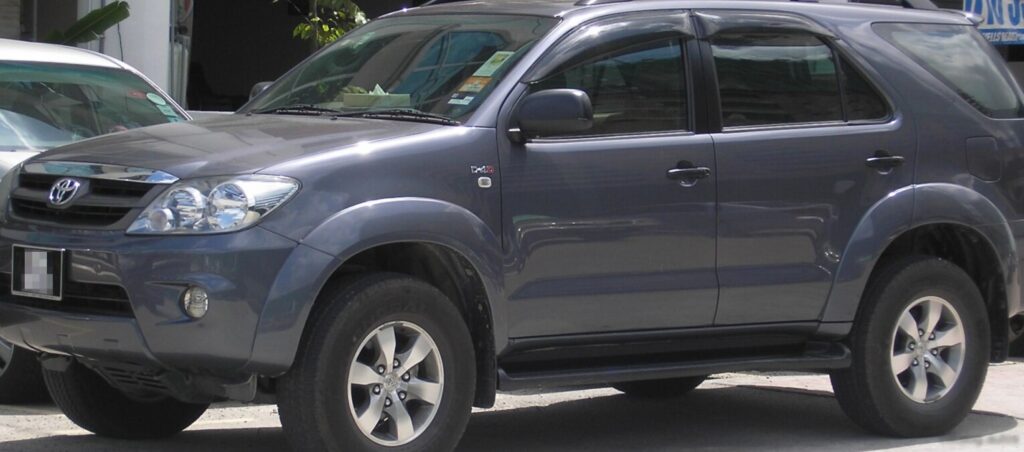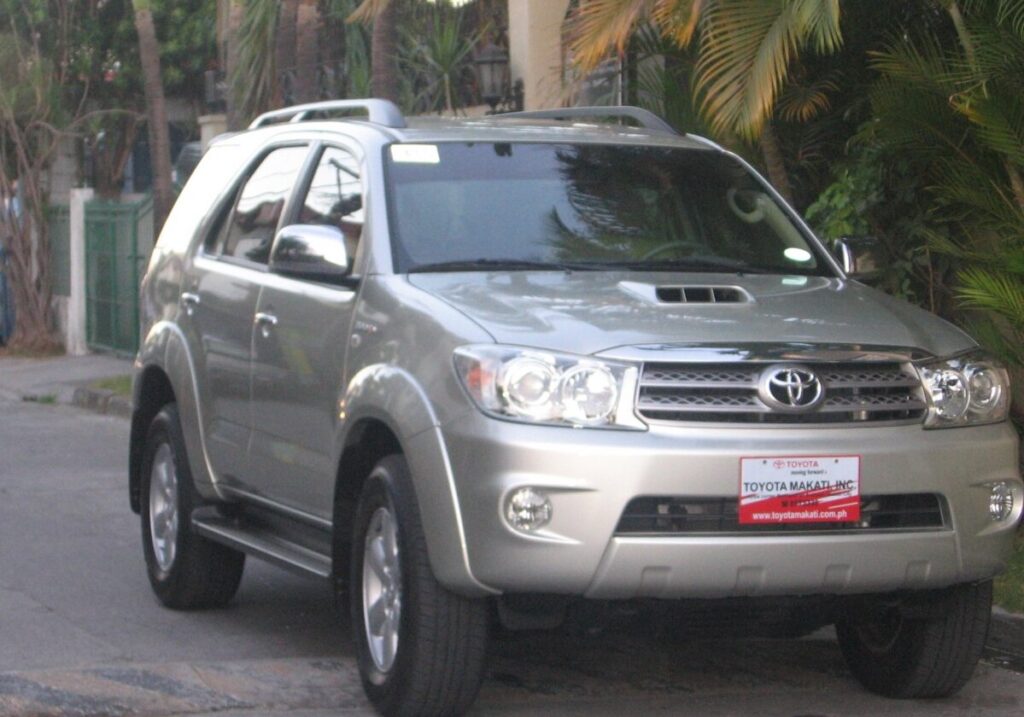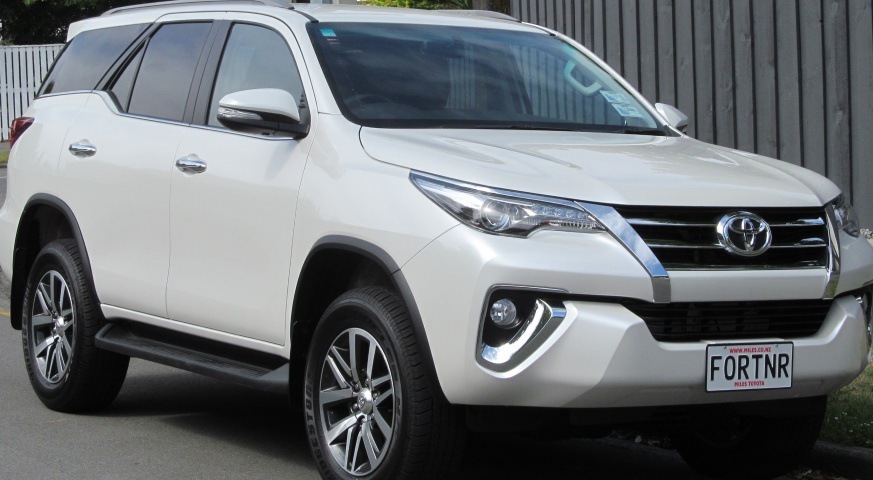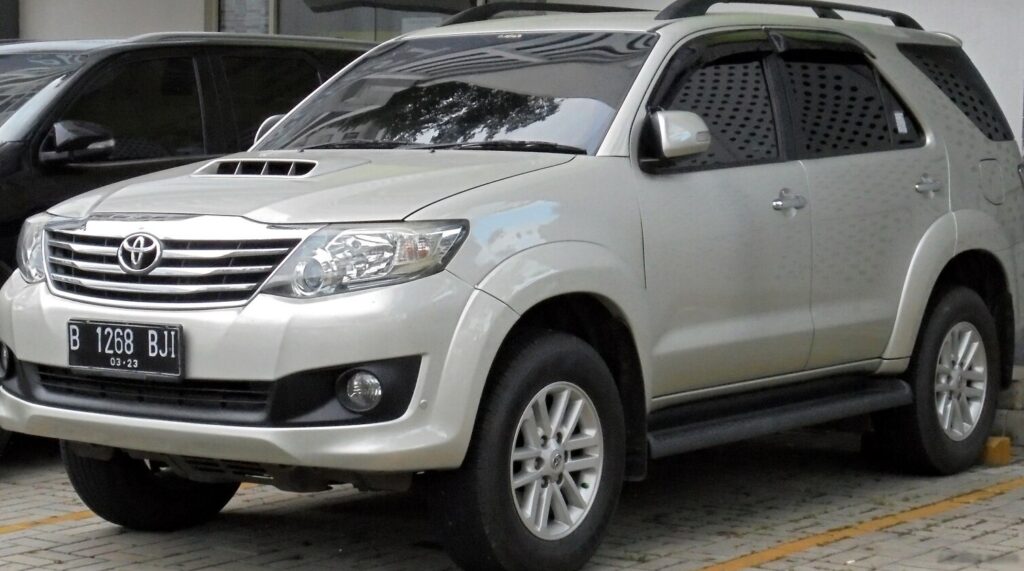
The Toyota Fortuner, launched in 2005, quickly became a popular choice in the mid-size SUV segment, particularly in markets outside of North America. The first generation (often referred to as the Fortuner I) underwent a significant facelift in 2011, bringing updated styling and mechanical refinements. Among the various engine and drivetrain configurations offered, the 4.0-liter V6 paired with a four-wheel-drive system and a five-speed automatic transmission represented a premium offering, positioned as a capable and comfortable vehicle for families and those requiring off-road capability. Production of this specific variant ran from 2011 to 2015.
Technical Specifications
| Brand | Toyota |
| Model | Fortuner |
| Generation | Fortuner I (facelift 2011) |
| Type (Engine) | 4.0 V6 (238 Hp) 4WD Automatic |
| Start of production | 2011 |
| End of production | 2015 |
| Powertrain Architecture | Internal Combustion engine |
| Body type | SUV |
| Seats | 7 |
| Doors | 5 |
| Fuel consumption (combined) | 13 l/100 km (18.1 US mpg, 21.7 UK mpg, 7.7 km/l) |
| CO2 emissions | 309 g/km |
| Fuel Type | Petrol (Gasoline) |
| Maximum speed | 180 km/h (111.85 mph) |
| Emission standard | Euro 3 |
| Power | 238 Hp @ 5200 rpm |
| Power per litre | 60.2 Hp/l |
| Torque | 376 Nm @ 3800 rpm (277.32 lb.-ft. @ 3800 rpm) |
| Engine layout | Front, Longitudinal |
| Engine Model/Code | 1GR-FE |
| Engine displacement | 3956 cm3 (241.41 cu. in.) |
| Number of cylinders | 6 |
| Engine configuration | V-engine |
| Cylinder Bore | 94 mm (3.7 in.) |
| Piston Stroke | 95 mm (3.74 in.) |
| Number of valves per cylinder | 4 |
| Fuel injection system | Multi-port manifold injection |
| Engine aspiration | Naturally aspirated engine |
| Valvetrain | DOHC, VVT-i |
| Engine oil capacity | 5.5 l (5.81 US qt | 4.84 UK qt) |
| Coolant | 9.8 l (10.36 US qt | 8.62 UK qt) |
| Max. weight | 2510 kg (5533.6 lbs.) |
| Fuel tank capacity | 80 l (21.13 US gal | 17.6 UK gal) |
| Permitted trailer load with brakes (12%) | 1800 kg (3968.32 lbs.) |
| Permitted trailer load without brakes | 750 kg (1653.47 lbs.) |
| Length | 4705 mm (185.24 in.) |
| Width | 1840 mm (72.44 in.) |
| Height | 1850 mm (72.83 in.) |
| Wheelbase | 2750 mm (108.27 in.) |
| Front track | 1540 mm (60.63 in.) |
| Rear track | 1540 mm (60.63 in.) |
| Ride height (ground clearance) | 220 mm (8.66 in.) |
| Minimum turning circle | 11.8 m (38.71 ft.) |
| Approach angle | 30° |
| Departure angle | 25° |
| Drivetrain Architecture | The Internal combustion engine (ICE) drives permanently the four wheels of the vehicle. |
| Drive wheel | All wheel drive (4×4) |
| Number of gears and type of gearbox | 5 gears, automatic transmission |
| Front suspension | Coil spring, Double wishbone, Transverse stabilizer |
| Rear suspension | Rigid axle suspension, Coil spring |
| Front brakes | Ventilated discs |
| Rear brakes | Drum |
| Assisting systems | ABS (Anti-lock braking system) |
| Steering type | Steering rack and pinion |
| Power steering | Hydraulic Steering |
| Tires size | 265/65 R17 |
| Wheel rims size | 7.5J x 17 |
INTRODUCTION
The 2011 facelift of the Toyota Fortuner I brought a refreshed look and several mechanical improvements to Toyota’s popular body-on-frame SUV. Built on the Hilux platform, the Fortuner was designed to offer a blend of rugged off-road capability and family-friendly comfort. The 4.0-liter V6 engine, coupled with a four-wheel-drive system and a five-speed automatic transmission, was the top-of-the-line powertrain option, aimed at buyers who desired strong performance and convenience. This configuration was particularly popular in markets like Australia, South Africa, and parts of Asia, where robust SUVs are in high demand. It sat at the top of the Fortuner range, offering more power and refinement than the 2.5-liter diesel and 2.7-liter inline-four gasoline options.
Powertrain & Engine Architecture
The heart of this Fortuner variant is the 1GR-FE engine, a 4.0-liter (3956 cc) naturally aspirated V6. This engine utilizes a cast-iron block and aluminum cylinder heads, a common configuration for durability and weight reduction. It features a double overhead camshaft (DOHC) valvetrain with Toyota’s Variable Valve Timing-intelligent (VVT-i) system, optimizing engine performance and efficiency across the rev range. Fuel delivery is managed by a multi-port fuel injection system. The 1GR-FE is known for its reliability and relatively simple design, making it easier to maintain compared to more complex engines. The five-speed automatic transmission, a Toyota A750E, was chosen for its smooth operation and ability to handle the engine’s torque output. While not the most modern transmission by today’s standards, it proved to be durable and reliable in service. The transmission features overdrive for improved highway fuel economy.
Driving Characteristics
The 4.0-liter V6 provides a noticeable performance advantage over the lower-displacement engines offered in the Fortuner lineup. With 238 horsepower and 376 Nm (277 lb-ft) of torque, the Fortuner accelerates briskly, even when fully loaded. The automatic transmission shifts smoothly, although it can sometimes feel hesitant during quick overtaking maneuvers. The four-wheel-drive system provides excellent traction in off-road conditions, and the vehicle’s generous ground clearance allows it to navigate challenging terrain with ease. Compared to the manual transmission versions, the automatic offers greater convenience, particularly in urban driving. However, it does result in a slight decrease in fuel economy. The gear ratios are tuned for a balance of acceleration and highway cruising, with the overdrive gear helping to keep engine speeds low at higher speeds.
Equipment & Trim Levels
The 4.0 V6 4WD Automatic trim typically came well-equipped, reflecting its position as the range-topping model. Standard features often included air conditioning, power windows and locks, a multi-function steering wheel, and an audio system with CD player and auxiliary input. Higher-grade trims added features such as leather upholstery, woodgrain interior trim, a sunroof, and a rear parking camera. Optional extras could include a navigation system, upgraded audio system, and alloy wheels. The interior design was functional and durable, prioritizing practicality over luxury. The seven-seat configuration provided ample space for passengers and cargo.
Chassis & Braking
The Fortuner’s chassis is a traditional body-on-frame construction, providing robust strength and durability. The front suspension utilizes a double wishbone setup with coil springs and a transverse stabilizer bar, while the rear suspension employs a rigid axle with coil springs. This configuration provides a comfortable ride on paved roads while maintaining off-road capability. The braking system consists of ventilated discs at the front and drum brakes at the rear. Anti-lock Braking System (ABS) was standard, enhancing safety during emergency braking situations. The steering is a rack-and-pinion system with hydraulic power assistance, providing precise and responsive handling.
Market Reception & Comparison
The 4.0-liter V6 Fortuner received generally positive reviews, with critics praising its strong performance, comfortable ride, and off-road capability. However, its fuel economy was often cited as a drawback, especially compared to the diesel-powered models. Compared to the 2.5-liter diesel, the V6 offered more power and refinement but consumed significantly more fuel. The 2.7-liter inline-four gasoline engine provided a more affordable option but lacked the V6’s performance. The Fortuner competed with other mid-size SUVs like the Mitsubishi Pajero Sport and the Isuzu MU-X, offering a compelling combination of features and value.
Legacy
The 1GR-FE engine has proven to be exceptionally reliable, and well-maintained examples of the 4.0-liter V6 Fortuner continue to be sought after in the used car market. While the five-speed automatic transmission is not as sophisticated as modern eight or ten-speed automatics, it has also demonstrated good durability. Common maintenance items include regular oil changes, coolant flushes, and inspection of the suspension components. The Fortuner’s body-on-frame construction contributes to its longevity, making it a durable and dependable vehicle for years to come. Today, these Fortuners represent a good value for buyers seeking a capable and reliable SUV with a proven track record.