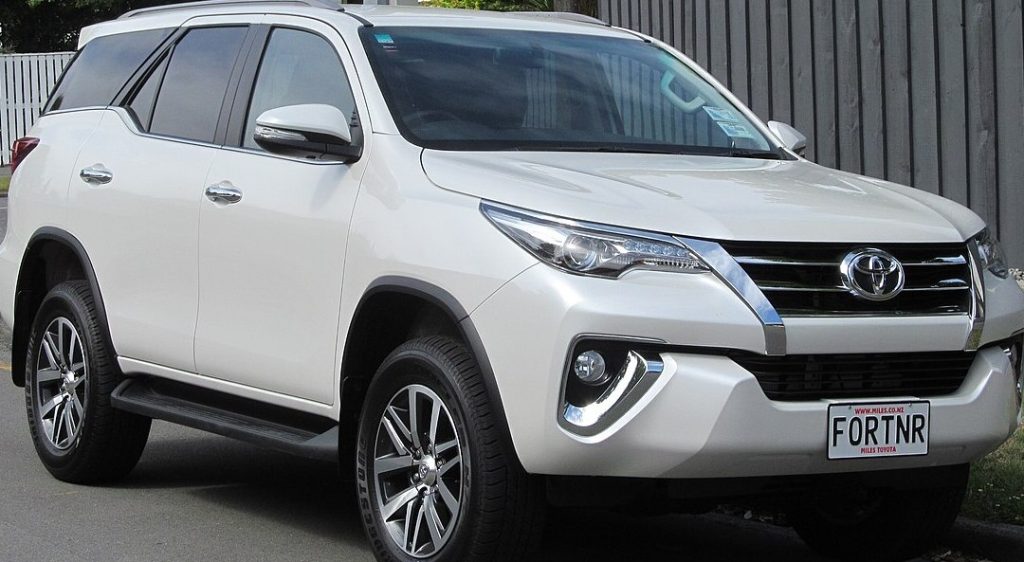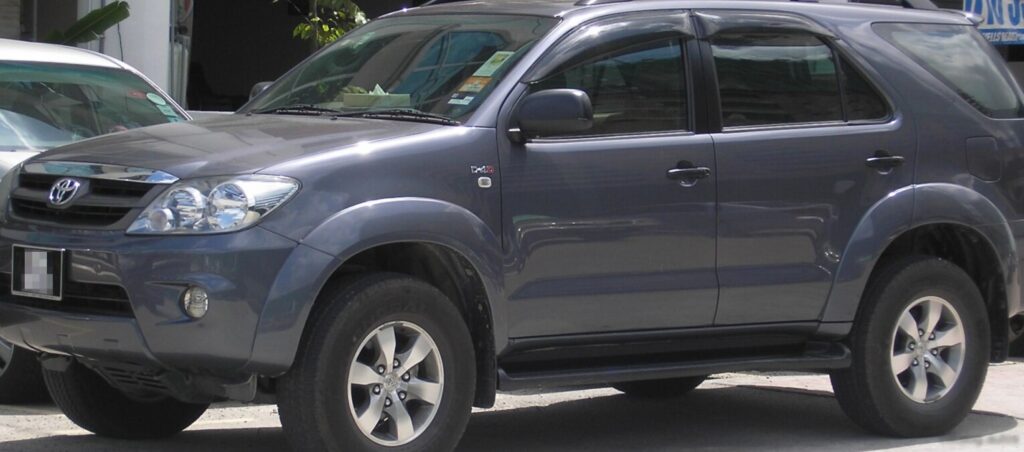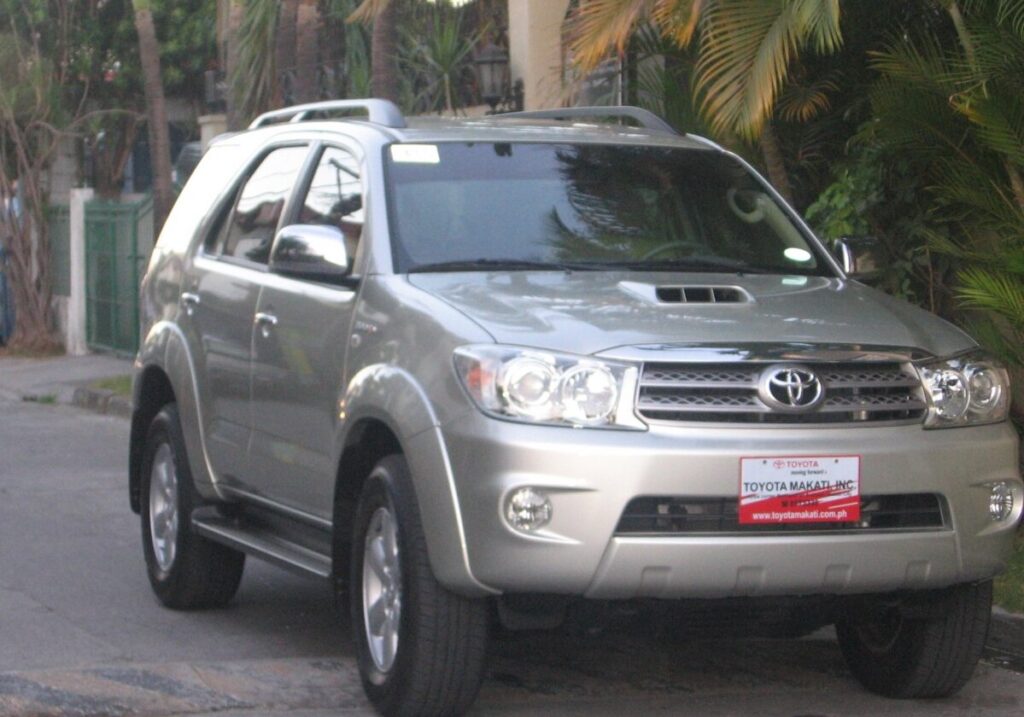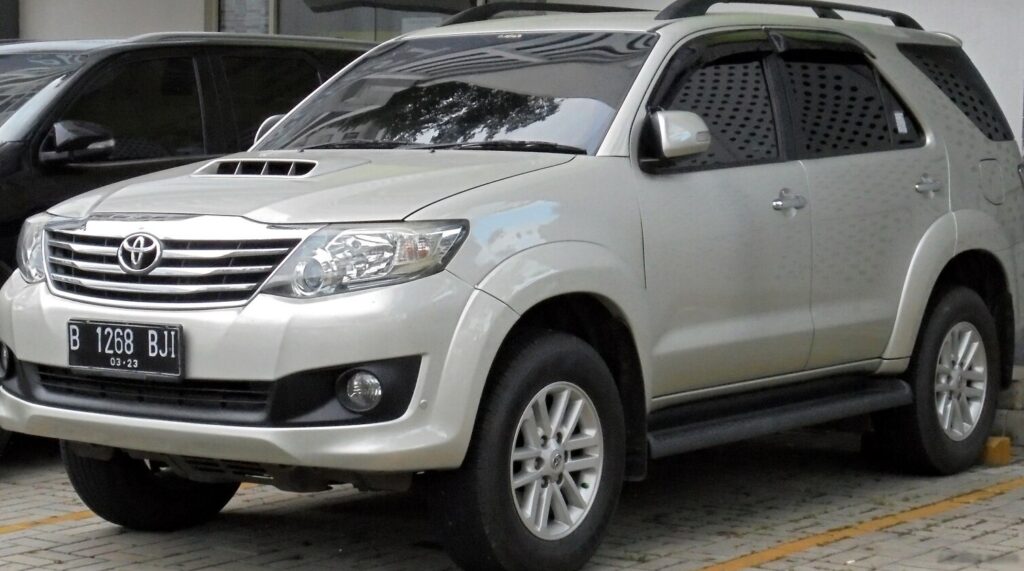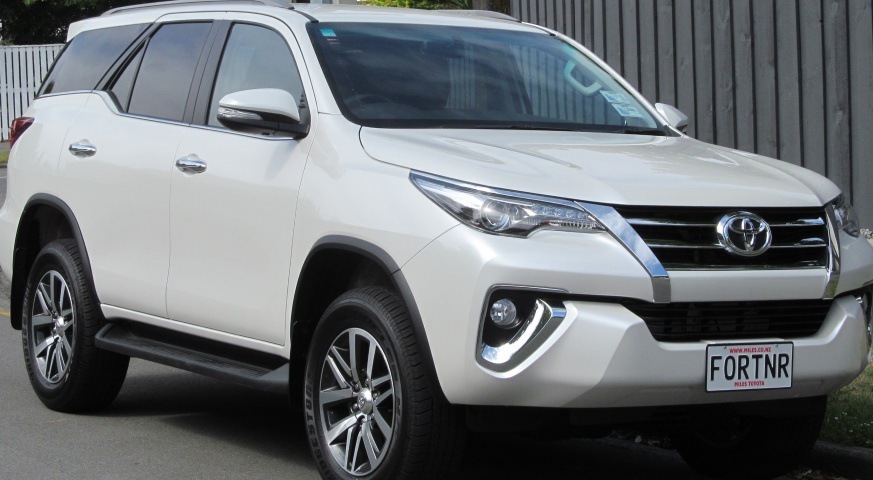
The Toyota Fortuner II 2.4d (150 Hp) represents a significant iteration of Toyota’s popular body-on-frame SUV, produced from 2015 to 2020. Positioned as a mid-range offering within the second-generation Fortuner (launched as the AN150/AN160 series), this variant aimed to balance affordability with respectable performance and capability. The Fortuner, originally introduced in 2005, was specifically designed to cater to the growing demand for robust, seven-seater SUVs in emerging markets, particularly in Southeast Asia, Australia, and South Africa. The 2.4d model, powered by the 2GD-FTV engine, became a mainstay in these regions, offering a diesel-powered alternative to gasoline options and competing directly with vehicles like the Mitsubishi Pajero Sport and Isuzu MU-X.
Technical Specifications
| Brand | Toyota |
| Model | Fortuner |
| Generation | Fortuner II |
| Type (Engine) | 2.4d (150 Hp) |
| Start of production | 2015 |
| End of production | 2020 |
| Powertrain Architecture | Internal Combustion engine |
| Body type | SUV |
| Seats | 7 |
| Doors | 5 |
| Fuel consumption (combined) | 7 l/100 km (33.6 US mpg, 40.4 UK mpg, 14.3 km/l) |
| CO2 emissions | 184 g/km |
| Fuel Type | Diesel |
| Acceleration 0 – 100 km/h | 13.2 sec |
| Acceleration 0 – 62 mph | 13.2 sec |
| Acceleration 0 – 60 mph | 12.5 sec |
| Maximum speed | 175 km/h (108.74 mph) |
| Power | 150 Hp @ 3400 rpm |
| Power per litre | 62.7 Hp/l |
| Torque | 400 Nm @ 1600-2000 rpm (295.02 lb.-ft. @ 1600-2000 rpm) |
| Engine layout | Front, Longitudinal |
| Engine Model/Code | 2GD-FTV |
| Engine displacement | 2393 cm3 (146.03 cu. in.) |
| Number of cylinders | 4 |
| Engine configuration | Inline |
| Cylinder Bore | 92 mm (3.62 in.) |
| Piston Stroke | 90 mm (3.54 in.) |
| Compression ratio | 15.6:1 |
| Number of valves per cylinder | 4 |
| Fuel injection system | Diesel Commonrail |
| Engine oil capacity | 7.5 l (7.93 US qt | 6.6 UK qt) |
| Coolant | 9.1 l (9.62 US qt | 8.01 UK qt) |
| Fuel tank capacity | 80 l (21.13 US gal | 17.6 UK gal) |
| Length | 4795 mm (188.78 in.) |
| Width | 1855 mm (73.03 in.) |
| Height | 1835 mm (72.24 in.) |
| Wheelbase | 2745 mm (108.07 in.) |
| Minimum turning circle | 11.6 m (38.06 ft.) |
| Drivetrain Architecture | Rear wheel drive |
| Number of gears | 6 |
| Gearbox type | Manual transmission |
| Front suspension | Double wishbone |
| Rear suspension | Independent multi-link suspension |
| Front brakes | Ventilated discs |
| Rear brakes | Ventilated discs |
| Assisting systems | ABS (Anti-lock braking system) |
| Tires size | 265/65 R17 |
| Wheel rims size | 17 |
Powertrain & Engine Architecture
The heart of the Fortuner II 2.4d is the 2GD-FTV, a 2.4-liter inline-four cylinder diesel engine. This engine is part of Toyota’s GD series of diesel engines, known for their durability and efficiency. The 2GD-FTV utilizes a common-rail direct injection system, delivering fuel at extremely high pressure for optimized combustion. A turbocharger with an intercooler further enhances performance by forcing more air into the cylinders. The engine produces 150 horsepower at 3400 rpm and a substantial 400 Nm (295 lb-ft) of torque between 1600 and 2000 rpm. This torque band is particularly useful for towing and off-road driving, characteristics highly valued by Fortuner buyers. The six-speed manual transmission was the standard offering for this variant, providing drivers with full control over gear selection. While an automatic transmission was available on other Fortuner trims, it wasn’t typically paired with the base 2.4d engine.
Driving Characteristics
The 2.4d with the manual transmission delivers a practical and capable driving experience. Acceleration is not particularly brisk, with a 0-60 mph time of around 12.5 seconds, but the engine’s strong low-end torque makes it well-suited for everyday driving and hauling loads. The manual gearbox allows for precise control, especially when navigating challenging terrain. Compared to the more powerful 2.8-liter diesel variants, the 2.4d feels less refined and requires more gear changes to maintain speed, particularly when fully loaded or climbing hills. However, the lower engine displacement contributes to slightly better fuel economy. The gear ratios are tuned for practicality rather than outright performance, prioritizing fuel efficiency and drivability over sporty acceleration.
Equipment & Trim Levels
The 2.4d trim typically served as the entry point to the Fortuner II range. Standard equipment generally included air conditioning, power windows, power steering, and a basic audio system with Bluetooth connectivity. Safety features such as ABS, airbags, and stability control were also standard. Interior upholstery was typically cloth, and the dashboard featured a functional but relatively simple design. Optional extras, depending on the market, could include alloy wheels, a touchscreen infotainment system, rear parking sensors, and a reverse camera. Higher trim levels, such as the 2.8d and those with the automatic transmission, offered more luxurious features like leather seats, sunroofs, and advanced safety systems.
Chassis & Braking
The Fortuner II utilizes a traditional body-on-frame construction, providing robust durability and off-road capability. The front suspension consists of a double wishbone setup, while the rear features an independent multi-link suspension. This configuration aims to balance ride comfort with off-road performance. Braking duties are handled by ventilated discs on all four wheels, providing adequate stopping power for the vehicle’s weight. The 2.4d variant, being the base model, often featured slightly smaller wheels and tires compared to higher trims, which could impact ride quality and off-road traction. Stabilizer bars were included both front and rear to reduce body roll during cornering.
Market Reception & Comparison
The Toyota Fortuner II 2.4d was generally well-received in its target markets. Critics praised its ruggedness, reliability, and spacious interior. However, some reviewers noted that the 2.4-liter engine felt underpowered, especially when compared to the more potent 2.8-liter diesel option. Fuel economy was considered respectable for a vehicle of its size and type, averaging around 7 liters per 100 kilometers (33.6 US mpg). Compared to the 2.8d, the 2.4d offered a more affordable entry point into Fortuner ownership, appealing to buyers who prioritized value and practicality over outright performance. The manual transmission, while offering greater control, was less popular than the automatic option in some markets.
Legacy
The 2GD-FTV engine has proven to be remarkably reliable, and the Fortuner II 2.4d continues to hold its value in the used car market. Its robust construction and relatively simple mechanicals make it a relatively easy vehicle to maintain. While not the fastest or most luxurious SUV in its class, the Fortuner II 2.4d remains a popular choice for those seeking a durable, capable, and affordable seven-seater. Common issues reported by owners include wear and tear on suspension components and occasional problems with the diesel particulate filter (DPF), particularly in regions with poor fuel quality. Overall, the 2.4d variant represents a solid and dependable option within the Fortuner II lineup, offering a compelling blend of practicality, reliability, and affordability.