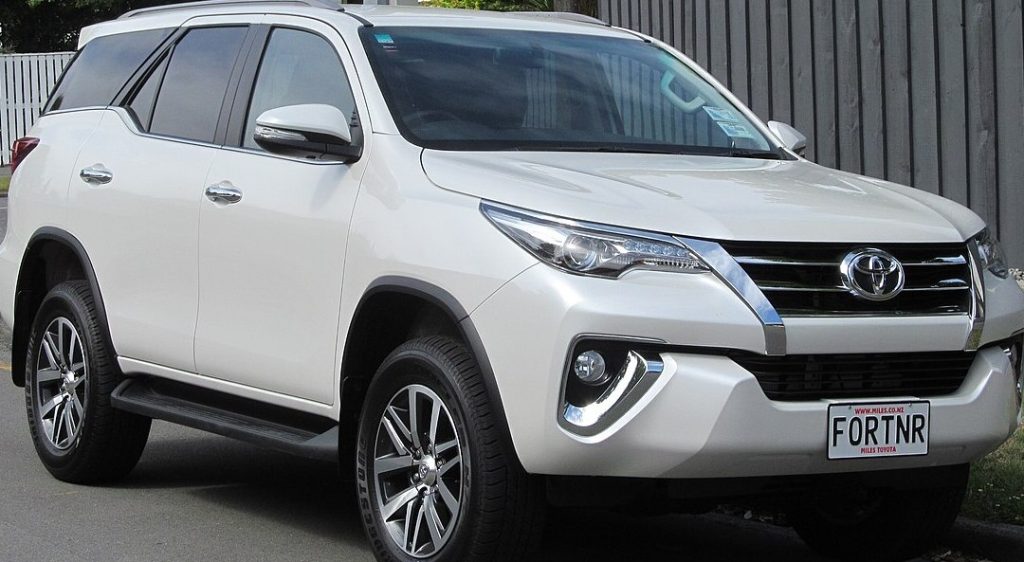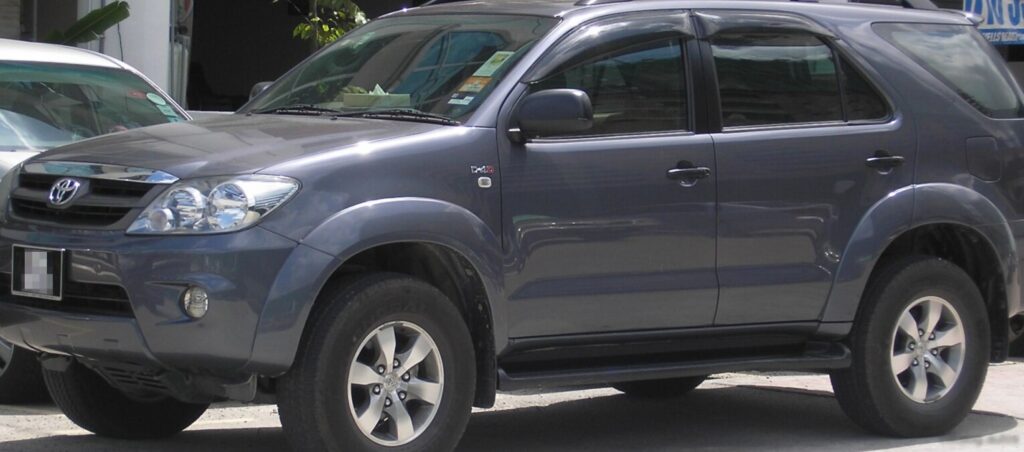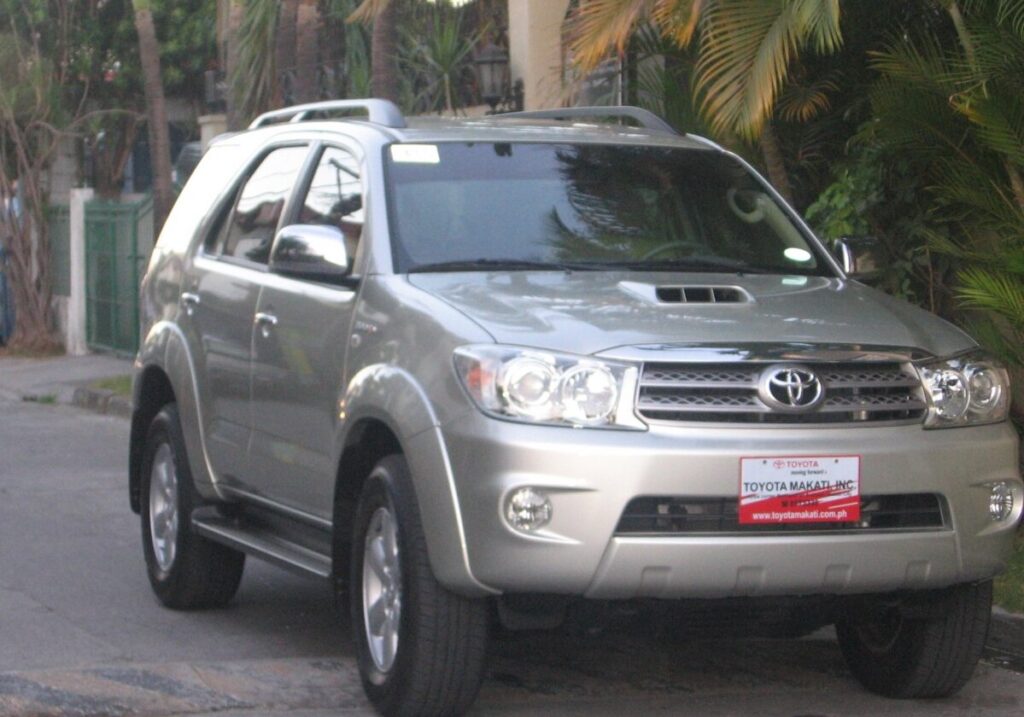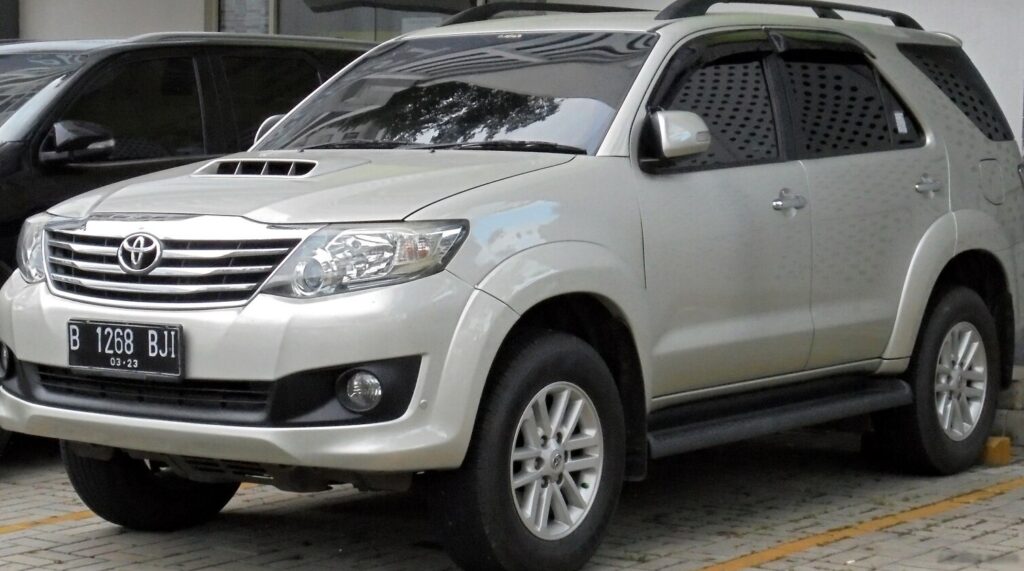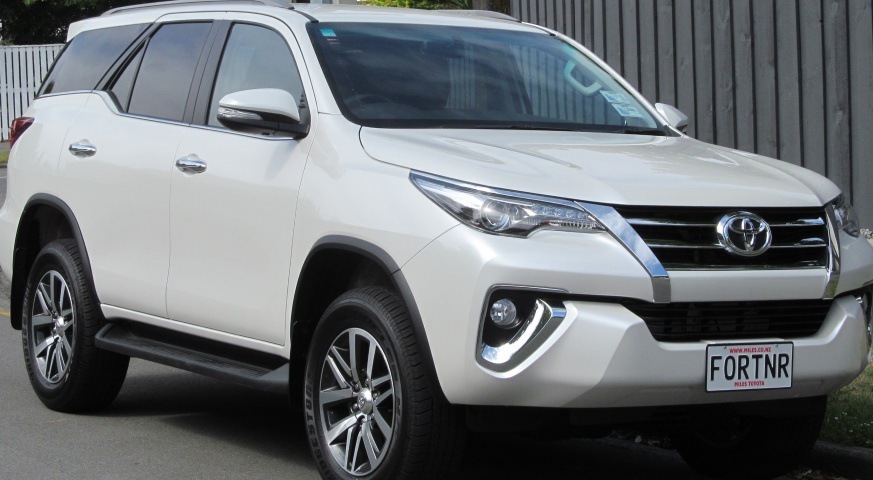
The Toyota Fortuner II 2.8 D-4D 4WD, produced from 2015 to 2020, represents a significant iteration of Toyota’s popular body-on-frame SUV. Positioned as a robust and capable vehicle, the Fortuner II aimed to blend off-road prowess with family-oriented practicality. This particular variant, equipped with the 1GD-FTV 2.8-liter diesel engine and a six-speed manual transmission, served as a mid-range offering within the Fortuner II lineup, appealing to buyers seeking a balance between performance, fuel efficiency, and all-terrain capability. It was primarily marketed in regions like Asia, Africa, South America, and Australia, where demand for durable and versatile SUVs remains strong. The Fortuner II built upon the success of the first-generation Fortuner, addressing criticisms regarding refinement and interior space.
Technical Specifications
| Brand | Toyota |
| Model | Fortuner |
| Generation | Fortuner II |
| Type (Engine) | 2.8 D-4D (177 Hp) 4WD |
| Start of production | 2015 |
| End of production | 2020 |
| Powertrain Architecture | Internal Combustion engine |
| Body type | SUV |
| Seats | 7 |
| Doors | 5 |
| Fuel consumption (combined) | 7.8 l/100 km (30.2 US mpg, 36.2 UK mpg, 12.8 km/l) |
| CO2 emissions | 204 g/km |
| Fuel Type | Diesel |
| Acceleration 0 – 100 km/h | 11.2 sec |
| Acceleration 0 – 62 mph | 11.2 sec |
| Acceleration 0 – 60 mph | 10.6 sec |
| Maximum speed | 180 km/h (111.85 mph) |
| Weight-to-power ratio | 15.5 kg/Hp, 64.7 Hp/tonne |
| Weight-to-torque ratio | 6.5 kg/Nm, 153.6 Nm/tonne |
| Power | 177 Hp @ 3400 rpm |
| Power per litre | 64.2 Hp/l |
| Torque | 420 Nm @ 1400-2600 rpm (309.78 lb.-ft. @ 1400-2600 rpm) |
| Engine layout | Front, Longitudinal |
| Engine Model/Code | 1GD-FTV |
| Engine displacement | 2755 cm3 (168.12 cu. in.) |
| Number of cylinders | 4 |
| Engine configuration | Inline |
| Cylinder Bore | 92 mm (3.62 in.) |
| Piston Stroke | 103.6 mm (4.08 in.) |
| Compression ratio | 15.6:1 |
| Number of valves per cylinder | 4 |
| Fuel injection system | Diesel Commonrail |
| Engine aspiration | Turbocharger, Intercooler |
| Valvetrain | DOHC |
| Engine oil capacity | 7.5 l (7.93 US qt | 6.6 UK qt) |
| Coolant | 9.1 l (9.62 US qt | 8.01 UK qt) |
| Kerb Weight | 2735 kg (6029.64 lbs.) |
| Fuel tank capacity | 80 l (21.13 US gal | 17.6 UK gal) |
| Length | 4795 mm (188.78 in.) |
| Width | 1855 mm (73.03 in.) |
| Height | 1835 mm (72.24 in.) |
| Wheelbase | 2745 mm (108.07 in.) |
| Minimum turning circle | 11.6 m (38.06 ft.) |
| Drive wheel | All wheel drive (4×4) |
| Number of gears | 6 |
| Gearbox type | Manual transmission |
| Front suspension | Double wishbone |
| Rear suspension | Independent multi-link suspension |
| Front brakes | Ventilated discs |
| Rear brakes | Ventilated discs |
| Assisting systems | ABS (Anti-lock braking system) |
| Tires size | 265/60 R18 |
| Wheel rims size | 18 |
Powertrain & Engine Architecture
The heart of the Fortuner II 2.8 D-4D is the 1GD-FTV engine, a 2.8-liter inline-four cylinder diesel. This engine is a member of Toyota’s GD series, known for its durability and efficiency. The 1GD-FTV utilizes a common-rail direct injection system, delivering fuel at extremely high pressure for optimized combustion. A variable geometry turbocharger (VGT) and intercooler further enhance performance and reduce emissions. The engine boasts a robust cast iron block and aluminum cylinder head, contributing to its longevity. The six-speed manual transmission provides drivers with precise control over the engine’s power delivery. The transmission’s gear ratios are tuned to balance acceleration with fuel economy, offering a comfortable driving experience both on and off-road.
Driving Characteristics
The 2.8 D-4D with the manual transmission offers a noticeably more engaging driving experience compared to the automatic variants. While not a sports car, the engine delivers ample torque from low RPMs, making it well-suited for towing and navigating challenging terrain. The manual gearbox allows for precise gear selection, maximizing control in off-road situations. Acceleration to 60 mph takes around 10.6 seconds, which is respectable for a vehicle of this size and weight. The Fortuner’s body-on-frame construction provides a comfortable ride, absorbing bumps and irregularities in the road. However, it also results in some body roll during cornering. The 4WD system, typically selectable between 2H (rear-wheel drive), 4H (four-wheel drive high), and 4L (four-wheel drive low), provides excellent traction in various conditions.
Equipment & Trim Levels
The 2.8 D-4D 4WD trim typically included features such as air conditioning, power windows, power door locks, and a basic audio system. Higher trim levels added features like leather upholstery, a touchscreen infotainment system with navigation, automatic climate control, and a sunroof. Safety features generally included ABS, multiple airbags, and stability control. Optional extras often included a rear parking camera, a premium audio system, and alloy wheels. The interior design prioritized functionality and durability, with hard-wearing materials and a straightforward layout.
Chassis & Braking
The Fortuner II utilizes a robust body-on-frame chassis, providing a solid foundation for both on-road and off-road driving. The front suspension consists of a double wishbone setup, while the rear features an independent multi-link suspension. This configuration provides a good balance between ride comfort and handling. Braking duties are handled by ventilated discs on all four wheels, providing ample stopping power. The ABS system helps to prevent wheel lockup during hard braking, enhancing safety. The Fortuner’s relatively high ground clearance and approach/departure angles contribute to its off-road capability.
Market Reception & Comparison
The Toyota Fortuner II 2.8 D-4D 4WD was generally well-received by automotive critics and consumers alike. It was praised for its reliability, durability, and off-road capability. Compared to the 2.4-liter engine option, the 2.8 D-4D offered significantly more power and torque, making it a better choice for those who frequently tow or drive in challenging conditions. The manual transmission variant was favored by drivers who preferred a more engaging driving experience. Fuel economy was considered reasonable for a vehicle of its size and type, averaging around 30.2 US mpg. However, some critics noted that the interior could be more refined and that the ride could be somewhat harsh on rough roads.
Legacy
The 1GD-FTV engine has proven to be exceptionally reliable, with many examples exceeding high mileage without major issues. The Fortuner II, in general, has established a strong reputation for durability and longevity. In the used car market, the 2.8 D-4D 4WD variant remains a popular choice, commanding a premium price due to its performance and capability. Its robust construction and readily available parts ensure that it will continue to be a viable option for buyers seeking a dependable and versatile SUV for years to come. The Fortuner II solidified Toyota’s position as a leader in the mid-size SUV segment, particularly in markets where off-road capability is highly valued.