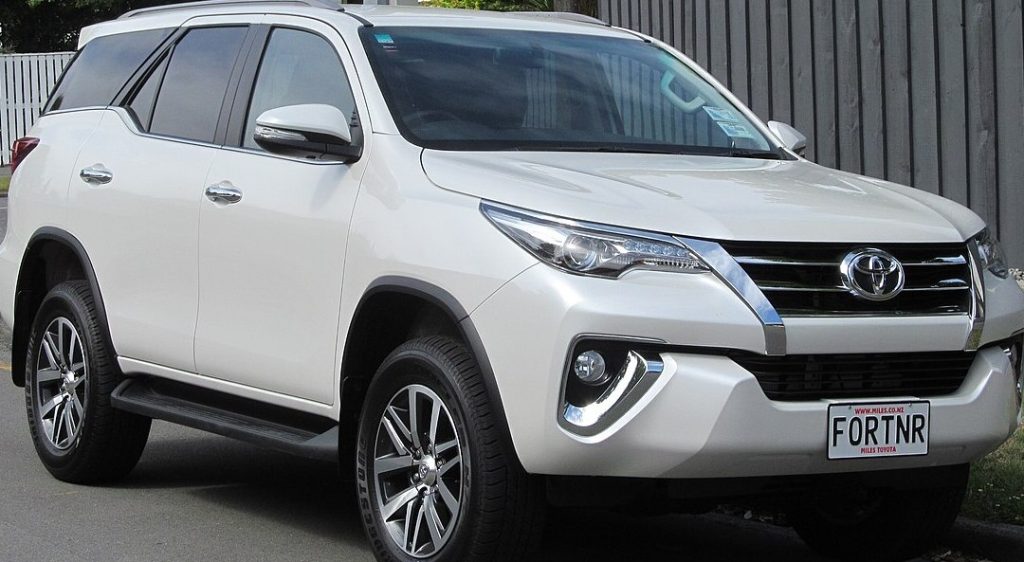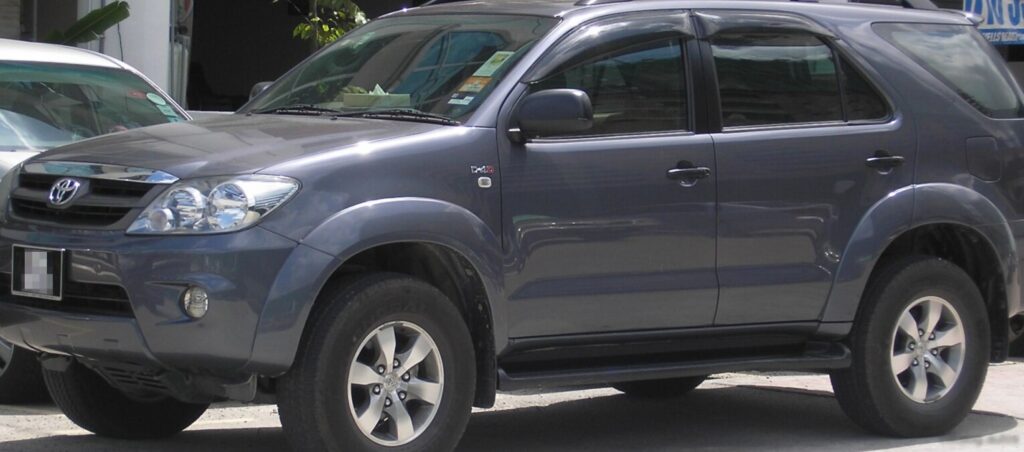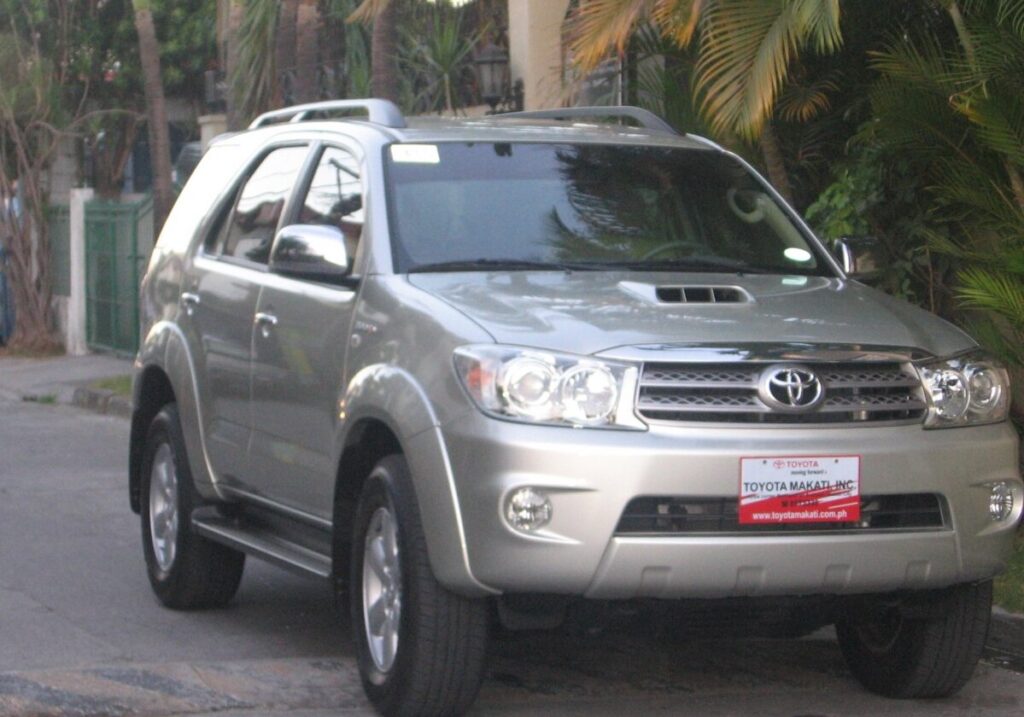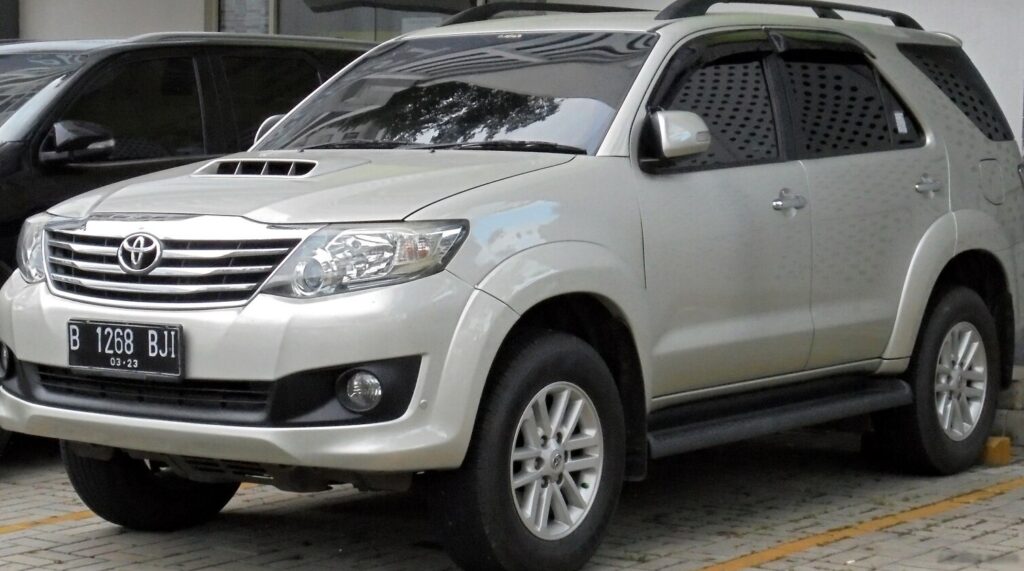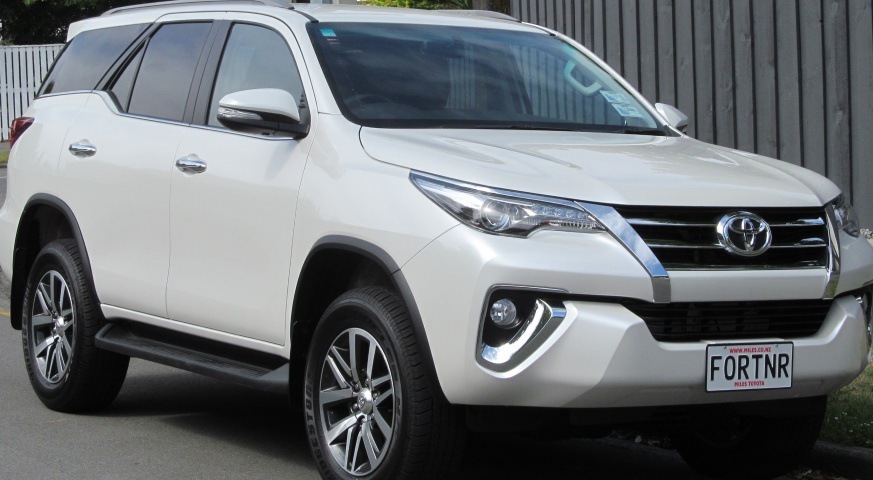
The Toyota Fortuner II 4.0i V6 4WD Automatic, produced between 2015 and 2020, represents a significant iteration of Toyota’s popular body-on-frame SUV. Positioned as a premium offering within the Fortuner II range (typically designated as the AN150 series), this variant catered to buyers seeking a blend of off-road capability, spaciousness, and a more powerful engine option. It primarily served markets in Asia, Africa, South America, and Australia, where robust SUVs with four-wheel drive are highly valued. The 4.0i V6 model occupied the top tier of the Fortuner II lineup, offering a substantial upgrade over the 2.4L and 2.8L diesel engine options available in many regions.
Technical Specifications
| Brand | Toyota |
| Model | Fortuner |
| Generation | Fortuner II |
| Type (Engine) | 4.0i V6 (238 Hp) 4WD Automatic |
| Start of production | 2015 |
| End of production | 2020 |
| Powertrain Architecture | Internal Combustion engine |
| Body type | SUV |
| Seats | 7 |
| Doors | 5 |
| Fuel consumption (combined) | 12 l/100 km (19.6 US mpg, 23.5 UK mpg, 8.3 km/l) |
| CO2 emissions | 277 g/km |
| Fuel Type | Petrol (Gasoline) |
| Acceleration 0 – 100 km/h | 9.4 sec |
| Acceleration 0 – 62 mph | 9.4 sec |
| Acceleration 0 – 60 mph | 8.9 sec |
| Maximum speed | 180 km/h (111.85 mph) |
| Power | 238 Hp @ 5200 rpm |
| Power per litre | 60.2 Hp/l |
| Torque | 376 Nm @ 3800 rpm (277.32 lb.-ft. @ 3800 rpm) |
| Engine layout | Front, Longitudinal |
| Engine Model/Code | 1GR-FE |
| Engine displacement | 3956 cm3 (241.41 cu. in.) |
| Number of cylinders | 6 |
| Engine configuration | V-engine |
| Cylinder Bore | 94 mm (3.7 in.) |
| Piston Stroke | 95 mm (3.74 in.) |
| Compression ratio | 10:1 |
| Number of valves per cylinder | 4 |
| Fuel injection system | Multi-port manifold injection |
| Engine aspiration | Naturally aspirated engine |
| Valvetrain | DOHC |
| Engine oil capacity | 5.5 l (5.81 US qt | 4.84 UK qt) |
| Coolant | 9.8 l (10.36 US qt | 8.62 UK qt) |
| Fuel tank capacity | 80 l (21.13 US gal | 17.6 UK gal) |
| Length | 4795 mm (188.78 in.) |
| Width | 1855 mm (73.03 in.) |
| Height | 1835 mm (72.24 in.) |
| Wheelbase | 2745 mm (108.07 in.) |
| Minimum turning circle | 11.6 m (38.06 ft.) |
| Drive wheel | All wheel drive (4×4) |
| Number of gears | 6 |
| Gearbox type | Automatic transmission |
| Front suspension | Double wishbone |
| Rear suspension | Independent multi-link suspension |
| Front brakes | Ventilated discs |
| Rear brakes | Ventilated discs |
| Assisting systems | ABS (Anti-lock braking system) |
| Tires size | 265/60 R18 |
| Wheel rims size | 18 |
Powertrain & Engine Architecture
The heart of the Fortuner II 4.0i V6 is Toyota’s 1GR-FE engine, a 3.956-liter (241.41 cubic inches) naturally aspirated V6. This engine is renowned for its durability and relatively smooth power delivery. The 1GR-FE utilizes a cast iron block with an aluminum cylinder head, incorporating dual overhead camshafts (DOHC) and four valves per cylinder. Fuel delivery is managed by a multi-port fuel injection system, providing precise fuel metering for optimal combustion. The engine produces 238 horsepower at 5200 rpm and 376 Nm (277.32 lb.-ft.) of torque at 3800 rpm. This power is then channeled through a six-speed automatic transmission, specifically designed to handle the engine’s output and the demands of off-road driving. The transmission features conventional torque converter technology and offers a balance between smooth shifting and responsive performance.
Driving Characteristics
The 4.0i V6 Automatic Fortuner delivers a noticeably more spirited driving experience compared to the diesel variants. While not a sports car, the V6 provides ample power for both on-road overtaking and tackling challenging off-road terrain. The automatic transmission, while smooth, isn’t particularly quick to downshift, which can sometimes feel sluggish during aggressive driving. The six-speed configuration offers a reasonable spread of gear ratios, prioritizing usability and fuel efficiency over outright performance. The 4WD system, typically a part-time system with selectable modes (2WD, 4WD High, 4WD Low), provides excellent traction in various conditions. The Fortuner’s body-on-frame construction contributes to a more truck-like ride quality, which can be less refined than the unibody SUVs, but provides greater durability and off-road robustness.
Equipment & Trim Levels
The 4.0i V6 Automatic trim generally came well-equipped, often including features such as leather upholstery, automatic climate control, a touchscreen infotainment system (varying by market), and rear parking sensors. Optional extras could include a sunroof, navigation system, and upgraded audio system. Safety features typically included ABS, multiple airbags, and stability control. The interior design was functional and durable, prioritizing practicality over luxury. The third-row seating, while present, was best suited for occasional use or smaller passengers.
Chassis & Braking
The Fortuner II utilizes a robust body-on-frame chassis, providing a solid foundation for both on-road and off-road driving. The front suspension employs a double wishbone setup, while the rear features an independent multi-link suspension. This configuration aims to balance ride comfort with off-road articulation. Braking duties are handled by ventilated disc brakes on all four wheels, providing adequate stopping power for the vehicle’s weight and capabilities. The 18-inch alloy wheels, typically fitted with 265/60 R18 tires, contribute to both the vehicle’s appearance and its off-road performance.
Market Reception & Comparison
The 4.0i V6 Automatic Fortuner was generally well-received in markets where it was offered. Critics praised its powerful engine, spacious interior, and robust four-wheel-drive system. However, the fuel economy was often cited as a drawback, particularly compared to the diesel alternatives. Compared to the 2.8L diesel, the V6 offered significantly more power and a smoother driving experience, but at the cost of increased fuel consumption and a higher purchase price. Against competitors like the Mitsubishi Pajero Sport and Isuzu MU-X, the Fortuner often stood out for its Toyota reliability and strong resale value.
Legacy
The 1GR-FE engine has proven to be exceptionally reliable, and the Fortuner II 4.0i V6 continues to hold its value in the used car market. While fuel economy remains a concern for some buyers, the engine’s durability and the Fortuner’s overall robustness make it a popular choice for those seeking a dependable and capable SUV. Common maintenance items include regular oil changes, coolant flushes, and inspection of the suspension components. The automatic transmission, when properly maintained, is also known for its longevity. The Fortuner II 4.0i V6 represents a compelling option for buyers seeking a capable and reliable SUV with a powerful gasoline engine.