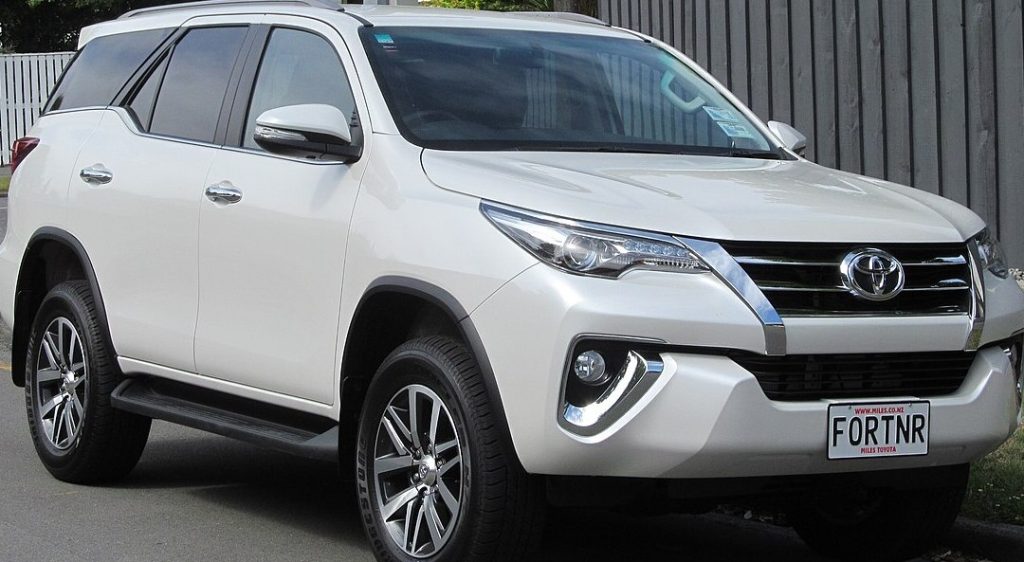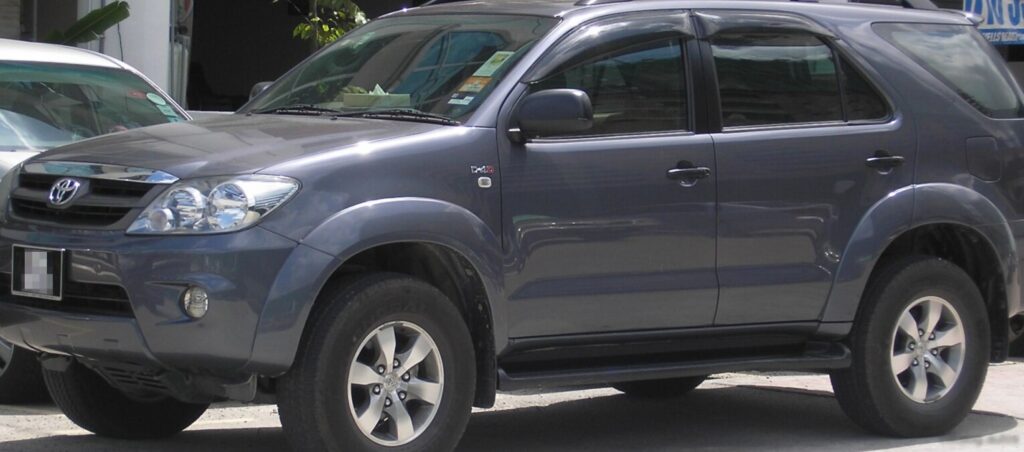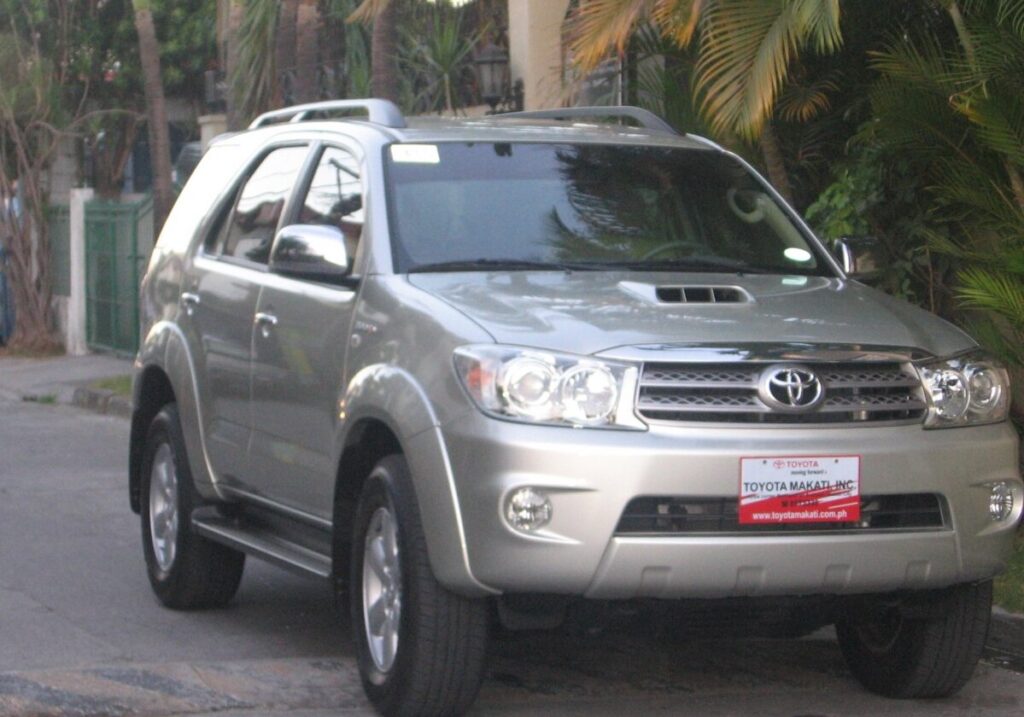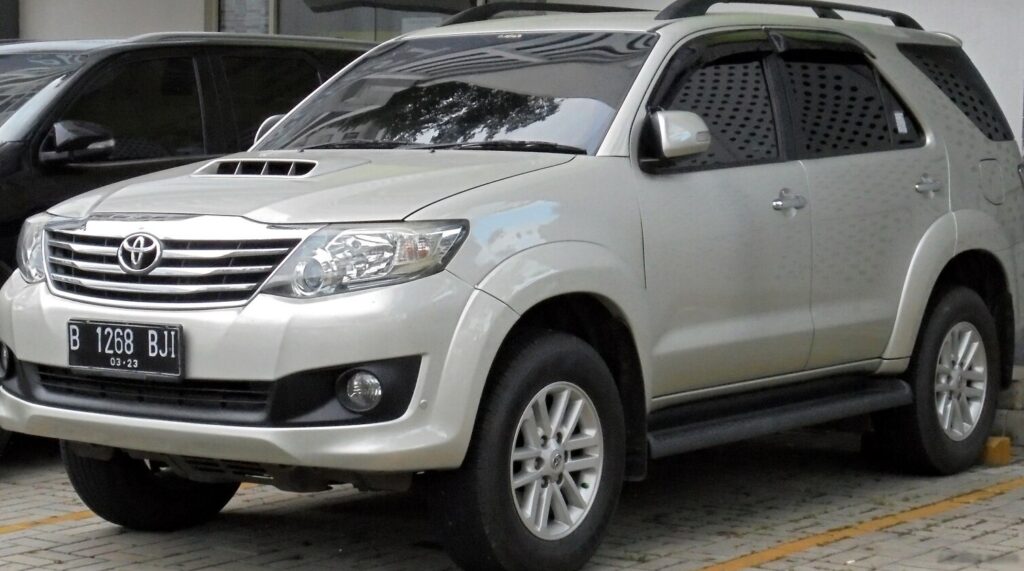
The Toyota Fortuner II, specifically the 2.4d (150 Hp) 4WD Automatic variant introduced with the 2020 facelift, represents a significant iteration of Toyota’s popular body-on-frame SUV. Launched initially in 2005, the Fortuner was designed to cater to markets demanding a robust, reliable, and capable SUV, particularly in Southeast Asia, Australia, and South Africa. The 2020 facelift brought styling updates, improved technology, and refinements to the powertrain, solidifying the Fortuner’s position as a leading contender in the mid-size SUV segment. This particular 2.4-liter diesel automatic configuration aimed to balance fuel efficiency with sufficient power for both on-road comfort and off-road capability, positioning it as a versatile option within the Fortuner lineup.
Technical Specifications
| Brand | Toyota |
| Model | Fortuner |
| Generation | Fortuner II (facelift 2020) |
| Type (Engine) | 2.4d (150 Hp) 4WD Automatic |
| Start of production | 2020 |
| Powertrain Architecture | Internal Combustion engine |
| Body type | SUV |
| Seats | 7 |
| Doors | 5 |
| Fuel consumption (combined) | 7.6 l/100 km (30.9 US mpg, 37.2 UK mpg, 13.2 km/l) |
| CO2 emissions | 201 g/km |
| Fuel Type | Diesel |
| Weight-to-power ratio | 14.1 kg/Hp, 71.1 Hp/tonne |
| Weight-to-torque ratio | 5.3 kg/Nm, 189.6 Nm/tonne |
| Power | 150 Hp @ 3400 rpm |
| Power per litre | 62.7 Hp/l |
| Torque | 400 Nm @ 1600-2000 rpm (295.02 lb.-ft. @ 1600-2000 rpm) |
| Engine layout | Front, Longitudinal |
| Engine Model/Code | 2GD-FTV |
| Engine displacement | 2393 cm3 (146.03 cu. in.) |
| Number of cylinders | 4 |
| Engine configuration | Inline |
| Cylinder Bore | 92 mm (3.62 in.) |
| Piston Stroke | 90 mm (3.54 in.) |
| Number of valves per cylinder | 4 |
| Fuel injection system | Diesel Commonrail |
| Engine aspiration | Turbocharger, Intercooler |
| Valvetrain | DOHC |
| Engine oil capacity | 7.5 l (7.93 US qt | 6.6 UK qt) |
| Kerb Weight | 2110 kg (4651.75 lbs.) |
| Max. weight | 2705-2710 kg (5963.5 – 5974.53 lbs.) |
| Max load | 595-600 kg (1311.75 – 1322.77 lbs.) |
| Fuel tank capacity | 80 l (21.13 US gal | 17.6 UK gal) |
| Permitted trailer load with brakes (12%) | 3300 kg (7275.25 lbs.) |
| Permitted trailer load without brakes | 750 kg (1653.47 lbs.) |
| Length | 4795 mm (188.78 in.) |
| Width | 1855 mm (73.03 in.) |
| Height | 1835 mm (72.24 in.) |
| Wheelbase | 2745 mm (108.07 in.) |
| Front track | 1545 mm (60.83 in.) |
| Rear (Back) track | 1555 mm (61.22 in.) |
| Ride height (ground clearance) | 279 mm (10.98 in.) |
| Minimum turning circle (turning diameter) | 11.6 m (38.06 ft.) |
| Drivetrain Architecture | All wheel drive (4×4). ICE drives rear wheels, front wheels engaged via clutch. |
| Number of gears and type of gearbox | 6 gears, automatic transmission |
| Front suspension | Coil spring, Double wishbone, Transverse stabilizer |
| Rear suspension | Rigid axle suspension, Coil spring |
| Front brakes | Ventilated discs |
| Rear brakes | Ventilated discs |
| Assisting systems | ABS (Anti-lock braking system) |
| Steering type | Steering rack and pinion |
| Power steering | Hydraulic Steering |
| Tires size | 265/65 R17; 265/60 R18 |
| Wheel rims size | 7.5J x 17; 7.5J x 18 |
Powertrain & Engine Architecture
The heart of the 2020 Fortuner 2.4d 4WD Automatic is the 2GD-FTV 2.4-liter inline-four diesel engine. This engine is part of Toyota’s GD series of diesel engines, known for their durability and efficiency. The 2GD-FTV utilizes a common-rail direct injection system, delivering fuel at extremely high pressure for optimized combustion. A turbocharger with an intercooler further enhances performance by forcing more air into the cylinders. The engine features a Double Overhead Camshaft (DOHC) valvetrain with four valves per cylinder, contributing to improved breathing and power output. The automatic transmission is a conventional six-speed unit, chosen for its balance of responsiveness and fuel economy. It’s designed to handle the engine’s 400 Nm (295 lb-ft) of torque and provide smooth shifts in various driving conditions.
Driving Characteristics
The 150 horsepower and 400 Nm of torque offered by the 2.4d powertrain provide adequate performance for everyday driving and moderate off-road excursions. While not as quick as the higher-output variants, the 2.4d delivers a usable powerband, with peak torque available from 1600-2000 rpm. This makes it well-suited for towing and navigating challenging terrain. The automatic transmission, while generally smooth, can sometimes feel hesitant during quick acceleration. Compared to the manual transmission versions, the automatic offers greater convenience, especially in urban environments, but sacrifices some driver engagement. The 4WD system provides enhanced traction on slippery surfaces, making it a capable vehicle for inclement weather and off-road adventures. The gear ratios are tuned for a balance between fuel efficiency and off-road crawling ability.
Equipment & Trim Levels
The 2020 Fortuner 2.4d 4WD Automatic typically came equipped with a respectable array of standard features. These generally included air conditioning, power windows and locks, a touchscreen infotainment system with Bluetooth connectivity, and basic safety features like ABS and airbags. Higher trim levels offered upgrades such as leather upholstery, automatic climate control, a sunroof, and advanced safety technologies like lane departure alert and adaptive cruise control. The interior design focused on practicality and durability, with hard-wearing materials and a functional layout. Optional extras often included a rear-seat entertainment system and upgraded audio systems.
Chassis & Braking
The Fortuner’s chassis is a traditional body-on-frame construction, providing robustness and off-road capability. The front suspension utilizes a double wishbone setup with a transverse stabilizer bar, while the rear employs a rigid axle suspension with coil springs. This configuration prioritizes durability and load-carrying capacity over outright on-road handling finesse. Braking duties are handled by ventilated discs on all four wheels, providing adequate stopping power for the vehicle’s weight. The hydraulic power steering offers a reasonable level of assistance, although it lacks the precision of more modern electric systems.
Market Reception & Comparison
The 2020 Fortuner 2.4d 4WD Automatic was generally well-received by automotive critics as a practical and capable SUV. It was praised for its reliability, durability, and off-road prowess. However, some reviewers noted that the engine could feel underpowered when fully loaded or tackling steep inclines. Compared to other trims in the Fortuner lineup, the 2.4d offered a more affordable entry point, making it accessible to a wider range of buyers. Its fuel economy was generally competitive with other diesel SUVs in its class, although it didn’t match the efficiency of some smaller, lighter vehicles. Compared to rivals like the Mitsubishi Pajero Sport and Isuzu MU-X, the Fortuner offered a strong reputation for reliability and resale value.
Legacy
The 2GD-FTV engine has proven to be a remarkably reliable powertrain, and the 2020 Fortuner 2.4d 4WD Automatic continues to hold its value in the used car market. Its robust construction and relatively simple mechanicals contribute to its longevity and ease of maintenance. While some owners have reported minor issues with the automatic transmission, these are generally infrequent. The Fortuner’s reputation for dependability and its ability to handle rough conditions have made it a popular choice among those seeking a durable and capable SUV. As a result, well-maintained examples of this variant are likely to remain desirable for years to come.