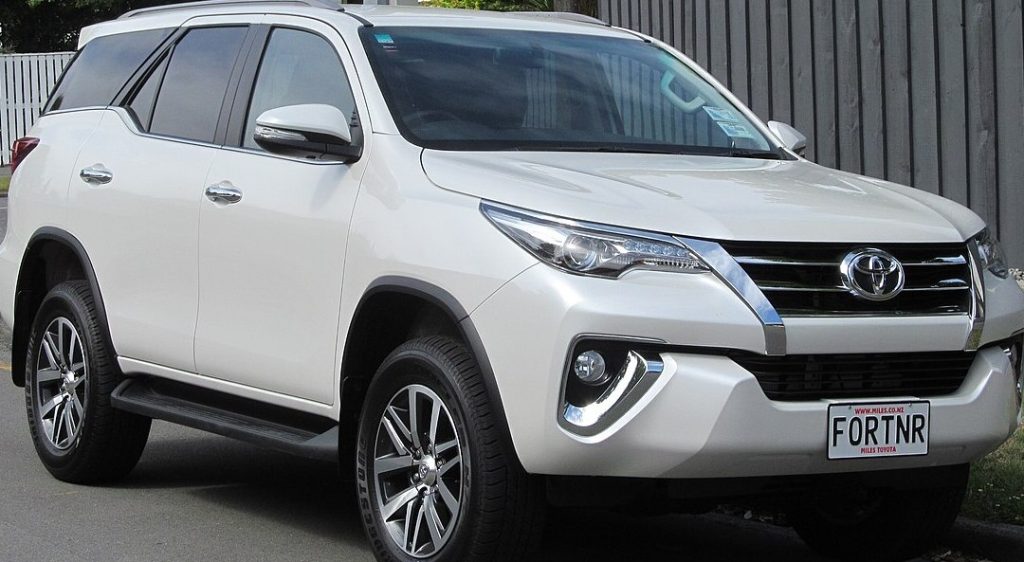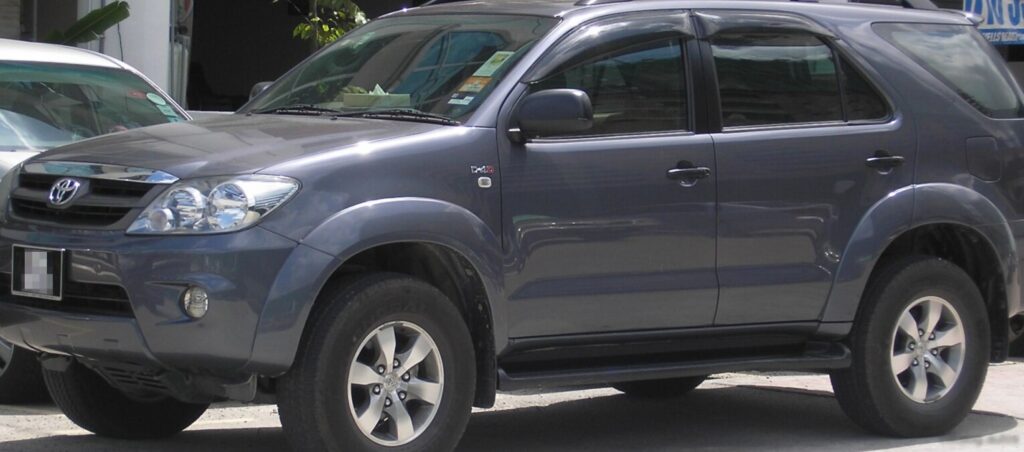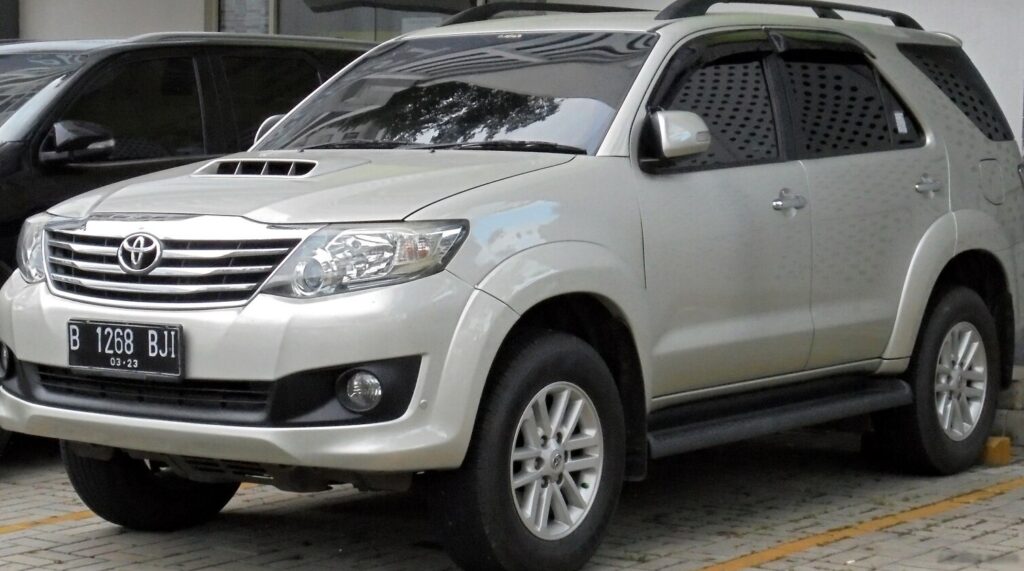
The Toyota Fortuner II, specifically the 2.7i variant introduced with the 2020 facelift, represents a key offering in Toyota’s mid-size SUV lineup, particularly in markets outside of North America. Positioned as a robust, body-on-frame SUV, the Fortuner caters to buyers seeking a durable and capable vehicle for both on-road comfort and off-road excursions. The 2.7i model, producing 166 horsepower, served as the entry point to the Fortuner range in many regions, offering a balance between affordability and capability. It’s built on the IMV platform (Innovative Multi-purpose Vehicle) shared with the Toyota Hilux pickup truck, emphasizing its rugged construction. This facelift brought updated styling, enhanced features, and refinements to the powertrain, solidifying the Fortuner’s position as a popular choice in its segment.
Technical Specifications
| Brand | Toyota |
| Model | Fortuner |
| Generation | Fortuner II (facelift 2020) |
| Type (Engine) | 2.7i (166 Hp) |
| Start of production | 2020 |
| Powertrain Architecture | Internal Combustion engine |
| Body type | SUV |
| Seats | 7 |
| Doors | 5 |
| Fuel Type | Petrol (Gasoline) |
| Power | 166 Hp @ 5200 rpm |
| Power per litre | 61.6 Hp/l |
| Torque | 245 Nm @ 4000 rpm / 180.7 lb.-ft. @ 4000 rpm |
| Engine layout | Front, Longitudinal |
| Engine Model/Code | 2TR-FE |
| Engine displacement | 2694 cm3 / 164.4 cu. in. |
| Number of cylinders | 4 |
| Engine configuration | Inline |
| Number of valves per cylinder | 4 |
| Fuel injection system | Multi-port manifold injection |
| Engine aspiration | Naturally aspirated engine |
| Valvetrain | DOHC, Dual VVT-i |
| Engine oil capacity | 5.6 l / 5.92 US qt | 4.93 UK qt |
| Coolant | 8.1 l / 8.56 US qt | 7.13 UK qt |
| Max. weight | 2510 kg / 5533.6 lbs |
| Fuel tank capacity | 80 l / 21.13 US gal | 17.6 UK gal |
| Length | 4795 mm / 188.78 in |
| Width | 1855 mm / 73.03 in |
| Height | 1835 mm / 72.24 in |
| Wheelbase | 2745 mm / 108.07 in |
| Minimum turning circle | 11.6 m / 38.06 ft |
| Drivetrain Architecture | Rear wheel drive |
| Number of gears | 5 |
| Gearbox type | Manual transmission |
| Front suspension | Double wishbone |
| Rear suspension | Independent multi-link suspension |
| Front brakes | Ventilated discs |
| Rear brakes | Ventilated discs |
| Assisting systems | ABS (Anti-lock braking system) |
| Steering type | Steering rack and pinion |
| Tires size | 265/65 R17 |
| Wheel rims size | 17 |
Powertrain & Engine Architecture
The heart of the 2020 Toyota Fortuner 2.7i is the 2TR-FE engine, a 2.7-liter inline-four cylinder gasoline engine. This engine is a naturally aspirated design, meaning it doesn’t utilize turbocharging or supercharging. It employs a dual overhead camshaft (DOHC) valvetrain with Toyota’s Variable Valve Timing-intelligent (VVT-i) system on both intake and exhaust valves. This technology optimizes valve timing based on engine speed and load, improving both performance and fuel efficiency. Fuel delivery is managed by a multi-port fuel injection system. The 2TR-FE is known for its reliability and durability, characteristics prioritized in the Fortuner’s design. The engine is longitudinally mounted within the chassis, contributing to the vehicle’s rear-wheel-drive configuration. The 5-speed manual transmission is a conventional design, offering straightforward gear changes. While not the most technologically advanced transmission, it’s known for its robustness and relatively low maintenance requirements.
Driving Characteristics
The 166 horsepower and 245 Nm (180.7 lb-ft) of torque produced by the 2.7i engine provide adequate, but not exhilarating, performance for the Fortuner. Acceleration is best described as steady, rather than quick, and is noticeably slower than the higher-output diesel or larger gasoline engine options available in the Fortuner lineup. The manual transmission allows for greater driver control, but the gear ratios are tuned for practicality and fuel economy rather than outright speed. The Fortuner 2.7i feels most comfortable cruising at highway speeds, where the engine operates within its optimal range. Off-road, the engine provides sufficient low-end torque for navigating moderate terrain, but lacks the sheer pulling power of the diesel variants. The rear-wheel-drive configuration, combined with the manual transmission, requires a more experienced driver to manage traction in challenging conditions.
Equipment & Trim Levels
The 2.7i trim level typically served as the base model in many markets. Standard equipment generally included air conditioning, power windows, power door locks, and a basic audio system. Interior upholstery was typically cloth, and the dashboard featured a functional, if somewhat utilitarian, design. Optional extras often included alloy wheels, a touchscreen infotainment system with navigation, rear parking sensors, and a reverse camera. Higher trim levels, such as the 2.8L diesel variants, offered more luxurious features like leather seats, automatic climate control, and advanced safety systems. The 2.7i was aimed at buyers prioritizing value and practicality over premium features.
Chassis & Braking
The Fortuner’s chassis is a traditional body-on-frame construction, providing excellent durability and off-road capability. The front suspension utilizes a double wishbone setup, while the rear features an independent multi-link suspension. This configuration balances ride comfort with off-road articulation. Braking duties are handled by ventilated disc brakes on all four wheels, providing adequate stopping power for the vehicle’s weight. An Anti-lock Braking System (ABS) is standard, enhancing safety during emergency braking situations. The steering system employs a rack and pinion setup, offering precise and responsive steering feel.
Market Reception & Comparison
The Toyota Fortuner 2.7i was generally well-received as a capable and reliable SUV, particularly in regions where off-road capability and durability are highly valued. Critics often praised its robust construction and comfortable ride, but noted that the 2.7-liter engine felt underpowered compared to the diesel alternatives. Fuel economy was also a point of criticism, as the gasoline engine consumed more fuel than the more efficient diesel options. Compared to competitors like the Mitsubishi Pajero Sport and Isuzu MU-X, the Fortuner 2.7i offered a compelling combination of reliability, comfort, and off-road capability, making it a popular choice among families and adventurers.
Legacy
The 2TR-FE engine, found in the Fortuner 2.7i, has a strong reputation for long-term reliability and durability. With proper maintenance, these engines can easily exceed 200,000 kilometers (124,000 miles) without major issues. On the used car market, the Fortuner 2.7i represents a relatively affordable entry point into Fortuner ownership. While it may not offer the same performance or fuel economy as the diesel variants, its lower purchase price and proven reliability make it an attractive option for budget-conscious buyers. The 2020 facelift model benefits from updated styling and improved features, further enhancing its appeal in the used car market. The Fortuner continues to be a popular choice in many regions, and the 2.7i variant remains a viable option for those seeking a dependable and capable SUV.