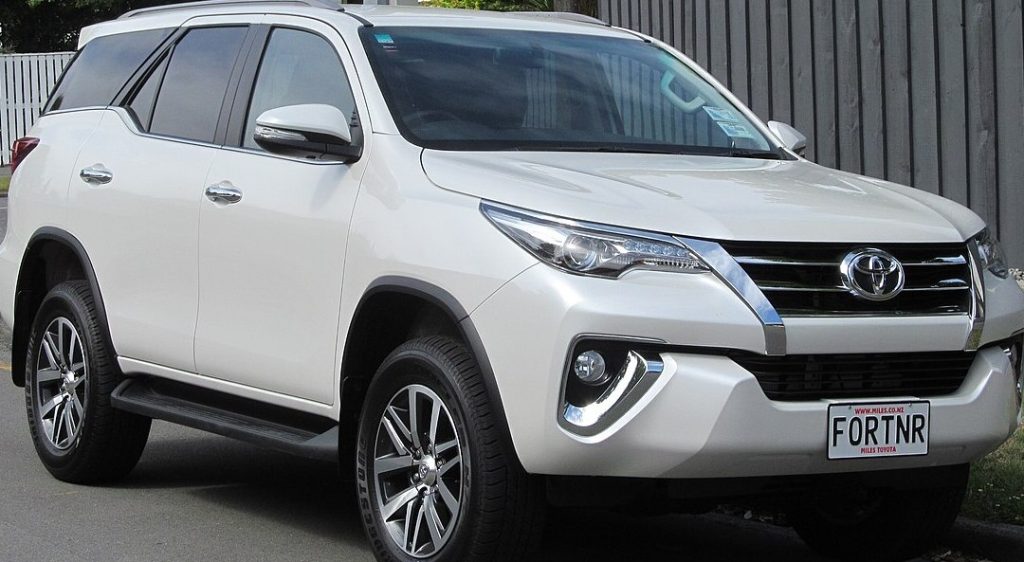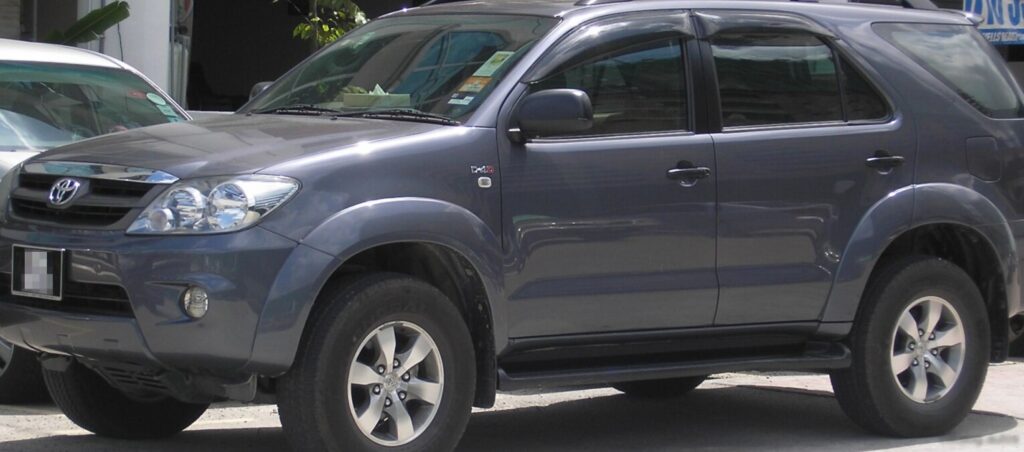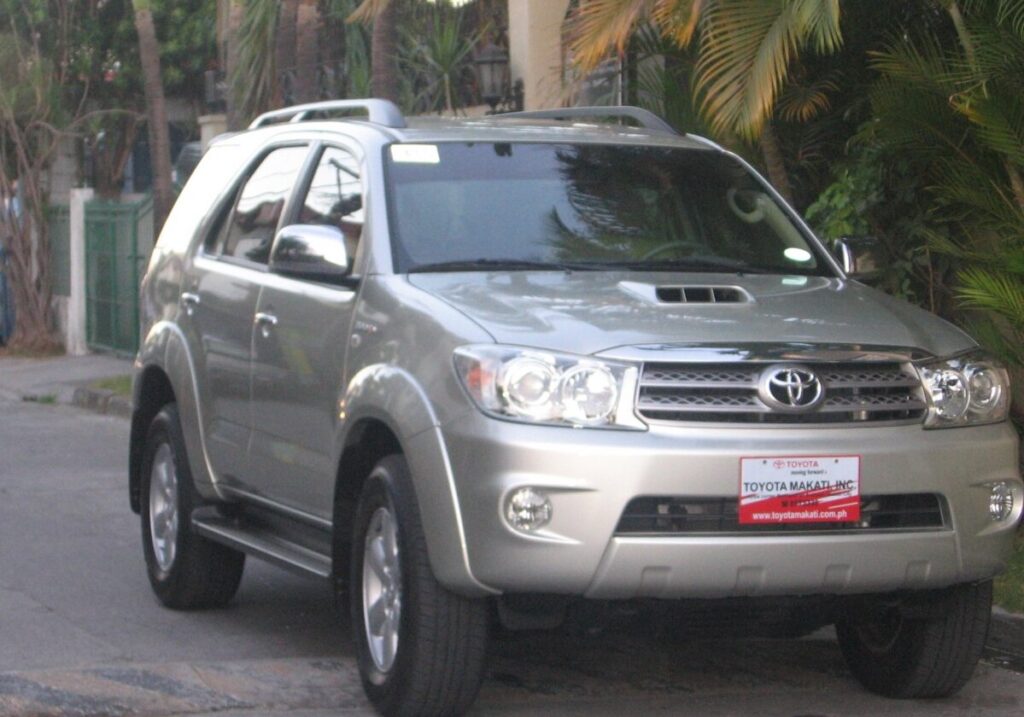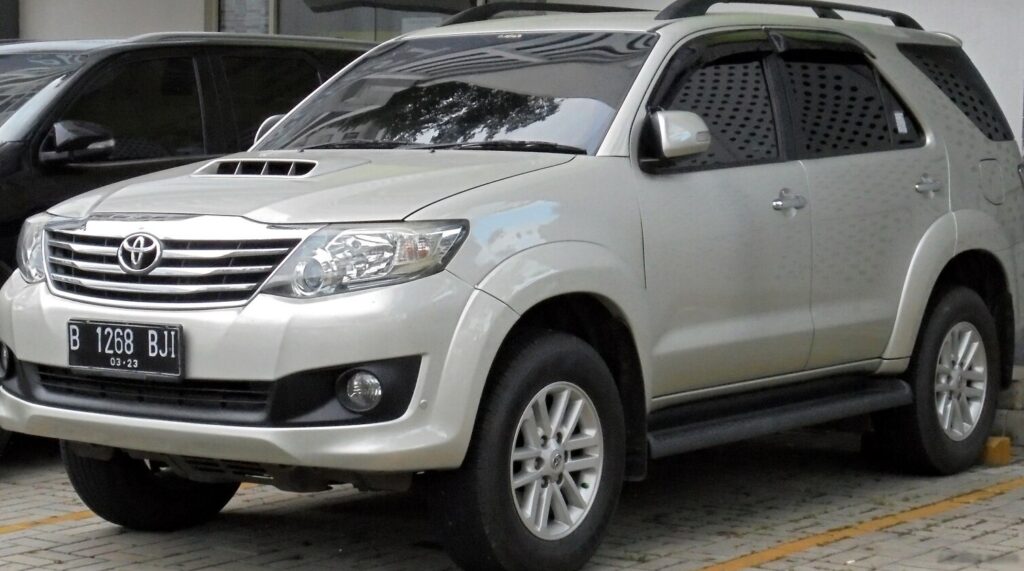
The Toyota Fortuner II, specifically the GR-S 2.8d 4WD Automatic variant introduced with the 2020 facelift, represents a performance-oriented iteration of Toyota’s popular mid-size SUV. Production of this specific trim began in 2023, building upon the foundation of the second-generation Fortuner (launched in 2015). Positioned as a premium offering within the Fortuner lineup, the GR-S (Gazoo Racing Sport) model aimed to deliver enhanced driving dynamics and a more aggressive aesthetic compared to the standard trims. It primarily serves markets in Asia, Africa, South America, and Australia, where body-on-frame SUVs remain highly sought after for their robustness and off-road capability. The Fortuner competes with vehicles like the Mitsubishi Pajero Sport, Isuzu MU-X, and Ford Everest.
Technical Specifications
| Brand | Toyota |
| Model | Fortuner |
| Generation | Fortuner II (facelift 2020) |
| Type | GR-S 2.8d (224 Hp) 4WD Automatic |
| Start of production | 2023 |
| Powertrain Architecture | Internal Combustion engine |
| Body type | SUV |
| Seats | 7 |
| Doors | 5 |
| Fuel consumption (combined) | 8.4 l/100 km (28 US mpg, 33.6 UK mpg, 11.9 km/l) |
| CO2 emissions | 221 g/km |
| Fuel Type | Diesel |
| Power | 224 Hp @ 3000 rpm |
| Power per litre | 81.3 Hp/l |
| Torque | 550 Nm @ 1600-2800 rpm (405.66 lb.-ft. @ 1600-2800 rpm) |
| Engine layout | Front, Longitudinal |
| Engine Model/Code | 1GD-FTV |
| Engine displacement | 2755 cm3 (168.12 cu. in.) |
| Number of cylinders | 4 |
| Engine configuration | Inline |
| Cylinder Bore | 92 mm (3.62 in.) |
| Piston Stroke | 103.6 mm (4.08 in.) |
| Number of valves per cylinder | 4 |
| Fuel injection system | Diesel Commonrail |
| Engine aspiration | Turbocharger, Intercooler |
| Valvetrain | DOHC |
| Engine oil capacity | 7.5 l (7.93 US qt | 6.6 UK qt) |
| Max. weight | 2735 kg (6029.64 lbs.) |
| Fuel tank capacity | 80 l (21.13 US gal | 17.6 UK gal) |
| Permitted trailer load with brakes (12%) | 3300 kg (7275.25 lbs.) |
| Permitted trailer load without brakes | 750 kg (1653.47 lbs.) |
| Length | 4795 mm (188.78 in.) |
| Width | 1855 mm (73.03 in.) |
| Height | 1835 mm (72.24 in.) |
| Wheelbase | 2745 mm (108.07 in.) |
| Front track | 1545 mm (60.83 in.) |
| Rear track | 1555 mm (61.22 in.) |
| Minimum turning circle | 11.6 m (38.06 ft.) |
| Drivetrain Architecture | All wheel drive (4×4). ICE drives rear wheels, front wheels engaged via clutch. |
| Number of gears and type of gearbox | 6 gears, automatic transmission |
| Front suspension | Coil spring, Double wishbone, Transverse stabilizer |
| Rear suspension | Rigid axle suspension, Coil spring |
| Front brakes | Ventilated discs |
| Rear brakes | Ventilated discs |
| Steering type | Steering rack and pinion |
| Power steering | Hydraulic Steering |
| Tires size | 265/60 R18 |
| Wheel rims size | 7.5J x 18 |
Powertrain & Engine Architecture
The heart of the Fortuner GR-S 2.8d is Toyota’s 1GD-FTV 2.8-liter inline-four diesel engine. This engine is a member of Toyota’s GD series, known for its durability and efficiency. The 1GD-FTV utilizes a common-rail direct injection system, delivering fuel at extremely high pressure for optimized combustion. A variable geometry turbocharger with intercooling further enhances performance, providing increased boost across a wider RPM range. The engine features a Double Overhead Camshaft (DOHC) valvetrain with four valves per cylinder, contributing to improved breathing and power output. The engine produces 224 horsepower at 3000 rpm and a substantial 550 Nm (405.66 lb.-ft.) of torque between 1600 and 2800 rpm. This torque output is particularly beneficial for towing and off-road driving. The engine is paired with a six-speed automatic transmission, specifically tuned for the GR-S model to provide quicker shifts and a more responsive driving experience.
Driving Characteristics
The 2.8-liter diesel engine and six-speed automatic transmission combination in the Fortuner GR-S delivers a compelling blend of performance and usability. While not a sports car, the GR-S offers noticeably more spirited acceleration than the base Fortuner models equipped with the 2.4-liter engine. The automatic transmission is well-programmed, providing smooth shifts during normal driving and readily downshifting when more power is needed. The torque-rich engine makes overtaking at highway speeds relatively effortless. The GR-S benefits from a tuned suspension, offering a firmer ride compared to standard Fortuners, which improves handling and body control, especially when cornering. However, this firmness can translate to a slightly less comfortable ride on rough roads. The four-wheel-drive system provides excellent traction in various conditions, making it a capable off-road vehicle.
Equipment & Trim Levels
The GR-S trim level represents the highest specification available on the Fortuner. Standard features include LED headlights, alloy wheels, a touchscreen infotainment system with navigation, automatic climate control, and a reverse camera. The interior is typically finished with a combination of leather and synthetic materials, with unique GR-S badging and accents. Safety features include multiple airbags, ABS, electronic stability control, and traction control. Optional extras often include a sunroof, premium audio system, and advanced driver-assistance systems like lane departure warning and adaptive cruise control.
Chassis & Braking
The Fortuner II utilizes a traditional body-on-frame construction, providing a robust and durable platform. The GR-S variant features a tuned suspension system with upgraded shock absorbers and springs, designed to improve handling and reduce body roll. Both the front and rear axles are equipped with ventilated disc brakes, providing ample stopping power. The GR-S also benefits from a thicker front stabilizer bar, further enhancing stability. The four-wheel-drive system employs a part-time transfer case, allowing the driver to switch between two-wheel drive and four-wheel drive modes as needed.
Market Reception & Comparison
The Toyota Fortuner GR-S 2.8d 4WD Automatic was generally well-received by automotive critics. Reviewers praised its powerful engine, improved handling, and enhanced styling. The fuel economy of 8.4 l/100 km (28 US mpg) is respectable for a vehicle of its size and capability, although slightly lower than the base 2.4-liter models. Compared to the standard Fortuner trims, the GR-S offers a more engaging driving experience and a more premium interior. Reliability is a strong point for the Fortuner, with Toyota’s reputation for building durable vehicles. However, the GR-S trim commands a higher price than the lower-spec models.
Legacy
The 1GD-FTV engine has proven to be a reliable and durable powertrain, and the Fortuner GR-S 2.8d 4WD Automatic is expected to hold its value well in the used car market. The combination of a robust engine, capable four-wheel-drive system, and comfortable interior makes it a popular choice for those seeking a versatile and dependable SUV. As with any diesel vehicle, proper maintenance, including regular oil changes and fuel filter replacements, is crucial for long-term reliability. The GR-S variant, with its enhanced features and performance, is likely to become a sought-after model among Fortuner enthusiasts.