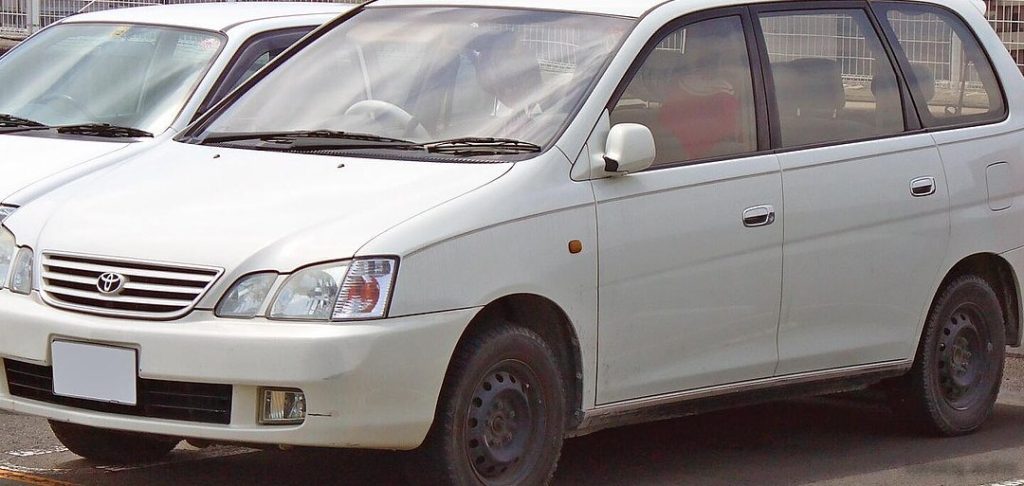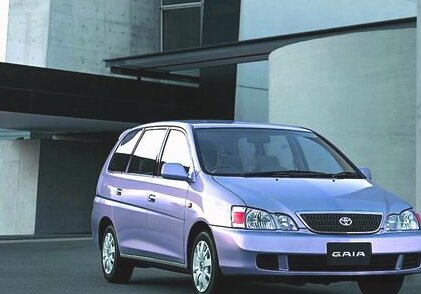
The Toyota Gaia (M10G) 2.0 i 16V STD, produced between 2002 and September 2004, represents a significant offering in Toyota’s lineup of people carriers. Positioned as a mid-range trim within the broader Gaia generation, this variant catered to families seeking a spacious and practical vehicle with a balance of performance and fuel efficiency. The Gaia, primarily marketed in Japan, was designed to compete with other compact MPVs, offering a versatile interior and Toyota’s reputation for reliability. This specific 2.0-liter, 152 horsepower configuration, paired with a four-speed automatic transmission, aimed to provide a comfortable and convenient driving experience for everyday use.
Technical Specifications
| Brand | Toyota |
| Model | Gaia |
| Generation | Gaia (M10G) |
| Type (Engine) | 2.0 i 16V STD (152 Hp) |
| Start of production | 2002 |
| End of production | September, 2004 |
| Powertrain Architecture | Internal Combustion engine |
| Body type | Minivan |
| Seats | 7 |
| Doors | 5 |
| Fuel consumption (urban) | 7.04 l/100 km (33.4 US mpg, 40.1 UK mpg, 14.2 km/l) |
| Fuel Type | Petrol (Gasoline) |
| Weight-to-power ratio | 9.3 kg/Hp, 107 Hp/tonne |
| Weight-to-torque ratio | 7.1 kg/Nm, 140.8 Nm/tonne |
| Power | 152 Hp @ 6000 rpm |
| Power per litre | 76.1 Hp/l |
| Torque | 200 Nm @ 4000 rpm (147.51 lb.-ft. @ 4000 rpm) |
| Engine layout | Front, Transverse |
| Engine Model/Code | 1AZ-FSE |
| Engine displacement | 1998 cm3 (121.93 cu. in.) |
| Number of cylinders | 4 |
| Engine configuration | Inline |
| Cylinder Bore | 86 mm (3.39 in.) |
| Piston Stroke | 86 mm (3.39 in.) |
| Compression ratio | 9.8:1 |
| Number of valves per cylinder | 4 |
| Fuel injection system | Direct injection |
| Engine aspiration | Naturally aspirated engine |
| Valvetrain | DOHC |
| Engine oil capacity | 4.2 l (4.44 US qt | 3.7 UK qt) |
| Coolant | 6.6 l (6.97 US qt | 5.81 UK qt) |
| Kerb Weight | 1420 kg (3130.56 lbs.) |
| Max. weight | 1750 kg (3858.09 lbs.) |
| Max load | 330 kg (727.53 lbs.) |
| Fuel tank capacity | 60 l (15.85 US gal | 13.2 UK gal) |
| Length | 4620 mm (181.89 in.) |
| Width | 1695 mm (66.73 in.) |
| Height | 1640 mm (64.57 in.) |
| Wheelbase | 2735 mm (107.68 in.) |
| Front track | 1470 mm (57.87 in.) |
| Rear track | 1450 mm (57.09 in.) |
| Drivetrain | Front wheel drive |
| Number of gears | 4 |
| Gearbox type | automatic transmission |
| Front suspension | Coil spring |
| Rear suspension | Coil spring |
| Front brakes | Ventilated discs |
| Rear brakes | Drum |
| Assisting systems | ABS (Anti-lock braking system) |
| Steering type | Steering rack and pinion |
| Power steering | Hydraulic Steering |
| Tires size | 195/60 R15 H |
Powertrain & Engine Architecture
The heart of the Gaia 2.0 i 16V STD is the 1AZ-FSE engine, a 1.998-liter inline-four cylinder powerplant. This engine utilizes Toyota’s D-4 direct injection technology, which improves fuel efficiency and power output compared to traditional port fuel injection systems. The 1AZ-FSE features a double overhead camshaft (DOHC) valvetrain with four valves per cylinder, contributing to its responsive nature. The engine’s 9.8:1 compression ratio strikes a balance between performance and the ability to run on readily available gasoline grades. Paired with this engine is a four-speed automatic transmission, designed for smooth and convenient operation. While not offering the most advanced gear count by modern standards, this transmission was well-suited to the engine’s torque curve and the Gaia’s intended use as a family vehicle.
Driving Characteristics
The 152 horsepower and 200 Nm (147.51 lb-ft) of torque delivered by the 2.0-liter engine, combined with the four-speed automatic, provided adequate performance for everyday driving. Acceleration was respectable, though not particularly sporty. The automatic transmission prioritized smooth shifts and fuel economy over aggressive gear changes. Compared to the manual transmission options available on other Gaia trims, the automatic version offered less driver engagement but greater ease of use, particularly in urban traffic. The gear ratios were tuned for comfortable cruising and sufficient power for overtaking maneuvers, but the lack of additional gears meant that engine speeds could be higher at highway speeds compared to more modern transmissions.
Equipment & Trim Levels
The “STD” designation indicated a standard trim level, offering a good balance of features without the added cost of premium options. Standard equipment typically included power windows, power door locks, air conditioning, and a basic audio system. Interior upholstery was generally cloth, with a functional and durable design. Optional extras could include alloy wheels, upgraded audio systems, and a sunroof. The Gaia’s interior was designed with practicality in mind, offering ample space for passengers and cargo. The seven-seat configuration provided flexibility for families, while the folding rear seats allowed for increased cargo capacity when needed.
Chassis & Braking
The Gaia 2.0 i 16V STD utilized a relatively simple chassis design, featuring coil spring suspension at both the front and rear. The front suspension employed a MacPherson strut setup, while the rear utilized a torsion beam axle. This configuration provided a comfortable ride quality, although handling was not particularly sporty. The braking system consisted of ventilated discs at the front and drum brakes at the rear. Anti-lock braking system (ABS) was standard, enhancing safety by preventing wheel lockup during hard braking. The steering system was a rack and pinion setup with hydraulic power assistance, providing light and easy steering feel.
Market Reception & Comparison
The Toyota Gaia 2.0 i 16V STD was generally well-received in the Japanese market as a practical and reliable family vehicle. Critics praised its spacious interior, comfortable ride, and Toyota’s reputation for build quality. However, some reviewers noted that the automatic transmission could feel somewhat dated compared to competitors offering more advanced gearboxes. Compared to other Gaia trims, such as those with manual transmissions or different engine options, the 2.0-liter automatic offered a compromise between performance and convenience. The 1.8-liter versions were more fuel-efficient but lacked the power of the 2.0-liter, while the higher-output engines were less common and often found in more expensive trims.
Legacy
The Toyota Gaia, and specifically the 2.0 i 16V STD variant, has proven to be a durable and reliable vehicle in the used car market. The 1AZ-FSE engine is known for its longevity, provided it receives regular maintenance. While parts availability may be becoming more challenging as the vehicle ages, the Gaia remains a popular choice for those seeking an affordable and practical people carrier. Its simple design and robust construction contribute to its continued appeal, making it a testament to Toyota’s engineering prowess.