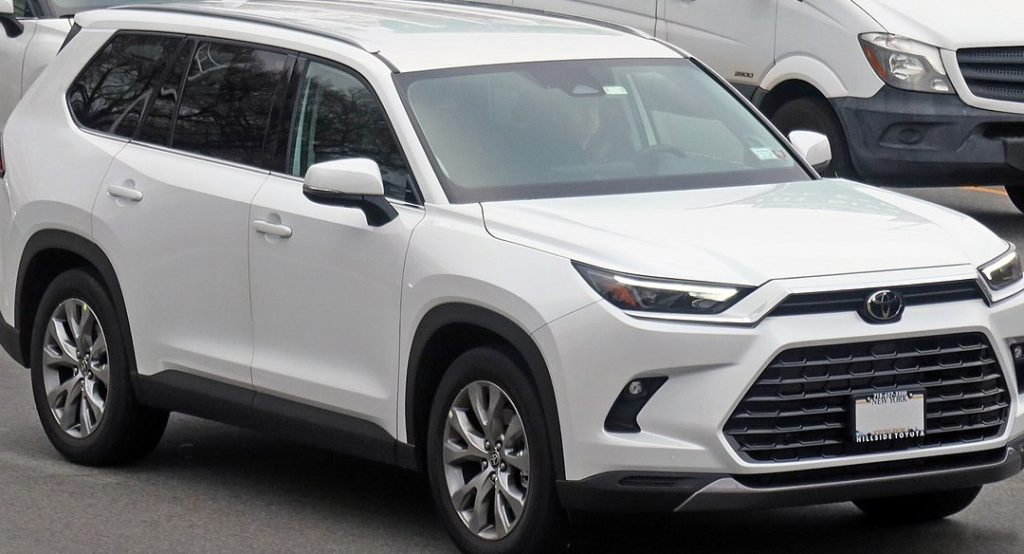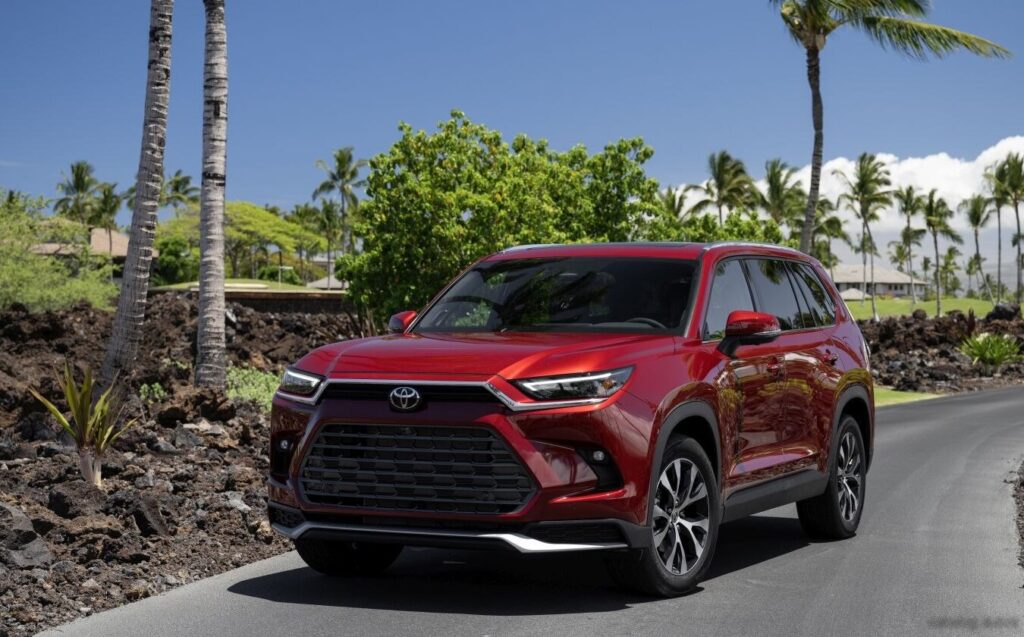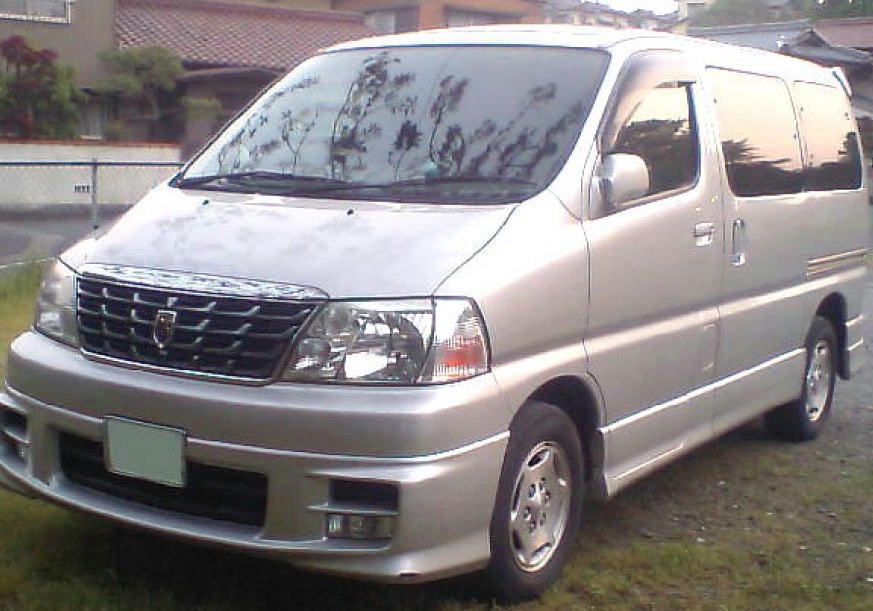
The Toyota Grand Hiace 3.4i (185 Hp) was a variant of the fourth-generation Hiace, produced between 1999 and 2002. This generation, known for its robust build and spacious interior, served as a popular choice for families and commercial use, particularly in markets outside of North America. The 3.4i model represented a step up in performance within the Hiace lineup, offering a larger displacement engine compared to the base models. It was primarily sold in regions like Asia, Australia, and parts of Europe, where the Hiace enjoyed a strong reputation for reliability and practicality.
Technical Specifications
| Brand | Toyota |
| Model | Grand Hiace |
| Generation | Grand Hiace |
| Type (Engine) | 3.4 i (185 Hp) |
| Start of production | 1999 year |
| End of production | 2002 year |
| Powertrain Architecture | Internal Combustion engine |
| Body type | Minivan |
| Seats | 8 |
| Doors | 4 |
| Fuel Type | Petrol (Gasoline) |
| Power | 185 Hp @ 4800 rpm |
| Power per litre | 54.8 Hp/l |
| Torque | 294 Nm @ 3600 rpm |
| Torque (lb.-ft.) | 216.84 lb.-ft. @ 3600 rpm |
| Engine layout | Front, Longitudinal |
| Engine Model/Code | 5VZ-FE |
| Engine displacement | 3378 cm3 |
| Engine displacement (cu. in.) | 206.14 cu. in. |
| Number of cylinders | 6 |
| Engine configuration | V-engine |
| Cylinder Bore | 93.5 mm |
| Cylinder Bore (in.) | 3.68 in. |
| Piston Stroke | 82 mm |
| Piston Stroke (in.) | 3.23 in. |
| Compression ratio | 9.6:1 |
| Number of valves per cylinder | 4 |
| Fuel injection system | Multi-port manifold injection |
| Engine aspiration | Naturally aspirated engine |
| Valvetrain | DOHC |
| Engine oil capacity | 5.2 l |
| Engine oil capacity (US qt) | 5.49 US qt |
| Engine oil capacity (UK qt) | 4.58 UK qt |
| Fuel tank capacity | 75 l |
| Fuel tank capacity (US gal) | 19.81 US gal |
| Fuel tank capacity (UK gal) | 16.5 UK gal |
| Length | 4790 mm |
| Length (in.) | 188.58 in. |
| Width | 1800 mm |
| Width (in.) | 70.87 in. |
| Height | 1965 mm |
| Height (in.) | 77.36 in. |
| Wheelbase | 2985 mm |
| Wheelbase (in.) | 117.52 in. |
| Front track | 1560 mm |
| Front track (in.) | 61.42 in. |
| Rear track | 1540 mm |
| Rear track (in.) | 60.63 in. |
| Minimum turning circle | 11 m |
| Minimum turning circle (ft.) | 36.09 ft. |
| Drivetrain | Rear wheel drive |
| Front brakes | Ventilated discs |
| Rear brakes | Disc |
| Tires size | 205/70 R15 |
| Wheel rims size | 6JJ x 15 |
Powertrain & Engine Architecture
The heart of the Grand Hiace 3.4i was the 5VZ-FE engine, a 3.4-liter V6 gasoline engine. This engine was a member of Toyota’s VZ series, known for its durability and relatively smooth operation. The 5VZ-FE featured a cast iron block and aluminum cylinder heads, contributing to its robust nature. It employed multi-port fuel injection (MPI) to deliver fuel to the cylinders, and a double overhead camshaft (DOHC) valvetrain to optimize airflow and improve engine efficiency. The engine’s 9.6:1 compression ratio was a balance between performance and fuel economy. The engine was longitudinally mounted in the front of the vehicle, driving the rear wheels. While not a particularly high-revving engine, the 5VZ-FE delivered a respectable 185 horsepower and 294 Nm (216.84 lb-ft) of torque, making it well-suited for carrying passengers and cargo. The transmission was a four-speed automatic, chosen for its ease of use and suitability for the target market.
Driving Characteristics
The Grand Hiace 3.4i, with its automatic transmission, offered a comfortable and predictable driving experience. Acceleration was adequate for everyday driving, but it wasn’t designed for sporty performance. The four-speed automatic transmission, while smooth, lacked the responsiveness of a manual gearbox or a more modern automatic with additional gears. The gear ratios were tuned for fuel efficiency and ease of driving rather than outright speed. Compared to the lower-powered 2.4-liter Hiace variants, the 3.4i provided noticeably more power, especially when fully loaded with passengers or cargo. However, it didn’t offer the same level of driver engagement as a manual transmission model. The rear-wheel-drive configuration provided decent handling, but the Hiace was primarily designed for practicality rather than dynamic driving.
Equipment & Trim Levels
The Grand Hiace 3.4i typically came equipped with a range of features designed for comfort and convenience. Standard equipment often included air conditioning, power windows, power steering, and a basic audio system. Interior upholstery was usually cloth, with options for upgraded materials available on higher trim levels. The dashboard layout was functional and straightforward, prioritizing ease of use. Optional extras could include features like alloy wheels, a more advanced audio system, and upgraded seating configurations. The 3.4i trim generally sat in the mid-range of the Hiace lineup, offering a good balance of features and performance without the premium price tag of the top-of-the-line models.
Chassis & Braking
The Grand Hiace 3.4i utilized a body-on-frame construction, contributing to its durability and load-carrying capacity. The suspension consisted of independent double wishbones at the front and a leaf spring setup at the rear. The rear leaf springs were chosen for their ability to handle heavy loads. Braking duties were handled by ventilated discs at the front and solid discs at the rear. The braking system was adequate for the vehicle’s weight and intended use, but it wasn’t particularly powerful. The 205/70 R15 tires provided a reasonable level of grip, but they were not performance-oriented.
Market Reception & Comparison
The Toyota Grand Hiace 3.4i was generally well-received in its target markets. Critics praised its reliability, spacious interior, and comfortable ride. The 3.4-liter engine was considered a good compromise between power and fuel economy. Compared to the smaller-engined Hiace variants, the 3.4i offered a significant performance boost, making it a more suitable choice for those who frequently carried heavy loads or drove in hilly terrain. However, some critics noted that the automatic transmission could feel sluggish at times, and the Hiace’s handling wasn’t as refined as some of its competitors. Fuel economy was reasonable for a vehicle of its size and type, but it wasn’t a standout feature.
Legacy
The Toyota Grand Hiace 3.4i, and the fourth-generation Hiace as a whole, has earned a reputation for exceptional longevity and reliability. The 5VZ-FE engine is known to be a durable powerplant, capable of exceeding 200,000 miles with proper maintenance. Today, used examples of the Grand Hiace 3.4i are still relatively common in many parts of the world, and they continue to be valued for their practicality and dependability. While parts availability may be becoming more challenging in some regions, the Hiace’s robust construction and simple design make it a relatively easy vehicle to maintain. The 3.4i variant remains a popular choice for those seeking a spacious, reliable, and affordable minivan.