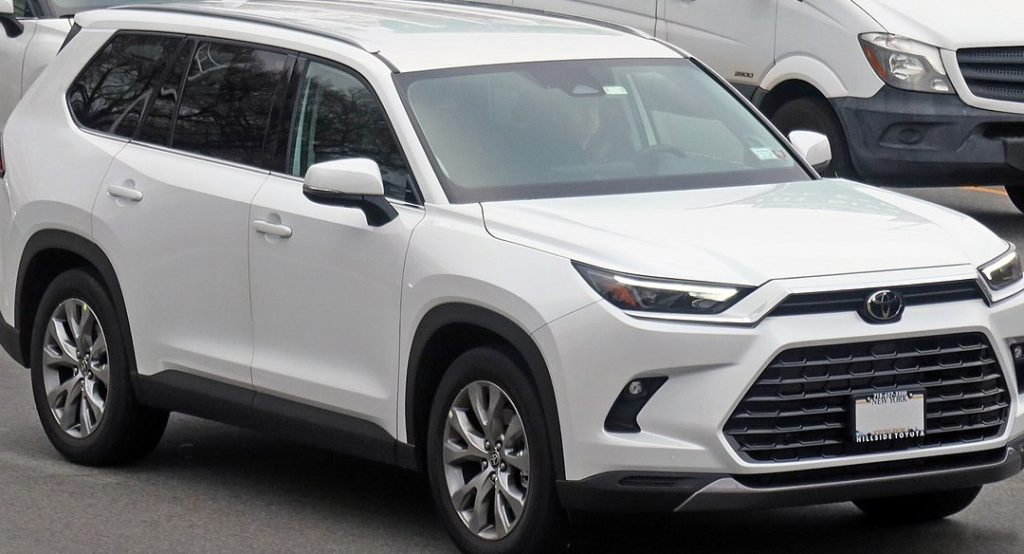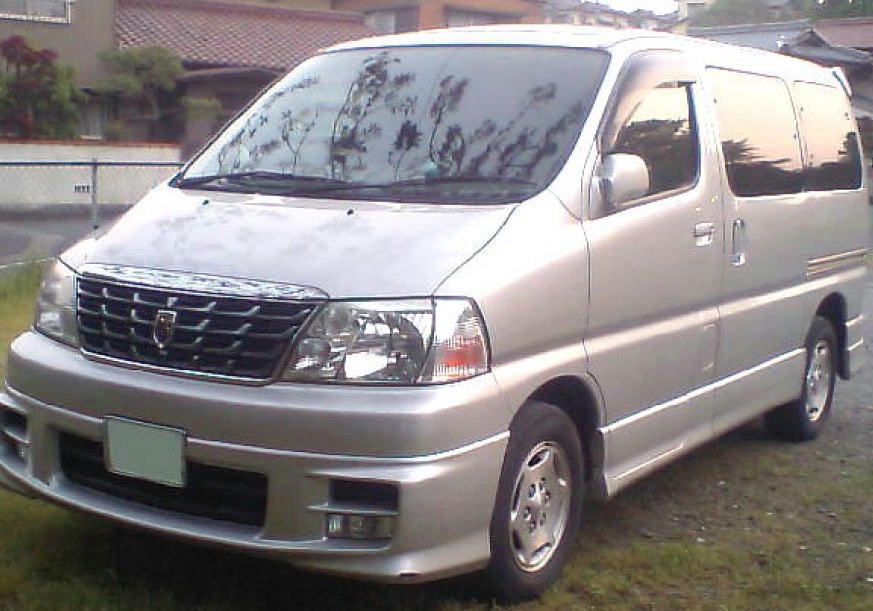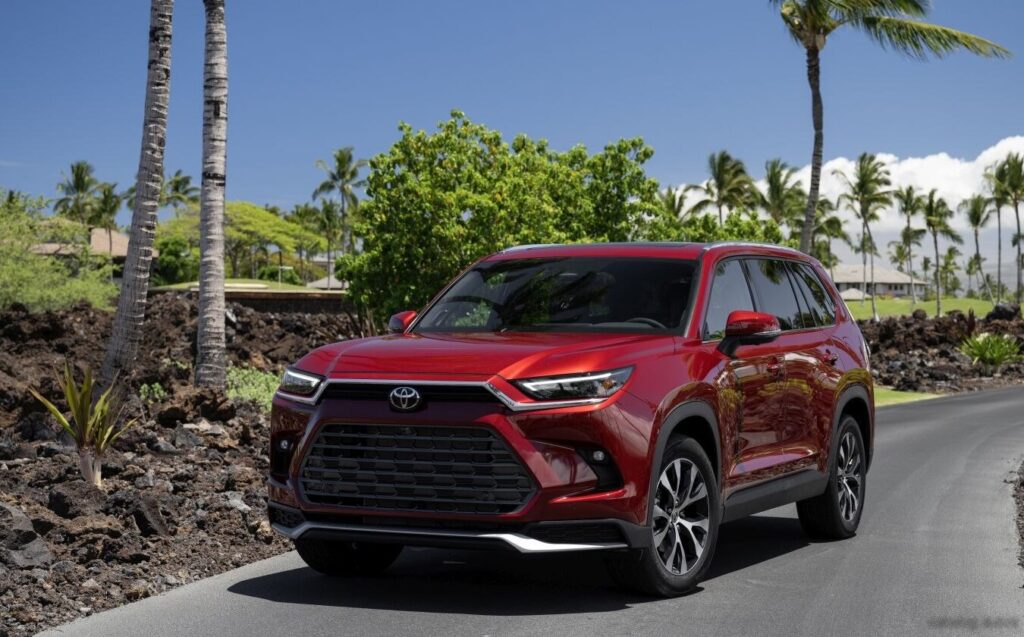
The Toyota Grand Highlander 2.4 Turbo with 265 horsepower and all-wheel drive, equipped with a Direct Shift ECT automatic transmission, represents a significant addition to Toyota’s SUV lineup, introduced for the 2024 model year (production began in August 2023). Positioned as a larger alternative to the popular Highlander, the Grand Highlander aims to cater to families needing three-row seating with enhanced space and comfort. This particular variant, featuring the turbocharged 2.4-liter engine and all-wheel drive, occupies a mid-range position within the Grand Highlander family, offering a balance between performance, fuel efficiency, and price. It’s built on Toyota’s TNGA-K platform, shared with models like the Camry and RAV4, but stretched to accommodate the larger dimensions and third-row seating.
Technical Specifications
| Brand | Toyota |
| Model | Grand Highlander |
| Generation | Grand Highlander |
| Type (Engine) | 2.4 Turbo (265 Hp) AWD Direct Shift ECT |
| Start of production | August, 2023 |
| Powertrain Architecture | Internal Combustion engine |
| Body type | SUV |
| Seats | 7-8 |
| Doors | 5 |
| Fuel consumption (urban) | 11.2-11.8 l/100 km (21 – 19.9 US mpg) |
| Fuel consumption (extra urban) | 8.7-9 l/100 km (27 – 26.1 US mpg) |
| Fuel consumption (combined) | 10.2-10.7 l/100 km (23.1 – 22 US mpg) |
| Fuel Type | Petrol (Gasoline) |
| Acceleration 0 – 100 km/h | 7.7 sec |
| Acceleration 0 – 62 mph | 7.7 sec |
| Acceleration 0 – 60 mph | 7.3 sec |
| Emission standard | SULEV 30 |
| Weight-to-power ratio | 7.6 kg/Hp |
| Weight-to-torque ratio | 4.8 kg/Nm |
| Power | 265 Hp @ 6000 rpm |
| Torque | 420 Nm @ 1700-3600 rpm (309.78 lb.-ft. @ 1700-3600 rpm) |
| Engine layout | Front, Transverse |
| Engine Model/Code | T24A-FTS |
| Engine displacement | 2393 cm3 (146.03 cu. in.) |
| Number of cylinders | 4 |
| Engine configuration | Inline |
| Cylinder Bore | 87.5 mm (3.44 in.) |
| Piston Stroke | 99.5 mm (3.92 in.) |
| Compression ratio | 11:1 |
| Number of valves per cylinder | 4 |
| Fuel injection system | Direct injection and Multi-port manifold injection |
| Engine aspiration | Twin-scroll turbo, Intercooler |
| Valvetrain | DOHC, Dual VVT-i |
| Engine oil capacity | 5.3 l (5.6 US qt | 4.66 UK qt) |
| Coolant capacity | 11.5 l (12.15 US qt | 10.12 UK qt) |
| Kerb Weight | 2021-2075 kg (4455.54 – 4574.59 lbs.) |
| Max. weight | 2735 kg (6029.64 lbs.) |
| Max load | 660-714 kg (1455.05 – 1574.1 lbs.) |
| Trunk (boot) space – minimum | 583 l (20.59 cu. ft.) |
| Trunk (boot) space – maximum | 2761 l (97.5 cu. ft.) |
| Fuel tank capacity | 67 l (17.7 US gal | 14.74 UK gal) |
| Permitted trailer load with brakes (12%) | 2268 kg (5000.08 lbs.) |
| Permitted towbar download | 227 kg (500.45 lbs.) |
| Length | 5115 mm (201.38 in.) |
| Width | 1990 mm (78.35 in.) |
| Height | 1780 mm (70.08 in.) |
| Wheelbase | 2950 mm (116.14 in.) |
| Front track | 1705-1715 mm (67.13 – 67.52 in.) |
| Rear (Back) track | 1715-1725 mm (67.52 – 67.91 in.) |
| Ride height (ground clearance) | 203 mm (7.99 in.) |
| Minimum turning circle (turning diameter) | 11.6 m (38.06 ft.) |
| Front brakes | Ventilated discs, 340 mm |
| Rear brakes | Ventilated discs, 338 mm |
| Number of gears and type of gearbox | 8 gears, automatic transmission Direct Shift ECT |
Powertrain & Engine Architecture
At the heart of this Grand Highlander variant lies the T24A-FTS engine, a 2.4-liter inline-four cylinder gasoline engine. This engine utilizes a twin-scroll turbocharger and direct injection, combined with multi-port fuel injection, to deliver a balance of power and efficiency. The engine’s architecture features a double overhead camshaft (DOHC) valvetrain with Toyota’s Dual VVT-i (Variable Valve Timing-intelligent) system, optimizing valve timing for improved performance and fuel economy across a wide range of engine speeds. The Direct Shift ECT 8-speed automatic transmission is designed for smooth and responsive shifting. This transmission isn’t a traditional torque-converter automatic; it employs a wet multi-plate clutch for quicker shifts and a more direct feel.
Driving Characteristics
The 265-horsepower output and 420 lb-ft of torque provide adequate acceleration for a vehicle of this size. The 0-60 mph time of around 7.3 seconds is respectable for a three-row SUV. The Direct Shift ECT transmission contributes to a more engaging driving experience compared to a conventional automatic, with quicker gear changes and a more connected feel. However, it doesn’t offer the same level of sportiness as some dual-clutch transmissions. The all-wheel-drive system provides enhanced traction in various weather conditions, but the Grand Highlander is primarily tuned for comfort rather than aggressive handling. The gear ratios are optimized for both highway cruising and everyday driving, with a focus on maximizing fuel efficiency.
Equipment & Trim Levels
The 2.4 Turbo AWD trim typically includes standard features such as Toyota Safety Sense 3.0 (a suite of advanced driver-assistance systems), an 8-inch touchscreen infotainment system with Apple CarPlay and Android Auto compatibility, and tri-zone automatic climate control. Interior upholstery is generally fabric, with options for SofTex (Toyota’s synthetic leather) available on higher sub-trims. Optional extras include a larger 12.3-inch touchscreen display, a panoramic sunroof, premium audio system, and heated/ventilated front seats. The Grand Highlander offers a relatively well-equipped base model, with the 2.4 Turbo trim adding a touch more refinement and performance.
Chassis & Braking
The Grand Highlander utilizes an independent McPherson strut front suspension and an independent multi-link rear suspension, both incorporating coil springs and stabilizer bars. This setup provides a comfortable ride quality, absorbing bumps and irregularities in the road surface effectively. The braking system consists of ventilated discs on all four wheels, with the front discs measuring 340mm and the rear discs measuring 338mm. The inclusion of Anti-lock Braking System (ABS) ensures safe and controlled stopping power. The chassis is designed to balance ride comfort with handling stability, prioritizing a smooth and predictable driving experience.
Market Reception & Comparison
Initial reviews of the Grand Highlander 2.4 Turbo have been generally positive, with critics praising its spacious interior, comfortable ride, and respectable fuel economy. Compared to the base 2.5-liter four-cylinder engine, the 2.4-liter turbo offers a significant performance upgrade. While the hybrid variants offer even better fuel economy, the 2.4 Turbo provides a more traditional driving experience. Reliability is expected to be in line with Toyota’s reputation for durability, although long-term data is still emerging. Compared to competitors like the Kia Telluride and Hyundai Palisade, the Grand Highlander offers a slightly more refined driving experience and a more spacious third row.
Legacy
The Toyota Grand Highlander 2.4 Turbo is still a relatively new vehicle, so its long-term reliability remains to be fully assessed. However, given Toyota’s track record and the robust design of the T24A-FTS engine, it is expected to be a dependable powertrain. In the used car market, this variant is likely to hold its value well due to its combination of performance, fuel efficiency, and Toyota’s brand reputation. As the Grand Highlander establishes itself in the market, the 2.4 Turbo AWD variant is poised to become a popular choice for families seeking a spacious and capable three-row SUV.