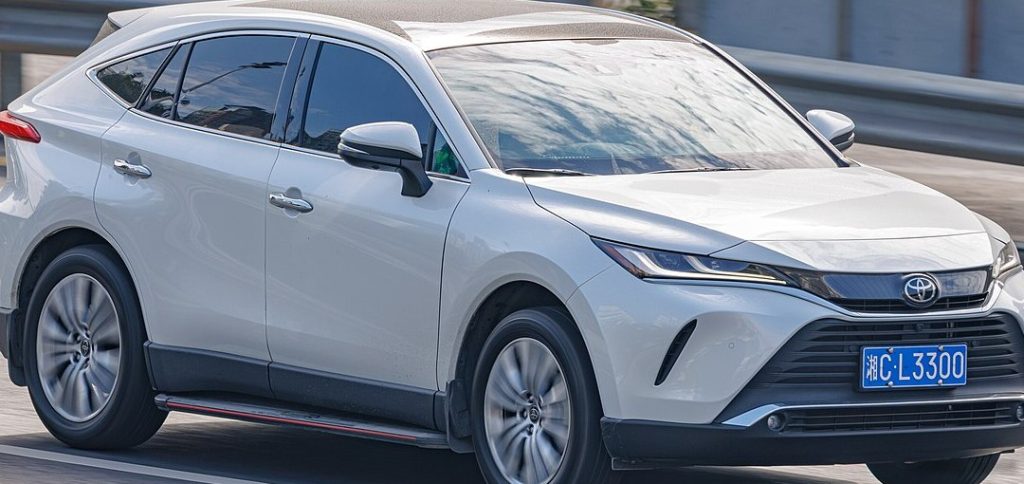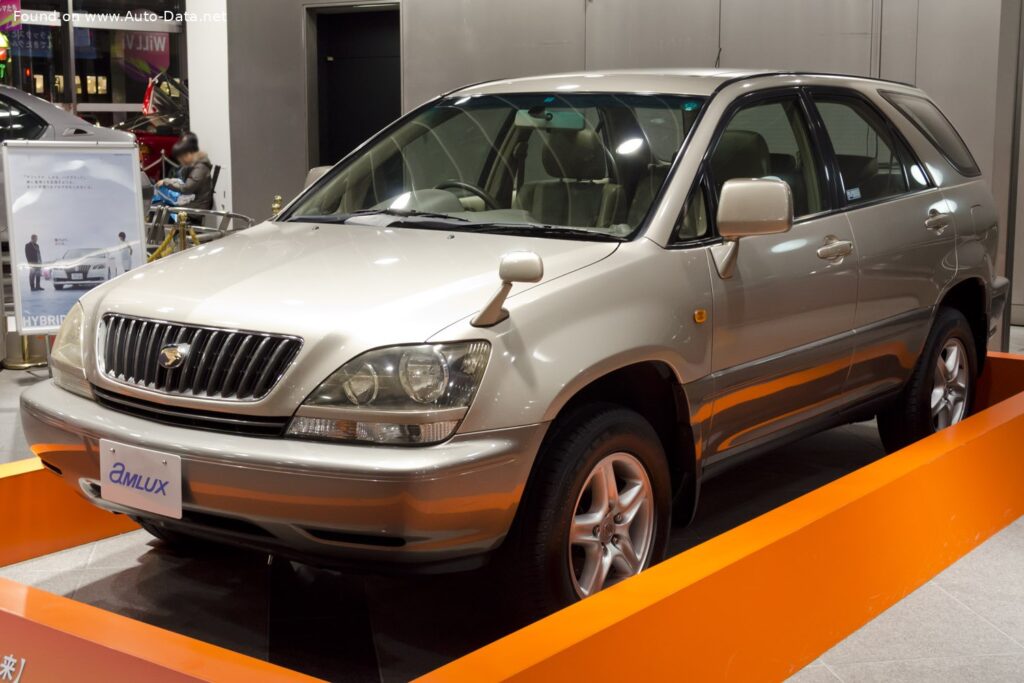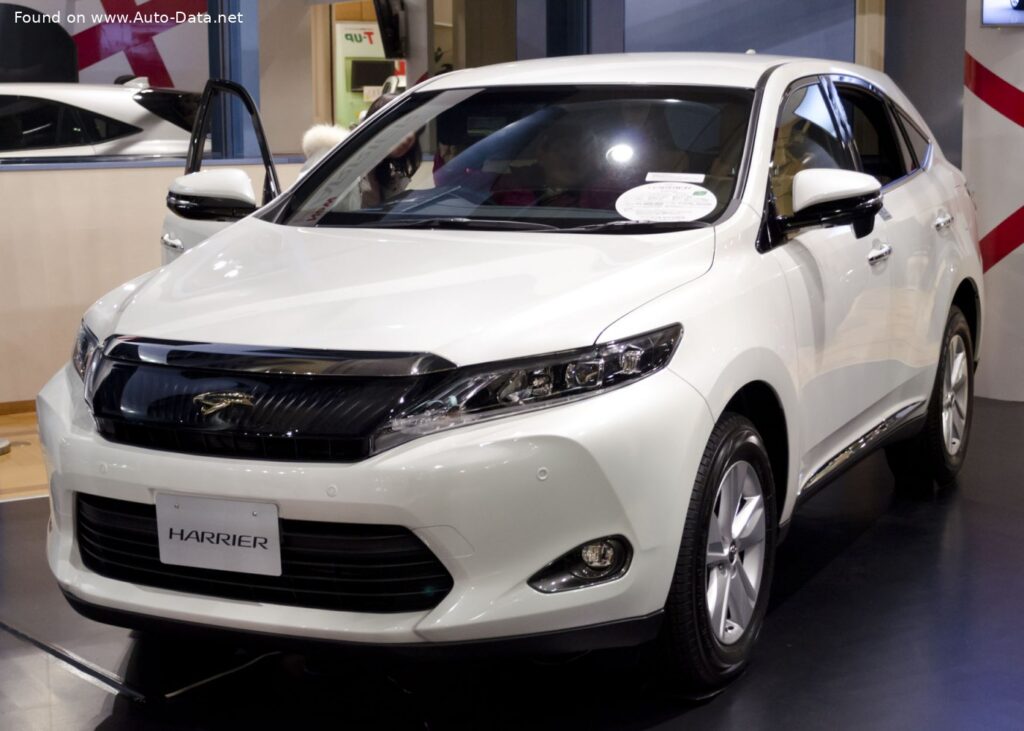
The Toyota Harrier is a vehicle that embodies a fascinating intersection of automotive innovation and market strategy. While largely unknown to North American consumers under its original name, the third-generation Toyota Harrier III (XU60) 2.5 (197 Hp) Hybrid E-Four e-CVT, produced from 2013 to 2017, represents a significant achievement in Toyota’s hybrid technology and a testament to the brand’s commitment to premium SUV offerings. This model, primarily sold in Japan and select Asian markets, showcases a blend of performance, fuel efficiency, and refined comfort that established it as a popular choice in its segment.
The Toyota Harrier III (XU60): A Lineage of Luxury Crossovers
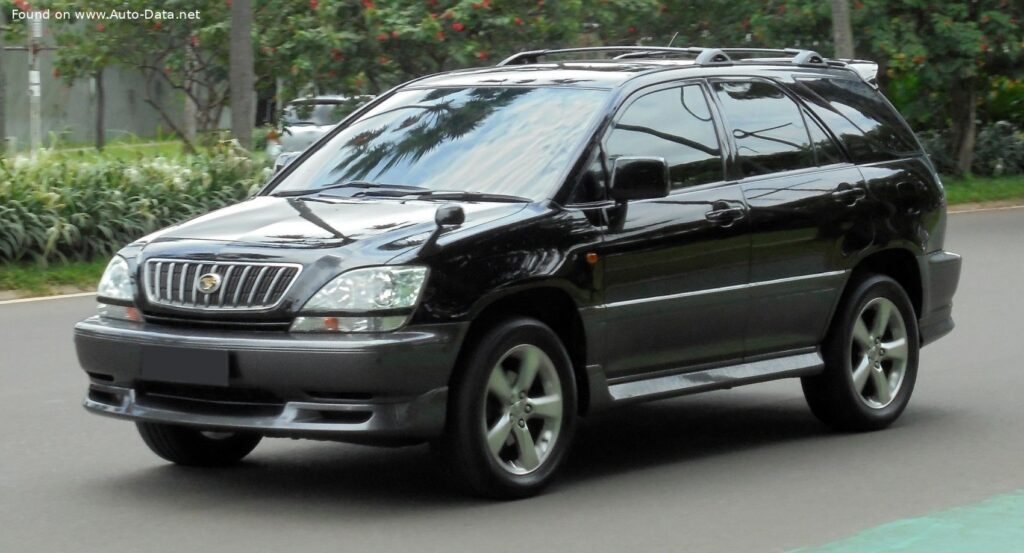
For many, the “Harrier” name might evoke images of the British-designed jump jet. However, within the automotive world, it’s inextricably linked to the genesis of the luxury crossover segment. The original Harrier (XU10) served as the foundation for the Lexus RX, launched in 1998, effectively creating a new category of vehicles. While subsequent Lexus RX generations evolved distinctly, the Toyota Harrier continued its independent development as a premium offering within Toyota’s lineup, particularly in Japan. The XU60 generation solidified this identity, presenting a stylish and technologically advanced SUV that foreshadowed the future direction of Toyota’s global SUV strategy.
Engine & Performance
The Toyota Harrier III (XU60) 2.5 (197 Hp) Hybrid E-Four e-CVT is powered by a sophisticated full hybrid electric vehicle (FHEV) powertrain. The core of this system is a 2.5-liter (2493 cm3) naturally aspirated inline-four engine, designated 2AR-FXE. This engine utilizes a high compression ratio of 12.5:1 and multi-port fuel injection, producing 152 horsepower at 5700 rpm and 151.94 lb-ft of torque between 4400 and 4800 rpm. Toyota’s emphasis on efficiency is evident in the engine’s design, employing an Atkinson cycle for optimized fuel consumption and smooth operation.
Complementing the gasoline engine are two synchronous electric motors. The first (model 2JM) drives the front wheels, contributing 143 horsepower and 199.14 lb-ft of torque. The second (model 2FM) powers the rear wheels, adding 68 horsepower and 102.52 lb-ft of torque. This E-Four all-wheel-drive system, achieved through electric motor integration, provides enhanced traction and stability without the mechanical complexity of traditional AWD setups. The hybrid system allows the vehicle to operate in full electric, mixed, or gasoline-only modes, adapting to driving conditions and battery charge. The combined system output reaches an impressive 197 horsepower.
Power is delivered through an electronic continuously variable transmission (e-CVT), known for its seamless acceleration and efficiency. This drivetrain contributes to exceptional fuel economy, with combined figures ranging from 4.5 to 4.6 liters per 100 km (52.3 to 51.1 US mpg). Coupled with a 14.79 US gallon fuel tank, the Harrier offers a substantial cruising range, making it well-suited for long journeys.
Design & Features
The Toyota Harrier III (XU60) was designed to appeal to buyers seeking a stylish and modern SUV. Its exterior features sharp lines, a bold front fascia, and a sleek profile. The interior offers a refined ambiance with quality materials and comfortable seating for five passengers. The vehicle’s 104.72-inch wheelbase and spacious cabin provide ample room for passengers and cargo.
As a premium mid-size SUV of its era, the Harrier would have been equipped with a comprehensive suite of features. These likely included a touchscreen infotainment system with Bluetooth connectivity, potentially with integrated navigation. Premium audio options and multi-zone climate control were also common. Safety features would have included a full complement of airbags, ABS, electronic stability control, and traction control. Higher trim levels likely offered advanced driver-assistance systems (ADAS) such as pre-collision systems, lane departure warning, and adaptive cruise control, technologies that were becoming increasingly prevalent during the 2013-2017 production period.
A Market-Specific Vehicle
It’s important to note that the Harrier was primarily targeted towards the Japanese and Asian markets. While not directly sold in North America under the Harrier name, it represents a significant example of Toyota’s engineering capabilities and its ability to create compelling, efficient, and luxurious SUVs. The technologies and design elements found in the Harrier often influenced subsequent Toyota and Lexus models sold globally.
Technical Specifications: Toyota Harrier III (XU60) 2.5 (197 Hp) Hybrid E-Four e-CVT
| Category | Specification |
| General Information | |
| Brand | Toyota |
| Model | Harrier |
| Generation | Harrier III (XU60) |
| Type (Engine) | 2.5 (197 Hp) Hybrid E-Four e-CVT |
| Production Start | 2013 year |
| Production End | 2017 year |
| Powertrain Architecture | FHEV (Full Hybrid Electric Vehicle) |
| Body type | SUV |
| Seats | 5 |
| Doors | 5 |
| Performance Specs | |
| Fuel consumption (combined) | 4.5-4.6 l/100 km (52.3 – 51.1 US mpg) |
| Fuel Type | Petrol (Gasoline) |
| Weight-to-power ratio | 8.9 kg/Hp, 112.6 Hp/tonne |
| Weight-to-torque ratio | 8.5 kg/Nm, 117.7 Nm/tonne |
| Electric Cars and Hybrids Specs | |
| Battery technology | Nickel-metal hydride (NiMH) |
| Electric motor 1 Power (Front) | 143 Hp |
| Electric motor 1 Torque (Front) | 270 Nm (199.14 lb-ft) |
| Electric motor 1 Model/Code | 2JM |
| Electric motor 1 Type | Synchronous |
| Electric motor 2 Power (Rear) | 68 Hp |
| Electric motor 2 Torque (Rear) | 139 Nm (102.52 lb-ft) |
| Electric motor 2 Model/Code | 2FM |
| Electric motor 2 Type | Synchronous |
| System power (Total) | 197 Hp |
| Internal Combustion Engine Specs | |
| Power | 152 Hp @ 5700 rpm |
| Power per litre | 61 Hp/l |
| Torque | 206 Nm @ 4400-4800 rpm (151.94 lb-ft @ 4400-4800 rpm) |
| Engine layout | Front, Transverse |
| Engine Model/Code | 2AR-FXE |
| Engine displacement | 2493 cm3 (152.13 cu. in.) |
| Number of cylinders | 4 |
| Engine configuration | Inline |
| Cylinder Bore | 90 mm (3.54 in.) |
| Piston Stroke | 98 mm (3.86 in.) |
| Compression ratio | 12.5:1 |
| Number of valves per cylinder | 4 |
| Fuel injection system | Multi-port manifold injection |
| Engine aspiration | Naturally aspirated engine |
| Valvetrain | DOHC |
| Engine oil capacity | 4.4 l (4.65 US qt) |
| Coolant capacity | 6.7 l (7.08 US qt) |