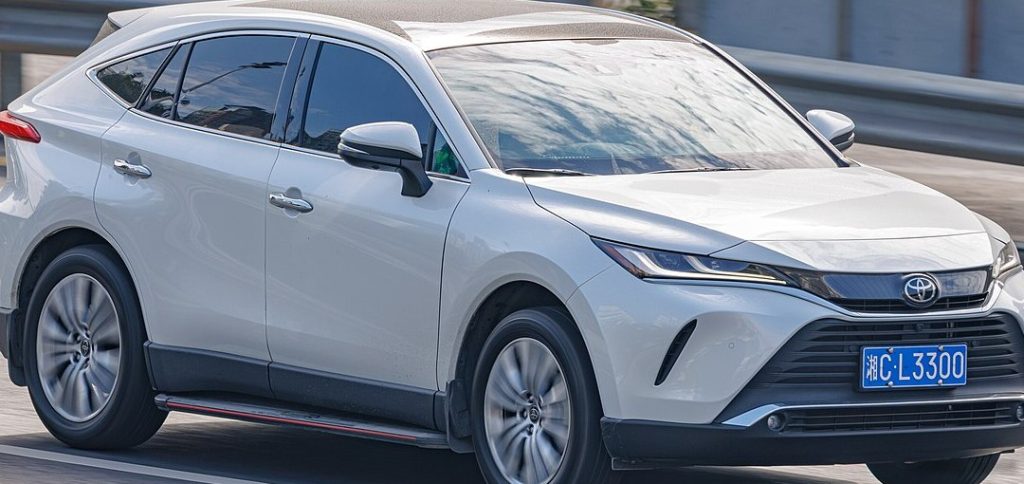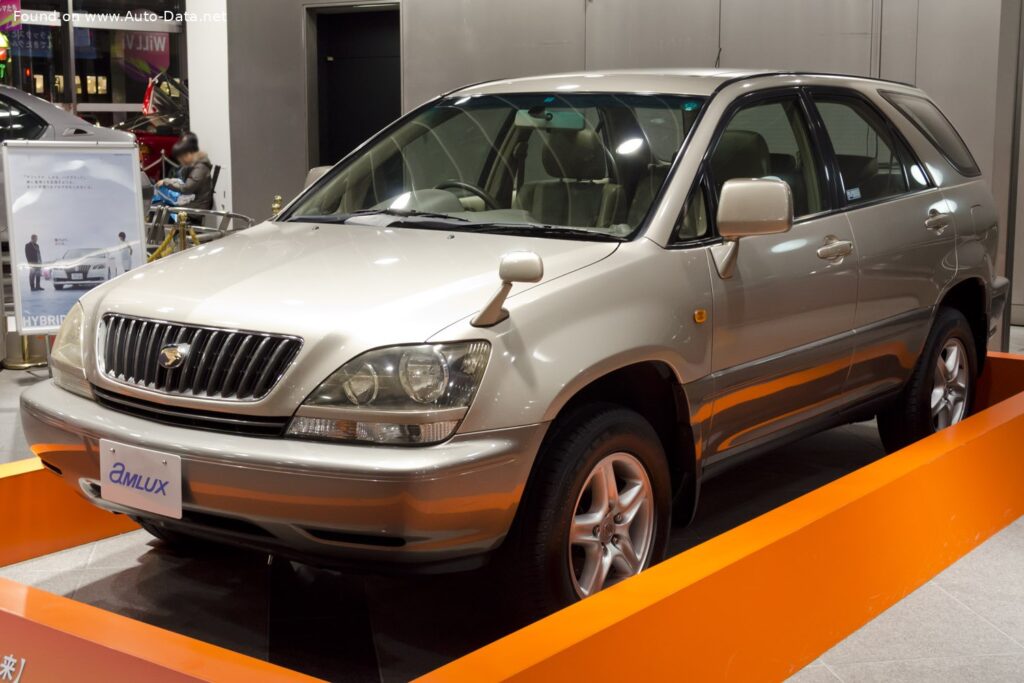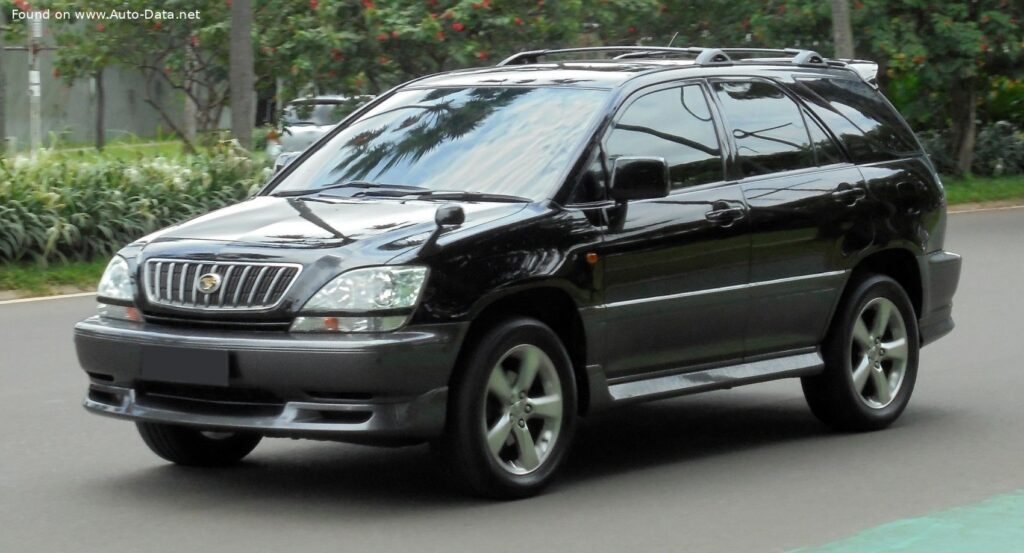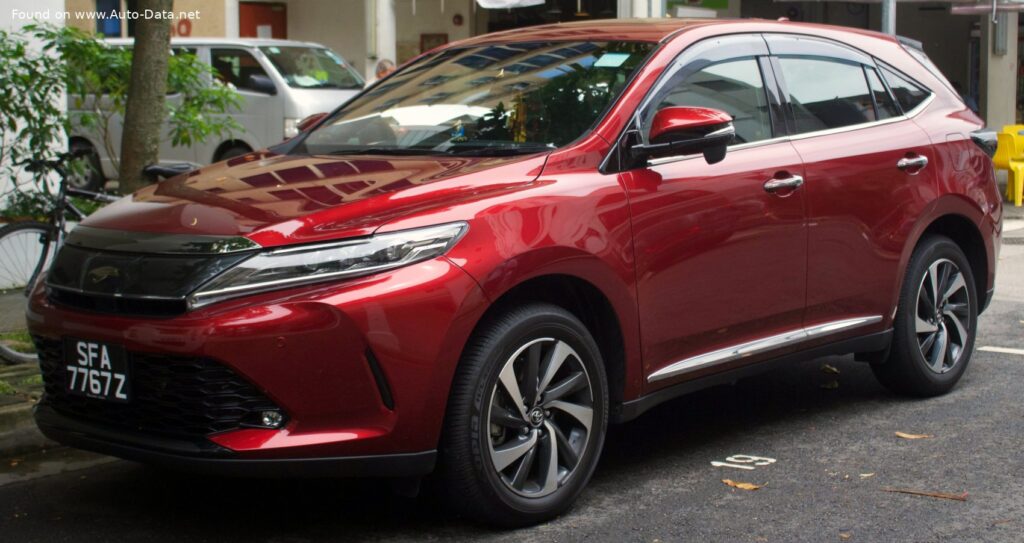
The Toyota Harrier III (XU60 facelift) 2.0 (151 Hp) 4WD CVT-i represents a significant iteration of Toyota’s mid-size luxury crossover SUV, specifically the refreshed version introduced in 2017. While the Harrier nameplate is perhaps best known in North America as the original basis for the Lexus RX, by the third generation (XU60), the Harrier had evolved into a distinct model primarily targeted at the Japanese and other Asian markets, offering a more upscale and refined alternative to the popular RAV4. This particular variant, produced from 2017 to 2020, featured a 2.0-liter turbocharged inline-four engine, an advanced Continuously Variable Transmission (CVT-i), and a sophisticated all-wheel-drive system, emphasizing efficiency, comfort, and a premium driving experience within its segment.
Toyota Harrier III (XU60 Facelift): An Overview
The Harrier III (XU60) marked a departure from earlier generations, becoming more focused on a premium experience. The 2017 facelift further refined this approach, enhancing both the exterior styling and interior features. Positioned between the more utilitarian RAV4 and the fully-fledged Lexus RX, the Harrier aimed to attract buyers seeking a blend of luxury, practicality, and Toyota’s renowned reliability. It was never officially sold in the United States, but its influence on the Lexus RX design language is undeniable. The XU60 facelift specifically targeted consumers desiring a stylish and efficient all-wheel-drive SUV for urban and highway driving.
Engine & Performance
The Toyota Harrier III (XU60 facelift) 2.0 (151 Hp) 4WD CVT-i is powered by the 3ZR-FAE engine, a 2.0-liter (1986 cm³ or 121.19 cu. in.) inline-four gasoline unit. This engine utilizes direct injection and a DOHC valvetrain with four valves per cylinder, coupled with a turbocharger and intercooler to boost output. It produces 151 horsepower at 6100 rpm and 193 Nm (142.35 lb.-ft.) of torque at 3800 rpm. The engine’s tuning prioritizes smooth power delivery and fuel efficiency over outright performance, aligning with the Harrier’s luxury-oriented character.
Power is transmitted through Toyota’s Super CVT-i automatic transmission, a continuously variable unit designed for seamless acceleration and optimal fuel economy. An all-wheel-drive (4×4) system enhances traction and stability in various conditions. The engine is mounted transversely in the front of the vehicle, maximizing interior space. The Harrier achieves a combined fuel consumption of 6.2 liters per 100 kilometers (37.9 US mpg), making it an economical choice for a mid-size AWD SUV. Its weight-to-power ratio is 12.3 kg/Hp (81.4 Hp/tonne), balancing performance and efficiency, with a curb weight ranging from 1855-1895 kg (4089.57 – 4177.76 lbs.).
Design & Features
The exterior of the Toyota Harrier III (XU60 facelift) is characterized by its sleek, coupe-like profile. It measures 4725 mm (186.02 in.) in length, 1835 mm (72.24 in.) in width, and 1690 mm (66.54 in.) in height, with a wheelbase of 2660 mm (104.72 in.). The facelift brought subtle but noticeable changes to the front and rear fascias, lighting signatures, and wheel designs, enhancing its sophisticated appearance.
The interior emphasizes luxury and comfort, featuring high-quality materials and soft-touch surfaces. A large central display, navigation, and connectivity options were standard or widely available. Features like climate control, power-adjustable seats, and premium audio systems further enhanced the driving experience. Safety was a key consideration, with features beyond ABS including multiple airbags, traction control, stability control, and potentially advanced driver-assistance systems like pre-collision systems, lane departure alerts, and adaptive cruise control, particularly in the post-facelift models. The suspension consists of independent McPherson struts at the front and a double wishbone setup at the rear, providing a refined ride quality. Ventilated disc brakes at the front and disc brakes at the rear, coupled with ABS, ensure confident braking performance. Electric power steering (EPS) offers light and precise steering, making the Harrier easy to maneuver. Ground clearance is 190 mm (7.48 in.), and the minimum turning circle is 11.2 m (36.75 ft.).
Technical Specifications
| General Information | |
| Brand | Toyota |
| Model | Harrier |
| Generation | Harrier III (XU60, facelift 2017) |
| Type (Engine) | 2.0 (151 Hp) 4WD CVT-i |
| Start of production | 2017 year |
| End of production | 2020 year |
| Powertrain Architecture | Internal Combustion engine |
| Body type | SUV |
| Seats | 5 |
| Doors | 5 |
| Performance Specs | |
| Fuel consumption (economy) – combined | 6.2 l/100 km (37.9 US mpg / 45.6 UK mpg / 16.1 km/l) |
| Fuel Type | Petrol (Gasoline) |
| Weight-to-power ratio | 12.3 kg/Hp (81.4 Hp/tonne) |
| Weight-to-torque ratio | 9.6 kg/Nm (104 Nm/tonne) |
| Engine Specs | |
| Power | 151 Hp @ 6100 rpm |
| Power per liter | 76 Hp/l |
| Torque | 193 Nm (142.35 lb.-ft.) @ 3800 rpm |
| Engine layout | Front, Transverse |
| Engine Model/Code | 3ZR-FAE |
| Engine displacement | 1986 cm³ (121.19 cu. in.) |
| Number of cylinders | 4 |
| Engine configuration | Inline |
| Cylinder Bore | 80.5 mm (3.17 in.) |
| Piston Stroke | 97.6 mm (3.84 in.) |
| Number of valves per cylinder | 4 |
| Fuel injection system | Direct injection |
| Engine aspiration | Turbocharger, Intercooler |
| Valvetrain | DOHC |
| Engine oil capacity | 4.2 l (4.44 US qt / 3.7 UK qt) |
| Coolant | 5.9 l (6.23 US qt / 5.19 UK qt) |
| Space, Volume and Weights | |
| Kerb Weight | 1855-1895 kg (4089.57 – 4177.76 lbs.) |
| Max. weight | 1945 kg (4287.99 lbs.) |
| Max load | 50-90 kg (110.23 – 198.42 lbs.) |
| Fuel tank capacity | 60 l (15.85 US gal / 13.2 UK gal) |
| Dimensions | |
| Length | 4725 mm (186.02 in.) |
| Width | 1835 mm (72.24 in.) |
| Height | 1690 mm (66.54 in.) |
| Wheelbase | 2660 mm (104.72 in.) |
| Front track | 1560-1570 mm (61.42 – 61.81 in.) |
| Rear (Back) track | 1560-1570 mm (61.42 – 61.81 in.) |
| Ride height (ground clearance) | 190 mm (7.48 in.) |
| Minimum turning circle (turning diameter) | 11.2 m (36.75 ft.) |
| Drivetrain, Brakes and Suspension Specs | |
| Drive wheel | All wheel drive (4×4) |
| Number of gears and type of gearbox | automatic transmission Super CVT-i |
| Front suspension | Independent type McPherson |
| Rear suspension | Double wishbone |
| Front brakes | Ventilated discs |
| Rear brakes | Disc |
| Assisting systems | ABS (Anti-lock braking system) |
| Steering type | Steering rack and pinion |
| Power steering | Electric Steering |
| Tires size | 225/65 R17 102H; 235/55 R18 100H; 235/50 R19 99V |
| Wheel rims size | 6.5J x 17 ET39; 7.5J x 18 ET45; 8J x 19 ET40 |
Legacy and Market Impact
The Toyota Harrier has established a strong reputation in its primary markets, particularly Japan and parts of Asia, as a sophisticated and reliable mid-size SUV. The third generation (XU60), and especially its 2017 facelift, reinforced this image by offering a blend of premium styling, a comfortable and well-appointed interior, and efficient powertrains. Its market positioning allowed it to appeal to buyers seeking something more upscale and stylish than a typical compact SUV like the RAV4, but perhaps not quite ready for the full luxury experience (and price tag) of a Lexus RX, with which it shares a historical lineage but had diverged significantly in its later generations.
In its competitive landscape, the Harrier faced rivals such as the Honda CR-V, Mazda CX-5, Nissan X-Trail, and Subaru Forester. However, the Harrier consistently stood out with its more luxurious aesthetics and refinement, often seen as a semi-premium offering. Its sleek, urban-focused design, coupled with Toyota’s legendary reliability and strong resale value, contributed to its enduring popularity. The introduction of the 2.0-liter turbocharged engine with the facelift, paired with the efficient CVT-i and available all-wheel drive, showcased Toyota’s commitment to modern powertrains that balance performance with excellent fuel economy, appealing to environmentally conscious consumers without sacrificing comfort or capability. The Harrier’s legacy is one of successful adaptation and evolution, solidifying its position as a premium choice within the Asian automotive market.