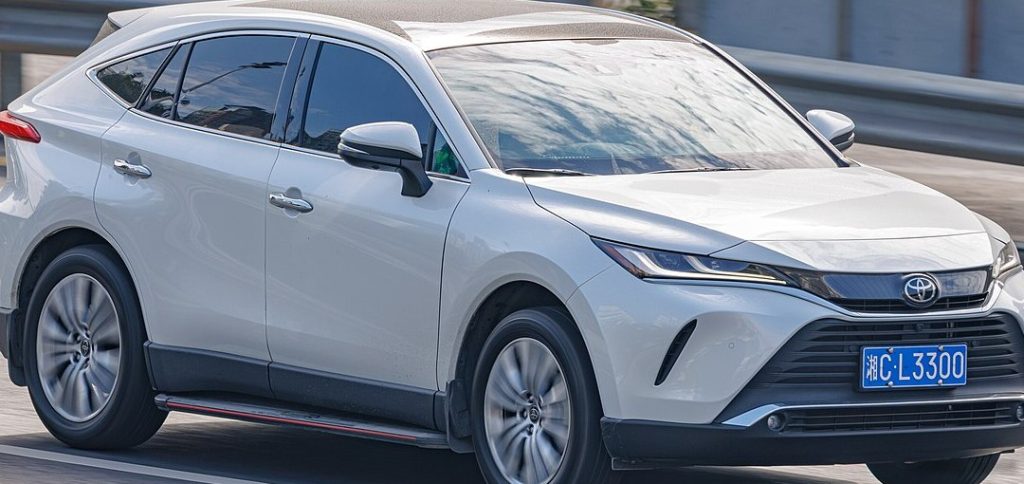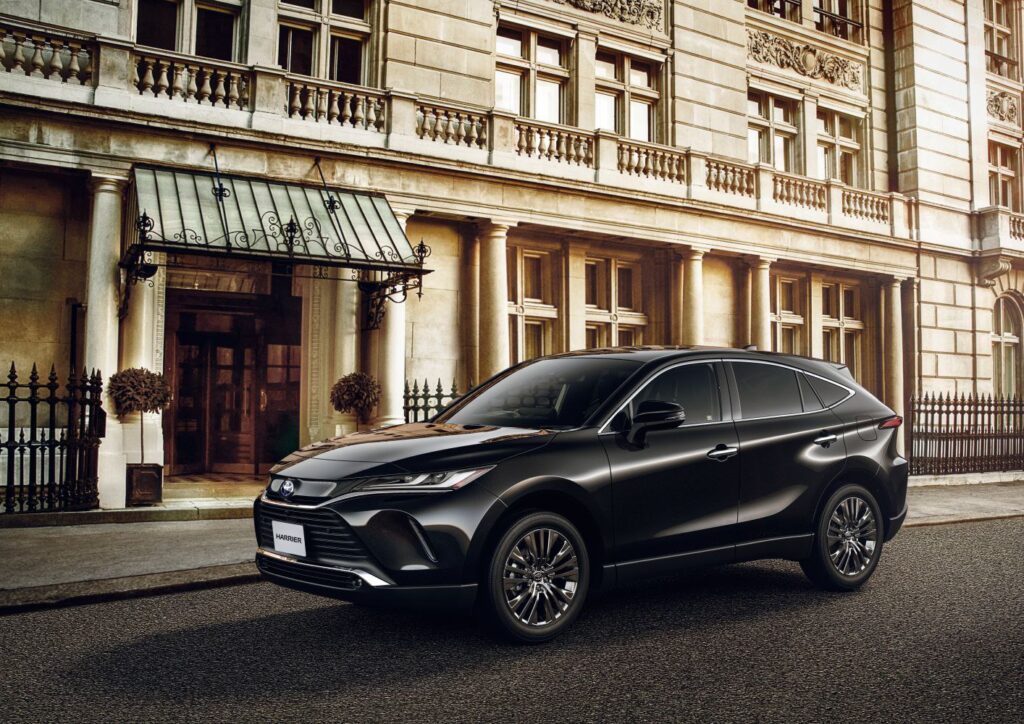
The Toyota Harrier IV (XU80) represents the fourth generation of Toyota’s mid-size crossover SUV, a model renowned for its blend of luxury, comfort, and reliability. Introduced in June 2020, this iteration continues the Harrier’s legacy as a more upscale and design-focused alternative to the mechanically related Toyota RAV4 in markets outside of North America. Primarily targeting discerning customers in Japan, other parts of Asia, and Europe, the Harrier IV (XU80) is positioned as a sophisticated urban cruiser, emphasizing a premium driving experience over rugged off-road capability. While the Harrier nameplate is not directly sold in the United States, its market segment and design ethos align with vehicles like the Toyota Venza or even smaller Lexus models, underscoring its role as a refined, five-seat SUV that prioritizes style and on-road manners. This particular variant, equipped with a 2.0-liter gasoline engine and a Continuously Variable Transmission (CVT), offers a balance of efficient performance and smooth operation for daily commuting and extended journeys.
Engine & Performance of the Toyota Harrier IV (XU80)
This Toyota Harrier IV (XU80) model is powered by Toyota’s M20A-FKS engine, a naturally aspirated 2.0-liter inline four-cylinder powerplant. This engine is a member of Toyota’s Dynamic Force engine family, recognized for its high thermal efficiency and responsive power delivery. It produces 171 horsepower at 6600 rpm, providing sufficient power for both city and highway driving. The engine achieves 86.1 horsepower per liter, demonstrating its efficient design. Torque output is also notable for a naturally aspirated engine, peaking at 207 Newton-meters (152.68 lb.-ft.) at 4800 rpm, ensuring readily available power throughout the rev range.
The M20A-FKS engine incorporates an advanced fuel injection system, utilizing both direct injection and multi-port manifold injection. This dual-injection strategy optimizes fuel atomization and combustion efficiency, leading to improved performance and reduced emissions. Further enhancing efficiency, the engine features a Start & Stop system, which automatically shuts off the engine when the vehicle is stationary, and a particulate filter to meet stringent emissions regulations.
Power is delivered to the front wheels through a Continuously Variable Transmission (CVT). This transmission is designed to provide smooth acceleration and maximize fuel economy by maintaining the engine within its optimal operating range. The combination of the responsive 2.0-liter engine and the smooth CVT results in a refined driving experience, offering consistent, linear acceleration without the noticeable shift points of a traditional automatic transmission. The vehicle’s weight-to-power ratio of 8.9 kg/Hp (111.8 Hp/tonne) and a weight-to-torque ratio of 7.4 kg/Nm (135.3 Nm/tonne) indicate a well-balanced performance profile for its class.
Design & Features of the Toyota Harrier IV (XU80)
The Toyota Harrier IV (XU80) maintains the model’s tradition of offering a distinctive and elegant design. It is a five-door SUV designed to comfortably accommodate five passengers. The exterior styling is characterized by sleek lines, a coupe-like roofline, and a sophisticated front fascia, contributing to a premium and dynamic appearance. The vehicle’s dimensions – a length of 186.61 inches, a width of 73.03 inches, and a height of 65.35 inches – create a commanding yet graceful stance. A 105.91-inch wheelbase provides a spacious cabin and stable ride.
The interior of the Harrier IV (XU80) is designed to provide a comfortable and upscale environment. While specific interior material details are not widely publicized, the Harrier’s market positioning suggests the use of high-quality finishes, soft-touch materials, and advanced infotainment systems. The five-seat configuration offers ample passenger space and a versatile cargo area, making it suitable for both families and individuals. The ride height of 7.68 inches provides a balance between easy entry/exit and sufficient ground clearance for typical urban conditions.
The Harrier IV (XU80) features an independent McPherson strut front suspension and a double wishbone rear suspension, engineered for on-road comfort and confident handling. This suspension setup typically delivers a refined ride and responsive steering. Braking performance is provided by ventilated discs at the front and solid discs at the rear, enhanced by an Anti-lock Braking System (ABS) for improved safety during emergency stops. The steering system utilizes a rack and pinion setup for precise control. The vehicle is equipped with 19-inch wheels and 225/55 R19 tires, contributing to both its aesthetic appeal and its road holding capabilities.
Technical Specifications
| Category | Specification |
| General Information | |
| Brand | Toyota |
| Model | Harrier |
| Generation | Harrier IV (XU80) |
| Type (Engine) | 2.0 (171 Hp) CVT |
| Start of Production | June, 2020 |
| Powertrain Architecture | Internal Combustion Engine |
| Body Type | SUV |
| Seats | 5 |
| Doors | 5 |
| Performance Specs | |
| Fuel Consumption (Urban) | 8.8 l/100 km (26.7 US mpg) |
| Fuel Consumption (Extra Urban) | 5.5 l/100 km (42.8 US mpg) |
| Fuel Type | Petrol (Gasoline) |
| Weight-to-Power Ratio | 8.9 kg/Hp (111.8 Hp/tonne) |
| Weight-to-Torque Ratio | 7.4 kg/Nm (135.3 Nm/tonne) |
| Engine Specs | |
| Power | 171 Hp @ 6600 rpm |
| Power per Liter | 86.1 Hp/l |
| Torque | 207 Nm @ 4800 rpm (152.68 lb.-ft. @ 4800 rpm) |
| Engine Model/Code | M20A-FKS |
| Engine Displacement | 1986 cm3 (2.0 liters / 121.19 cu. in.) |
| Number of Cylinders | 4 |
| Engine Configuration | Inline |
| Cylinder Bore | 80.5 mm (3.17 in.) |
| Piston Stroke | 97.6 mm (3.84 in.) |
| Fuel Injection System | Direct injection and Multi-port manifold injection |
| Engine Aspiration | Naturally aspirated engine |
| Engine Oil Capacity | 4.3 l (4.54 US qt) |
| Coolant Capacity | 6.9 l (7.29 US qt) |
| Engine Systems | Start & Stop System, Particulate filter |
| Space, Volume and Weights | |
| Kerb Weight | 1530-1600 kg (3373.07 – 3527.4 lbs.) |
| Max. Weight (Gross Vehicle Weight) | 1875 kg (4133.67 lbs.) |
| Max Load | 275-345 kg (606.27 – 760.59 lbs.) |
| Fuel Tank Capacity | 55 l (14.53 US gal) |
| Dimensions | |
| Length | 4740 mm (186.61 in.) |
| Width | 1855 mm (73.03 in.) |
| Height | 1660 mm (65.35 in.) |
| Wheelbase | 2690 mm (105.91 in.) |
| Front Track | 1605 mm (63.19 in.) |
| Rear (Back) Track | 1625 mm (63.98 in.) |
| Ride Height (Ground Clearance) | 195 mm (7.68 in.) |
| Minimum Turning Circle (Turning Diameter) | 11-11.4 m (36.09 – 37.4 ft.) |
| Drivetrain, Brakes and Suspension Specs | |
| Drivetrain Architecture | Internal combustion engine (ICE) drives the front wheels |
| Drive Wheel | Front wheel drive |
| Number of Gears and Type of Gearbox | Automatic transmission CVT |
| Front Suspension | Independent type McPherson |
| Rear Suspension | Double wishbone |
| Front Brakes | Ventilated discs |
| Rear Brakes | Disc |
| Assisting Systems | ABS (Anti-lock braking system) |
| Steering Type | Steering rack and pinion |
| Tires Size | 225/55 R19 |
| Wheel Rims Size | 19 inches |
Legacy and Market Impact
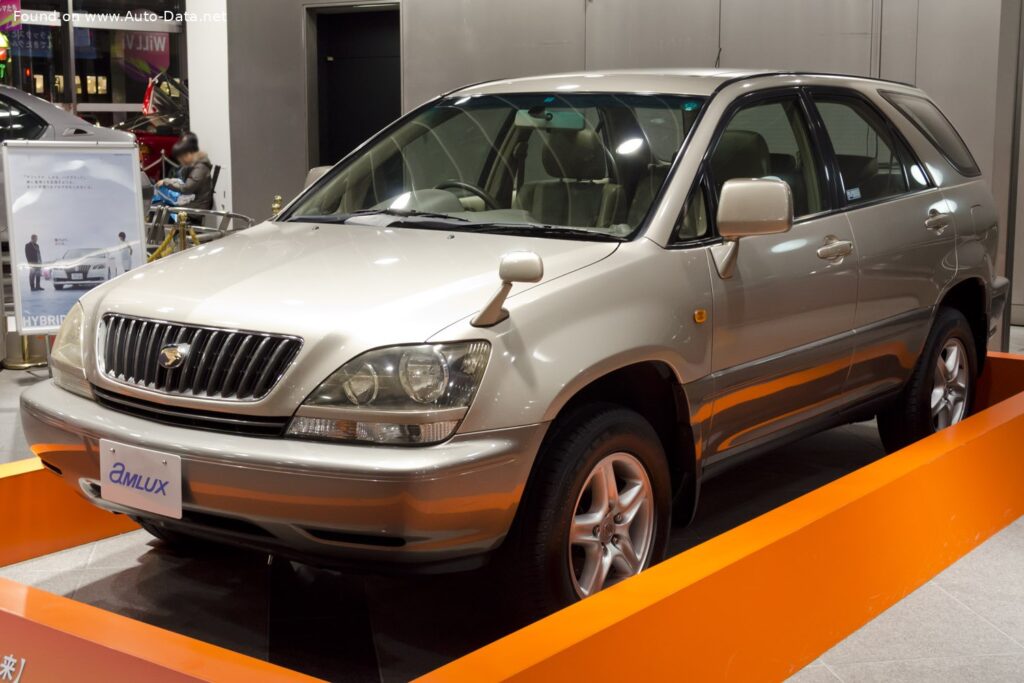
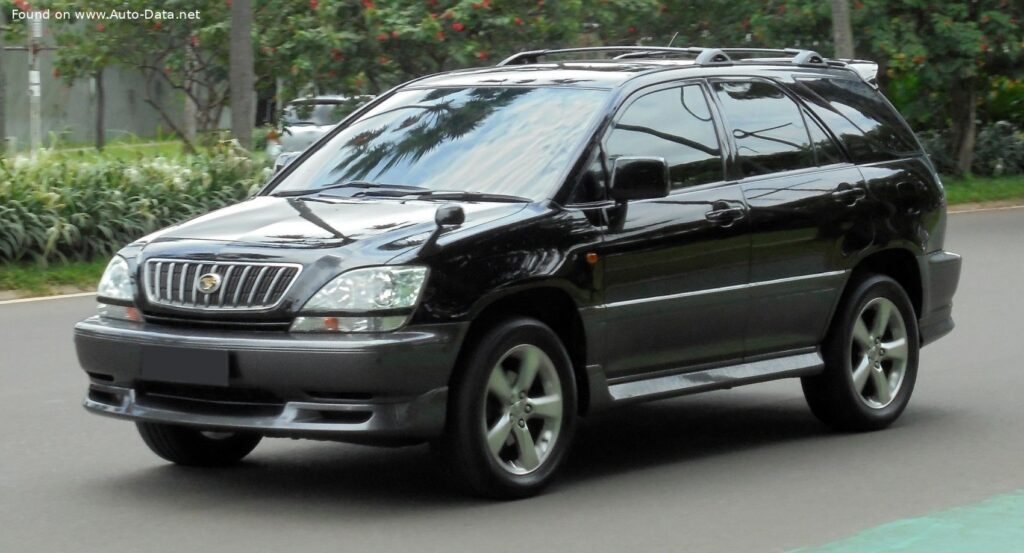
The Toyota Harrier has established a significant legacy in its primary markets, evolving from a sophisticated SUV sharing its platform with the first-generation Lexus RX to a distinct, premium crossover with its own unique identity. The Toyota Harrier IV (XU80) continues this tradition, solidifying its reputation as a vehicle that offers a compelling blend of style, comfort, and Toyota’s renowned reliability, without venturing into the rugged utility segment.
In markets like Japan, the Harrier is highly regarded as a benchmark for premium urban SUVs. Its sleek design and refined driving dynamics appeal to consumers seeking something more elegant and less utilitarian than a RAV4, yet still offering the versatility of an SUV. Key competitors in its region include other mid-size premium crossovers from brands like Mazda (e.g., CX-5, CX-60), Nissan (e.g., X-Trail/Rogue), and some entry-level offerings from European luxury brands. The Harrier distinguishes itself by offering a unique combination of Japanese craftsmanship, advanced technology, and a driving experience tailored for comfort and quietness.
The historical significance of the Harrier lies in its ability to bridge the gap between mainstream and luxury segments. Early generations were instrumental in establishing the premium crossover segment, paving the way for many competitors. The XU80 generation, while no longer directly related to the Lexus RX, maintains that upscale ethos. Its success demonstrates Toyota’s ability to deliver aspirational vehicles that cater to a nuanced demand for style-conscious and comfortable family transport. The adoption of efficient powertrains, such as the 2.0-liter gasoline engine with CVT, also highlights Toyota’s commitment to modern automotive trends, balancing performance with environmental considerations. The Harrier’s continued success underscores its enduring appeal and its crucial role in Toyota’s global product strategy, even if its presence in North America is under a different guise or entirely absent.