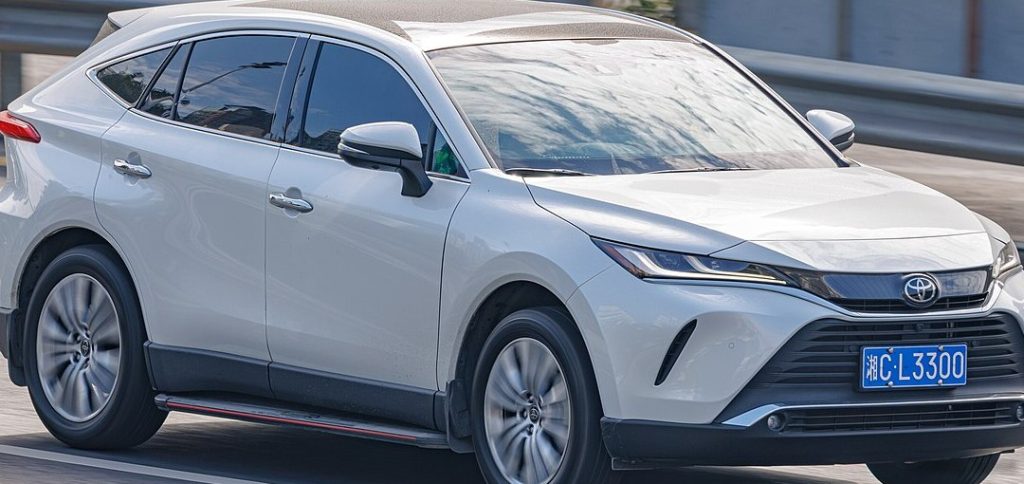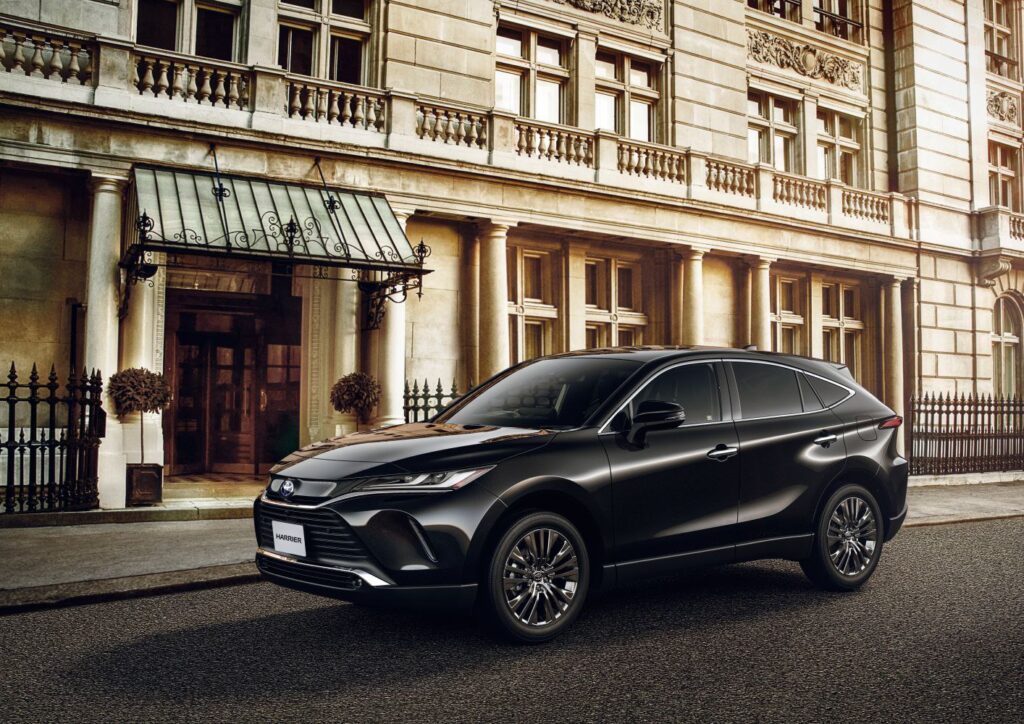
The Toyota Harrier IV (XU80) 2.5 (218 Hp) Hybrid e-CVT represents the fourth generation of Toyota’s mid-size crossover SUV, launched in June 2020. While the Harrier nameplate has a rich history, particularly its association with the Lexus RX in North American markets during earlier generations, the XU80 generation is primarily targeted at and sold in the Japanese and select Asian markets. In some regions, the Toyota Venza serves as its platform-mate and equivalent. The Harrier IV (XU80) is positioned as a more luxurious and stylish offering than the popular RAV4, yet remains below the Lexus brand, catering to consumers seeking a refined, efficient, and technologically advanced SUV with a distinctive aesthetic. This iteration continues the Harrier’s tradition of blending utility with a premium feel, emphasizing a sleek design and advanced hybrid powertrain technology.
Toyota Harrier IV (XU80) Powertrain and Performance
The Toyota Harrier IV (XU80)’s appeal centers around its sophisticated Full Hybrid Electric Vehicle (FHEV) powertrain. The 2.5 (218 Hp) Hybrid e-CVT variant combines a 2.5-liter (2487 cm3 or 151.77 cu. in.) A25A-FXS inline 4-cylinder gasoline engine with an efficient electric motor, delivering a compelling blend of power and fuel economy. The naturally aspirated engine features both direct injection and multi-port manifold injection, optimizing fuel efficiency and power output across the rev range. It produces 178 horsepower at 5700 rpm and 163 lb.-ft. of torque between 3600-5200 rpm.
A potent synchronous electric motor, designated 3NM, adds 120 horsepower and 148.99 lb.-ft. of torque. The combined system power for the front-wheel drive (FWD) variant reaches an impressive 218 horsepower. Toyota’s electronically controlled continuously variable transmission (e-CVT) manages this power, ensuring seamless delivery and optimal efficiency. The drivetrain architecture is primarily front-wheel drive, with the internal combustion engine and electric motor driving the front wheels, capable of operating in full electric mode or a mixed hybrid mode depending on driving conditions and battery charge.
The hybrid system utilizes a compact lithium-ion battery, chosen for its energy density and efficiency. This setup results in remarkable fuel economy: 5.1 liters per 100 km (46.1 US mpg) in urban environments and 4.5 liters per 100 km (52.3 US mpg) on the highway. These figures highlight the Harrier’s commitment to environmental performance and low running costs. The vehicle’s weight-to-power ratio is a respectable 7.4 kg/Hp, indicating lively performance for a hybrid SUV of its class. A Start & Stop System and a particulate filter further underscore its focus on modern efficiency and emissions control.
Design and Features
The Toyota Harrier IV (XU80) distinguishes itself with a sleek, elegant, and coupe-like SUV design, a departure from the more rugged aesthetics often seen in the segment. Its exterior styling is characterized by flowing lines, a prominent grille, and slim LED lighting elements, giving it a sophisticated and premium presence. The body type is a 5-door SUV, comfortably accommodating five occupants.
The Harrier measures 186.61 inches (4740 mm) in length, 73.03 inches (1855 mm) in width, and 65.35 inches (1660 mm) in height. It rides on a 105.91-inch (2690 mm) wheelbase, contributing to a spacious interior and stable ride. The ground clearance of 7.48 inches (190 mm) provides adequate capability for urban obstacles and light off-road excursions, fitting its crossover designation. The 19-inch wheels, shod with 225/55 R19 tires, enhance its visual appeal and road presence.
Inside, the Harrier XU80 aims for a luxurious and comfortable ambiance. Modern Toyota vehicles in this segment typically offer high-quality materials, advanced infotainment systems with large touchscreens, smartphone integration (Apple CarPlay and Android Auto), and a suite of advanced driver-assistance systems (ADAS) under the Toyota Safety Sense umbrella. These likely include adaptive cruise control, lane-keeping assist, pre-collision systems, and blind-spot monitoring, enhancing both convenience and safety. The cabin is designed to be quiet and refined, cementing its premium positioning. Practicality is also key, with a fuel tank capacity of 14.53 US gallons (55 liters) providing a substantial range given its excellent fuel economy. Cargo capacity is expected to be competitive for a mid-size SUV, offering versatility for families and individuals.
Technical Specifications
| Brand | Toyota |
| Model | Harrier |
| Generation | Harrier IV (XU80) |
| Type (Engine) | 2.5 (218 Hp) Hybrid e-CVT |
| Start of Production | June, 2020 |
| Powertrain Architecture | FHEV (Full Hybrid Electric Vehicle) |
| Body Type | SUV |
| Seats | 5 |
| Doors | 5 |
| Fuel Consumption (Urban) | 5.1 l/100 km (46.1 US mpg) |
| Fuel Consumption (Extra Urban) | 4.5 l/100 km (52.3 US mpg) |
| Fuel Type | Petrol (Gasoline) |
| Weight-to-Power Ratio | 7.4 kg/Hp (134.6 Hp/tonne) |
| Weight-to-Torque Ratio | 7.3 kg/Nm (136.4 Nm/tonne) |
| Battery Technology | Lithium-ion (Li-Ion) |
| Electric Motor 1 Power | 120 Hp |
| Electric Motor Torque | 202 Nm (148.99 lb.-ft.) |
| Electric Motor Model/Code | 3NM |
| Electric Motor Type | Synchronous |
| System Power | 218 Hp |
| Power | 178 Hp @ 5700 rpm |
| Power per Liter | 71.6 Hp/l |
| Torque | 221 Nm @ 3600-5200 rpm (163 lb.-ft. @ 3600-5200 rpm) |
| Engine Layout | Front, Transverse |
| Engine Model/Code | A25A-FXS |
| Engine Displacement | 2487 cm3 (2.5 liters, 151.77 cu. in.) |
| Number of Cylinders | 4 |
| Engine Configuration | Inline |
| Cylinder Bore | 87.5 mm (3.44 in.) |
| Piston Stroke | 103.4 mm (4.07 in.) |
| Fuel Injection System | Direct injection and Multi-port manifold injection |
| Engine Aspiration | Naturally aspirated engine |
| Engine Oil Capacity | 4.5 liters (4.76 US qt) |
| Coolant Capacity | 6.7 liters (7.08 US qt) |
| Engine Systems | Start & Stop System, Particulate Filter |
| Curb Weight | 1620-1690 kg (3571.49 – 3725.81 lbs.) |
| Max. Weight | 1965 kg (4332.08 lbs.) |
| Max Load | 275-345 kg (606.27 – 760.59 lbs.) |
| Fuel Tank Capacity | 55 liters (14.53 US gal) |
| Length | 4740 mm (186.61 in.) |
| Width | 1855 mm (73.03 in.) |
| Height | 1660 mm (65.35 in.) |
| Wheelbase | 2690 mm (105.91 in.) |
| Front Track | 1605 mm (63.19 in.) |
| Rear (Back) Track | 1625 mm (63.98 in.) |
| Ride Height (Ground Clearance) | 190 mm (7.48 in.) |
| Minimum Turning Circle | 11-11.4 m (36.09 – 37.4 ft.) |
| Drivetrain Architecture | FHEV (Full Hybrid Electric Vehicle). The Internal combustion engine (ICE) and electric motor drive the front wheels of the car with the ability to work in full electric or mixed mode. |
| Drive Wheel | Front-wheel drive |
| Number of Gears and Type of Gearbox | Automatic transmission e-CVT |
| Front Suspension | Independent type McPherson |
| Rear Suspension | Double wishbone |
| Front Brakes | Ventilated discs |
| Rear Brakes | Disc |
| Assisting Systems | ABS (Anti-lock braking system) |
| Steering Type | Steering rack and pinion |
| Power Steering | Electric Steering |
| Tires Size | 225/55 R19 |
| Wheel Rims Size | 19 inches |
Legacy and Market Impact
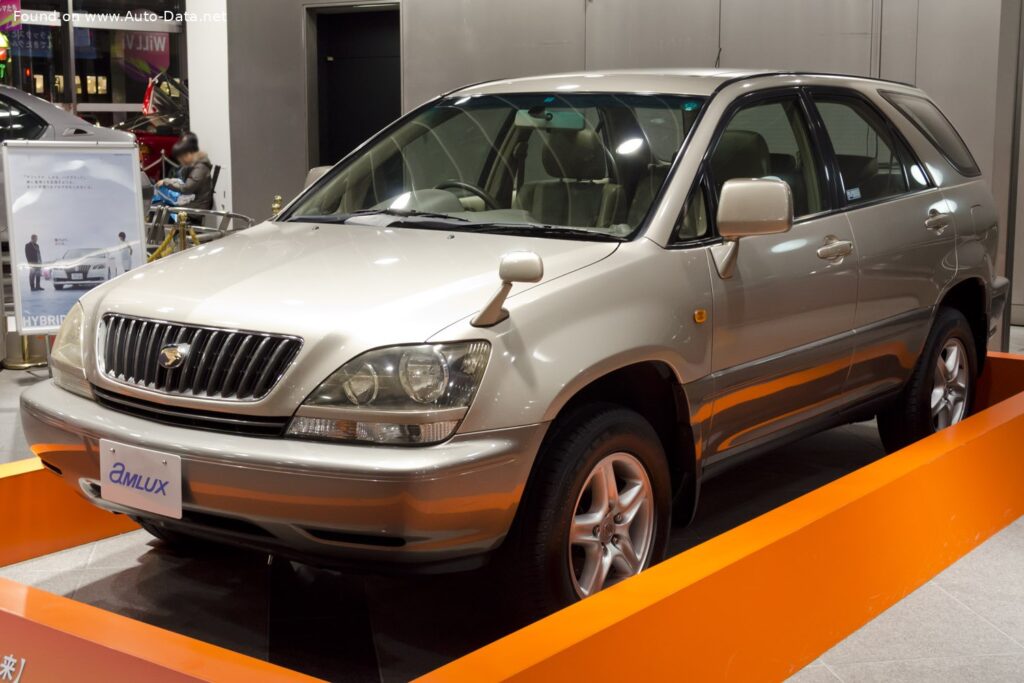
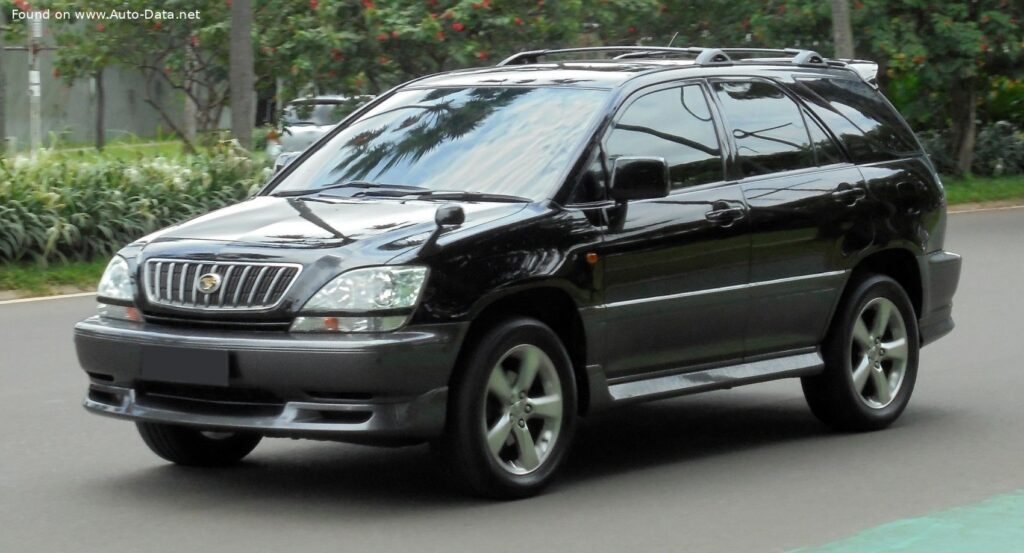
The Toyota Harrier has always held a unique position in Toyota’s global lineup. Originating in 1997, the first two generations were rebadged as the Lexus RX for markets outside Japan, establishing a precedent for a premium, comfortable, and reliable crossover. With the third generation (XU60) in 2013, Toyota decided to keep the Harrier exclusive to the Japanese market and other specific Asian regions, differentiating it from the global Lexus RX which had evolved into a larger, distinct model. The fourth-generation Toyota Harrier IV (XU80) continues this strategy, carving out its own identity as a stylish and sophisticated mid-size SUV.
In its primary markets, the Harrier XU80 competes with a range of popular crossovers, including the Honda CR-V, Mazda CX-5, Nissan X-Trail (Rogue in North America), and even some entry-level luxury SUVs. Its appeal lies in its distinctive styling, which many perceive as more upscale and less utilitarian than its direct rivals. The hybrid powertrain, particularly the 2.5 (218 Hp) Hybrid e-CVT, is a major selling point, offering class-leading fuel efficiency combined with ample power for daily driving and highway cruising. This makes it particularly attractive in markets where fuel costs are a significant concern and environmental consciousness is growing.
The XU80 Harrier is built on Toyota’s TNGA-K platform, which it shares with other successful models like the RAV4, Camry, and Highlander. This platform provides a strong foundation for dynamic performance, improved safety, and enhanced ride comfort, benefiting from Toyota’s extensive engineering expertise. The independent MacPherson strut front suspension and double wishbone rear suspension contribute to a refined driving experience, balancing comfort with agile handling. Its robust construction and Toyota’s reputation for reliability ensure strong resale values and long-term ownership satisfaction.
The Harrier’s market impact is significant within its target regions. It serves as a bridge for consumers who desire Lexus-level refinement and design but prefer a Toyota badge or a slightly more accessible price point. Its modern technology, including the advanced hybrid system and suite of safety features, keeps it relevant in a rapidly evolving automotive landscape. The Harrier IV (XU80) reinforces Toyota’s commitment to offering diverse and compelling vehicles, catering to specific market tastes while leveraging its global platforms and hybrid leadership. Its blend of elegance, efficiency, and practicality ensures its continued success as a premium choice in the non-luxury mid-size SUV segment.