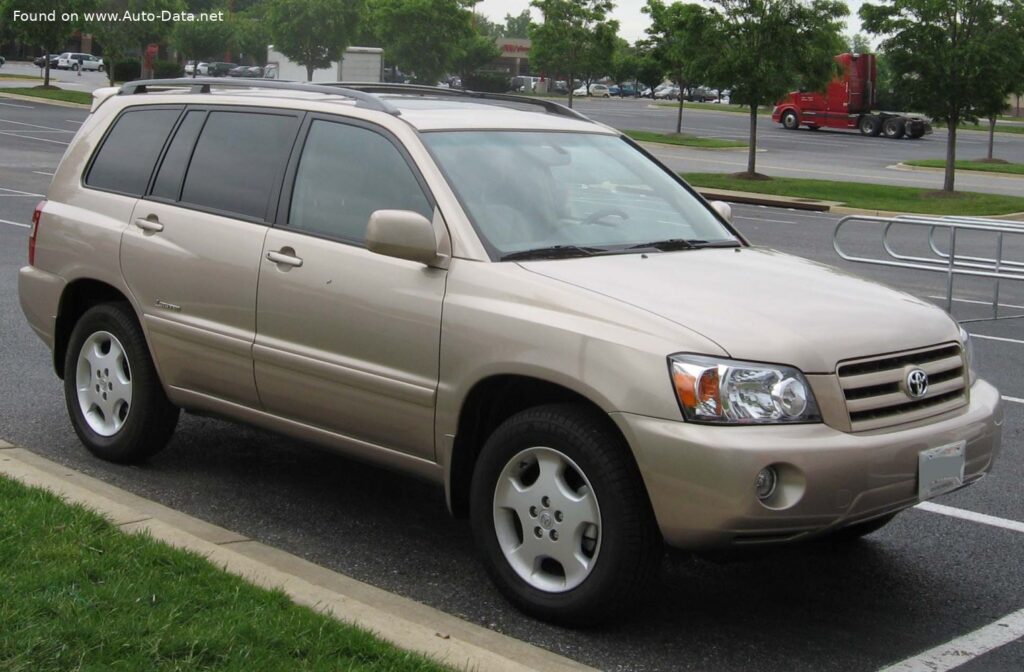
The Toyota Highlander I 3.0 i V6 24V 4WD Limited, launched in 2000, represented Toyota’s initial foray into the rapidly expanding mid-size crossover SUV market in North America. Strategically positioned between the more traditional, truck-based 4Runner and the smaller RAV4, the Highlander aimed to deliver the versatility and commanding view of an SUV combined with the comfortable ride and handling expected from a passenger car. Based on a modified platform shared with the Toyota Camry and Lexus RX, the Highlander quickly gained recognition for its dependability, comfort, and practicality. The 3.0 i V6 24V 4WD Limited trim, equipped with a 223 horsepower engine and a comprehensive suite of features, was the top-of-the-line model during its 2000-2007 production run, attracting buyers who desired a capable and adaptable vehicle for daily driving and weekend adventures. This first generation Highlander significantly influenced the evolving crossover SUV segment, successfully merging SUV styling with a car-like driving experience that proved popular with American families.
The Toyota Highlander I: A New Breed of SUV
The early 2000s witnessed a shift in consumer preferences within the SUV market. Buyers increasingly sought vehicles that offered the space and utility of an SUV but without the compromises in fuel economy and on-road refinement associated with traditional, body-on-frame designs. Toyota recognized this trend and responded with the Highlander, a crossover SUV built using a unibody construction. This approach, borrowed from passenger car engineering, resulted in a lighter, more rigid chassis that contributed to improved handling, ride quality, and fuel efficiency. The Highlander’s success demonstrated the growing appeal of crossovers and paved the way for numerous competitors to enter the segment.
Engine & Performance
The heart of the Toyota Highlander I 3.0 i V6 24V 4WD Limited is the 1MZ-FE engine, a 3.0-liter (2,994 cc or 182.7 cubic inches) V6. This naturally aspirated engine is celebrated for its smooth operation and exceptional reliability. The 24-valve, dual overhead camshaft design, coupled with a multi-port fuel injection system, allowed the engine to produce 223 horsepower at 5,800 rpm. Torque output was a substantial 222.01 lb-ft (301 Nm) at 4,400 rpm, providing ample power for everyday driving, highway merging, and even light towing. The V6 configuration inherently contributes to a smoother power delivery and reduced vibrations compared to inline engines.
Power is transmitted to all four wheels through a four-speed automatic transmission, providing seamless gear changes and contributing to the Highlander’s refined driving experience. The 4WD system utilizes a viscous coupling center differential, automatically distributing torque between the front and rear axles as needed to maintain optimal traction in various conditions. While not designed for extreme off-road adventures, the 4WD system provided enhanced stability and confidence on slippery surfaces like snow or gravel. The Highlander’s performance figures were competitive for its class, offering a balance of power and efficiency that appealed to a broad range of buyers. Acceleration from 0 to 60 mph was typically achieved in around 7.8 seconds, a respectable time for a mid-size SUV of that era.
Design & Features
The Toyota Highlander I featured a contemporary SUV design, characterized by its rounded lines, relatively compact dimensions, and a focus on interior space. The body-on-frame construction allowed for a lower floor height compared to traditional SUVs, making it easier to enter and exit the vehicle. The Limited trim level included numerous premium features, such as alloy wheels, color-keyed side moldings, and a rear spoiler. Inside, the Highlander offered seating for up to seven passengers with a standard second-row bench seat and an optional third-row seat. The interior was designed with family comfort in mind, featuring durable materials, ample storage compartments, and a user-friendly layout.
Safety was a key consideration in the Highlander’s design. Standard safety features included anti-lock brakes (ABS), front airbags, and side-impact airbags. The Highlander also benefited from Toyota’s commitment to build quality and reliability, contributing to its strong safety record. Other notable features of the Limited trim included leather upholstery, a premium sound system, automatic climate control, and power-adjustable front seats. These features elevated the Highlander’s appeal, positioning it as a comfortable and well-equipped family vehicle. The Highlander’s design successfully blended SUV practicality with the comfort and refinement of a passenger car, making it a compelling choice for buyers seeking a versatile and family-friendly vehicle.
Technical Specifications
| Engine Type | 3.0L V6, 24-Valve |
| Displacement | 2,994 cc (182.7 cu in) |
| Horsepower | 223 hp @ 5800 rpm |
| Torque | 222.01 lb-ft (301 Nm) @ 4400 rpm |
| Transmission | 4-Speed Automatic |
| Drive Train | 4WD |
| Fuel Capacity | 19.2 gallons (72.7 liters) |
| Curb Weight | 4,079 lbs (1,850 kg) |
| Wheelbase | 105.9 inches (2,689 mm) |
| Length | 180.5 inches (4,588 mm) |
| Width | 71.9 inches (1,826 mm) |
| Height | 66.1 inches (1,679 mm) |
The Toyota Highlander I 3.0 i V6 24V 4WD Limited established a strong foundation for the Highlander nameplate. Its blend of comfort, reliability, and practicality resonated with consumers, and it quickly became a popular choice in the mid-size crossover SUV segment. The first-generation Highlander’s success demonstrated Toyota’s ability to anticipate and respond to changing market demands, and it paved the way for subsequent generations of the Highlander to build upon its legacy.