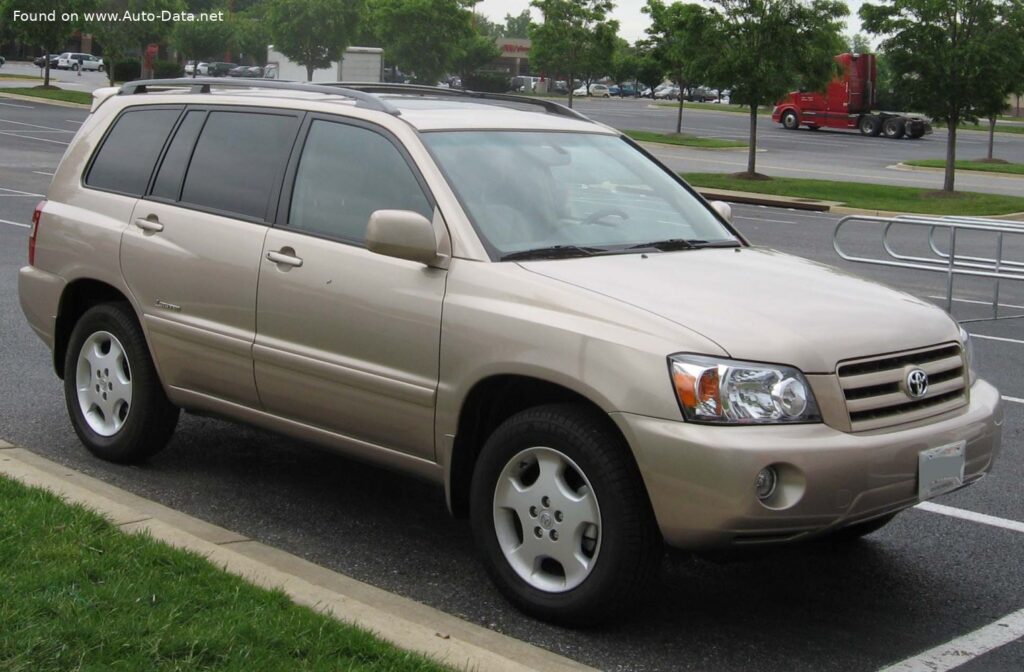
The Toyota Highlander, introduced in 2000 for the 2001 model year, represented a pivotal shift in the automotive landscape. As one of the earliest examples of a mid-size crossover SUV, it combined the rugged styling and elevated driving position of a traditional SUV with the comfortable ride and car-like handling of a sedan. The first generation, designated as the Highlander I, was built on the same platform as the popular Toyota Camry and Lexus RX 300, emphasizing its on-road prowess over serious off-road capability. This strategic positioning allowed it to cater to a burgeoning market of consumers seeking versatility without the compromises often associated with truck-based SUVs.
The specific variant, the Toyota Highlander I 3.3 i V6 24V (218 Hp), produced from 2003 to 2007, marked a significant upgrade in powertrain and refinement for the Highlander lineup. It solidified the model’s reputation as a reliable, practical, and family-friendly vehicle in the highly competitive North American market. This particular iteration, with its potent V6 engine, offered a compelling blend of performance, utility, and Toyota’s hallmark dependability, making it a strong contender against both traditional SUVs and emerging crossover rivals.
Engine & Performance: The 3.3 i V6 24V Powertrain
The Toyota Highlander I 3.3 i V6 24V (218 Hp) was powered by the 3MZ-FE engine, a 3.3-liter naturally aspirated V6. This engine displaced 3311 cubic centimeters (202.05 cubic inches) and featured a sophisticated 24-valve, Double Overhead Camshaft (DOHC) configuration. Multi-port fuel injection ensured precise fuel delivery and optimized combustion. The engine produced 218 horsepower at 5600 rpm, providing ample power for everyday driving, highway acceleration, and light towing. Torque output peaked at 222.01 lb.-ft. (301 Nm) at 3600 rpm, delivering strong low-end and mid-range responsiveness.
Power was transmitted to the front wheels through a smooth-shifting 5-speed automatic transmission. While all-wheel drive was available on other Highlander I models, this version utilized a front-wheel-drive layout, contributing to improved fuel economy and a lighter curb weight of 3703.77 lbs. (1680 kg). The vehicle could reach a maximum speed of 108.74 mph (175 km/h). Fuel efficiency was competitive for its class, achieving approximately 19 US mpg (12.4 l/100 km) in city driving and 25 US mpg (9.4 l/100 km) on the highway. This balance of performance and efficiency made the 3.3-liter V6 a popular choice among Highlander buyers.
Design & Features
The first-generation Toyota Highlander, including the 3.3 i V6 variant, featured a clean and functional design. Its body style was a classic 5-door SUV, offering standard seating for five passengers, with optional third-row seating available on some trims to accommodate seven. The exterior dimensions were well-proportioned, measuring 184.45 inches (4685 mm) in length, 71.85 inches (1825 mm) in width, and 68.31 inches (1735 mm) in height. These dimensions provided a manageable footprint while maintaining a commanding road presence.
The interior of the Highlander was characterized by Toyota’s focus on ergonomics and durable materials. The cabin offered generous space, particularly in the first two rows, prioritizing comfort and practicality. Cargo capacity was a significant selling point, offering a minimum of 38.49 cu. ft. (1090 l) of trunk space and expanding to a substantial 113.18 cu. ft. (3205 l) with the rear seats folded down. Standard features included power windows and locks, air conditioning, and a quality audio system. Safety features included ABS (Anti-lock Braking System) and ventilated front disc brakes, complemented by rear disc brakes. The suspension, utilizing spring struts at the front and coil springs at the rear, provided a comfortable and controlled ride.
Technical Specifications: Toyota Highlander I 3.3 i V6 24V (218 Hp)
| Category | Specification |
| General Information | Brand |
| Toyota | |
| Model | |
| Highlander | |
| Generation | |
| Highlander I | |
| Type (Engine) | |
| 3.3 i V6 24V (218 Hp) | |
| Start of Production | |
| 2003 | |
| End of Production | |
| 2007 | |
| Powertrain Architecture | |
| Internal Combustion engine | |
| Body type | |
| SUV | |
| Seats | |
| 5 | |
| Doors | |
| 5 | |
| Performance Specs | Fuel consumption (economy) – urban |
| 12.4 l/100 km (19 US mpg) | |
| Fuel consumption (economy) – extra urban | |
| 9.4 l/100 km (25 US mpg) | |
| Fuel Type | |
| Petrol (Gasoline) | |
| Maximum speed | |
| 175 km/h (108.74 mph) | |
| Weight-to-power ratio | |
| 7.7 kg/Hp (129.8 Hp/tonne) | |
| Weight-to-torque ratio | |
| 5.6 kg/Nm (179.2 Nm/tonne) | |
| Engine Specs | Power |
| 218 Hp @ 5600 rpm | |
| Power per liter | |
| 65.8 Hp/l | |
| Torque | |
| 301 Nm @ 3600 rpm (222.01 lb.-ft. @ 3600 rpm) | |
| Engine layout | |
| Front, Transverse | |
| Engine Model/Code | |
| 3MZ-FE | |
| Engine displacement | |
| 3311 cm³ (202.05 cu. in.) | |
| Number of cylinders | |
| 6 | |
| Engine configuration | |
| V-engine | |
| Cylinder Bore | |
| 92 mm (3.62 in.) | |
| Piston Stroke | |
| 83 mm (3.27 in.) | |
| Compression ratio | |
| 10.8:1 | |
| Number of valves per cylinder | |
| 4 | |
| Fuel injection system | |
| Multi-port manifold injection | |
| Engine aspiration | |
| Naturally aspirated engine | |
| Valvetrain | |
| DOHC | |
| Space, Volume and Weights | Kerb Weight |
| 1680 kg (3703.77 lbs.) |
Legacy and Market Impact
The first-generation Toyota Highlander, particularly the 3.3-liter V6 models from 2003-2007, established a strong foothold in the North American automotive market. It arrived during a period of consumer preference shifting away from traditional, truck-based SUVs towards more refined, fuel-efficient, and comfortable alternatives. The Highlander was a pioneer in the emerging crossover segment, offering a compelling alternative to larger, less efficient SUVs like the Ford Explorer or Chevrolet Tahoe, while providing more utility and an elevated driving position than a typical sedan.
Its main competitors included crossovers like the Honda Pilot, Nissan Murano, and later, the Ford Edge. The Highlander consistently stood out due to its reputation for exceptional reliability, strong resale value, and practical design. The 3.3L V6 engine, shared with other successful Toyota and Lexus models, was a proven performer, contributing to the Highlander’s image of longevity and low maintenance costs. The 5-speed automatic transmission provided a smooth and responsive driving experience. The Highlander’s success wasn’t just in sales numbers; it also redefined the expectations for family vehicles, demonstrating that an SUV could be comfortable, efficient, and refined without sacrificing utility. Its car-like platform (derived from the Camry) offered a more comfortable ride than many body-on-frame SUVs, making it ideal for families and commuters. The generous cargo space and optional third-row seating solidified its position as a versatile family vehicle.
Historically, the Toyota Highlander I played a vital role in popularizing the mid-size crossover SUV segment. It helped shape the design and engineering of countless models that followed. Even today, the first-generation Highlander is recognized for its enduring quality and remains a popular choice in the used car market, a testament to its robust engineering and lasting appeal. Its legacy is one of reliability, practicality, and a forward-thinking approach to vehicle design that effectively met the evolving needs of American consumers.