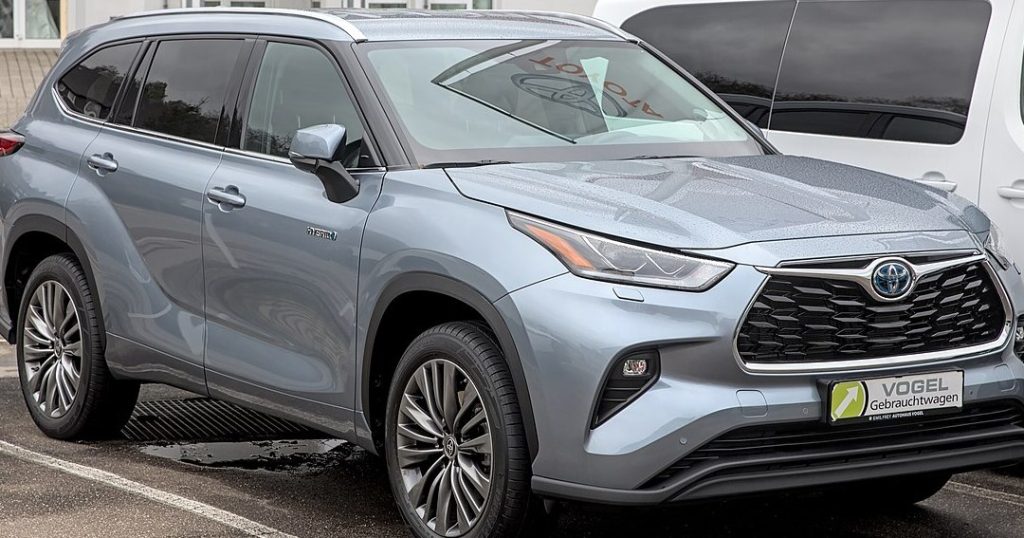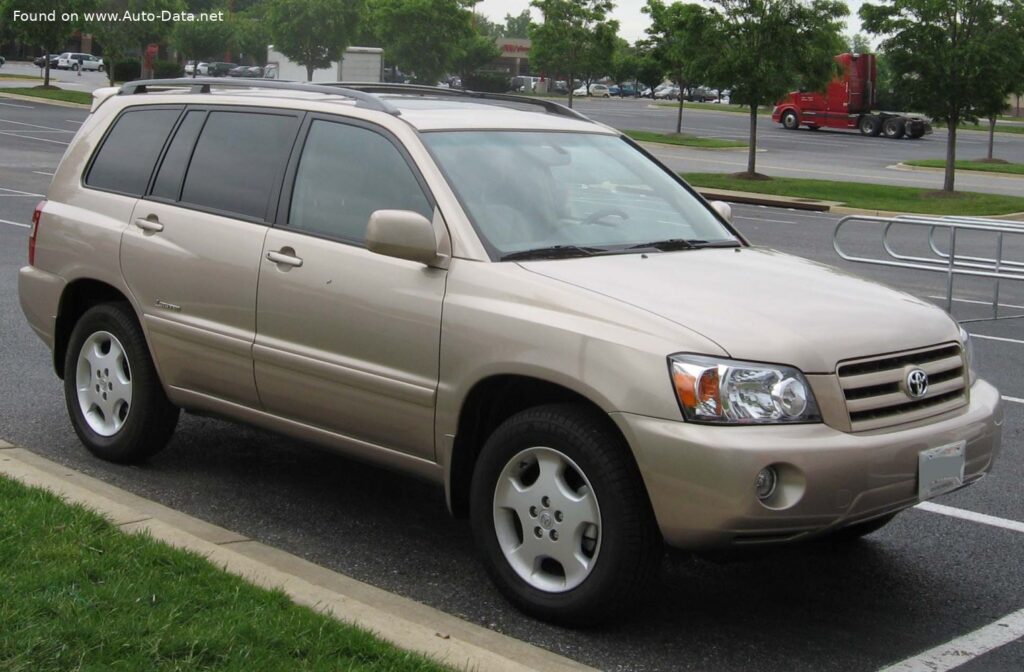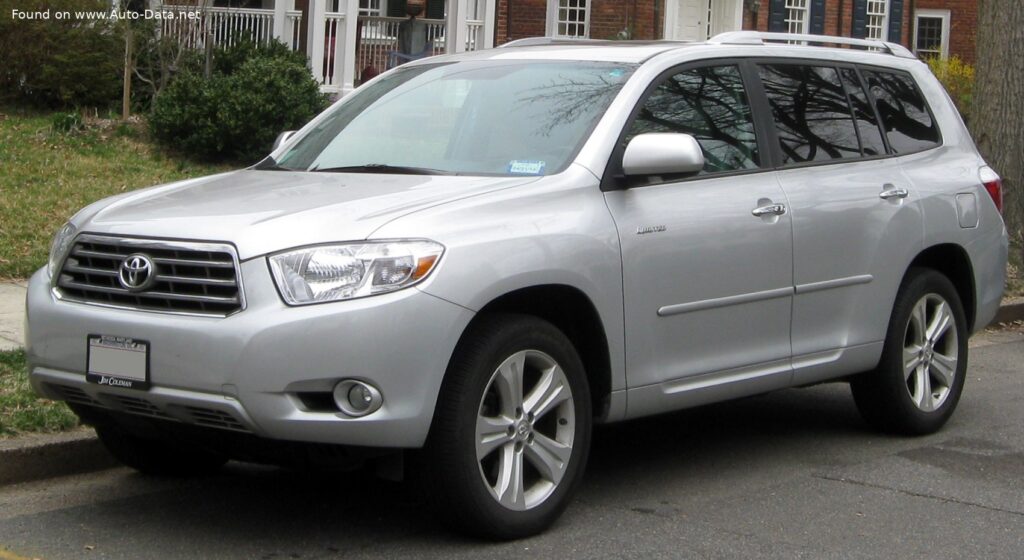
The Toyota Highlander II 3.3 V6 (270 Hp) Hybrid 4WD-i e-CVT represents a pivotal moment in the evolution of the family-oriented SUV, blending Toyota’s proven hybrid technology with the practicality and versatility demanded by the American market. Launched in 2007 as part of the second-generation Highlander lineup, this particular variant stood out as a leader in fuel efficiency within the mid-size SUV segment, without compromising on power or utility. It offered a compelling package for consumers seeking a spacious, seven-passenger vehicle with reduced environmental impact and lower running costs compared to traditional gasoline-only SUVs of its size.
Positioned as a more refined and technologically advanced option, the Highlander Hybrid built upon the conventional Highlander’s reputation for reliability and comfort. It was designed to appeal to suburban families and eco-conscious drivers who still required the capability of an all-wheel-drive SUV. The second generation, produced from 2007 to 2010 for this hybrid iteration, showcased Toyota’s commitment to hybrid powertrains beyond its popular Prius, integrating the technology into larger, more mainstream vehicles. This approach helped solidify Toyota’s position as a pioneer in hybrid vehicle development, offering a practical solution for everyday driving challenges while pushing the boundaries of what was expected from an SUV.
Engine & Performance: The Heart of the Toyota Highlander II 3.3 V6 (270 Hp) Hybrid 4WD-i e-CVT
At the core of the Toyota Highlander II 3.3 V6 (270 Hp) Hybrid 4WD-i e-CVT’s impressive performance and efficiency was its sophisticated Full Hybrid Electric Vehicle (FHEV) powertrain. This system combined a robust 3.3-liter (3311 cm³ or 202.05 cu. in.) 3MZ-FE V6 gasoline engine with two electric motors, delivering a combined system output of 270 horsepower. The internal combustion engine itself produced a healthy 212 horsepower at 5600 rpm and 211.68 lb.-ft. (287 Nm) of torque at 3600 rpm, configured as a front, transverse-mounted V-engine with DOHC valvetrain and direct injection.
The hybrid system’s intelligence came from its dual electric motor setup. The primary electric motor, integrated into the transmission, provided a substantial 167 horsepower at 4500 rpm and an impressive 247.08 lb.-ft. (335 Nm) of torque available from 0-1500 rpm. A second, smaller electric motor, transversely mounted on the rear axle, contributed 68 horsepower at 4610-5120 rpm and 95.88 lb.-ft. (130 Nm) of torque from 0-610 rpm. This innovative architecture allowed for an “on-demand” all-wheel-drive system (4WD-i), where the rear electric motor could provide power to the rear wheels independently, enhancing traction and stability without a mechanical connection to the front axle.
Power delivery was managed by an electronically controlled Continuously Variable Transmission (e-CVT), ensuring seamless acceleration and optimal fuel efficiency. This sophisticated powertrain enabled the Highlander Hybrid to achieve a respectable 0-60 mph acceleration time of 8.1 seconds (0-100 km/h in 8.4 seconds) and a top speed electronically limited to 111.85 mph (180 km/h). Despite its size and capabilities, the hybrid system delivered remarkable fuel economy for its class: an estimated 25 US mpg in urban driving, 27 US mpg on the highway, and a combined rating of 26.1 US mpg (9 l/100 km). Furthermore, it met the stringent SULEV (Super Ultra Low Emission Vehicle) standard, underscoring its environmental credentials.
The Nickel-metal hydride (NiMH) battery pack, weighing 152.12 lbs (69 kg) and operating at 288 volts, was cleverly positioned below the floor under the rear seats, ensuring minimal intrusion into cabin space. This strategic placement contributed to the vehicle’s balanced weight distribution and protected the battery from potential impacts. The drivetrain architecture allowed for flexible operation, running in full electric mode at low speeds, or a combination of electric and gasoline power, making the most of its FHEV design.
Design & Features
The second-generation Toyota Highlander, including the hybrid variant, presented a more mature and substantial design compared to its predecessor. With a length of 188.39 inches (4785 mm), a width of 75.2 inches (1910 mm), and a height of 69.29 inches (1760 mm), it offered a commanding presence on the road while remaining maneuverable for urban environments. The wheelbase measured 109.84 inches (2790 mm), contributing to a stable ride and generous interior volume. Its SUV body type, with five doors and standard seven-passenger seating, made it an ideal choice for families, offering flexibility for both people and cargo.
Inside, the Highlander Hybrid prioritized comfort and utility. The cabin was designed with family needs in mind, featuring a versatile seating arrangement that could be reconfigured to maximize cargo space. Minimum trunk space was 10.31 cu. ft. (292 liters), expanding significantly to a cavernous 80.59 cu. ft. (2282 liters) with the rear seats folded down. This adaptability made it suitable for everything from grocery runs to hauling sports equipment or luggage for a family vacation.
From a chassis perspective, the Highlander Hybrid featured an independent McPherson strut front suspension with coil springs and an anti-roll bar, complemented by an independent coil spring rear suspension. This setup provided a comfortable and composed ride, absorbing road imperfections effectively. Braking duties were handled by disc brakes at both the front and rear, augmented by an Anti-lock Braking System (ABS) for enhanced safety. The vehicle rode on either 245/65 R17 or 245/55 R19 tires, paired with 7.5J x 17 or 7.5J x 19 wheel rims, respectively, providing ample grip and a confident stance. With a ground clearance of 8.11 inches (206 mm), it was capable of handling light off-road excursions or snowy conditions with ease.
Toyota Highlander II 3.3 V6 (270 Hp) Hybrid 4WD-i e-CVT: Technical Specifications
| Category | Specification |
| General Information | |
| Brand | Toyota |
| Model | Highlander |
| Generation | Highlander II |
| Type (Engine) | 3.3 V6 (270 Hp) Hybrid 4WD-i e-CVT |
| Start of Production | 2007 |
| End of Production | 2010 |
| Powertrain Architecture | FHEV (Full Hybrid Electric Vehicle) |
| Body type | SUV |
| Seats | 7 |
| Doors | 5 |
| Performance Specs | |
| Fuel Consumption (Urban) | 9.4 l/100 km (25 US mpg) |
| Fuel Consumption (Extra Urban) | 8.7 l/100 km (27 US mpg) |
| Fuel Consumption (Combined) | 9 l/100 km (26.1 US mpg) |
| Fuel Type | Petrol (Gasoline) |
| Acceleration 0 – 60 mph | 8.1 sec |
| Acceleration 0 – 100 km/h | 8.4 sec |
| Maximum Speed | 180 km/h (111.85 mph) |
| Emission Standard | SULEV |
| Electric Cars and Hybrids Specs | |
| Battery Voltage | 288 V |
| Battery Technology | Nickel-metal hydride (NiMH) |
| Battery Weight | 69 kg (152.12 lbs) |
| Internal Combustion Engine Specs | |
| Power | 212 Hp @ 5600 rpm |
| Torque | 287 Nm @ 3600 rpm (211.68 lb.-ft. @ 3600 rpm) |
The Toyota Highlander II 3.3 V6 (270 Hp) Hybrid 4WD-i e-CVT left a significant mark on the automotive landscape, particularly in the North American market. It wasn’t the first hybrid SUV, but it was arguably one of the most successful in bringing hybrid technology to the mainstream mid-size SUV segment. Its production run from 2007 to 2010 coincided with a growing consumer interest in fuel efficiency, driven by fluctuating gasoline prices and increasing environmental awareness. The Highlander Hybrid offered a practical, no-compromise solution for families who needed the space and utility of an SUV but desired the fuel economy benefits of a hybrid.
Its primary competitors in the market included conventional mid-size SUVs like the Honda Pilot, Ford Edge, Nissan Murano, and Chevrolet Traverse. However, in the hybrid segment, its direct rivals were fewer, mainly consisting of its luxury sibling, the Lexus RX 400h (which shared much of its powertrain technology), and later, the Ford Escape Hybrid (a smaller compact SUV). The Highlander Hybrid distinguished itself by offering a larger, more family-friendly package than most early hybrid SUVs, making it a unique proposition.
Toyota’s reputation for reliability and the proven track record of its hybrid synergy drive system were major selling points. Consumers trusted the brand to deliver a complex hybrid system that would be durable and require minimal maintenance. The Highlander Hybrid’s SULEV emission rating further enhanced its appeal, positioning it as a responsible choice for environmentally conscious buyers. Its ability to offer impressive fuel economy while maintaining strong acceleration and a comfortable ride proved that hybrid technology could be seamlessly integrated into larger vehicles without sacrificing performance or practicality.
The success of the second-generation Highlander Hybrid paved the way for future hybrid SUVs and crossovers, demonstrating that there was a strong market demand for such vehicles. It helped normalize hybrid technology in larger vehicle segments, moving it beyond compact sedans like the Prius. Its legacy is evident in the continued proliferation of hybrid options across Toyota’s SUV lineup and the broader automotive industry. The Toyota Highlander II 3.3 V6 (270 Hp) Hybrid 4WD-i e-CVT remains a testament to Toyota’s foresight and engineering prowess, a vehicle that successfully balanced power, efficiency, and family utility during a transformative period for the automotive industry.