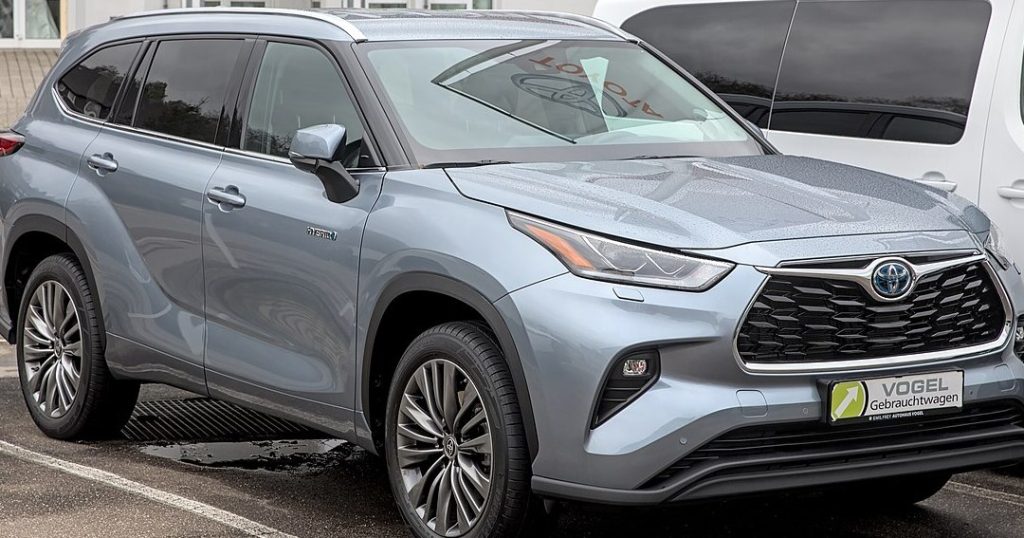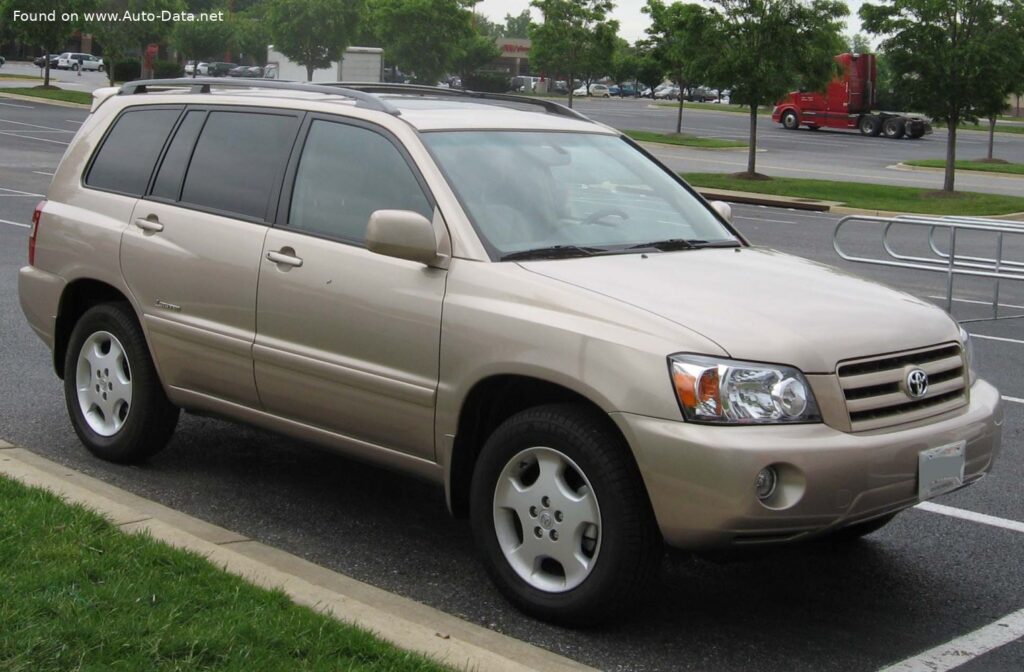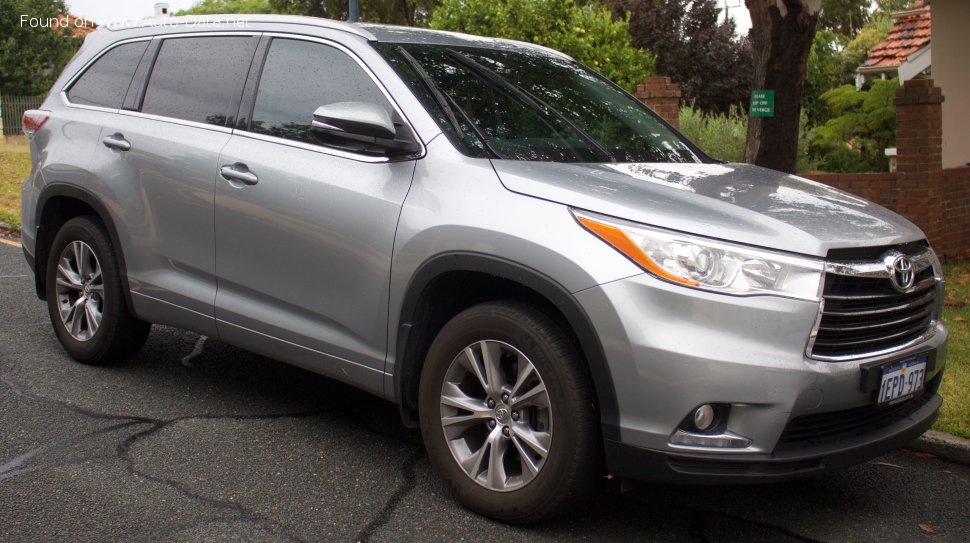
The Toyota Highlander III, produced between 2013 and 2016, represents the third generation of Toyota’s popular mid-size crossover SUV. Positioned as a practical and family-oriented vehicle, the Highlander III was a key model in Toyota’s North American lineup, offering three-row seating and available all-wheel drive. This generation saw a significant refinement in styling, interior quality, and powertrain options, with a particular emphasis on fuel efficiency through the introduction of a hybrid powertrain. The 3.5 V6 Hybrid AWD-i e-CVT model, detailed here, combined a gasoline engine with an electric motor system to deliver a balance of performance and economy.
Toyota Highlander III 3.5 V6 Hybrid AWD-i e-CVT
The Highlander III 3.5 V6 Hybrid AWD-i e-CVT is a Full Hybrid Electric Vehicle (FHEV) that utilizes Toyota’s Hybrid Synergy Drive system. This configuration combines a 3.5-liter V6 gasoline engine with two electric motors, providing both all-wheel drive capability and enhanced fuel efficiency. The “AWD-i” designation signifies Toyota’s Intelligent All-Wheel Drive system, which automatically distributes power between the front and rear axles as needed. The e-CVT (electronically controlled Continuously Variable Transmission) further optimizes engine efficiency and provides a smooth driving experience. This model was primarily sold in North America, where the demand for family-sized SUVs with hybrid options was growing.
Engine & Performance
The heart of the Highlander III 3.5 V6 Hybrid is the 2GR-FXE 3.5-liter V6 gasoline engine. This naturally aspirated engine produces 280 horsepower at 6000 rpm and 248.56 lb.-ft. of torque at 4700 rpm. The engine features a DOHC-VVTi (Dual Overhead Camshafts with Variable Valve Timing-intelligent) valvetrain and multi-port fuel injection. Supplementing the gasoline engine are two electric motors. The primary electric motor, integrated into the transmission, delivers 167 horsepower and 335 Nm (247.08 lb.-ft.) of torque. A second, smaller electric motor, located on the rear axle, contributes an additional 68 horsepower and 139 Nm (102.52 lb.-ft.) of torque. The combined system output is 280 horsepower.
The powertrain’s architecture allows for operation in various modes, including full electric, gasoline engine only, or a combination of both. The e-CVT seamlessly manages the power delivery between the engine and motors, resulting in a 0-60 mph acceleration time of approximately 6.9 seconds and a 0-100 km/h time of 7.3 seconds. The Highlander III 3.5 V6 Hybrid achieves a maximum speed of 111.85 mph (180 km/h). The weight-to-power ratio is 7.9 kg/Hp, and the weight-to-torque ratio is 6.5 kg/Nm, indicating a respectable power-to-weight balance.
Design & Features
The Toyota Highlander III is a five-door SUV with seating for up to seven passengers. Its exterior design represents a departure from the more angular styling of the previous generation, adopting a more sculpted and modern aesthetic. The vehicle measures 191.54 inches in length, 75.79 inches in width, and 68.11 inches in height, with a wheelbase of 109.84 inches.
Key features of the Highlander III 3.5 V6 Hybrid include the standard all-wheel drive system, providing enhanced traction and stability in various driving conditions. The interior is designed with family comfort in mind, offering ample space and a range of convenience features. Safety features, crucial for a family vehicle, include ABS (Anti-lock Braking System) and a comprehensive airbag system. The trunk offers a versatile cargo space, ranging from 13.81 cubic feet with all seats in place to 83.7 cubic feet with the rear seats folded down. The vehicle’s drag coefficient of 0.34 contributes to its aerodynamic efficiency, aiding in fuel economy.
Technical Specifications
| Brand | Toyota |
| Model | Highlander |
| Generation | Highlander III |
| Type (Engine) | 3.5 V6 (280 Hp) Hybrid AWD-i e-CVT |
| Start of production | 2013 |
| End of production | 2016 |
| Powertrain Architecture | FHEV (Full Hybrid Electric Vehicle) |
| Body type | SUV |
| Seats | 7 |
| Doors | 5 |
| Fuel consumption (urban) | 8.7 l/100 km (27 US mpg) |
| Fuel consumption (extra urban) | 8.4 l/100 km (28 US mpg) |
| Fuel consumption (combined) | 8.4 l/100 km (28 US mpg) |
| Fuel Type | Petrol (Gasoline) |
| Acceleration 0 – 100 km/h | 7.3 sec |
| Acceleration 0 – 62 mph | 7.3 sec |
| Acceleration 0 – 60 mph | 6.9 sec |
| Maximum speed | 180 km/h (111.85 mph) |
| Emission standard | Euro 5 |
| Weight-to-power ratio | 7.9 kg/Hp |
| Weight-to-torque ratio | 6.5 kg/Nm |
| Battery voltage | 288 V |
| Battery technology | Nickel-metal hydride (NiMH) |
| Electric motor power (primary) | 167 Hp |
| Electric motor torque (primary) | 335 Nm (247.08 lb.-ft.) |
| Electric motor power (secondary) | 68 Hp |
| Electric motor torque (secondary) | 139 Nm (102.52 lb.-ft.) |
| System power | 280 Hp |
| Engine Power | 280 Hp @ 6000 rpm |
| Engine Torque | 337 Nm @ 4700 rpm (248.56 lb.-ft. @ 4700 rpm) |
| Engine displacement | 3456 cm3 (210.9 cu. in.) |
| Number of cylinders | 6 |
| Cylinder Bore | 94 mm (3.7 in.) |
| Piston Stroke | 83 mm (3.27 in.) |
| Compression ratio | 10.8:1 |
| Kerb Weight | 2205 kg (4861.19 lbs.) |
| Max. weight | 2844 kg (6269.95 lbs.) |
| Trunk (boot) space – minimum | 391 l (13.81 cu. ft.) |
| Trunk (boot) space – maximum | 2370 l (83.7 cu. ft.) |
| Fuel tank capacity | 65 l (17.17 US gal) |
| Length | 4865 mm (191.54 in.) |
| Width | 1925 mm (75.79 in.) |
| Height | 1730 mm (68.11 in.) |
| Wheelbase | 2790 mm (109.84 in.) |