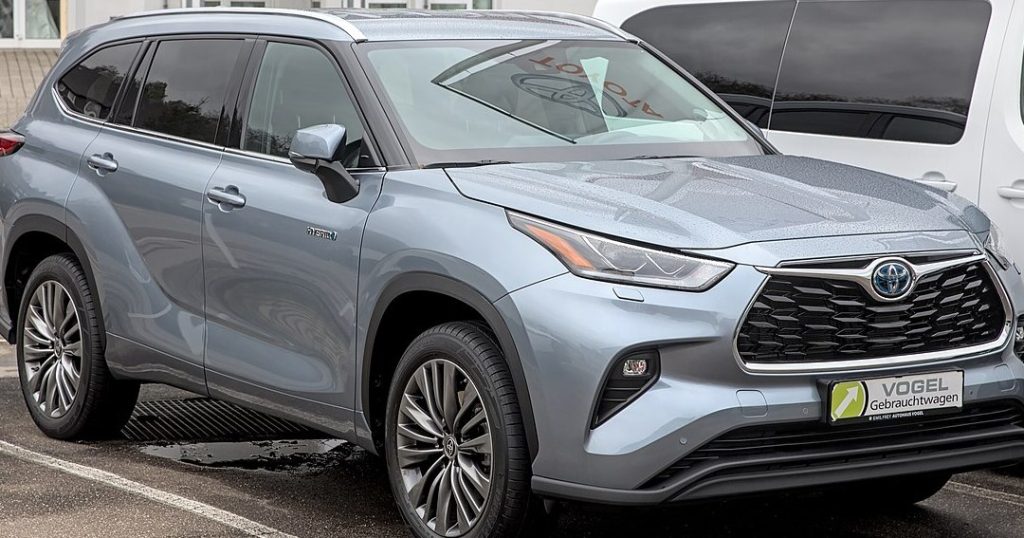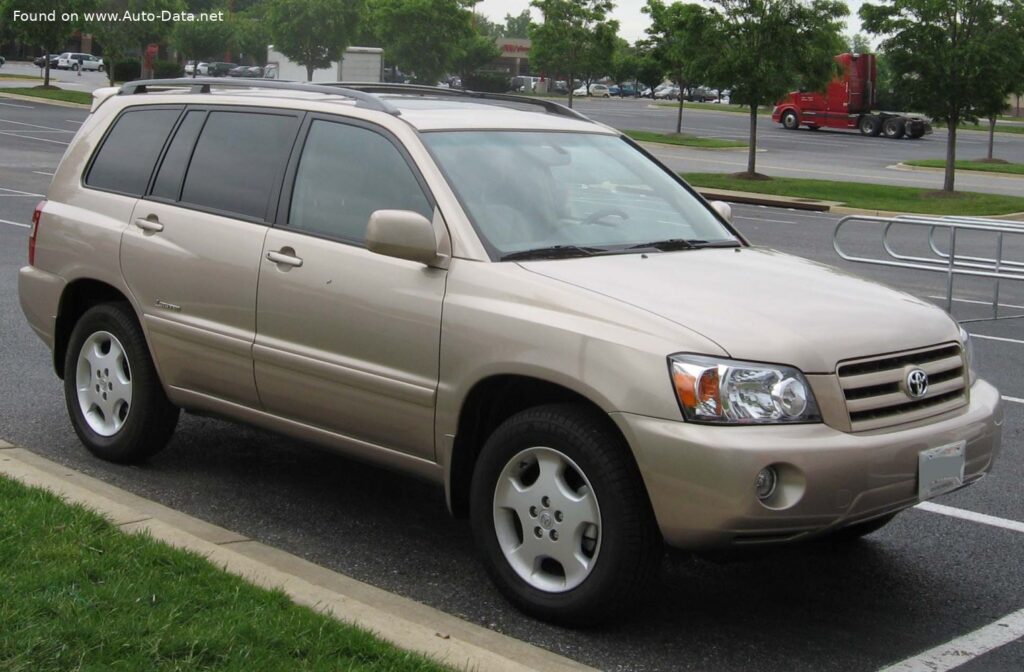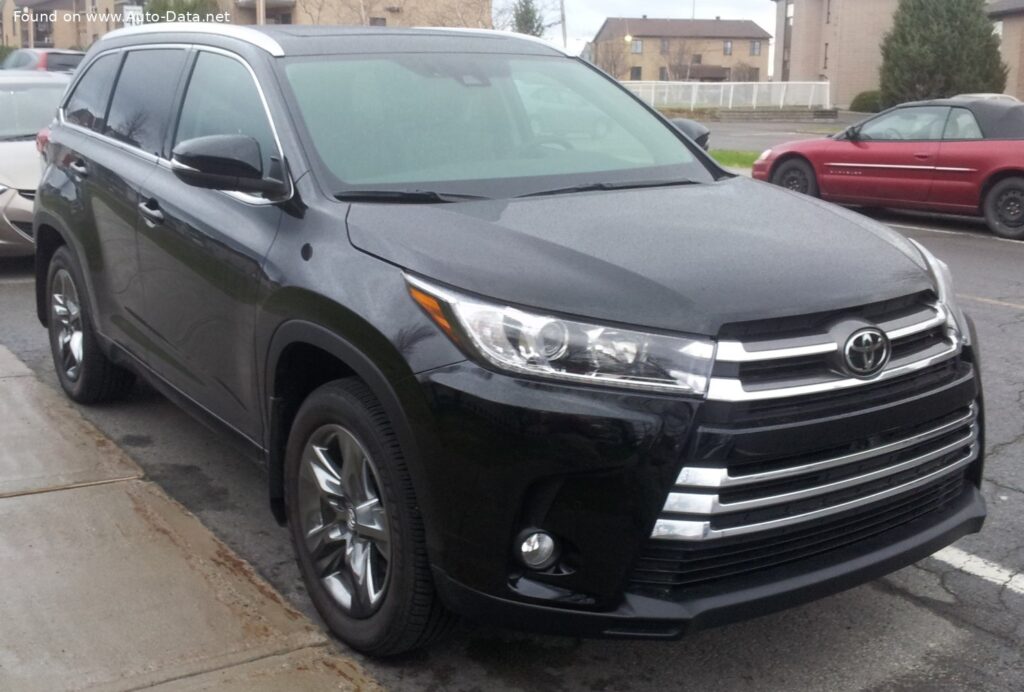
The Toyota Highlander III, particularly the facelifted version introduced in 2016, represents a significant iteration in Toyota’s mid-size crossover SUV lineup. Positioned as a practical and family-oriented vehicle, the Highlander competes with models like the Honda Pilot, Ford Explorer, and Nissan Pathfinder. This generation, produced from 2016 to 2019, focused on refining the existing platform with updated styling, enhanced features, and improved efficiency. The 3.5 V6 4×4 Automatic variant, detailed here, was a popular configuration offering a balance of performance and all-weather capability.
Toyota Highlander III (Facelift 2016) 3.5 V6 4×4 Automatic
The Highlander III facelift brought subtle but noticeable changes to the exterior, including revised front and rear fascias, headlights, and taillights. These updates aimed to give the vehicle a more modern and sophisticated appearance. Internally, the focus was on improving the user experience with upgraded materials and technology. The 3.5-liter V6 engine remained a core component, providing ample power for everyday driving and towing. The availability of all-wheel drive (4×4) enhanced its appeal in regions with inclement weather or those seeking added traction.
Engine & Performance
At the heart of the 2016-2019 Toyota Highlander 3.5 V6 4×4 Automatic lies a 3.5-liter (3456 cm3 or 210.9 cu. in.) naturally aspirated V6 engine, designated the 2GR-FKS. This engine produces 249 horsepower at 5000-6600 rpm and 356 Nm (262.57 lb.-ft.) of torque at 4700 rpm. The engine features a double overhead camshaft (DOHC) valvetrain with Toyota’s Variable Valve Timing-intelligent (D-VVT-i) system, optimizing performance and efficiency across the rev range. Power is delivered to all four wheels via an eight-speed automatic transmission. This powertrain combination allows for a 0-100 km/h (0-62 mph) acceleration time of 8.8 seconds, and a 0-60 mph time of approximately 8.4 seconds. The Highlander’s top speed is electronically limited to 180 km/h (111.85 mph). The engine’s power-to-weight ratio is 8.5 kg/Hp, and the torque-to-weight ratio is 5.9 kg/Nm.
Design & Features
The Toyota Highlander III is a five-door SUV designed to comfortably accommodate up to eight passengers. Its body-on-frame construction provides a robust and durable platform. The facelifted model features a more sculpted exterior design, with a prominent grille and updated headlight clusters. Inside, the cabin is designed with practicality and comfort in mind. Standard features typically include a touchscreen infotainment system, Bluetooth connectivity, and a rearview camera. Higher trim levels offer amenities such as leather upholstery, a premium sound system, and advanced safety technologies. Safety features in this generation include Anti-lock Braking System (ABS). The Highlander’s spacious interior and flexible seating configurations make it well-suited for families and those who frequently transport passengers or cargo. Trunk space ranges from a minimum of 269 liters (9.5 cu. ft.) with all seats in use to a maximum of 813 liters (28.71 cu. ft.) with the rear seats folded down.
Technical Specifications
| Brand | Toyota |
| Model | Highlander |
| Generation | Highlander III (facelift 2016) |
| Type (Engine) | 3.5 V6 (249 Hp) 4×4 Automatic |
| Start of production | 2016 |
| End of production | 2019 |
| Powertrain Architecture | Internal Combustion engine |
| Body type | SUV |
| Seats | 8 |
| Doors | 5 |
| Fuel consumption (urban) | 12.8 l/100 km (18.4 US mpg, 22.1 UK mpg, 7.8 km/l) |
| Fuel consumption (extra urban) | 7.6 l/100 km (30.9 US mpg, 37.2 UK mpg, 13.2 km/l) |
| Fuel consumption (combined) | 9.5 l/100 km (24.8 US mpg, 29.7 UK mpg, 10.5 km/l) |
| CO2 emissions | 221 g/km |
| Fuel Type | Petrol (Gasoline) |
| Acceleration 0 – 100 km/h | 8.8 sec |
| Acceleration 0 – 62 mph | 8.8 sec |
| Acceleration 0 – 60 mph | 8.4 sec |
| Maximum speed | 180 km/h (111.85 mph) |
| Emission standard | Euro 5 |
| Weight-to-power ratio | 8.5 kg/Hp |
| Weight-to-torque ratio | 5.9 kg/Nm |
| Power | 249 Hp @ 5000-6600 rpm |
| Torque | 356 Nm @ 4700 rpm (262.57 lb.-ft. @ 4700 rpm) |
| Engine layout | Front, Transverse |
| Engine Model/Code | 2GR-FKS |
| Engine displacement | 3456 cm3 (210.9 cu. in.) |
| Number of cylinders | 6 |
| Engine configuration | V-engine |
| Cylinder Bore | 94 mm (3.7 in.) |
| Piston Stroke | 83 mm (3.27 in.) |
| Compression ratio | 11.8:1 |
| Number of valves per cylinder | 4 |
| Fuel injection system | Multi-port manifold injection |
| Engine aspiration | Naturally aspirated engine |
| Valvetrain | DOHC, D-VVT-i |
| Engine oil capacity | 5.5 l (5.81 US qt | 4.84 UK qt) |
| Coolant capacity | 11.6 l (12.26 US qt | 10.21 UK qt) |
| Kerb Weight | 2110 kg (4651.75 lbs.) |
| Max. weight | 2760 kg (6084.76 lbs.) |
| Max load | 650 kg (1433 lbs.) |
| Trunk (boot) space – minimum | 269 l (9.5 cu. ft.) |
| Trunk (boot) space – maximum | 813 l (28.71 cu. ft.) |
| Fuel tank capacity | 72 l (19.02 US gal | 15.84 UK gal) |
| Length | 4890 mm (192.52 in.) |
| Width | 1925 mm (75.79 in.) |
| Height | 1770 mm (69.69 in.) |
| Wheelbase | 2790 mm (109.84 in.) |
| Front track | 1635 mm (64.37 in.) |
| Rear track | 1650 mm (64.96 in.) |
| Ride height (ground clearance) | 200 mm (7.87 in.) |
| Drag coefficient (Cd) | 0.33 |
| Approach angle | 18.0° |
| Departure angle | 23.1° |
| Drive wheel | All wheel drive (4×4) |
| Number of gears | 8 |
| Gearbox type | Automatic transmission |
| Front suspension | Independent, type McPherson with coil spring and anti-roll bar |
| Rear suspension | Independent coil spring |
| Front brakes | Ventilated discs |
| Rear brakes | Disc |
| Assisting systems | ABS (Anti-lock braking system) |
| Steering type | Steering rack and pinion |
| Power steering | Electric Steering |
| Tires size | 245/55 R19 |
| Wheel rims size | 19 |