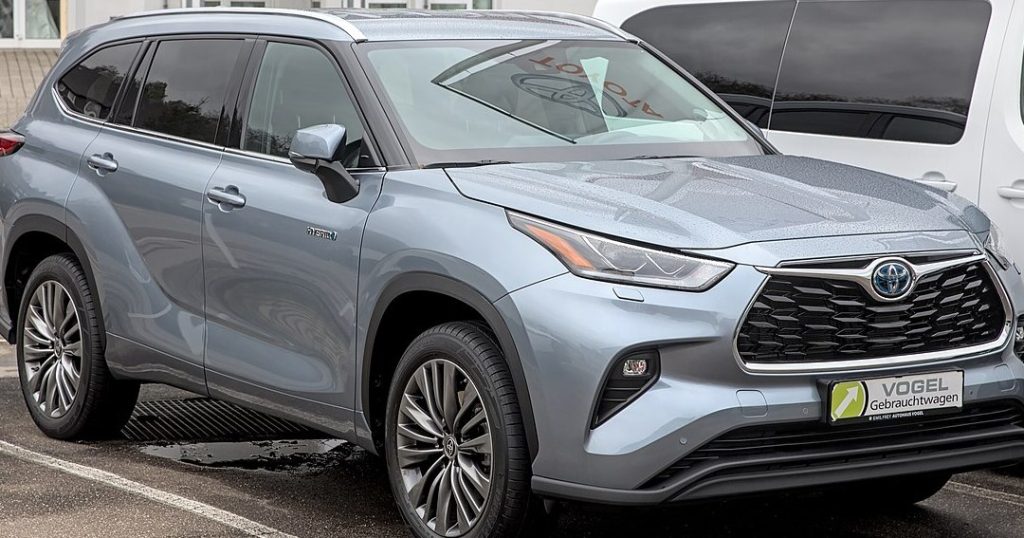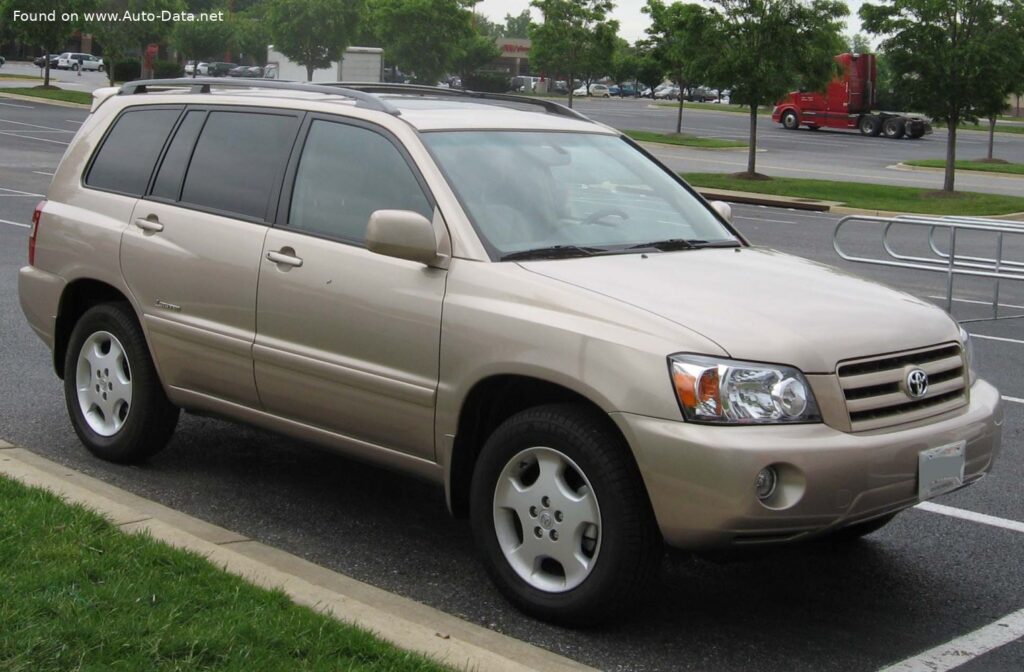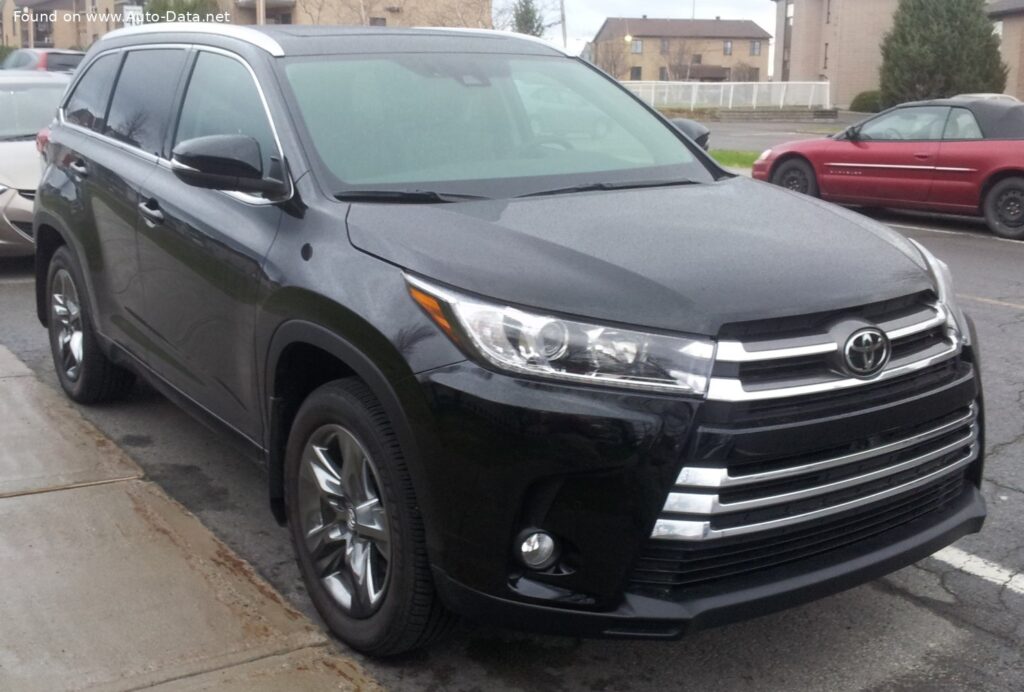
The Toyota Highlander is a mid-size crossover SUV produced by Toyota since 2000. Positioned above the RAV4 but below the Sequoia, the Highlander has become a mainstay in the family SUV segment, known for its reliability, spacious interior, and comfortable ride. The third generation, launched in 2013 and receiving a significant facelift in 2016, continued this trend, offering a refined driving experience and updated styling. This article details the 2016-2019 facelifted Highlander, specifically the 3.5-liter V6 model equipped with a four-wheel-drive system and automatic transmission.
Toyota Highlander III (Facelift 2016): An Overview
The facelifted Highlander III, produced from 2016 to 2019, represented a mid-cycle refresh for the popular SUV. The updates focused on enhancing the vehicle’s exterior styling, improving interior refinement, and bolstering its safety features. While the core mechanical components remained largely unchanged from the 2014-2015 models, the revised front fascia, rear taillights, and interior trim gave the Highlander a more modern and upscale appearance. In the North American market, the Highlander competed directly with vehicles like the Honda Pilot, Ford Explorer, and Chevrolet Traverse, offering a compelling blend of practicality, comfort, and Toyota’s renowned dependability.
Engine & Performance
The 2016-2019 Toyota Highlander 3.5 V6 4×4 is powered by the 2GR-FKS engine, a 3.5-liter naturally aspirated V6 gasoline engine. This engine produces 296 horsepower at 6,600 rpm and 358 Newton-meters (264.05 lb-ft) of torque at 4,700 rpm. The engine features a double overhead camshaft (DOHC) valvetrain with Toyota’s Variable Valve Timing-intelligent (D-VVT-i) system, optimizing performance and fuel efficiency. The engine’s transverse front-engine layout contributes to a balanced weight distribution. Power is delivered to all four wheels via an eight-speed automatic transmission, providing smooth and responsive shifting. The weight-to-power ratio of 7 kg/Hp and a weight-to-torque ratio of 5.8 kg/Nm contribute to respectable acceleration and overall driving dynamics. Fuel economy is rated at approximately 10.7 liters per 100 kilometers (22 US mpg) combined, with 12.4 l/100km (19 US mpg) in urban settings and 9 l/100km (26.1 US mpg) on the highway.
Design & Features
The Highlander III (facelift 2016) maintains the SUV body style, offering five doors and seating for up to eight passengers. The exterior design features a more aggressive front grille, redesigned headlights, and updated taillights compared to the pre-facelift model. The vehicle’s dimensions are substantial, measuring 4,890 mm (192.52 inches) in length, 1,925 mm (75.79 inches) in width, and 1,770 mm (69.69 inches) in height. A wheelbase of 2,790 mm (109.84 inches) provides a stable platform. The interior is designed with family comfort in mind, offering ample headroom and legroom in all three rows. Standard features typically include a touchscreen infotainment system, Bluetooth connectivity, and a rearview camera. Safety features are a priority, with standard inclusion of Anti-lock Braking System (ABS) and a comprehensive airbag system. The Highlander’s trunk space is versatile, offering 269 liters (9.5 cu. ft.) with all seats in place and expanding to 813 liters (28.71 cu. ft.) with the third-row seats folded down. The vehicle boasts a ground clearance of 200 mm (7.87 inches) and a drag coefficient of 0.33.
Technical Specifications
| Brand | Toyota |
| Model | Highlander |
| Generation | Highlander III (facelift 2016) |
| Type (Engine) | 3.5 V6 (296 Hp) 4×4 Automatic |
| Start of production | 2016 |
| End of production | 2019 |
| Powertrain Architecture | Internal Combustion engine |
| Body type | SUV |
| Seats | 8 |
| Doors | 5 |
| Fuel consumption (urban) | 12.4 l/100 km (19 US mpg) |
| Fuel consumption (extra urban) | 9 l/100 km (26.1 US mpg) |
| Fuel consumption (combined) | 10.7 l/100 km (22 US mpg) |
| Fuel Type | Petrol (Gasoline) |
| Emission standard | Euro 5 |
| Weight-to-power ratio | 7 kg/Hp |
| Weight-to-torque ratio | 5.8 kg/Nm |
| Power | 296 Hp @ 6600 rpm |
| Torque | 358 Nm @ 4700 rpm (264.05 lb.-ft. @ 4700 rpm) |
| Engine layout | Front, Transverse |
| Engine Model/Code | 2GR-FKS |
| Engine displacement | 3456 cm3 (210.9 cu. in.) |
| Number of cylinders | 6 |
| Engine configuration | V-engine |
| Cylinder Bore | 94 mm (3.7 in.) |
| Piston Stroke | 83 mm (3.27 in.) |
| Compression ratio | 10.8:1 |
| Number of valves per cylinder | 4 |
| Fuel injection system | Multi-port manifold injection |
| Engine aspiration | Naturally aspirated engine |
| Valvetrain | DOHC, D-VVT-i |
| Engine oil capacity | 5.5 l (5.81 US qt | 4.84 UK qt) |
| Coolant capacity | 11.6 l (12.26 US qt | 10.21 UK qt) |
| Kerb Weight | 2060 kg (4541.52 lbs.) |
| Max. weight | 2725 kg (6007.6 lbs.) |
| Max load | 665 kg (1466.07 lbs.) |
| Trunk (boot) space – minimum | 269 l (9.5 cu. ft.) |
| Trunk (boot) space – maximum | 813 l (28.71 cu. ft.) |
| Fuel tank capacity | 72 l (19.02 US gal | 15.84 UK gal) |
| Length | 4890 mm (192.52 in.) |
| Width | 1925 mm (75.79 in.) |
| Height | 1770 mm (69.69 in.) |
| Wheelbase | 2790 mm (109.84 in.) |
| Front track | 1635 mm (64.37 in.) |
| Rear (Back) track | 1650 mm (64.96 in.) |
| Ride height (ground clearance) | 200 mm (7.87 in.) |
| Drag coefficient (Cd) | 0.33 |
| Approach angle | 18.0° |
| Departure angle | 23.1° |
| Drive wheel | All wheel drive (4×4) |
| Number of gears and type of gearbox | 8 gears, automatic transmission |
| Front suspension | Independent, type McPherson with coil spring and anti-roll bar |
| Rear suspension | Independent coil spring |
| Front brakes | Ventilated discs |
| Rear brakes | Disc |
| Assisting systems | ABS (Anti-lock braking system) |
| Steering type | Steering rack and pinion |
| Power steering | Electric Steering |
| Tires size | 245/60 R18; 245/55 R19 |
| Wheel rims size | 18; 19 |