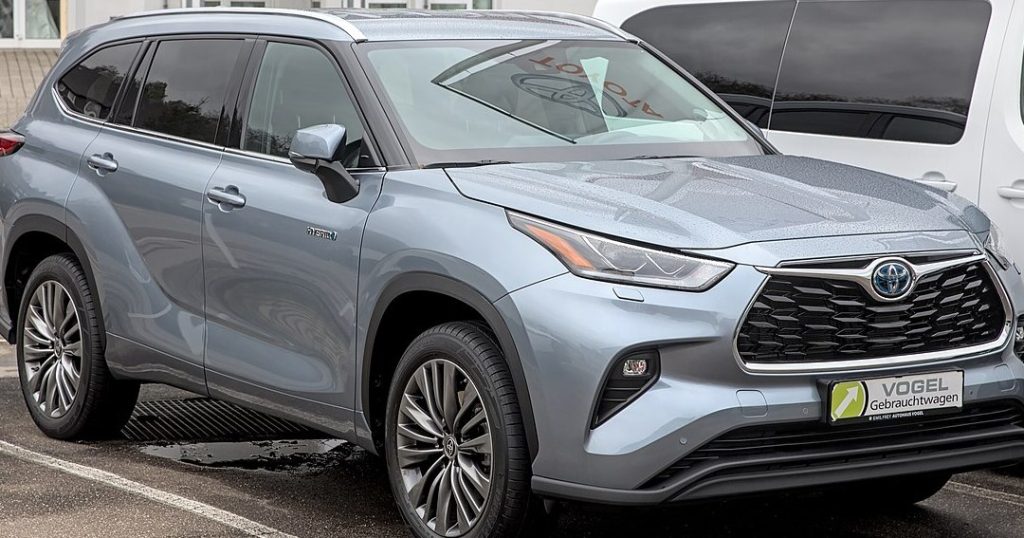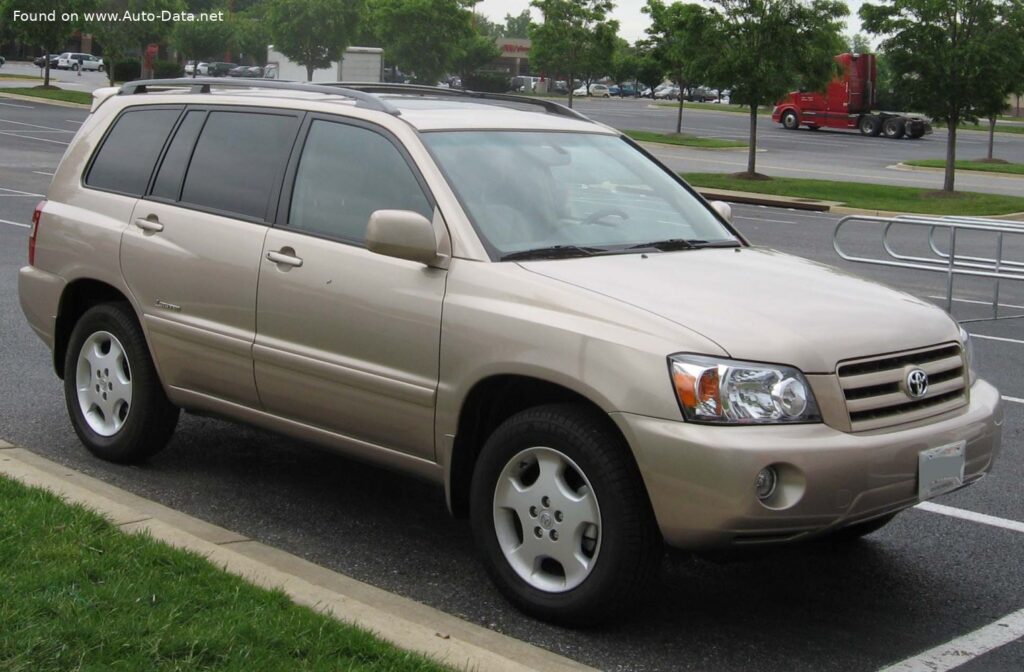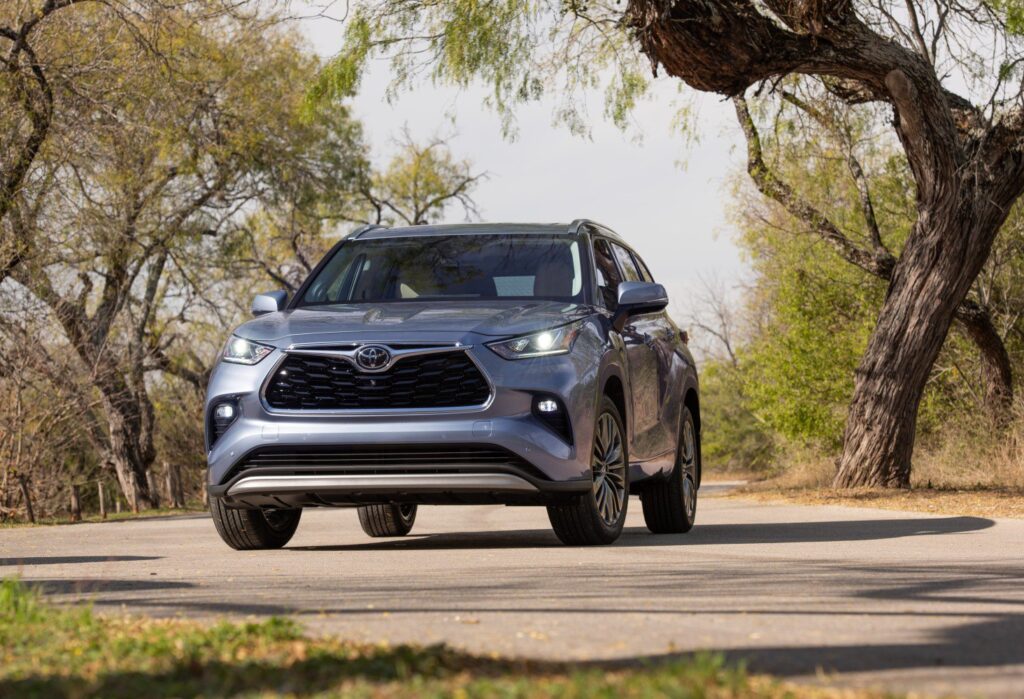
The Toyota Highlander IV 2.5 (243 Hp) Hybrid e-CVT, introduced in 2020, represents the fourth generation of Toyota’s popular mid-size SUV. Positioned as a family-focused vehicle, the Highlander IV offers seating for seven to eight passengers and combines a gasoline engine with an electric motor for improved fuel efficiency. This generation marked a significant step forward in technology and refinement for the Highlander, solidifying its position in a highly competitive segment. While the Highlander has been a mainstay in the North American market for years, the fourth generation brought substantial updates to appeal to evolving consumer preferences for fuel economy, safety, and interior comfort.
Toyota Highlander IV: A Detailed Overview
The Highlander IV is a crucial model in Toyota’s global lineup, though its prominence is most significant in North America. In markets where Toyota offers a broader range of SUVs, the Highlander occupies a space between the smaller RAV4 and the larger Sequoia. The fourth generation was designed with a focus on a more robust exterior appearance and a more refined interior, aiming to attract buyers seeking a premium experience without the price tag of luxury brands. The hybrid powertrain option, as detailed here, is a key selling point, catering to the growing demand for environmentally conscious vehicles.
Engine & Performance
The Toyota Highlander IV 2.5 Hybrid utilizes a 2.5-liter inline-four cylinder gasoline engine (A25A-FXS) paired with an electric motor. The gasoline engine produces 186 horsepower at 6000 rpm and 174.8 lb-ft of torque at 4400 rpm. However, the combined system output, leveraging the electric motor’s 182 horsepower and 199.14 lb-ft of torque, results in a total of 243 horsepower. This power is delivered through an electronically controlled continuously variable transmission (e-CVT), which optimizes efficiency and provides smooth acceleration. The powertrain architecture is a Full Hybrid Electric Vehicle (FHEV), allowing for all-electric driving at lower speeds and assisting the gasoline engine during acceleration and demanding conditions. The weight-to-power ratio is 8.1 kg/Hp, translating to 123.7 Hp/tonne, and the weight-to-torque ratio is 8.3 kg/Nm, or 120.7 Nm/tonne. Fuel economy is rated at 36.2 US mpg combined (6.5 l/100 km), with figures of 36.2 US mpg (6.5 l/100 km) in urban settings and 35.1 US mpg (6.7 l/100 km) on the highway.
Design & Features
The Highlander IV is a five-door SUV available with either seven or eight seats, depending on the configuration. Its exterior design features a bolder front fascia and more sculpted body lines compared to previous generations. The interior has been significantly upgraded with higher-quality materials and a more modern dashboard layout. Key features include a standard touchscreen infotainment system, available premium audio systems, and a suite of advanced safety technologies. The hybrid battery, utilizing Nickel-metal hydride (NiMH) technology and a voltage of 288V, is strategically located under the rear seats to minimize intrusion into passenger or cargo space. The vehicle offers a trunk capacity ranging from 16 cubic feet (453 liters) with all seats in use to 84.3 cubic feet (2387 liters) with the rear seats folded down. Safety features are a priority, with standard inclusion of ABS (Anti-lock braking system) and a comprehensive airbag system.
Technical Specifications
| Brand | Toyota |
| Model | Highlander |
| Generation | Highlander IV |
| Type (Engine) | 2.5 (243 Hp) Hybrid e-CVT |
| Start of production | 2020 |
| Powertrain Architecture | FHEV (Full Hybrid Electric Vehicle) |
| Body type | SUV |
| Seats | 7-8 |
| Doors | 5 |
| Fuel consumption (economy) – urban | 6.5 l/100 km (36.2 US mpg) |
| Fuel consumption (economy) – extra urban | 6.7 l/100 km (35.1 US mpg) |
| Fuel consumption (economy) – combined | 6.5 l/100 km (36.2 US mpg) |
| Fuel Type | Petrol (Gasoline) |
| Weight-to-power ratio | 8.1 kg/Hp |
| Weight-to-torque ratio | 8.3 kg/Nm |
| Battery voltage | 288 V |
| Battery technology | Nickel-metal hydride (NiMH) |
| Battery location | Under the rear seats |
| Electric motor power | 182 Hp |
| Electric motor Torque | 270 Nm (199.14 lb.-ft.) |
| Electric motor location | Integrated into the transmission |
| Electric motor type | Synchronous |
| System power | 243 Hp |
| Power | 186 Hp @ 6000 rpm |
| Torque | 237 Nm @ 4400 rpm (174.8 lb.-ft. @ 4400 rpm) |
| Engine layout | Front, Transverse |
| Engine Model/Code | A25A-FXS |
| Engine displacement | 2487 cm3 (151.77 cu. in.) |
| Number of cylinders | 4 |
| Engine configuration | Inline |
| Cylinder Bore | 87.5 mm (3.44 in.) |
| Piston Stroke | 103.4 mm (4.07 in.) |
| Compression ratio | 14:1 |
| Number of valves per cylinder | 4 |
| Fuel injection system | Direct injection and Multi-port manifold injection |
| Engine aspiration | Naturally aspirated engine |
| Valvetrain | DOHC |
| Engine oil capacity | 4.5 l (4.76 US qt | 3.96 UK qt) |
| Coolant | 9.9 l (10.46 US qt | 8.71 UK qt) |
| Kerb Weight | 1964-2009 kg (4329.88 – 4429.09 lbs.) |
| Max. weight | 2703 kg (5959.09 lbs.) |
| Max load | 694-739 kg (1530.01 – 1629.22 lbs.) |
| Trunk (boot) space – minimum | 453 l (16 cu. ft.) |
| Trunk (boot) space – maximum | 2387 l (84.3 cu. ft.) |
| Fuel tank capacity | 65 l (17.17 US gal | 14.3 UK gal) |
| Permitted trailer load with brakes (12%) | 1588 kg (3500.94 lbs.) |
| Length | 4950 mm (194.88 in.) |
| Width | 1930 mm (75.98 in.) |
| Height | 1730 mm (68.11 in.) |
| Wheelbase | 2850 mm (112.2 in.) |
| Front track | 1659 mm (65.31 in.) |
| Rear (Back) track | 1661 mm (65.39 in.) |
| Ride height (ground clearance) | 203 mm (7.99 in.) |
| Minimum turning circle (turning diameter) | 11.4 m (37.4 ft.) |
| Front brakes | Ventilated discs, 338 mm |
| Rear brakes | Disc, 338 mm |
| Drive wheel | Front wheel drive |
| Number of gears and type of gearbox | automatic transmission e-CVT |
| Tires size | 235/65 R18; 235/55 R20 |
The Toyota Highlander IV 2.5 Hybrid e-CVT continues to be a popular choice for families seeking a reliable, fuel-efficient, and well-equipped SUV. Its combination of hybrid technology, spacious interior, and advanced safety features makes it a compelling option in the mid-size SUV segment.