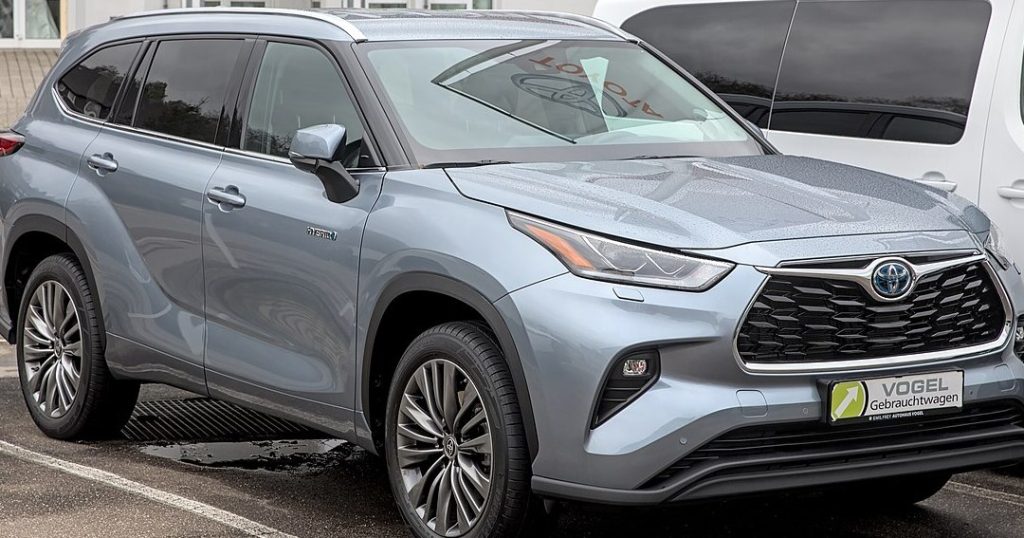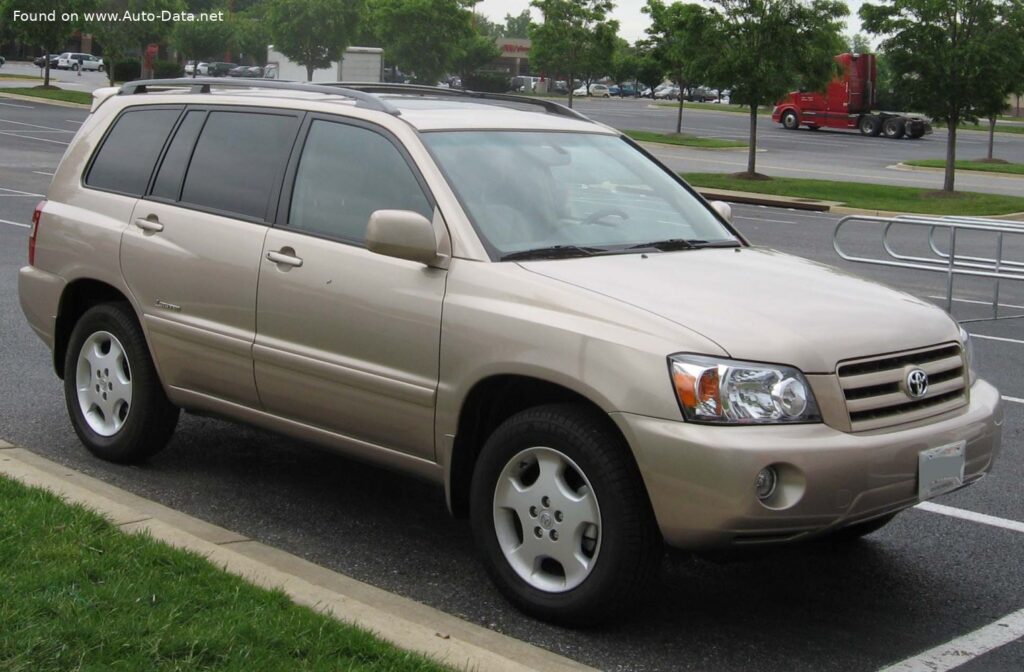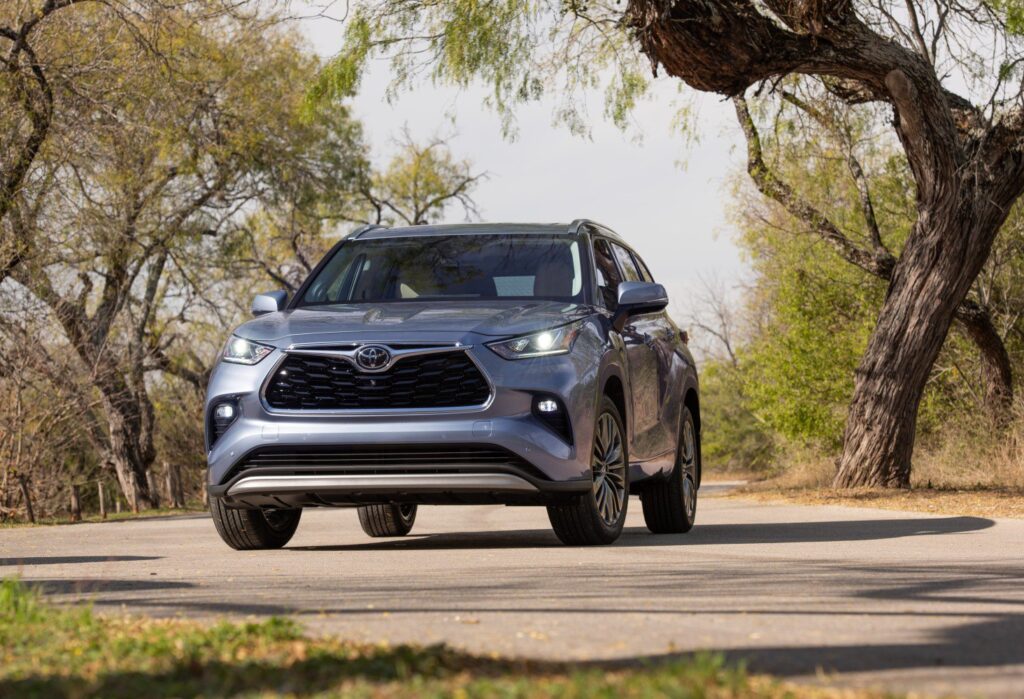
The Toyota Highlander IV 3.5 V6 (295 Hp) Direct Shift represents the fourth generation of Toyota’s popular mid-size crossover SUV, a vehicle that has become a staple for families across North America. Introduced for the 2020 model year and produced until 2022 in this specific powertrain configuration, the Highlander IV continued its legacy of offering a compelling blend of reliability, practicality, and comfort. This iteration of the Highlander was designed to meet the evolving demands of the SUV market, featuring a more robust and sophisticated design, enhanced technology, and improved driving dynamics, all while retaining its core identity as a spacious and dependable family hauler. Positioned squarely in the competitive three-row SUV segment, the Highlander IV aimed to provide a premium experience without sacrificing the renowned Toyota value proposition, making it a formidable contender against rivals.
Engine & Performance: The Heart of the Toyota Highlander IV
At the core of the Toyota Highlander IV 3.5 V6 (295 Hp) Direct Shift lies a robust and proven powertrain designed for both spirited performance and respectable efficiency. This particular model is equipped with Toyota’s well-regarded 3.5-liter (3456 cm3 or 210.9 cu. in.) 2GR-FKS V6 engine. This naturally aspirated V-engine, featuring six cylinders, delivers a strong 295 horsepower at 6600 rpm, providing ample power for highway cruising, merging, and hauling a full complement of passengers and cargo. The engine’s maximum torque output stands at 357 Nm (263.31 lb.-ft.) at 4700 rpm, ensuring responsive acceleration and confident passing maneuvers.
Key to the 2GR-FKS engine’s performance and efficiency is its advanced valvetrain and fuel injection system. It utilizes a DOHC (Double Overhead Camshaft) design with Dual VVT-i (Variable Valve Timing with intelligence), which continuously optimizes valve timing for both intake and exhaust, enhancing power delivery across the rev range while also improving fuel economy and reducing emissions. Furthermore, the engine employs a sophisticated D-4S fuel injection system, combining both direct injection and multi-port manifold injection. This dual injection strategy allows for precise fuel delivery under varying engine loads, maximizing combustion efficiency and minimizing emissions, contributing to its ULEV 70 (Ultra-Low Emission Vehicle) standard.
Power is seamlessly transmitted to the front wheels via an 8-speed “Direct Shift” automatic transmission. This modern gearbox is engineered for smooth and precise shifts, optimizing the engine’s power band and contributing significantly to the vehicle’s fuel efficiency. The inclusion of a Start & Stop System further aids in conserving fuel, particularly in urban driving conditions, by automatically shutting off the engine when the vehicle is stationary and restarting it seamlessly when the driver is ready to move. This combination of a powerful V6 engine and an efficient 8-speed automatic results in a commendable balance of performance and fuel economy for a vehicle of its size.
According to EPA estimates, the Toyota Highlander IV 3.5 V6 (295 Hp) Direct Shift achieves competitive fuel consumption figures: 21-19.9 US mpg in urban settings, 29-28 US mpg on the highway, and a combined rating of 24-23.1 US mpg. With a weight-to-power ratio of 6.4 kg/Hp (156.9 Hp/tonne) and a weight-to-torque ratio of 5.3 kg/Nm (189.9 Nm/tonne), the Highlander demonstrates a robust and capable powertrain architecture, delivering a confident and refined driving experience that aligns perfectly with its family-oriented mission.
Design & Features of the Toyota Highlander IV
The fourth-generation Toyota Highlander, specifically the 3.5 V6 (295 Hp) Direct Shift variant, showcases a design philosophy that blends rugged SUV aesthetics with sophisticated, modern lines. As a classic SUV body type with 5 doors and seating for 7-8 passengers, it prioritizes practicality and passenger comfort. Its exterior dimensions are substantial, measuring 4950 mm (194.88 in.) in length, 1930 mm (75.98 in.) in width, and 1730 mm (68.11 in.) in height, all riding on a generous 2850 mm (112.2 in.) wheelbase. These dimensions contribute to a commanding road presence and a spacious interior.
The Highlander IV’s design language features a more chiseled and athletic appearance compared to its predecessors, with sharper character lines and a more aggressive front fascia. Despite its size, it maintains a respectable ground clearance of 203 mm (7.99 in.), making it capable of handling light off-road duties or uneven terrain with ease. The approach angle of 18.1° and departure angle of 23° further enhance its utility beyond paved roads, though its primary domain remains urban and highway environments.
Inside, the Highlander is designed with family needs in mind. The flexible 7-8 seat configuration allows for various passenger and cargo arrangements. With all seats in place, it offers a minimum trunk space of 453 liters (16 cu. ft.), ample for daily errands. When the second and third rows are folded down, the cargo capacity expands significantly to a cavernous 2387 liters (84.3 cu. ft.), making it highly versatile for hauling larger items or luggage for extended trips. The fuel tank capacity of 68 liters (17.96 US gal) ensures a good driving range between fill-ups.
Underneath its refined exterior, the Highlander IV is built on a robust platform featuring independent suspension systems both front and rear. The front utilizes a McPherson strut setup with coil springs and an anti-roll bar, while the rear employs an independent multi-link spring suspension with a stabilizer. This configuration is tuned to provide a comfortable and composed ride, absorbing road imperfections effectively while maintaining stability. Braking performance is handled by ventilated discs measuring 338 mm at the front and solid discs of the same size at the rear, complemented by an Anti-lock Braking System (ABS) for enhanced safety. Steering is managed by an electric power-assisted rack and pinion system, offering light effort at low speeds for easy maneuvering and a more weighted feel at higher speeds for stability. The vehicle is fitted with tires sized 235/65 R18 or 235/55 R20, mounted on corresponding 8J x 18 or 8J x 20 wheel rims, providing a balance of grip and ride comfort.
Technical Specifications
| Category | Specification |
| General Information | |
| Brand | Toyota |
| Model | Highlander |
| Generation | Highlander IV |
| Type (Engine) | 3.5 V6 (295 Hp) Direct Shift |
| Start of Production | 2020 year |
| End of Production | 2022 year |
| Powertrain Architecture | Internal Combustion engine |
| Body type | SUV |
| Seats | 7-8 |
| Doors | 5 |
| Performance Specs | |
| Fuel Consumption (Economy) – Urban (EPA) | 11.2-11.8 l/100 km (21 – 19.9 US mpg) |
| Fuel Consumption (Economy) – Extra Urban (EPA) | 8.1-8.4 l/100 km (29 – 28 US mpg) |
| Fuel Consumption (Economy) – Combined (EPA) | 9.8-10.2 l/100 km (24 – 23.1 US mpg) |
| Fuel Type | Petrol (Gasoline) |
| Emission Standard | ULEV 70 |
| Weight-to-Power Ratio | 6.4 kg/Hp (156.9 Hp/tonne) |
| Weight-to-Torque Ratio | 5.3 kg/Nm (189.9 Nm/tonne) |
| Engine Specs | |
| Power | 295 Hp @ 6600 rpm |
| Power per Liter | 85.4 Hp/l |
| Torque | 357 Nm @ 4700 rpm (263.31 lb.-ft. @ 4700 rpm) |
| Engine Layout | Front, Transverse |
| Engine Model/Code | 2GR-FKS |
| Engine Displacement | 3456 cm3 (210.9 cu. in.) |
| Number of Cylinders | 6 |
| Engine Configuration | V-engine |
| Cylinder Bore | 94 mm (3.7 in.) |
| Piston Stroke | 83 mm (3.27 in.) |
| Compression Ratio | 11.8:1 |
| Number of Valves per Cylinder | 4 |
| Fuel Injection System | Direct injection and Multi-port manifold injection |
| Engine Aspiration | Naturally aspirated engine |
| Valvetrain | DOHC, Dual VVT-i |
| Engine Oil Capacity | 5.5 l (5.81 US qt | 4.84 UK qt) |
| Coolant Capacity | 12.2 l (12.89 US qt | 10.73 UK qt) |
| Engine Systems | Start & Stop System |
| Space, Volume and Weights | |
| Kerb Weight | 1880-1932 kg (4144.69 – 4259.33 lbs.) |
| Max. Weight | 2644 kg (5829.02 lbs.) |
| Max Load | 712-764 kg (1569.69 – 1684.33 lbs.) |
| Trunk (Boot) Space – Minimum | 453 l (16 cu. ft.) |
| Trunk (Boot) Space – Maximum | 2387 l (84.3 cu. ft.) |
| Fuel Tank Capacity | 68 l (17.96 US gal | 14.96 UK gal) |
| Permitted Trailer Load with Brakes (12%) | 2200 kg (4850.17 lbs.) |
| Dimensions | |
| Length | 4950 mm (194.88 in.) |
| Width | 1930 mm (75.98 in.) |
| Height | 1730 mm (68.11 in.) |
| Wheelbase | 2850 mm (112.2 in.) |
| Front Track | 1659 mm (65.31 in.) |
| Rear (Back) Track | 1662 mm (65.43 in.) |
| Ride Height (Ground Clearance) | 203 mm (7.99 in.) |
| Minimum Turning Circle (Turning Diameter) | 11.4 m (37.4 ft.) |
| Approach Angle | 18.1° |
| Departure Angle | 23° |
| Drivetrain, Brakes and Suspension Specs | |
| Drivetrain Architecture | The Internal combustion engine (ICE) drives the front wheels of the vehicle. |
| Drive Wheel | Front wheel drive |
| Number of Gears and Type of Gearbox | 8 gears, automatic transmission Direct Shift |
| Front Suspension | Independent, type McPherson with coil spring and anti-roll bar |
| Rear Suspension | Independent multi-link spring suspension with stabilizer |
| Front Brakes | Ventilated discs, 338 mm |
| Rear Brakes | Disc, 338 mm |
| Assisting Systems | ABS (Anti-lock braking system) |
| Steering Type | Steering rack and pinion |
| Power Steering | Electric Steering |
| Tires Size | 235/65 R18; 235/55 R20 |
| Wheel Rims Size | 8J x 18; 8J x 20 |
Legacy & Market Impact of the Toyota Highlander IV
The Toyota Highlander has long been a cornerstone of the mid-size SUV segment in the North American market, and the fourth-generation Highlander IV 3.5 V6 (295 Hp) Direct Shift further solidified its position as a top-tier choice for families. Its legacy is built upon Toyota’s unwavering reputation for reliability, durability, and strong resale value, attributes that consistently attract a broad customer base. The Highlander IV, produced from 2020 to 2022 in this specific V6 configuration, continued to emphasize these core strengths while introducing a more modern design, enhanced technology, and improved driving dynamics.
In a fiercely competitive segment, the Highlander IV faced formidable rivals such as the Honda Pilot, Kia Telluride, Hyundai Palisade, Ford Explorer, and Chevrolet Traverse. What distinguished the Highlander was its balanced approach: it offered a comfortable ride, a refined powertrain, a spacious and versatile interior, and a comprehensive suite of safety features (though not detailed in the provided data, modern Toyotas are known for their standard safety tech). The 3.5-liter V6 engine, a familiar and trusted powerplant, provided a strong combination of power and efficiency, making it suitable for both daily commuting and long-distance family road trips. The 8-speed Direct Shift automatic transmission further enhanced its appeal by delivering smooth and efficient power delivery.
The Highlander’s market impact stems from its ability to consistently meet and exceed the expectations of its target demographic: families seeking a dependable, safe, and practical vehicle with three-row seating. Its strong sales performance throughout its production run is a testament to its enduring popularity. Toyota’s commitment to quality and customer satisfaction meant that the Highlander IV, like its predecessors, maintained excellent long-term ownership costs and retained its value exceptionally well, making it an attractive proposition in the used car market too.
Ultimately, the Toyota Highlander IV 3.5 V6 (295 Hp) Direct Shift reinforced the model’s status as a benchmark in the mid-size SUV category. It seamlessly integrated modern automotive advancements with the traditional Toyota values of dependability and practicality, ensuring its continued relevance and success in a market segment that demands versatility and peace of mind. Its contribution to Toyota’s robust SUV lineup remains significant, acting as a crucial bridge between smaller crossovers like the RAV4 and larger, more rugged offerings, cementing its historical significance as a go-to family vehicle.